Ukrainian art & cultureOnline


Other dimensions of culture
Other dimensions of culture





Test mode: all content on this site is for testing and will be removed at launch.
Art Glossary
Ukrainian Art&Culture online glossary of art terms covers movements, styles and techniques such as Impressionism, Printmaking, Video art and more.
from Realismto Cyberpunk
34from Oilto 3D Modeling
8from Paintingto Design
7from Trypilliato Contemporary
23153 terms
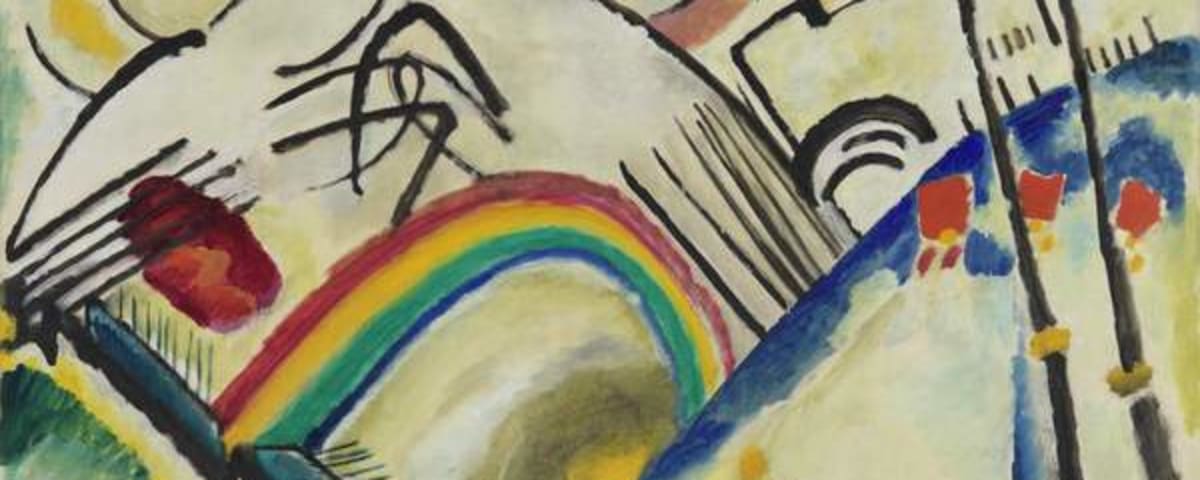
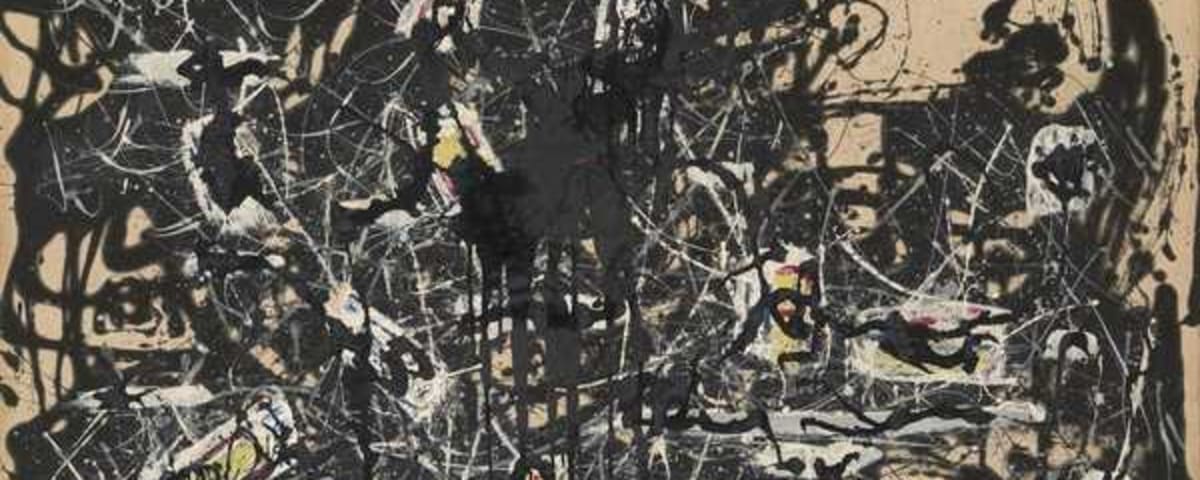
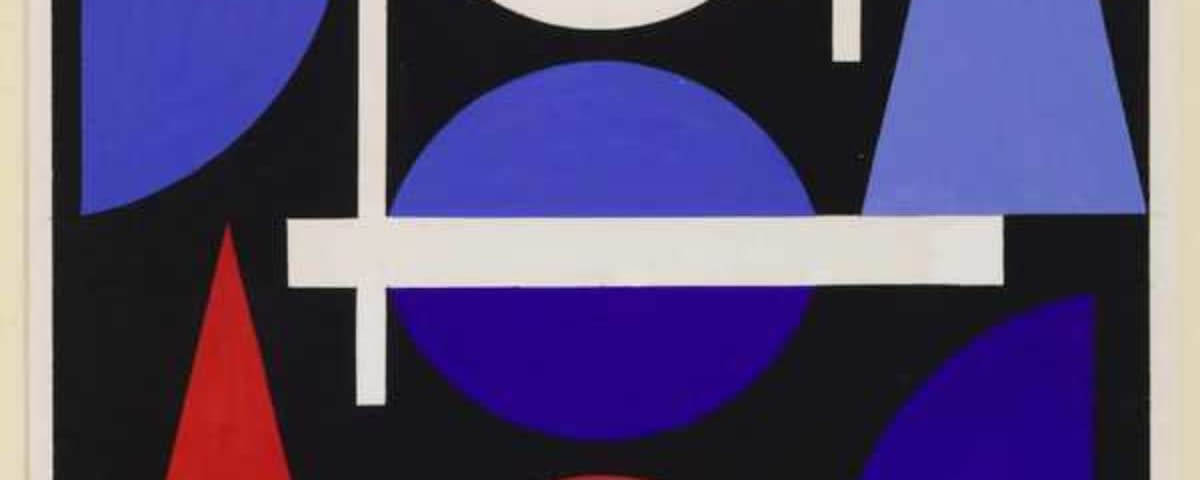
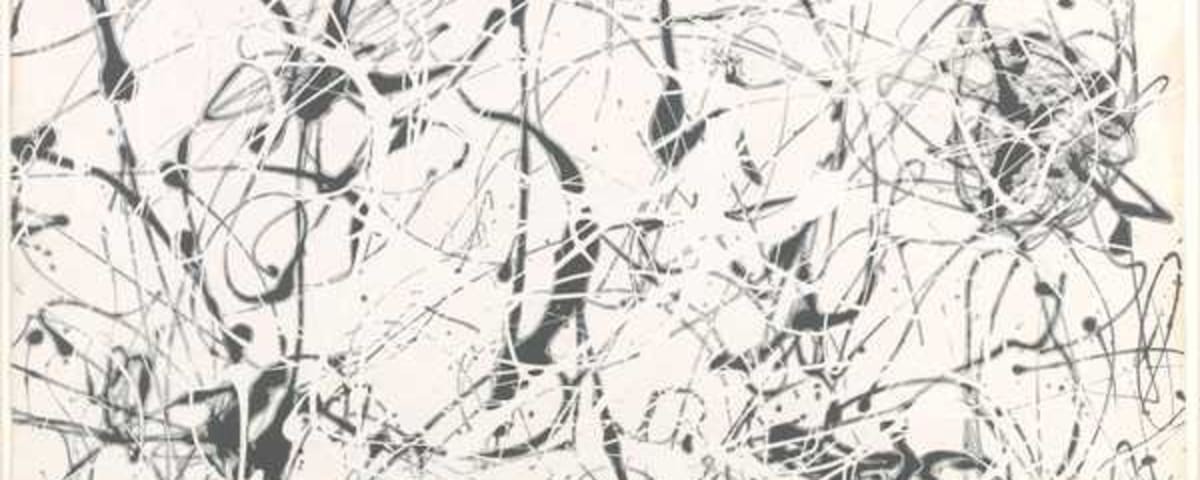
Abstraction is an artistic language that abandons the recognizable depiction of the material world and constructs the image from the pure means of painting and drawing: color, line, plane, rhythm and texture. Instead of imitating nature, an abstract work appeals to inner experience, musical association or spiritual idea, asserting the self-sufficiency of formal elements. Historically two principal currents are distinguished: lyrical, or organic, abstraction with flowing colored patches and an expressive gesture, and geometric abstraction with clear figures, right angles and calibrated proportions. The style's hallmarks are an open composition, the autonomous voice of color, attention to the very process of applying paint, and the refusal of narrative. Technically artists employ washes, dripping, collage, monochrome fields or, conversely, contrasting juxtapositions of tone. Wassily Kandinsky, for whom color carried a "spiritual sound," is regarded as the founder; alongside him worked Piet Mondrian with his Neoplasticism and Robert Delaunay with Orphism. In the Ukrainian context abstract inquiry involves Kazimir Malevich and his Suprematism, as well as Alexandra Exter, whose non-objective compositions fused color and dynamism. In the second half of the twentieth century abstraction unfolded in American Abstract Expressionism through Jackson Pollock and Mark Rothko. Abstraction permanently changed ideas about what could be the subject of art, opening the way to non-objective painting, color field and minimalism.
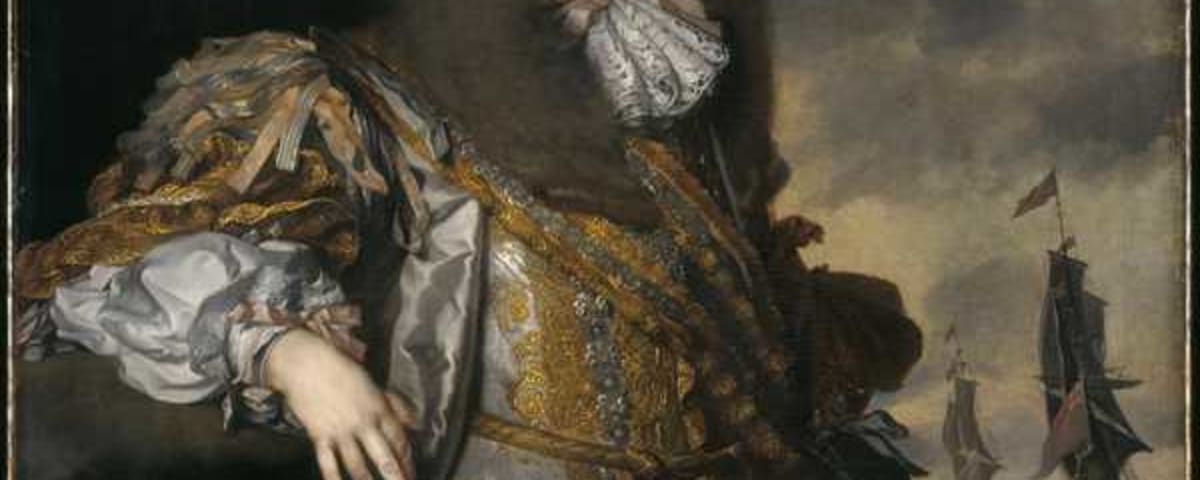
Baroque is an artistic language of the late sixteenth to the mid-eighteenth century, built on the pathos of movement, contrast and the emotional captivation of the viewer. In contrast to the balanced calm of the Renaissance, the Baroque strives to astonish, stir and draw the beholder into action, so its works are filled with dramatic tension and theatricality. Its hallmarks are a dynamic diagonal composition, sharp oppositions of light and shadow (the techniques of chiaroscuro and tenebroso), a wealth of textures, saturated color and an almost sculptural plasticity of form. Baroque masters loved expansive multi-figure scenes, illusionistic ceiling paintings that seem to open the sky, sumptuous draperies and the depiction of a moment of highest emotional intensity. In painting the style is represented by Caravaggio with his stark light, Peter Paul Rubens with his turbulent corporeality, Diego Velázquez and Rembrandt, who brought the play of light to psychological depth. In Ukraine a distinctive "Cossack Baroque" developed, blending Western European forms with local tradition: the architecture of the age of Hetman Ivan Mazepa, icon painting, engraving and the celebrated illustrated early printed books of the Kyiv-Pechersk Lavra. The Ukrainian portrait-parsuna and the many-tiered carved iconostases also belong to this era. Baroque became a style in which visual splendor served spiritual exaltation and affirmation, and its expressive means still nourish our notion of solemnity and drama in art.
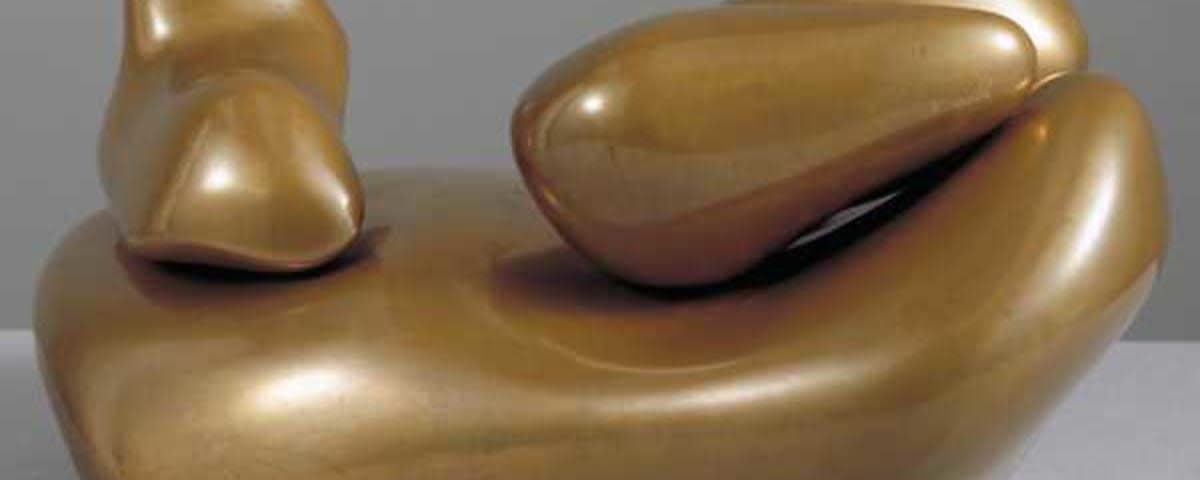
Biomorphic is a term describing forms or images that, while abstract, nonetheless refer to or evoke living organisms: plants, cells, amoebas, bones, organs or the human body. The word derives from the Greek bios, life, and morphe, form. Biomorphic forms are typically fluid, rounded, sinuous and asymmetrical, in contrast to rigid geometric abstraction with its straight lines and regular figures. Biomorphism gained particular importance in the art of the 1930s, above all within Surrealism, where it reflected an interest in the unconscious, organic growth and natural processes. Striking examples are the biomorphic sculptures and reliefs of Hans Arp, the organic forms of Joan Miró and Yves Tanguy in painting, and the streamlined plastic volumes in the work of the sculptors Henry Moore and Barbara Hepworth. Later biomorphic motifs spread into mid-twentieth-century design and architecture. The term remains useful for describing any abstract art whose forms suggest a sense of the living, growing and natural, set against the mechanical and artificial.

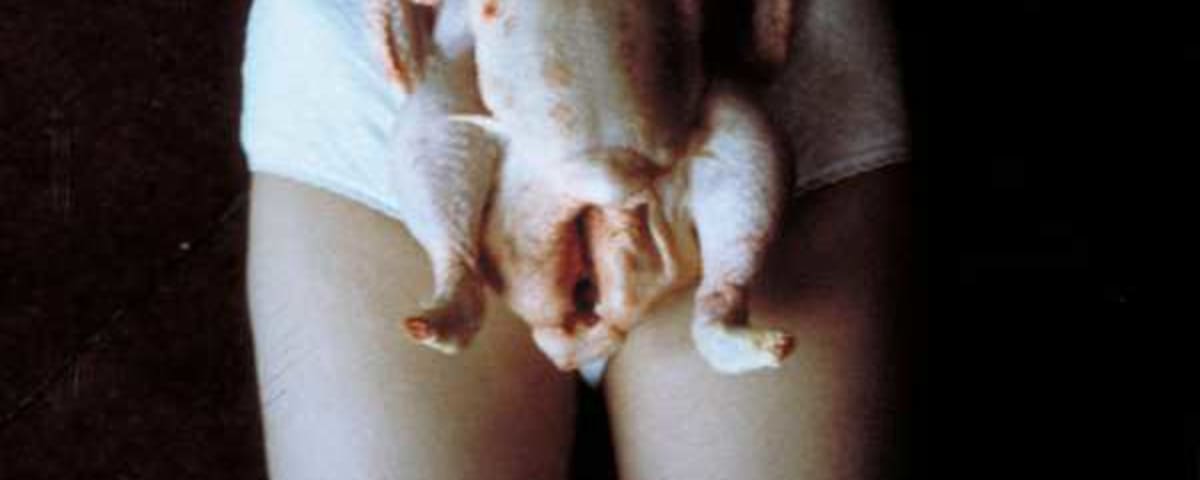
Body art is art in which the body, usually the artist's own body, is the primary medium and focus of the work. Instead of depicting the body in painting or sculpture, the artist uses their own physical presence, action, endurance, pain or risk as direct material. Body art is closely linked with performance and often exists only in the moment of execution, surviving afterwards as photographs, video or descriptions. The tendency took shape in the late 1960s and 1970s in the context of conceptual art, feminist thought and a desire to move beyond the traditional object. It raises questions of identity, gender, embodiment, the limits of endurance and the relationship between artist and viewer. Among its well-known representatives are Marina Abramović, who explored the limits of the physical and psychic through long, exhausting actions; Vito Acconci; Chris Burden, who exposed himself to danger; and Ana Mendieta, who joined the body with landscape and ritual. Body art expanded the notion of what can be artistic material and deeply influenced the later development of performance and socially engaged practice.
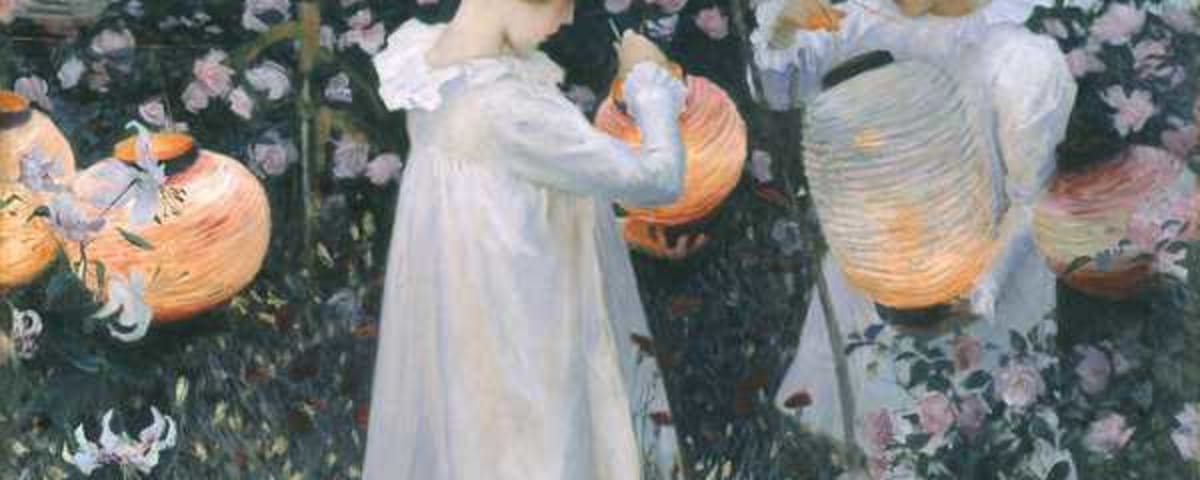
British Impressionism refers to artists who worked in Britain in the late nineteenth century under the influence of the ideas of the French Impressionists. They adopted a light palette, a free brushstroke, the depiction of modern everyday life and the desire to capture fleeting effects of light and atmosphere, while often retaining a greater attention to tonal modelling and structure than their French predecessors. An important role in spreading these ideas was played by the New English Art Club, founded in 1886 as an alternative to the conservative Royal Academy. Among its leading figures were Walter Sickert, who linked the British scene to Edgar Degas and conveyed the sombre poetry of urban interiors and music halls; Philip Wilson Steer with his luminous coastal landscapes; and the American James Abbott McNeill Whistler, who worked in London. The presence of Claude Monet, whose London series inspired local artists, was also significant. British Impressionism adapted French innovations to national taste and landscape, becoming a bridge to twentieth-century modernist art in Britain.
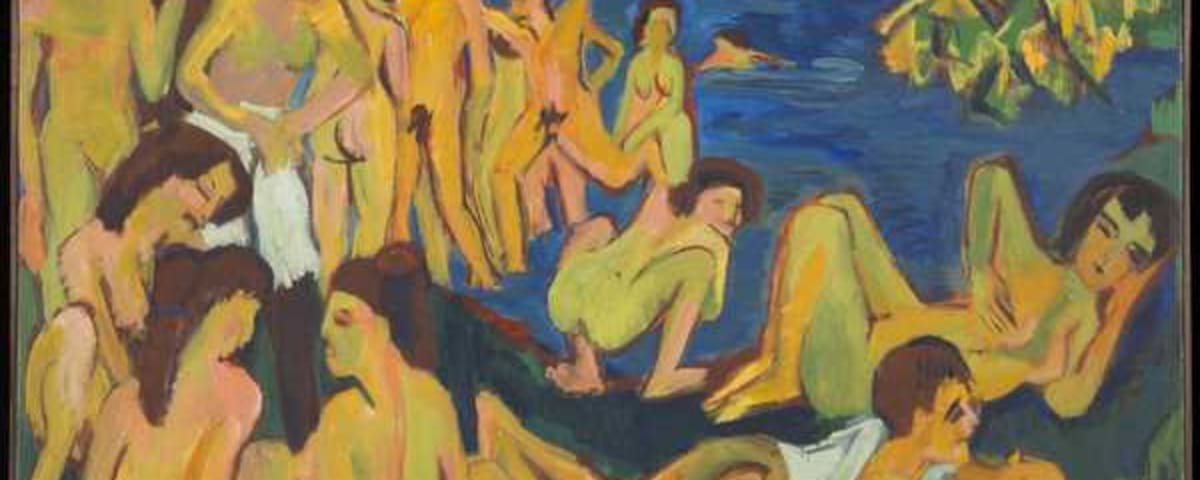
Die Brücke (The Bridge) was a German Expressionist group founded in Dresden in 1905 that developed a radical, anti-traditional style. The name The Bridge symbolised the wish to build a bridge to the art of the future and to unite all revolutionary-minded young artists. The group became one of the two key currents of German Expressionism alongside the Munich association The Blue Rider. Its founders were Ernst Ludwig Kirchner, Erich Heckel, Karl Schmidt-Rottluff and Fritz Bleyl, architecture students who turned to painting and graphic art. Max Pechstein and Emil Nolde later joined the group. Their style is marked by harsh, simplified forms, sharp angles, saturated unnatural colours and strong emotional tension. The artists drew inspiration from medieval German woodcuts, the work of Edvard Munch and Vincent van Gogh, and the art of non-European cultures. Their contribution to the revival of the woodcut was especially significant. Die Brücke lasted until 1913, when it broke up over internal disputes, but it had a profound influence on the development of twentieth-century modernist art.

Brutalism is an architectural style of the 1950s and 1960s characterised by simple, massive, blocky forms and exposed, rough concrete construction. The name derives from the French phrase béton brut, raw concrete, popularised by the architect Le Corbusier. Brutalism is typified by bare surfaces of untreated concrete bearing the marks of wooden formwork, by monumentality, repeating modular elements and an emphatic honesty in displaying materials and structure. The style grew out of the postwar need for rapid and economical construction of housing, schools, universities and public buildings. The theoretical grounding of the New Brutalism was provided by the British architects Alison and Peter Smithson, and among its landmark examples are Le Corbusier's Unité d'Habitation in Marseille, the National Theatre building and the Barbican complex in London. Brutalism was often linked with ideas of social utopia and collective welfare. It was later criticised for its grimness and inhuman scale, and many buildings decayed or were demolished. Yet since the early twenty-first century interest in Brutalism has revived, and its legacy is being reassessed as an important chapter of modernist architecture.
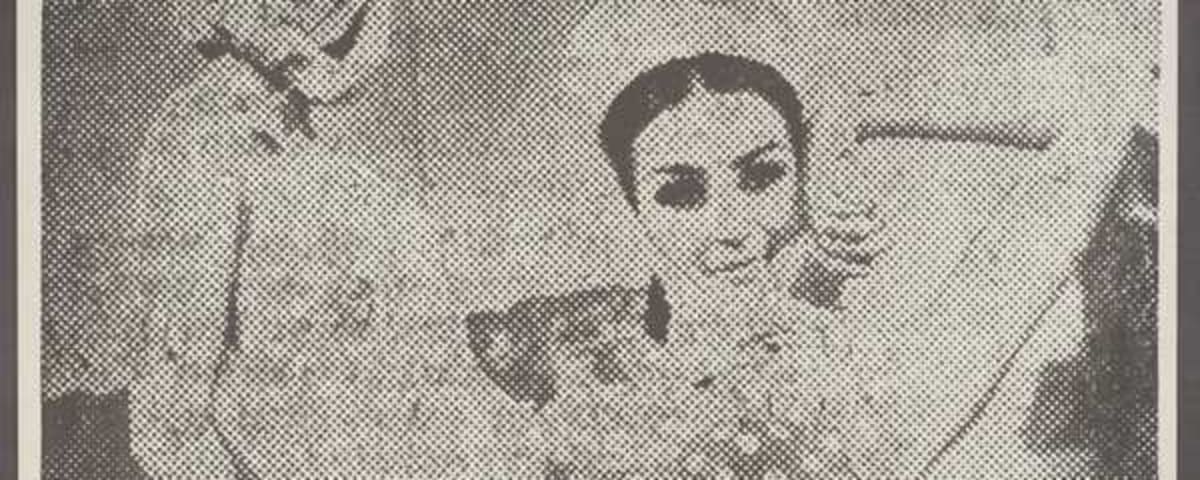
Capitalist Realism was a movement that arose in Düsseldorf and Berlin in Germany around 1963 to challenge the dominant influence of American Pop art in the Western world while also ironically playing on the official art of totalitarian regimes. The name itself is a parodic play on the term Socialist Realism, the state-imposed official style of communist countries; the artists transferred this logic to consumer society, making advertising, commodities and Western mass culture the subject of art. The tendency was founded by the artists Gerhard Richter, Sigmar Polke and Konrad Lueg, later known as the gallerist Konrad Fischer. In 1963 Richter and Lueg staged a provocative event in a furniture store in Düsseldorf, presenting an everyday setting as an art exhibition. Works of Capitalist Realism drew on images from newspapers, advertising and household goods, often treating them with a restrained, critically detached irony, in contrast to bright American Pop art. The movement reflected the particular German experience of the postwar economic miracle and a divided country, and it was an important stage in the formation of influential individual practices, above all that of Gerhard Richter.
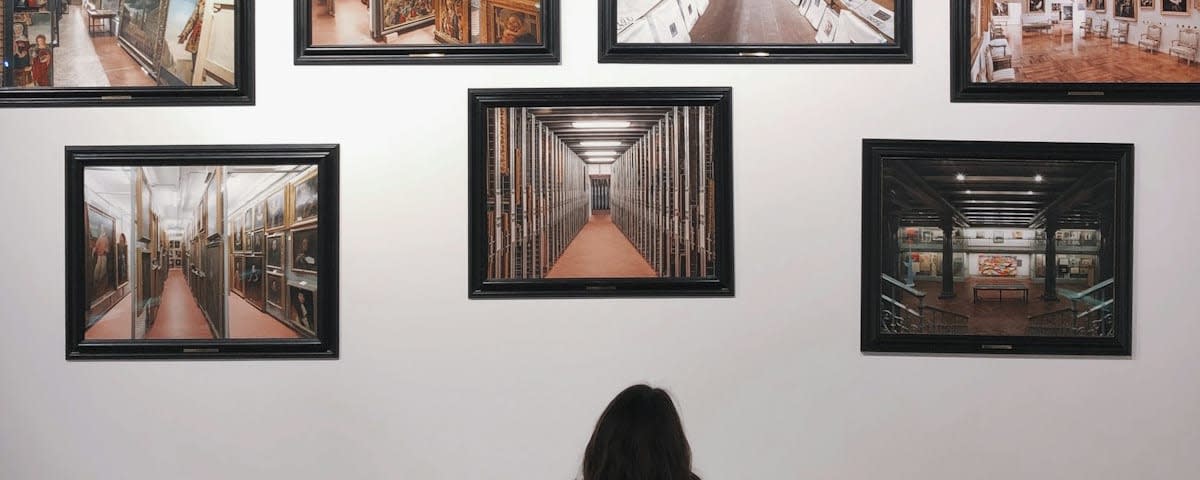
Classicism is an artistic language of the seventeenth to the early nineteenth century that took the art of ancient Greece and Rome as its model and elevated the ideals of reason, order and harmony. In contrast to the turbulence of the Baroque, Classicism affirms clarity, balance and the subordination of feeling to the discipline of form. Its aesthetic rests on the cult of clear drawing, which prevails over color, on a strict symmetrical composition, a calm rhythm and a noble restraint of gesture. Artists sought to depict not the accidental but the typical and the ideal, so they preferred heroic subjects from ancient history, mythology and civic virtue, meant to edify the viewer. Its formal marks are the plastic completeness of figures, as if carved from sculpture, local color, clear contours, a wing-like construction of space and the rational lucidity of the whole order of the work. The leading painter of Classicism was Nicolas Poussin, and in the age of Neoclassicism, Jacques-Louis David with his civic pathos and Jean-Auguste-Dominique Ingres. In architecture the style produced ordered palaces and rotundas that spread to Ukrainian lands as well: the classicist ensembles of Kyiv and Poltava and palace-and-park complexes such as the estate at Kachanivka. In Ukrainian painting the work of Dmytro Levytsky and Volodymyr Borovikovsky approaches the classicist tradition. Classicism established the idea of art as a school of taste and morality, and its expressive order long remained the basis of European artistic education.
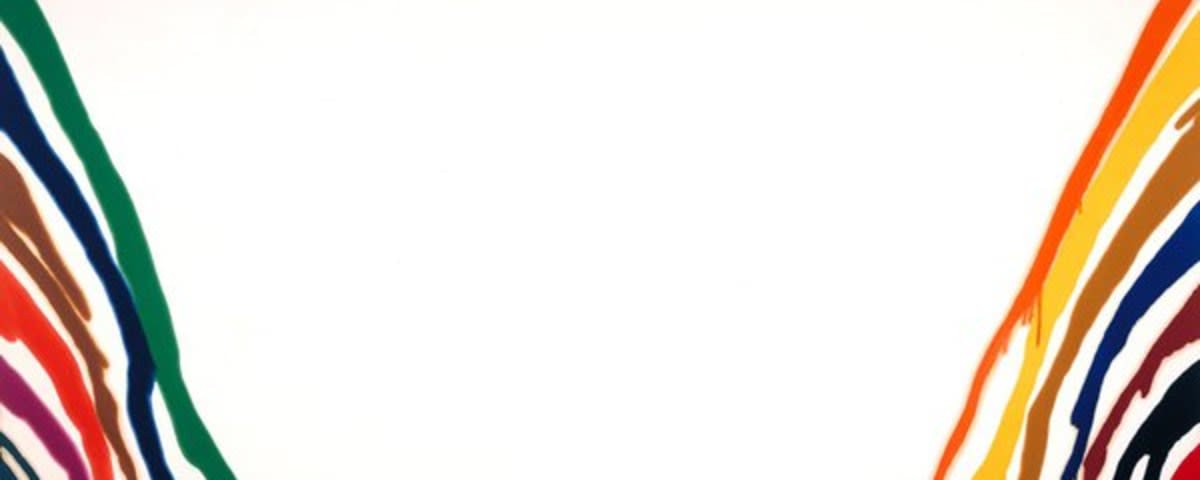
Colour field painting is a term describing the work of abstract artists active mainly in the 1950s and 1960s, characterised by large areas of more or less uniform, single-toned colour. Unlike gestural action painting, colour field avoids the visible brushstroke, drama and personal trace of the hand, instead emphasising a continuous, almost boundless expanse of colour that envelops and surrounds the viewer. The tendency is closely linked with Abstract Expressionism; its early pioneers were Mark Rothko with his rectangles of softly glowing colour, Barnett Newman with his vertical zips, and Clyfford Still. These artists sought to evoke sublime, contemplative, almost religious experience through the sheer presence of large-scale colour. In the 1950s and 1960s a second generation, Helen Frankenthaler, Morris Louis and Kenneth Noland, developed the soak-stain technique (pioneered by Frankenthaler in 1952), in which thinned paint soaked directly into unprimed canvas, merging with its surface. The critic Clement Greenberg theorised this approach as a logical step toward the purity of painting. Colour field remains one of the most influential currents of postwar abstraction.
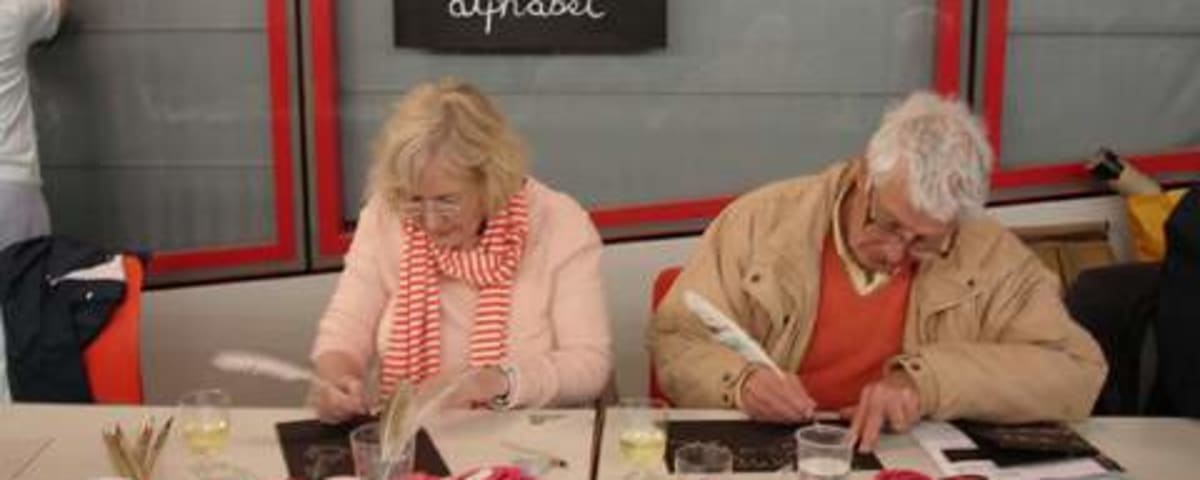
Community art is artistic activity that takes place in a community setting and is characterised by interaction or dialogue with that community; it often involves a professional artist who collaborates with local residents. The main emphasis falls not on the final object but on the process of shared creation, on involving people, empowering them and strengthening social ties. Here art becomes an instrument of social participation rather than a purely aesthetic product. The community art movement spread in the late 1960s and 1970s, when artists sought to move beyond elite galleries and make creativity accessible to broad sections of society, especially marginalised communities. Typical forms include murals, shared workshops, street festivals, theatrical events and projects in schools, hospitals and residential neighbourhoods. Community art is closely linked with activist and socially engaged art and raises questions about the role of the artist, authorship and participation. It emphasises that art can belong to everyone and be a means of collective self-expression, of solving local problems and of celebrating shared identity.

Conceptual art is a movement of the second half of the twentieth century for which the idea or intention of a work matters more than its material embodiment and aesthetic form. As one of the movement's theorists, Sol LeWitt, put it, "the idea becomes a machine that makes the art": the mental concept itself, rather than skill of execution or beauty of the object, is recognized as the true content. Conceptual works are therefore often stripped of traditional "pictorialism" and appear as texts, instructions, documentation, photographs, diagrams, ready-made objects or ephemeral actions. The style questions the status of the art object, the role of the artist, the museum and the market, drawing the viewer into intellectual play and critical reflection. The movement's origins are linked to Marcel Duchamp's "Fountain," while classic examples were created by Joseph Kosuth with "One and Three Chairs," Lawrence Weiner, the Art & Language group and Yoko Ono with her instruction pieces. The language of conceptualism is the analysis of the very notion of art, the investigation of the relation between word, image and thing. In the Eastern European context a Soviet conceptualist circle developed, and in Ukraine kindred practices marked the work of nonconformist artists and later actionist and media experiments. By renouncing the unique handmade object in favor of thought, conceptual art radically expanded the boundaries of art and prepared the ground for performance, installation and contemporary post-medium practices.
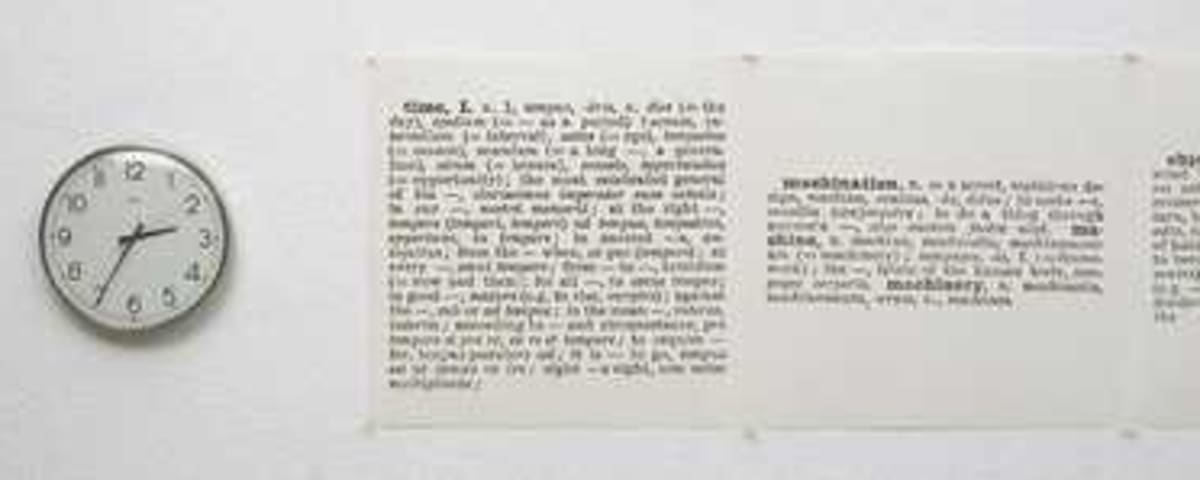
Conceptual art is a term that came into use in the late 1960s to describe a broad range of practices in which the concept or idea behind a work is elevated above traditional aesthetic and material concerns. In the words of one of the movement's theorists, Sol LeWitt, the idea becomes a machine that makes the art: the plan, intention or instruction may matter more than the final physical object, and sometimes the object is absent altogether. Conceptual art called into question the fundamental notions of authorship, craftsmanship, uniqueness and the commodity status of the artwork. It took the form of texts, instructions, documentation, photographs, diagrams and actions. A landmark is Joseph Kosuth's One and Three Chairs (1965), which juxtaposes a real chair, its photograph and a dictionary definition, exploring the nature of representation. Among its influential figures are Sol LeWitt, Joseph Kosuth, the group Art & Language, Lawrence Weiner and Yoko Ono. The movement's roots reach back to the readymades of Marcel Duchamp in the early twentieth century. Conceptualism fundamentally changed ideas of what art can be and remains a foundation for much contemporary practice.
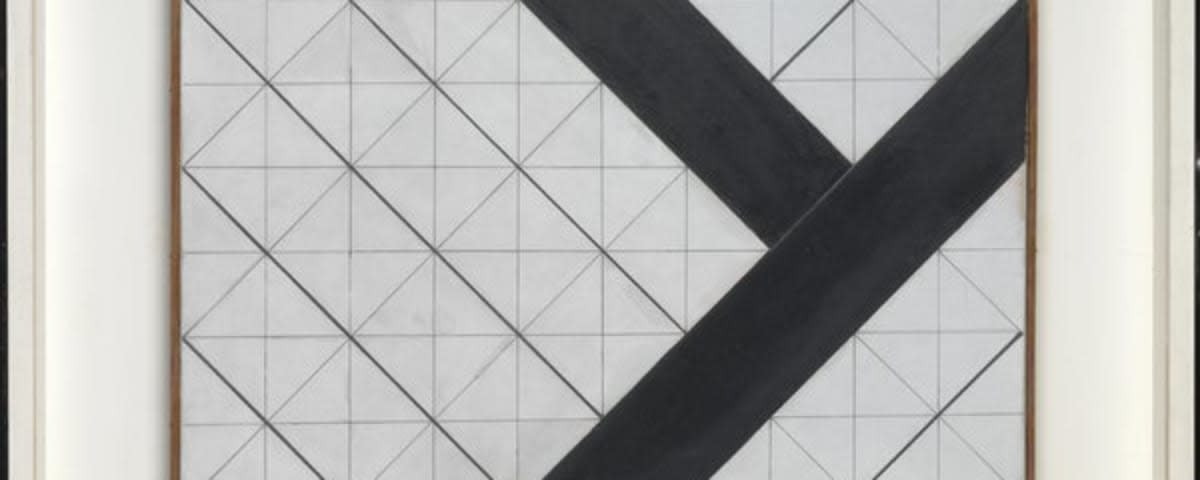
Concrete art is a current of abstract art that is entirely without any basis in observable reality and carries no symbolic or naturalistic implications. Its adherents insisted that line, plane and colour are concrete in themselves and should not depict or symbolise anything; a painting is as real an object as a chair or a tree. Works are constructed according to clear mathematical or geometric principles, methodically, without reliance on spontaneity or emotion. The term was proposed by the Dutch artist Theo van Doesburg in his 1930 manifesto Art Concret, contrasting concrete art with abstract art, which in his view still departed from reality through abstraction. After van Doesburg's death a leading role in the development of the current was played by the Swiss artist, designer and theorist Max Bill, who spread these ideas in the postwar decades. Concrete art developed significantly in Latin America, notably in Brazil and Argentina, where it influenced Neo-Concretism. The current is closely linked with Constructivism and geometric abstraction and emphasises clarity, order and rational structure.
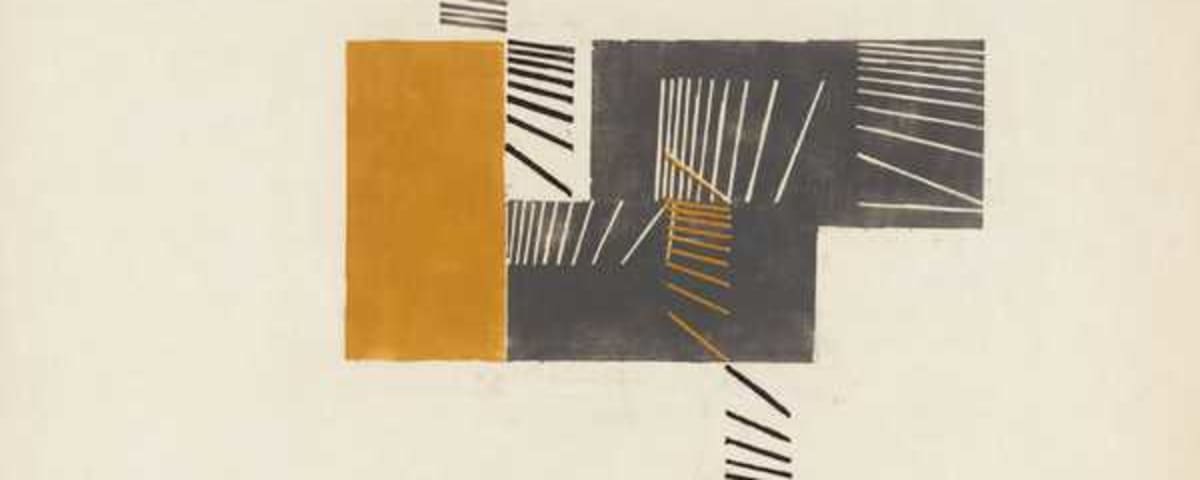
Constructionism is a strand of abstract art that developed in Britain from around 1950 as a late extension of the constructivist tradition. Rather than depicting the visible world, its practitioners sought to build the artwork according to objective, rational principles. They drew on naturally occurring proportional systems, mathematical sequences and rhythms to give geometric abstraction a sense of underlying order and harmony. Leading figures included Victor Pasmore, Kenneth Martin, Mary Martin and Anthony Hill, who produced reliefs, constructions and mobiles using industrial materials such as metal, glass and plastic. Constructionism rejected emotional spontaneity in favour of clarity, precision and structure, treating the work of art as something constructed rather than imitated. The movement is significant for carrying forward the analytical, materials-based ethos of European constructivism into the post-war period, and for its influence on later systems-based and kinetic art. It demonstrated that abstraction could be grounded in logic and measurement rather than in expressive impulse, offering an alternative to the gestural painting dominant at mid-century.
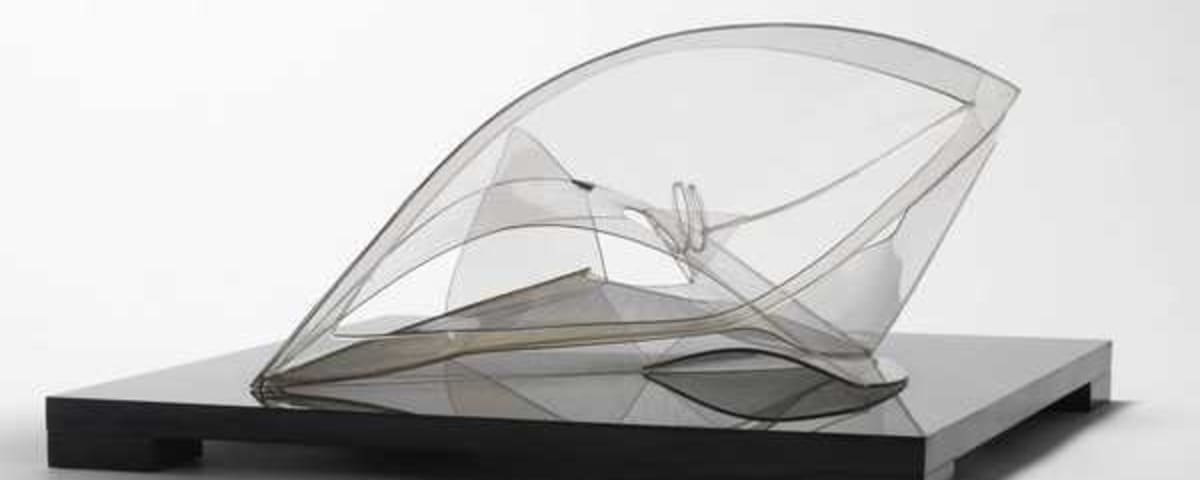
Constructivism is an avant-garde movement of the 1910s to 1930s that proclaimed art to be not contemplation but the construction of a purposeful material environment for a new society. Instead of depiction, the Constructivist artist thinks like an engineer who builds the work from real materials according to the laws of expediency, technology and economy of means. Its key concepts were "construction," "faktura" (texture) and "tectonics": what matters is not the subject but the logic of joining elements, the bared structure and the properties of the material itself — metal, glass, wood, cardboard. The formal language of Constructivism consists of clear geometric forms, straight and diagonal lines, a dynamic asymmetrical composition, a limited palette of red, black, white and gray, and the active introduction of type and photomontage. The style was realized above all in design, printing, the poster, stage design, architecture and production art, striving to erase the boundary between artist and manufacturer. Its leading masters were Vladimir Tatlin with his "Monument to the Third International," Alexander Rodchenko, El Lissitzky and Varvara Stepanova. In Ukraine a distinguished role was played by the Kharkiv artist Vasyl Yermilov, who created reliefs, journal designs and spatial constructions, and by Vadym Meller in theatrical stage design. Constructivism laid the foundations of modern graphic design, typography and functional architecture, and its visual language remains to this day a model of clarity and engineering beauty.

Cubism is a revolutionary avant-garde movement that emerged around 1907–1908 and radically changed ideas about the depiction of space and form. Its founding idea is that an object appears not from a single fixed viewpoint but is broken down into geometric planes and shown simultaneously from several angles, reduced to basic volumes — the cube, the cylinder, the cone. In this way the artist abandons classical linear perspective and the illusion of depth in favor of an analysis of the very structure of things on the flat surface of the canvas. Two phases are distinguished: Analytic Cubism, with the fragmentation of form into small facets and a muted ochre-gray range, and Synthetic Cubism, which restored brighter color and introduced collage, pasted papers and fragments of real materials. The style's founders were Pablo Picasso, whose "Les Demoiselles d'Avignon" became its manifesto, and Georges Braque, with Juan Gris and Fernand Léger among its leading masters; its first theoretical treatise, Du "Cubisme" (1912), was written by Albert Gleizes and Jean Metzinger. In Ukrainian art cubist inquiry was vividly developed by Oleksandr Bohomazov, who fused Cubism with dynamism in his Kyiv compositions (such as 'Lvivska Street in Kyiv', 1914), and by Alexandra Exter, whose Cubo-Futurist works merged the analysis of form with saturated color. Cubism opened the way to non-objective art, influenced Futurism, Constructivism and Suprematism, and the introduction of collage permanently expanded the technical arsenal of twentieth-century painting.

Cyberpunk is a visual and narrative aesthetic born in the science fiction of the 1980s that later unfolded into an independent style of digital art, illustration, concept art and design. Its worldview is summed up as "high tech, low life": it portrays a near-future dystopia in which all-powerful corporations, artificial intelligence, the cyborgization of the body and total networks coexist with decay, poverty and social alienation. The visual language of cyberpunk is recognizable by the rain-soaked nocturnal megalopolis flooded with the neon glow of acid-pink, cyan and violet signs, by the contrast of darkness and artificial light, glitch effects, holograms, hieroglyphic inscriptions and a dense layering of technological "junk." Composition is often built on the verticals of skyscrapers, reflections in puddles and a smoky perspective that swallows space. The aesthetic took shape under the influence of William Gibson's fiction and the novel "Neuromancer," while its canonical visual image was set by Ridley Scott's film "Blade Runner" and Japanese anime and manga, notably "Ghost in the Shell" and "Akira." Today cyberpunk lives vigorously in digital painting, video games, motion design and art generated by neural networks. As a style it combines a fetishism of technology with a critique of dehumanization, offering a bleak yet visually seductive mirror of the anxieties of contemporary civilization.

Dada was a radical anti-art movement born in 1916 in Zurich, at the Cabaret Voltaire, as an outraged response to the carnage of the First World War and to the bourgeois rationalism that had produced it. At the core of the Dada aesthetic lay deliberate provocation: the rejection of logic, taste and the very notion of the masterpiece, and a cult of chance, absurdity and irony. The movement's formal arsenal was exceptionally heterogeneous — photomontage, collage, assemblage, the readymade (a ready-made industrial object elevated to the status of an artwork), and sound or phonetic poetry. Composition was governed by rupture, by the collision of irreconcilable fragments and the montage of clippings from newspapers and advertising. Marcel Duchamp, with his urinal "Fountain" (1917) and his defaced "Mona Lisa," undermined the institution of the museum itself; Kurt Schwitters devised his own "Merz" system out of rubbish and tram tickets; Hannah Höch and Raoul Hausmann in Berlin turned photomontage into a political weapon; Man Ray and Francis Picabia extended the field toward machine-like imagery. Tristan Tzara formulated the movement's manifestos and its technique of poems assembled from cut-up words. Dada was fundamentally international and short-lived, yet it opened the road to Surrealism, conceptualism and all later art of the object and the action. Its legacy is not a style in the narrow sense but a new strategy: art as a critical gesture that questions its own limits.

Dansaekhwa is an influential movement of Korean monochrome painting that emerged in the late 1960s and 1970s as an attempt to reconcile the influence of Western modernism with Korean artistic culture and philosophy. The name literally means monochrome painting. Its artists worked mostly in muted, neutral palettes of white, beige, earth tones and grey, focusing not on depiction but on process and materiality. They repeated simple actions over and over: applying and scraping paint, pushing through the canvas from behind, soaking fabric in pigment, or pulling out the threads of the weave. These ritualistic, meditative gestures reflected Daoist and Buddhist ideas of patience, emptiness and the unity of hand, material and time. Key figures included Park Seo-bo, Chung Sang-hwa, Ha Chong-hyun, Lee Ufan and Yun Hyong-keun. Dansaekhwa was the first Korean movement to achieve international recognition and is still regarded as Korea's foundational contribution to the global history of abstraction, showing how a national spiritual tradition could renew the language of modernism.
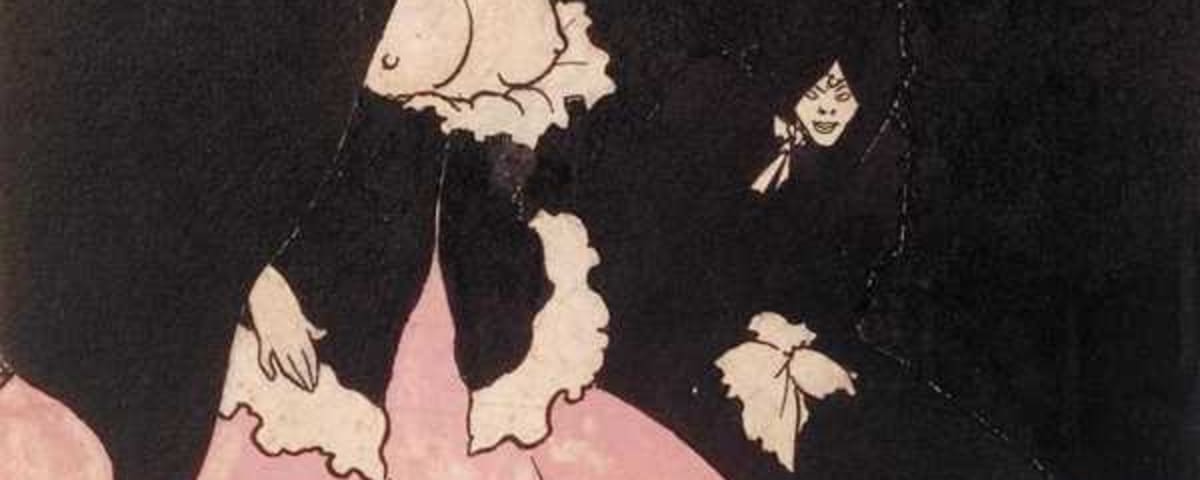
Decadence is a late nineteenth-century literary and artistic tendency that represents an extreme, intensified manifestation of Symbolism and is closely bound to the idea of the fin de siècle. The term emphasises the spiritual, the morbid and the erotic, together with a cult of refinement, artifice and decline. Decadents set themselves against bourgeois morality and faith in progress, celebrating the beauty of decay, dissolution, sin and exquisite despair. In the visual arts these moods were expressed by Gustave Moreau, Odilon Redon and Aubrey Beardsley, whose sinuous erotic illustrations became emblematic, while in literature they appear in Charles Baudelaire, Paul Verlaine and Joris-Karl Huysmans, whose novel Against Nature served as a kind of manifesto. Decadent aesthetics prized art for art's sake and preferred the artificial to the natural. More broadly, the word describes any culture believed to be undergoing moral or creative decline. Its sensibility resonated across European modernism, feeding the taste for stylisation, ambiguity and heightened subjective feeling that shaped the turn of the century.
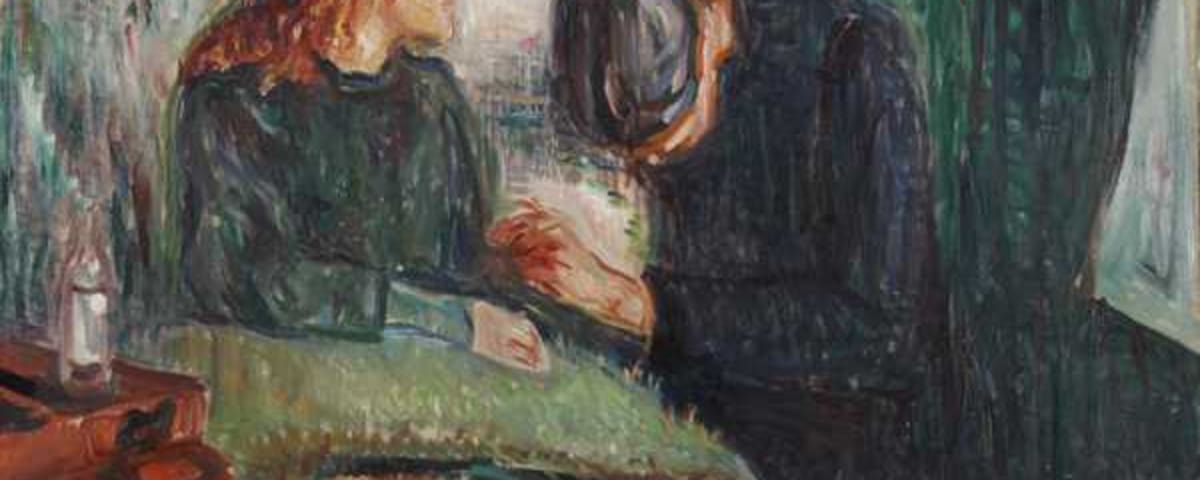
Degenerate art (German Entartete Kunst) was a derogatory label used by the National Socialist regime in 1930s Germany to condemn modern art that did not conform to its ideology. The term was applied to Expressionism, Dada, Cubism, Surrealism, abstraction and any work declared un-German, Bolshevik or diseased. In 1937 the regime staged the notorious Degenerate Art exhibition in Munich, where more than six hundred confiscated works were hung in a deliberately chaotic and humiliating manner, accompanied by mocking captions designed to ridicule them. Nearby, the Great German Art Exhibition displayed idealised, officially approved art. Thousands of works were removed from museums; some were sold abroad to raise foreign currency, while others were destroyed. Artists targeted included Ernst Ludwig Kirchner, Emil Nolde, Max Beckmann, Paul Klee, Oskar Kokoschka and Wassily Kandinsky. Many were forced into exile or banned from working. The campaign stands as one of the starkest examples of state suppression of creative freedom and of totalitarian control over culture in the twentieth century.
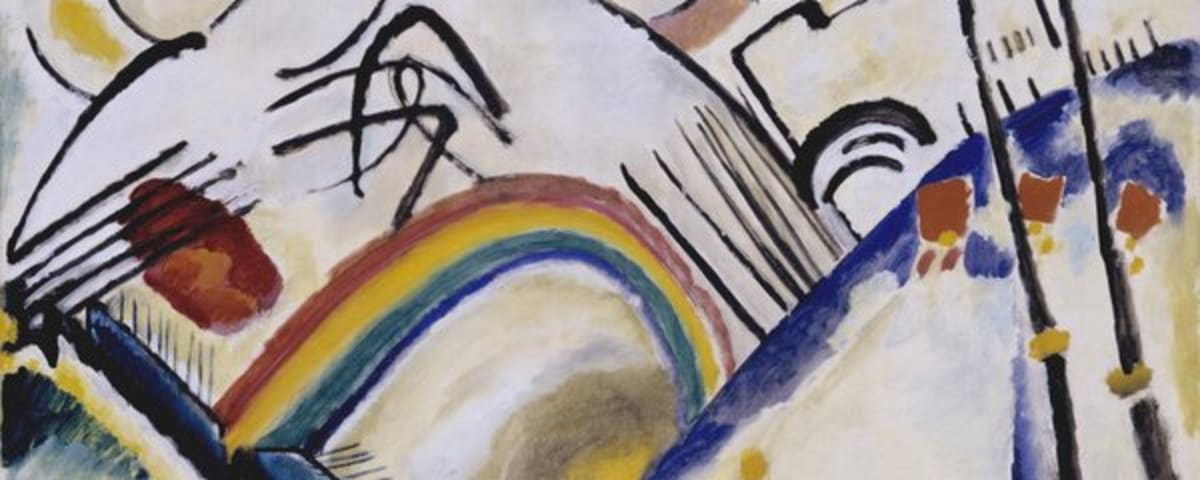
Der Blaue Reiter (The Blue Rider) was a German Expressionist group that formed in Munich around 1911 around the painters Wassily Kandinsky and Franz Marc. Its name came from the almanac they published in 1912 and, according to legend, from the founders' shared love of horses, riders and the colour blue, which they associated with spirituality. Unlike the harsh, angular aesthetic of the Dresden group Die Brücke, Der Blaue Reiter favoured a lyrical, mystical and increasingly abstract art in which colour and form were meant to express inner, spiritual realities. The circle included August Macke, Gabriele Münter, Alexej von Jawlensky, Marianne von Werefkin and the composer Arnold Schoenberg. Its members were fascinated by folk art, children's drawings, and medieval and non-European traditions, which they saw as possessing a sincerity lost to academic art. Kandinsky's treatise Concerning the Spiritual in Art provided the movement's theoretical foundation. The group dissolved with the outbreak of the First World War, in which both Marc and Macke were killed, yet it remained a decisive step towards abstract painting.
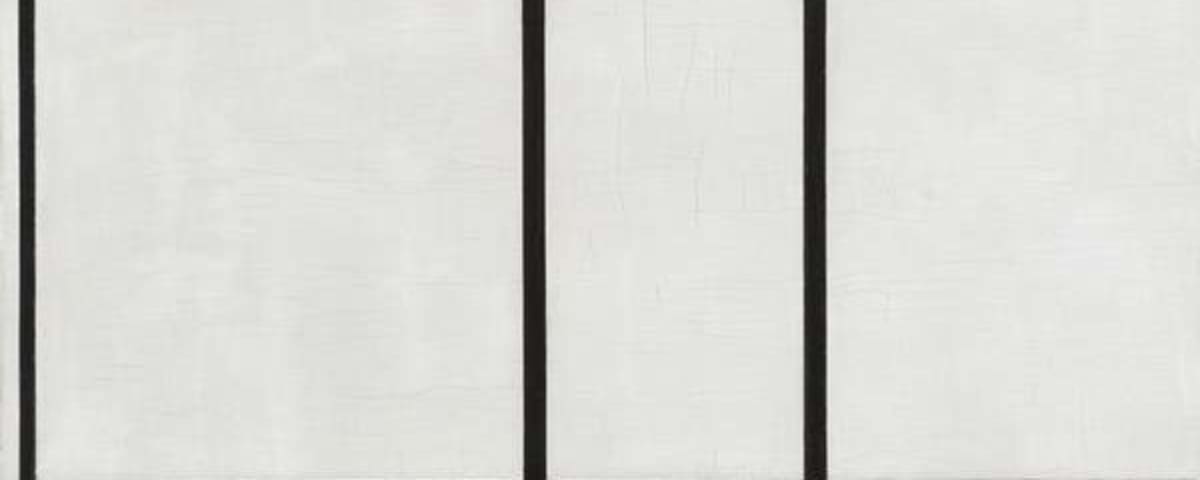
De Stijl (Dutch for The Style) was a circle of Dutch abstract painters and architects founded in 1917, together with the journal of the same name that spread their ideas. The movement promoted an art of strict geometry built exclusively from horizontals and verticals, right angles and flat planes, and a restricted palette of the three primary colours—red, yellow and blue—together with black, white and grey. Its adherents sought a universal, impersonal harmony purified of individual emotion and natural form, a philosophy that Piet Mondrian named Neoplasticism, also championed by Theo van Doesburg. Its most celebrated painter was Piet Mondrian, known for his balanced grid compositions, while its most famous three-dimensional expressions were Gerrit Rietveld's Red and Blue Chair and his Schröder House in Utrecht. The ideas of De Stijl had a profound impact on architecture, design, typography and the Bauhaus, becoming one of the cornerstones of the modernist pursuit of formal purity, clarity and rational order in the twentieth century.
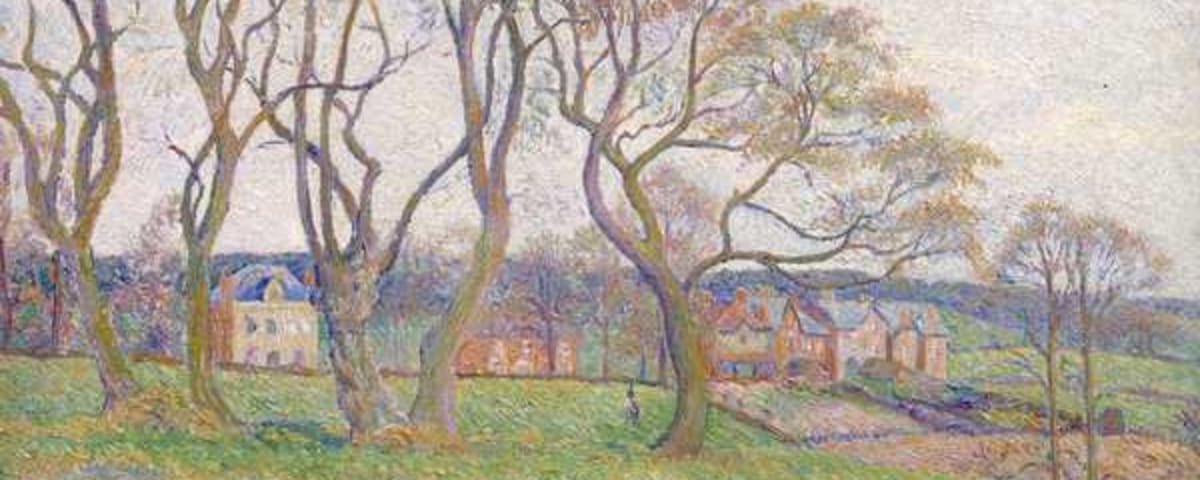
Divisionism is a late nineteenth-century painting technique that consists of applying tiny adjacent strokes or dots of pure colour to the canvas so that they mix optically in the viewer's eye, producing an effect of vibrant, luminous light. The method drew on contemporary scientific theories of colour and perception, including studies of simultaneous contrast. In French Neo-Impressionism this approach was developed by Georges Seurat and Paul Signac and is often identified with Pointillism, though Divisionism stresses the separation of colour according to optical principle rather than the dot technique alone. Its most famous example is Seurat's large canvas A Sunday on La Grande Jatte. A distinct Italian Divisionism also emerged, represented by Giovanni Segantini, Gaetano Previati and Giuseppe Pellizza da Volpedo, who combined the optical technique with symbolic and social themes. Divisionism was highly influential on later art: its understanding of the autonomy of colour and light fed into Fauvism, Futurism and early abstraction, preparing the ground for the liberation of colour from its descriptive function.

The term Elizabethan refers to the reign of Queen Elizabeth I of England from 1558 to 1603, an age of national self-confidence and flourishing of the arts. In the visual arts the period is defined above all by the development of portraiture, which acquired special importance as a means of asserting power, status and dynastic continuity. Portraits of the queen herself were deeply symbolic: pearls, roses, globes, ermine and other emblems embodied purity, might and dominion. The leading masters of the age were the miniaturists Nicholas Hilliard and Isaac Oliver, whose exquisite portrait miniatures represented the summit of English art of the time. The style was marked by flatness, decorative meticulousness and attention to sumptuous fabrics, embroidery and jewels rather than to volumetric, realistic space. The Elizabethan era was also a golden age of English literature and theatre, the time of William Shakespeare and Christopher Marlowe. More broadly, the word describes the architecture, decorative arts and dress of the period, with their characteristic opulence and symbolic richness.
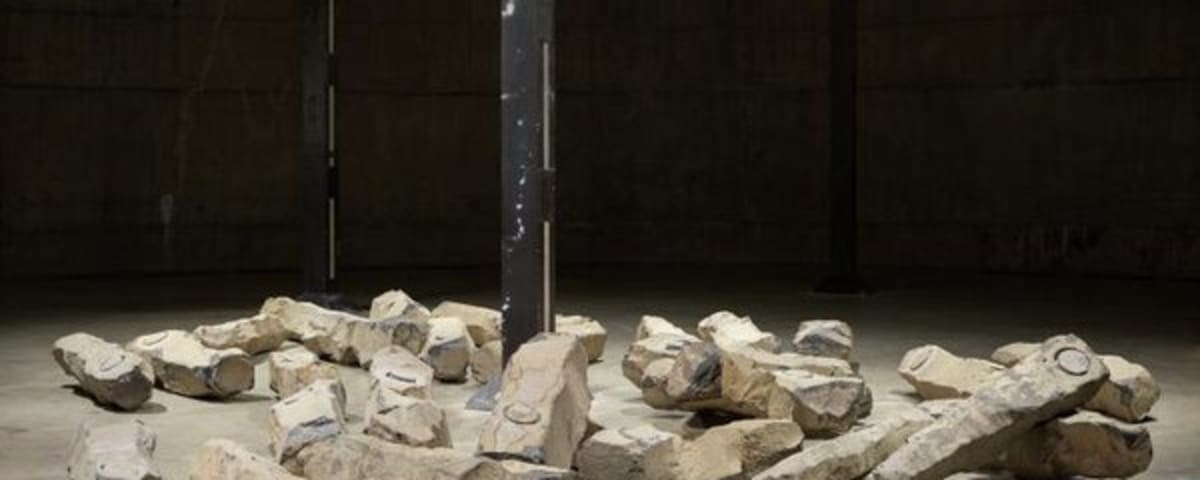
Environmental art is a broad term covering works that address social and political issues relating to the natural and urban environment. The term has two interrelated meanings. First, it describes art that physically engages with the landscape and space, including land art and large-scale interventions in nature. Second, and increasingly, it means ecologically conscious art—work that draws attention to environmental crisis, pollution, climate change, resource depletion and the relationship between humanity and nature. Unlike early land art, which sometimes altered the landscape by industrial means, contemporary environmental art often seeks to heal, to restore ecosystems or to propose sustainable solutions. Notable practitioners include Robert Smithson with his Spiral Jetty, Andy Goldsworthy, who works with fragile natural materials, and Hans Haacke and the Harrisons, whose projects combine art, science and activism. Environmental art reflects the growth of global ecological awareness and expands the understanding of the artist's role as a participant in social and environmental processes.
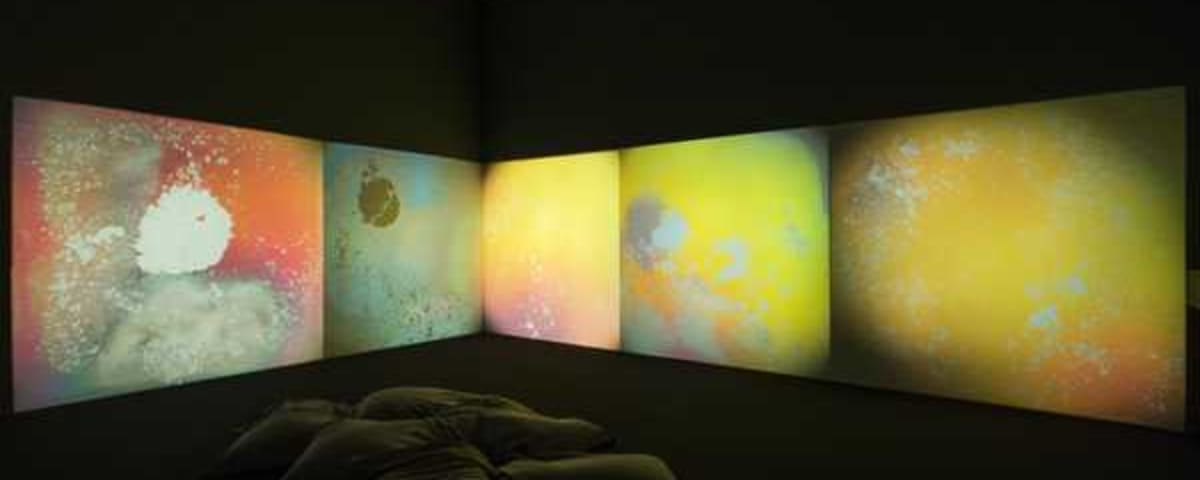
Environments is a term used as an alternative name for installation art. It refers to mixed-media constructions or assemblages, usually devised for a specific site and for a temporary period, which the viewer can physically enter and experience with the whole body. Unlike a traditional painting or sculpture contemplated at a distance, an environment surrounds the visitor, transforming them from a passive observer into a participant in the space. The concept became widespread in the late 1950s and early 1960s, when artists began to move beyond the frame and the pedestal to create total spatial situations. A key figure was Allan Kaprow, who linked the idea of environments directly to happenings; his early rooms filled with objects became a model for the genre. The tradition of environments also includes the work of Claes Oldenburg and Edward Kienholz, with his grim lifelike tableaux, as well as many experiments of Pop art and Neo-Dada. Historically the term marks an important stage in the shift from object-based art to spatial experience, which later crystallised into the independent field of installation.
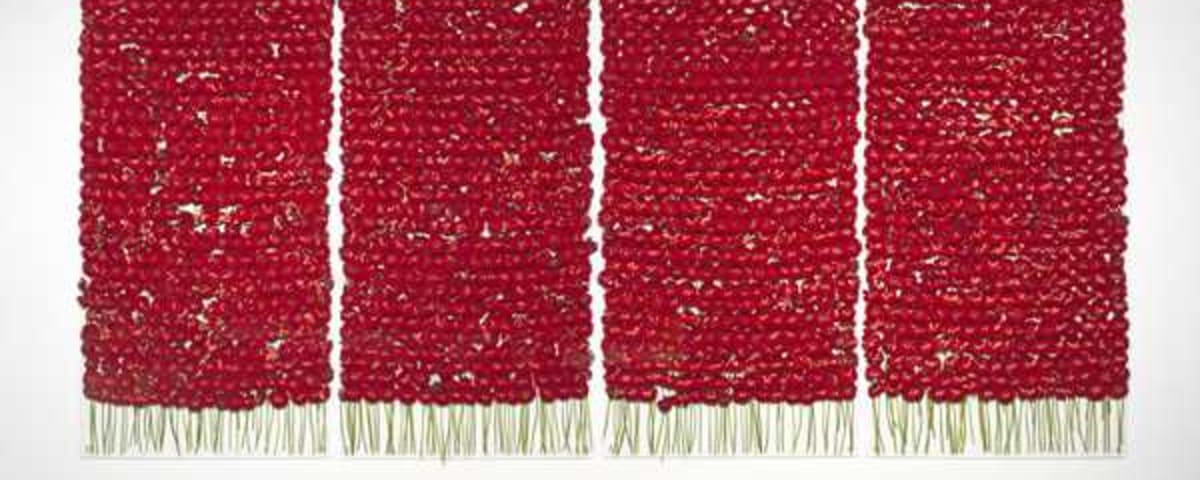
Ephemeral art is a general term for works that exist only for a short period of time and are not intended to be permanently preserved. Their very transience is part of the idea: a work may melt, wilt, crumble, be washed away or consumed, and this fated disappearance becomes a source of its meaning and beauty. Ephemeral art includes performances, happenings, works made from natural or fleeting materials such as ice, sand, flowers, smoke and food, as well as land art gradually undone by nature. Artists turn to ephemerality for many reasons: to resist commercialisation and the reduction of art to a commodity, to emphasise process rather than a finished object, or to reflect on the transience of life and memory. Notable examples include the fragile sculptures of Andy Goldsworthy made from leaves and ice, and the short-lived installations and documented actions of many conceptual artists. Often the only trace left of such a work is a photograph, video or description, which raises questions about the role of documentation in preserving art. Ephemeral art challenges the traditional identification of an artwork's value with its material permanence.

Ethno is a visual language that deliberately draws on the traditional folk ornament, craft and symbolism of a given culture, reinterpreting them within a contemporary visual context. Unlike purely authentic folk art, the ethno style is an authorial reflection upon heritage: the artist quotes, stylizes and adapts local motifs, preserving their recognizability while setting them into a new form. Its characteristic features are dense decorativeness, the rhythmic repetition of ornament, flatness, resonant contrasting colours, and a symbolism rooted in an agrarian and ritual worldview. In the Ukrainian context, ethno feeds on powerful sources: Petrykivka painting with its inventive floral tracery, block-printed cloth, paper-cut vytynanka, the art of the pysanka, weaving with geometric bands, and Hutsul ceramics and carving. These traditions are transferred into easel painting, graphic art, design, fashion and contemporary decorative art. Emblematic figures working at the boundary of the folk and the authorial include Maria Prymachenko with her fantastical bestiary, the Petrykivka masters Tetiana Pata and Fedir Panko, and numerous contemporary artists who build their identity on a dialogue with their roots. The ethno aesthetic combines ornamental generosity with emblematic concision, a festive palette with archaic depth of meaning. It is not museum conservation but a living mechanism of cultural continuity that lets tradition speak the language of the present and affirm national identity.

Expanded cinema is a term covering film, video, multimedia performance or immersive environments that go beyond the traditional cinema screening and reject the conventional one-way relationship between a passive audience and a flat screen. The term was popularised by the critic and theorist Gene Youngblood in his 1970 book Expanded Cinema, in which he understood new screen-based art forms as an extension of human consciousness. In practice, expanded cinema may project images onto multiple screens at once, onto three-dimensional surfaces, bodies or entire rooms; the screening is often combined with performance, live music, light effects and audience participation. Such experiments flourished in the 1960s within underground film and intermedia art, pursued by figures such as Stan VanDerBeek, Carolee Schneemann, the USCO collective and the scene associated with Andy Warhol. Expanded cinema anticipated the emergence of video art, moving-image installation and contemporary immersive media. It questioned the very boundaries of cinema, turning viewing into a spatial, bodily and collective experience rather than the contemplation of a narrative.
Expressionism is a visual language that places at its centre not outward verisimilitude but the subjective experience, inner state and emotional intensity of the artist. Emerging in the German-speaking world in the early twentieth century (the group Die Brücke in Dresden and Der Blaue Reiter in Munich), it opposed the Impressionist recording of an impression with the drive to express anxiety, despair, ecstasy or spiritual longing. Its formal marks are the deformation and sharpening of form, harsh and often dissonant colour, an energetic, nervous brushstroke, thickened contours and dramatic light. Composition is built on tension and instability; space is distorted for psychological effect, and body and face are contorted to lay bare feeling. Edvard Munch, with "The Scream," gave the movement its prototype; Ernst Ludwig Kirchner, Emil Nolde, Oskar Kokoschka and Egon Schiele developed its expressive figuration; Wassily Kandinsky passed through Expressionism on his way to abstraction. In Ukrainian art, kindred inflections are felt in the dramatic colourism of Oleksa Novakivskyi, in the tragic canvases of Anatol Petrytskyi and in the expressive imagery of interwar artists. Expressionism was closely bound to the woodcut, whose sharpness of line matched its emotional strain perfectly. The movement embraced painting, graphic art, literature, theatre and film, becoming the voice of a generation traumatized by modern civilization and war. Its influence nourishes Neo-Expressionism and the whole later tradition of art as confession.
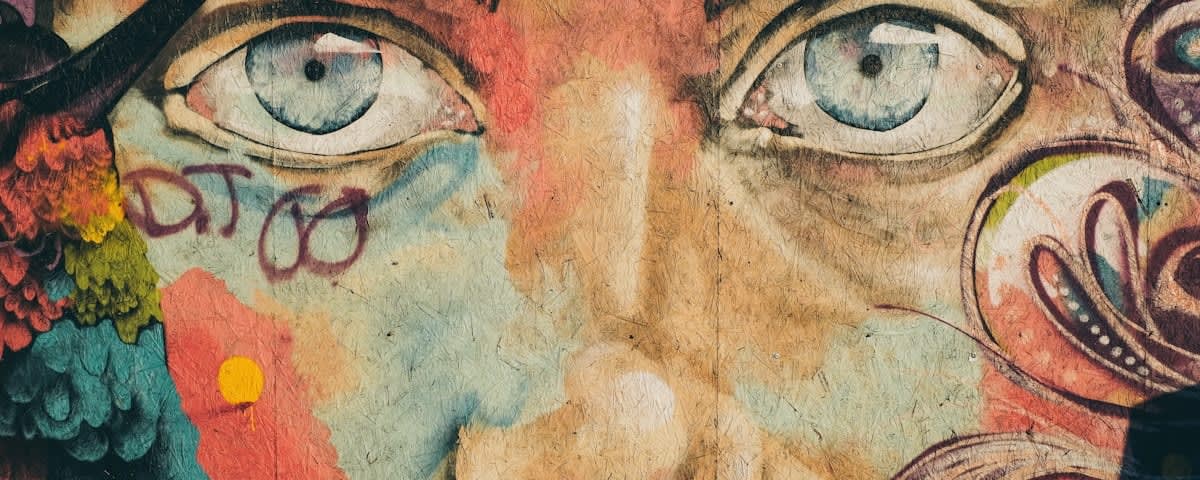
Fantastic realism is a movement associated above all with a group of artists who worked in the late 1940s and 1950s in Vienna, forming the so-called Vienna School of Fantastic Realism. Their work combined the flawless painterly technique of the old masters—fine glazing, meticulous detail and deep space—with an interest in contemporary artistic currents, Symbolism, mythology, religion and psychoanalysis. They gave form to ideas about the unconscious, dreams and archetypes in strange, sometimes grotesque images that fused convincing detail with impossible, phantasmagorical visions. The leading masters of the school were Ernst Fuchs, Rudolf Hausner, Arik Brauer, Wolfgang Hutter and Anton Lehmden. Their style was influenced by late Gothic art, Hieronymus Bosch, Pieter Bruegel and Surrealism, though, unlike Surrealist automatism, the Viennese deliberately cultivated painstaking craft and academic skill. Fantastic realism was an important instance of the post-war return to figuration and mythological imagination at a time dominated by abstraction, and it testified to the persistence of a visionary, symbolically rich tradition in twentieth-century European art.

Fauvism is the name given to the painting of Henri Matisse, André Derain and other artists in their circle from about 1905 to 1910. The tendency is characterised by a bold, often unnatural use of bright, pure colour, energetic visible brushwork and simplified, almost flat forms. The name comes from the French phrase les fauves, meaning wild beasts: the critic Louis Vauxcelles used it disparagingly when he saw the artists' paintings displayed beside a Renaissance-style sculpture at the 1905 Salon d'Automne in Paris. The Fauves freed colour from its descriptive, imitative function, using it as an autonomous means of expressing emotion and building the composition. Besides Matisse and Derain, the movement included Maurice de Vlaminck, Albert Marquet, Georges Rouault and Raoul Dufy. They were influenced by the Post-Impressionism of Van Gogh and Gauguin and by Divisionism. Fauvism was short-lived as a cohesive group, yet its emphasis on the autonomy of colour was decisive for the development of modern art and directly influenced German Expressionism and the later pursuit of abstraction in the twentieth century.
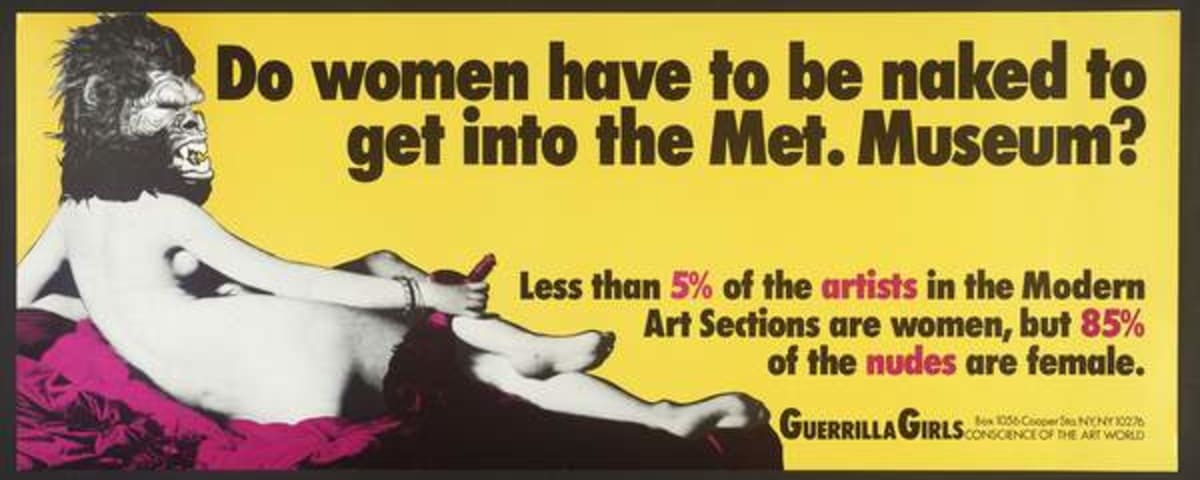
Feminist art is art made by women artists consciously in the context of the development of feminist theory from around 1970, and more broadly a tendency that questions the traditional, male-dominated understanding of art history. Its practitioners sought to make women's experience visible, to recover the forgotten names of women artists of the past, to reclaim the body, labour, domestic life and motherhood as valid artistic subjects, and to dismantle the hierarchy that dismissed so-called feminine crafts such as embroidery and textiles. A landmark figure was Judy Chicago, whose monumental installation The Dinner Party honours notable women throughout history; with Miriam Schapiro she founded an influential Feminist Art Program in California. Also important were the performances of Carolee Schneemann, the conceptual work of Martha Rosler, Cindy Sherman's photographic investigations of identity, and the collective actions of the Guerrilla Girls, who exposed gender inequality in museums. Linda Nochlin's essay Why Have There Been No Great Women Artists? provided a theoretical spur. Feminist art radically expanded ideas about who makes art, what it is about, and who has the right to write its history.

Figurative art is any form of modern art that retains distinct, recognisable references to the real world, and above all to the human figure. The term acquired particular meaning in the twentieth century as the opposite of abstract art: whereas abstraction rejects the depiction of recognisable objects, figurative art deliberately maintains a link with visible reality. Importantly, figurative does not mean simple copying of nature—it can be highly stylised, distorted or expressive, as long as figures, faces or objects remain recognisable within it. After the mid-twentieth-century dominance of abstraction there was a powerful return to figuration, represented among others by the expressive, disquieting canvases of Francis Bacon, the monumental fleshly images of Lucian Freud and the School of London, and various currents of Neo-Expressionism and new realism. The human figure remains one of the oldest and most enduring subjects of art, from prehistoric cave images to the present day. Figurative art testifies to the persistent need of artists to reflect on the human being, the body and the surrounding world, developing alongside abstraction rather than in denial of its existence.
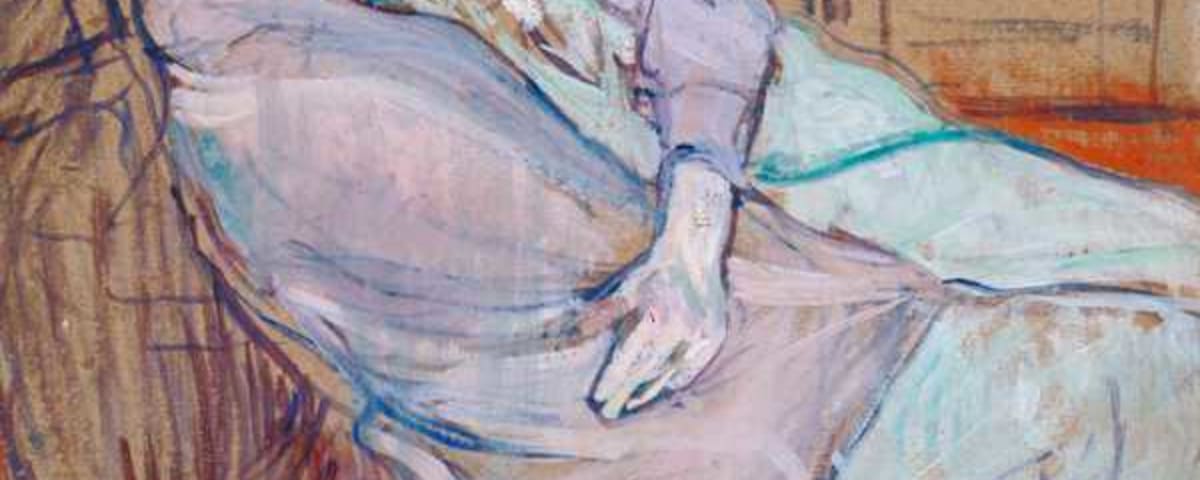
Fin de siècle is a French phrase used chiefly as a historical term to denote the end of the nineteenth century, and more precisely the decade of the 1890s. It conveys the distinctive atmosphere of that age: a mixture of refined weariness, pessimism and a sense of an era coming to a close, combined with a restless anticipation of renewal and of something new. Culturally, fin de siècle is closely bound to Decadence, Symbolism and Aestheticism; its hallmarks were a fascination with artifice, eroticism, mysticism, morbid beauty and the dissolution of established values. In the visual arts the mood of the period was embodied in Art Nouveau with its flowing lines, the graphic art of Aubrey Beardsley, and the Symbolist painting of Gustav Klimt and the Vienna Secession. It was a time of turbulent social change, scientific discovery, urbanisation and anxiety about the future. The turn-of-the-century atmosphere also nourished modern culture across Europe, where Symbolism, Secession and the aesthetics of formal renewal marked painting, graphics and literature. The term is still used to describe the tense, exquisite moods that accompany the turning of historical epochs.
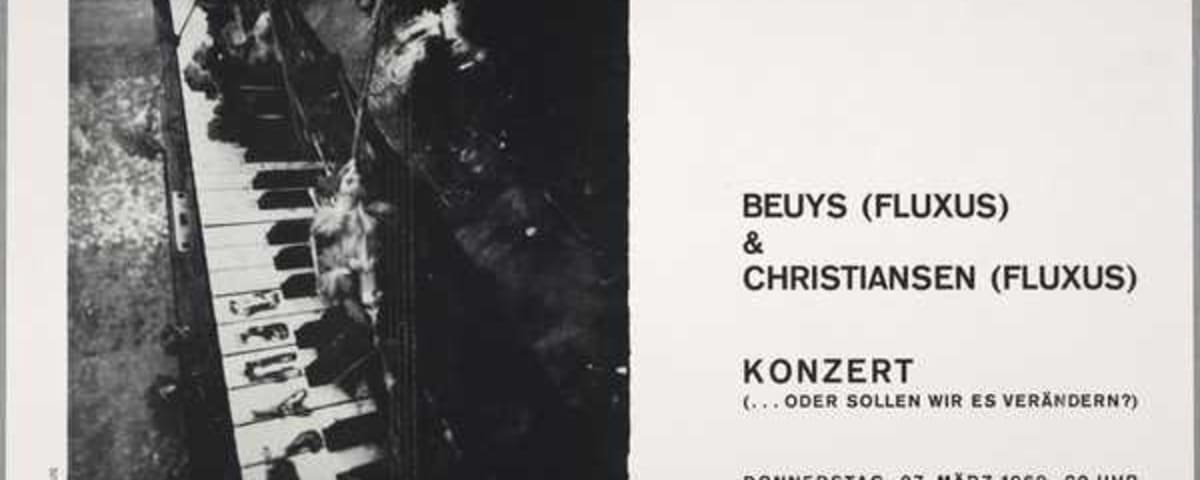
Fluxus was an international avant-garde group and, at the same time, a way of thinking that arose and flourished in the 1960s and in some forms continues today. Its name comes from the Latin word meaning flow, reflecting its members' commitment to constant change, lightness and elusiveness. Fluxus brought together artists, composers, poets and designers from many countries around the idea that art should be simple, everyday, witty and accessible, erasing the boundary between art and life. Its participants created events—short instruction scores for performing ordinary or absurd actions—as well as multiples, mail art, concerts, performances and publications. The movement's organiser and theorist was George Maciunas, and among its well-known members were John Cage as an inspiration, Yoko Ono, Nam June Paik, George Brecht, Dick Higgins and Joseph Beuys. Fluxus inherited the spirit of Dada and Cage's ideas about chance and everyday sound. Although the group was deliberately informal and impermanent, its influence on conceptual art, performance, intermedia and video art proved exceptionally deep and lasting.

Folk art is a collective form of creativity that grows out of traditional life, ritual and craft, is handed down from generation to generation and requires no academic training. Its aesthetic rests not on individual innovation but on a canon: established types of ornament, colour combinations and symbols that the maker varies within a shared tradition. Its characteristic features are flatness, decorative stylization, the rhythmic construction of pattern, bright local colour, symmetry, and a sacred symbolism of fertility, goodness and protection. Folk art is inseparable from utilitarian function: it lives in ceramics, weaving, embroidery, carving, the painting of chests and stoves, and icons on glass. In Ukraine its richness is exceptional — Petrykivka painting with its flowering branches, Opishnia and Kosiv ceramics, paper-cut vytynanka, the pysanka, and Poltava and Borshchiv embroidery. A separate chapter belongs to the naïve painting of self-taught masters: Maria Prymachenko with her fabulous beasts and flowers, Kateryna Bilokur with her hyperbolically lavish bouquets, and Nikifor Drovniak of Krynica. These artists, without professional education, created self-sufficient worlds of exceptional plastic power. Folk art is marked by sincerity of feeling, an organic bond with the natural cycle and a deep symbolic density. Each region cultivated its own recognizable manner — its colouring, repertoire of motifs and technique — by which a connoisseur can unerringly tell where an object came from. Here ornament is never mere decoration: it carries a protective, calendrical and ancestral semantics encoded in signs of the sun, the tree of life, the field-rhombus and the bird. Passed from master to apprentice and from mother to daughter, this tradition secured the continuity of collective memory and of an aesthetic canon over the centuries. It became a nourishing source for the professional avant-garde and for design, and it remains the foundation of national visual identity — proof that great art can be born beyond the walls of the academy.
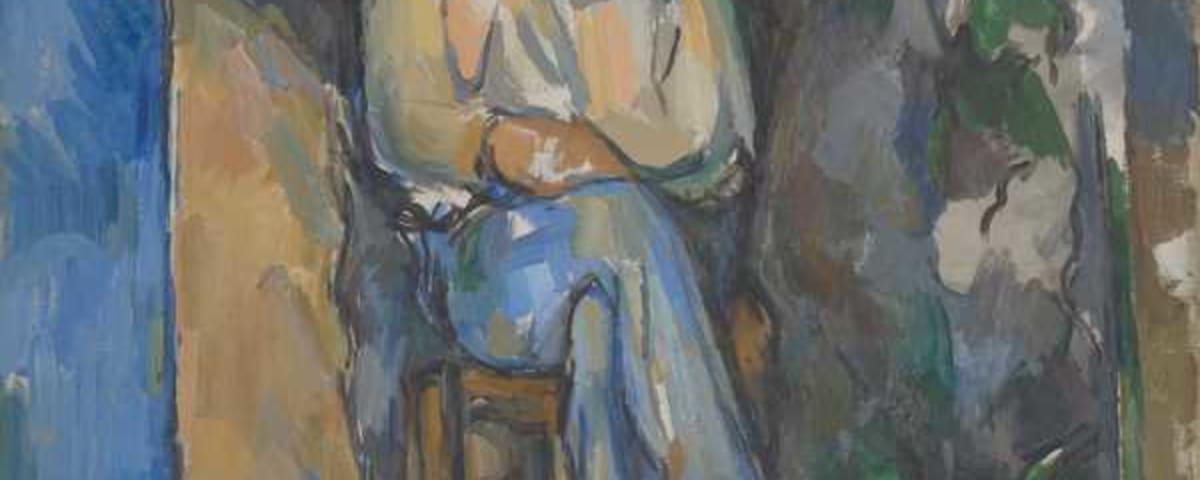
Formalism is an approach to the study and evaluation of art based solely on the analysis of its form—that is, the way a work is made and how it looks: composition, line, colour, texture, space and the relationship of parts. For a formalist, the artistic value of a work lies in its visual, formal qualities rather than in subject matter, narrative, historical context or social message. Formalism played a major role in the formation of modernist criticism and in the theoretical justification of abstract art, since formal analysis makes it possible to discuss works that lack recognisable imagery. Significant contributions to formalist thinking were made by the British critics Roger Fry and Clive Bell, who proposed the notion of significant form. In the mid-twentieth century the most influential advocate of formalism was the American critic Clement Greenberg, who championed the idea of the purity of each art form and interpreted the history of modernism as the progressive purification of painting toward its purely optical, flat properties. Formalism was later sharply criticised by contextual and social approaches, yet it remains a basic tool for describing and analysing the visual language of art.
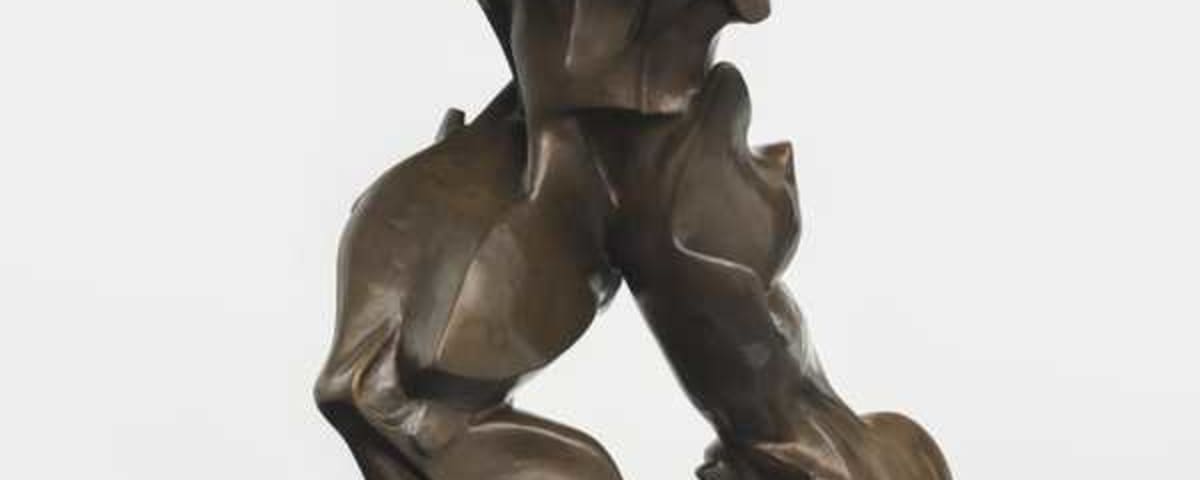
Futurism was an avant-garde movement proclaimed in 1909 by the manifesto of Filippo Marinetti, which glorified speed, the machine, the energy of industrial civilization and a break with the museum past. Its aesthetic sought to convey the dynamism, movement and simultaneity of sensation of the modern city. Its formal means were the fragmentation of form into successive phases of motion, "lines of force" that traced trajectories, the interpenetration of objects and space, the rhythmic repetition of contours, sharp diagonals and machine-like imagery. The Italian Futurists Umberto Boccioni, Giacomo Balla, Gino Severini and Carlo Carrà embodied the plasticity of movement and the vibration of light. The Ukrainian and East Slavic contribution was especially powerful: David Burliuk, the "father of Futurism" in the Empire, combined shock tactics with an uninhibited handling of surface; Oleksandr Bohomazov, in his treatise "Painting and Elements," developed a theory of dynamic form and created masterpieces of Cubo-Futurism such as "Lvivska Street in Kyiv" (1914); Aleksandra Exter synthesized Cubism and Futurism in explosive colour rhythms; the early Kazimir Malevich and Vadym Meller also gravitated to this circle. Cubo-Futurism became a distinctive East European version of the movement, closely tied to the poetic avant-garde. Futurism embraced painting, sculpture, graphic art, poetry, theatre and typography, proclaiming a cult of technological progress. Despite the political controversy of its Italian branch, the movement radically changed the depiction of time and motion and prepared the ground for Constructivism and kinetic art.
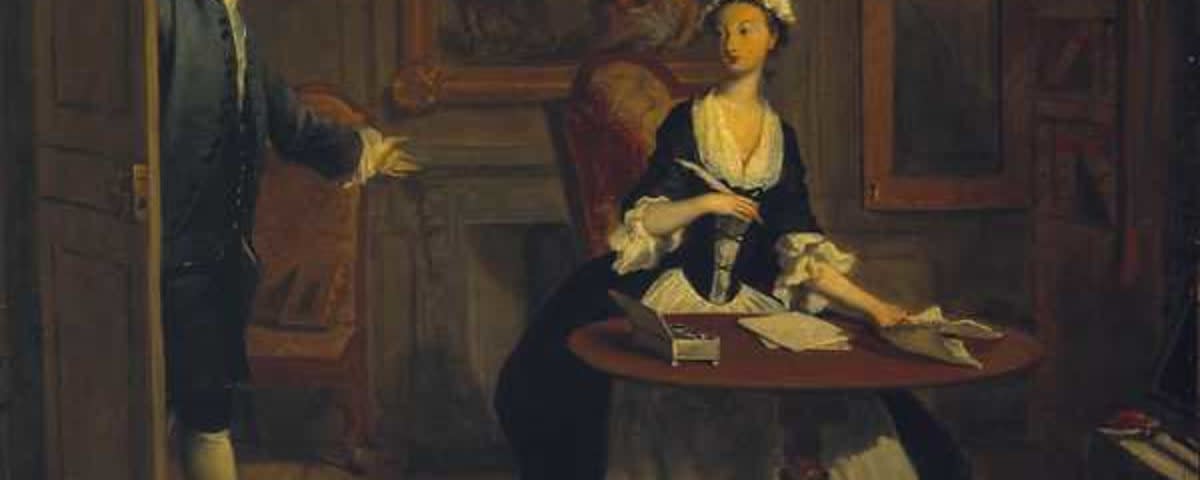
The term Georgian is applied to the styles that prevailed in Britain during the reigns of the four kings named George, from 1714 to 1830 (the period is sometimes extended to 1837). It is an age defined above all by the dominance of classicism and Palladianism in architecture and the decorative arts. The Georgian style is marked by symmetry, clear proportion, restrained elegance and reliance on ancient Roman and Renaissance models, disseminated by the Italian architect Andrea Palladio. Exemplars of Georgian architecture include the refined terraced town houses, squares and set-pieces of Bath and Edinburgh, as well as country houses. In furniture the age is celebrated for the names of Thomas Chippendale, George Hepplewhite and Thomas Sheraton, and in ceramics for the porcelain and earthenware of Josiah Wedgwood. In the fine arts it was a time of flourishing English portraiture and landscape: Joshua Reynolds and Thomas Gainsborough worked then, followed by John Constable and J. M. W. Turner. The end of the period also saw the elegant decorative Regency style. Overall the Georgian era is regarded as a classical, harmonious phase of British culture that laid the foundations of national taste in architecture and applied art.

German Expressionism was a stylistic movement of the early twentieth century in which the depiction of reality was deliberately distorted in order to express the artist's inner feelings, ideas and spiritual states. In contrast to Naturalism and Impressionism, which aimed to reproduce what was seen, the Expressionists sought to convey what was felt: anxiety, alienation, ecstasy and social criticism. To this end they used harsh, often discordant colours, deformed shapes, sharp angles and vigorous, brutal brushwork. The movement developed chiefly in two centres: the Dresden group Die Brücke (The Bridge), led by Ernst Ludwig Kirchner, Erich Heckel and Karl Schmidt-Rottluff, which tended toward primitivism and sharp, sensual imagery, and the Munich group Der Blaue Reiter (The Blue Rider), which was more lyrical and spiritual. Other important figures were Emil Nolde, Max Pechstein and Oskar Kokoschka. German Expressionism embraced not only painting and drawing but also woodcut, sculpture, literature, theatre and cinema. It reflected the crisis of European consciousness before and after the First World War and became one of the cornerstone tendencies of modernism, deeply influencing the later development of twentieth-century art.

Gothic was the visual language of the Western European Middle Ages, which took shape in the mid-twelfth century in France and prevailed until the fifteenth and sixteenth centuries, finding its fullest embodiment in the architecture of the cathedral. Its aesthetic core was an aspiration toward the vertical, the dematerialization of mass and the treatment of transcendent light as a symbol of the divine. Its structural basis lay in the pointed arch, the ribbed groin vault and the external flying buttress, which allowed the wall to be reduced to a skeleton and dissolved into vast stained-glass windows. The interior fills with coloured light, space is directed upward, and the silhouette of the church is articulated by towers, gables, pinnacles and openwork tracery. In sculpture the Gothic figure elongates, acquires an S-shaped curve, a gentle tenderness and individualized emotion, and its drapery becomes complex and mobile. Painting develops in stained glass, book illumination and the altarpiece, tending toward a refined line, gold grounds and a growing sense of space. Classic monuments include the cathedrals of Chartres, Reims and Amiens and Notre-Dame of Paris; the late "flamboyant" phase is marked by sumptuous ornament, while the "International Gothic" produced the exquisite works of the Limbourg brothers. In the Ukrainian lands Gothic influences are felt in the Catholic churches and castle architecture of Galicia, Volhynia and Transcarpathia, in Lviv and Kamianets. Gothic bequeathed a conception of art as synthesis, in which architecture, sculpture, stained glass and light merge into a single spiritual image.
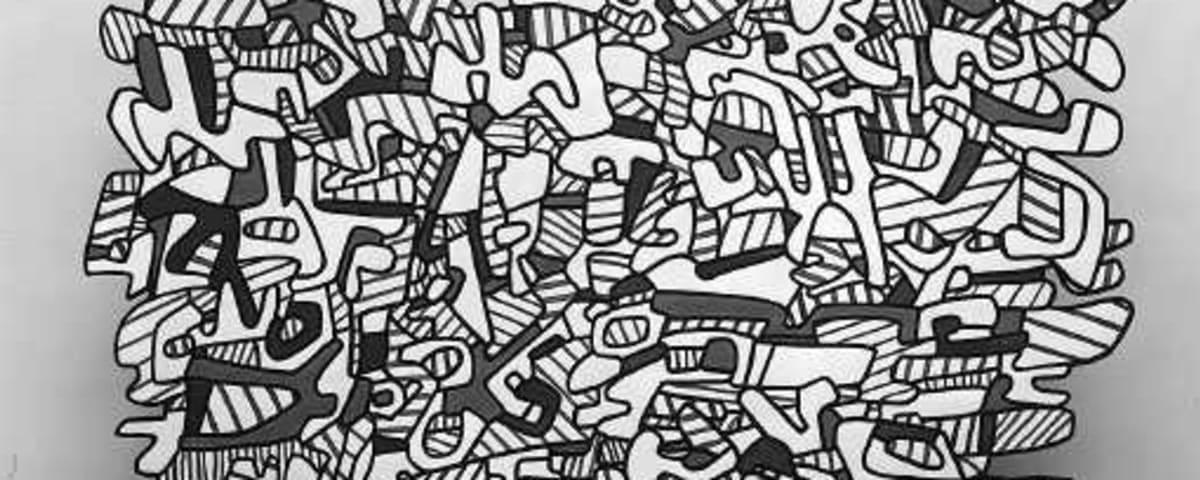
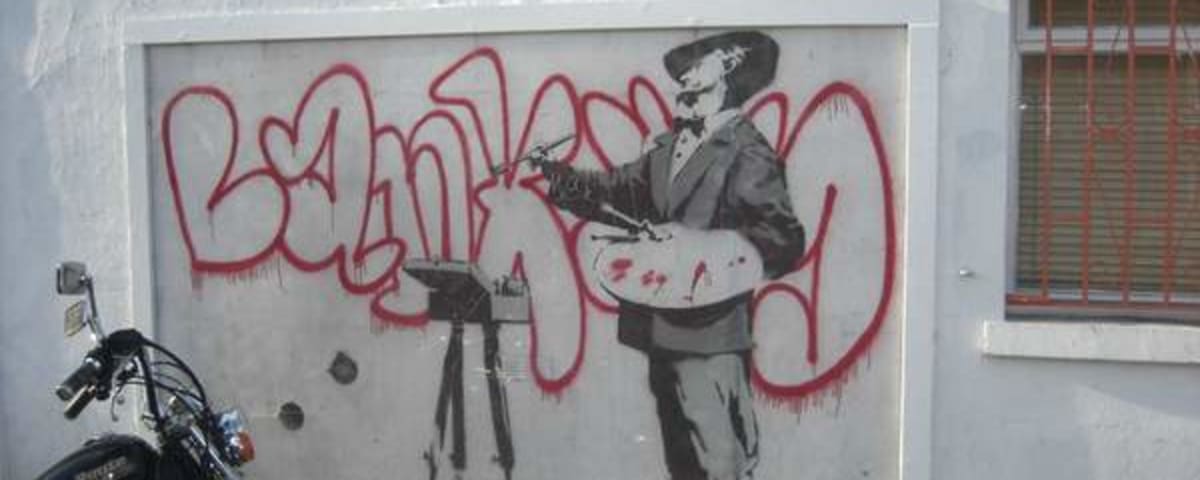
Graffiti art is imagery or text, usually applied to buildings and other urban surfaces, most often using aerosol spray paint. Modern graffiti as a cultural phenomenon took shape in the late 1960s and 1970s in the poorer districts of American cities, above all New York and Philadelphia, where young people began writing their nicknames, or tags, on walls and subway trains. Simple signatures soon grew into complex, colourful multi-letter compositions—wild style and monumental pieces. Graffiti was closely linked to hip-hop culture and often had a rebellious, illegal character, raising questions about the right to public space. In the 1980s graffiti entered the gallery art world: landmark figures in this transition were Jean-Michel Basquiat, who began with street writing under the tag SAMO, and Keith Haring with his instantly recognisable pictographic images. The tradition was later continued by street-art culture, notably the anonymous British artist Banksy. Graffiti art remains a contested phenomenon—viewed at once as vandalism and as a powerful form of popular, democratic self-expression that has significantly influenced visual culture, design and contemporary art.
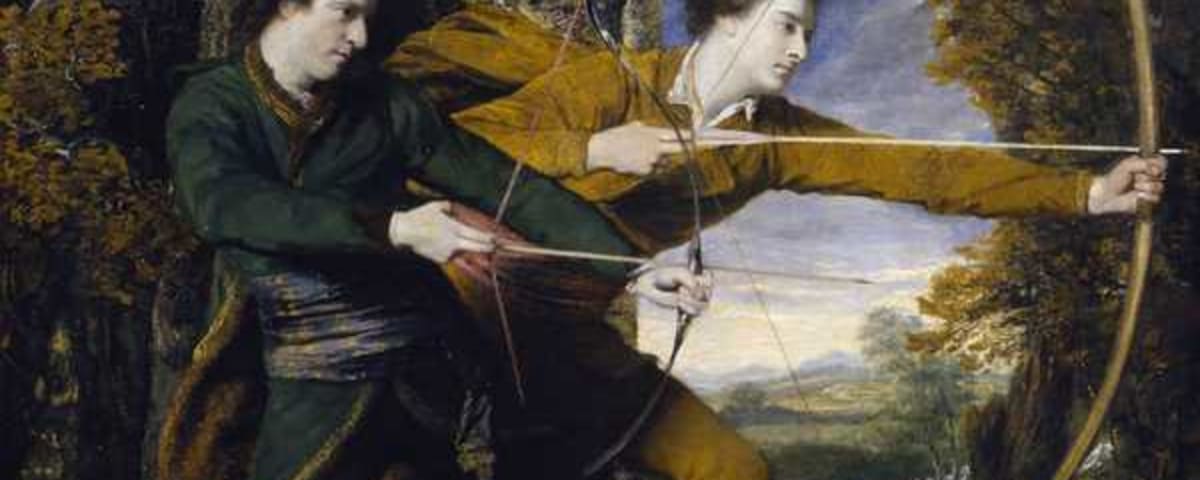
Grand manner is an English term for the highest, most noble style of art in academic theory, based on an idealised classical approach. It involves the depiction of elevated, edifying subjects—from history, mythology, religion or literature—in a monumental, heroic form. Rather than copying nature exactly with all its flaws, the grand manner artist was expected to improve and generalise it, raising the particular to the level of the ideal and universal in imitation of the models of antiquity and the masters of the High Renaissance, above all Raphael. The concept derives from the theory of the hierarchy of genres, in which history painting was regarded as the highest and worthiest kind of art. In Britain the ideas of the grand manner were most fully articulated by Joshua Reynolds, the first president of the Royal Academy, in his celebrated Discourses, where he urged young artists to model themselves on great history painting. Although Reynolds himself was famous chiefly as a portraitist, he sought to give his portraits a heroic elevation. The grand manner reflected the conviction that the task of art was not to entertain but to raise the viewer morally and spiritually, and it remained an influential ideal until the decline of the academic tradition in the nineteenth century.
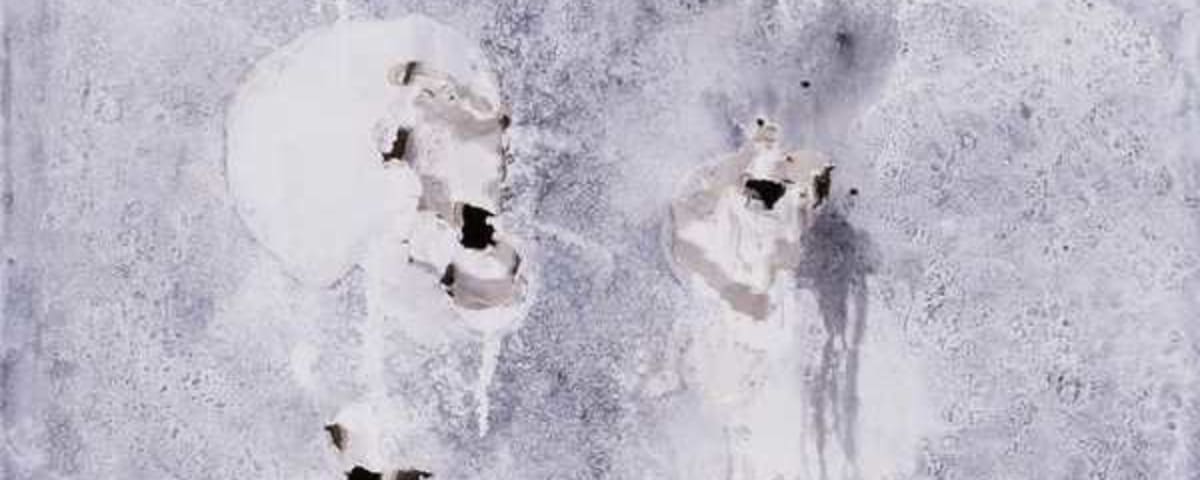
Gutai was a Japanese avant-garde group founded in 1954 in the Osaka region by the artist Jiro Yoshihara together with younger artists. Its full name, Gutai Bijutsu Kyokai, means Concrete Art Association; the word gutai signifies concreteness or embodiment. The group's ideas and approaches radically anticipated the performative, conceptual and process-based art practices of the 1960s and 1970s. Yoshihara urged his members never to imitate others and to make what had never existed before, giving primary importance to the direct, physical engagement of the artist with the material. The Gutai artists painted with their bodies, feet and machines, threw paint, tore through canvases with their own bodies, and staged performances outdoors and in theatres. Landmark actions included Kazuo Shiraga painting with his feet while suspended above the canvas, Atsuko Tanaka's Electric Dress made of glowing lamps, and Saburo Murakami bursting through sheets of stretched paper. Gutai engaged actively with the international scene, including European gestural art. The group became one of the most important post-war avant-garde movements in Asia and is still valued for its pioneering fusion of painting, performance and material experiment.
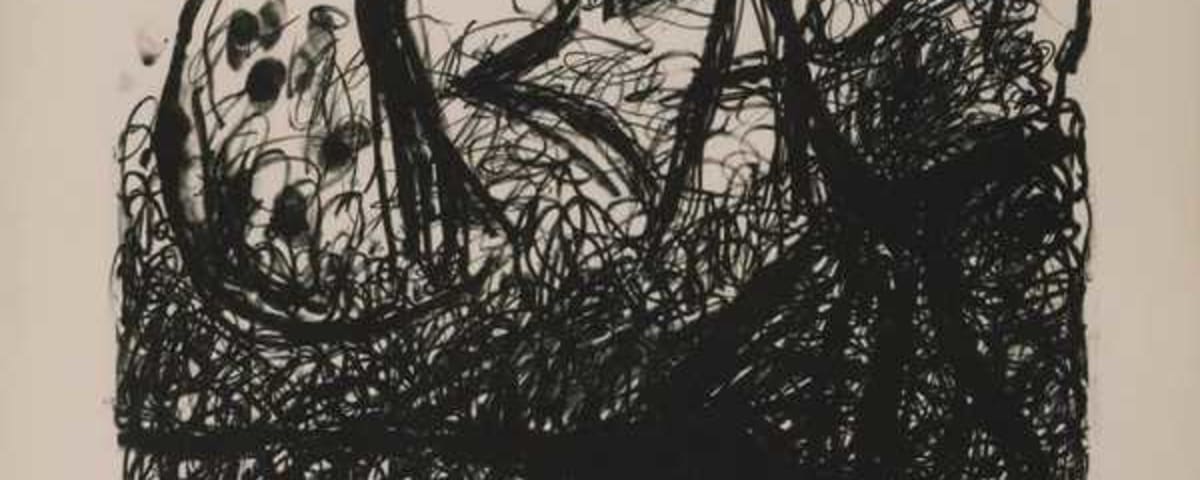
A happening is a theatrical event created by artists, originally in America in the late 1950s and early 1960s, that combined elements of visual art, theatre, music and everyday life in an unplanned or partly improvised action. Unlike a traditional performance, a happening usually had no clear plot, stage or division between actors and audience: participants often became co-creators of the event, drawn into actions, movement and immediate experience. The term was introduced and established by the American artist Allan Kaprow, who in 1959 staged an event in a New York gallery called 18 Happenings in 6 Parts. The origins of the genre lie in Dada, in the composer John Cage's ideas about chance and everyday sound, and in action painting. Happenings emphasised process, the body, immediacy and the unrepeatable nature of experience rather than the creation of a lasting object, which links them to ephemeral art. The genre was closely connected with the Fluxus movement and became an important precursor of performance as an independent art form. The happening radically expanded the boundaries of art, erasing the line between the artwork and life and between the artist and the public.
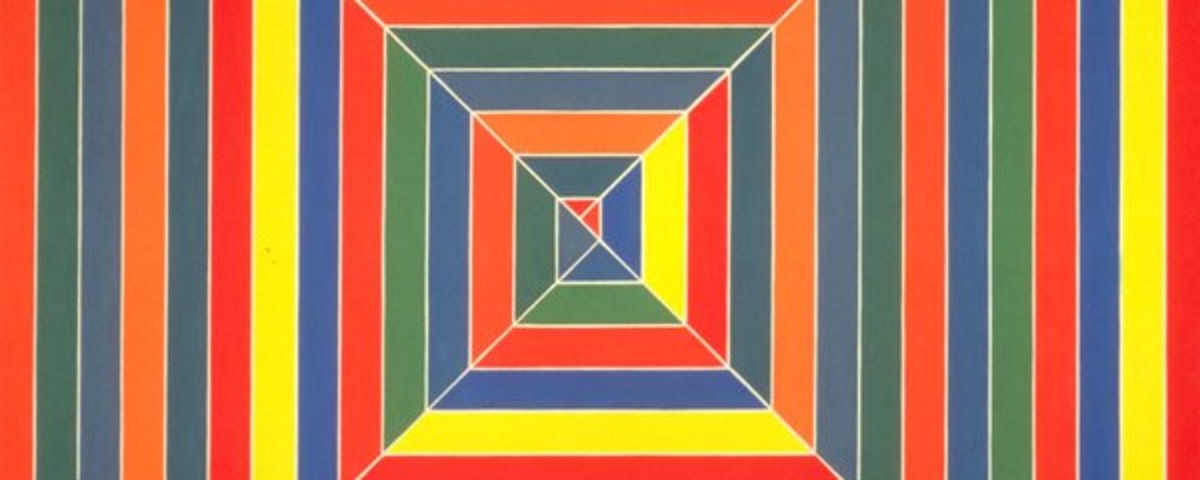
Hard-edge painting is an approach to abstract painting that became widespread in the 1960s and is characterised by areas of flat, even colour with sharp, clear, hard edges between them. The coloured planes meet one another without blurred transitions, visible brushwork or textural effects, so that the surface of the picture appears smooth, impersonal and carefully calculated. The term was proposed by the California critic Jules Langsner in the late 1950s to describe crisp, geometric painting set against the emotional, gestural manner of Abstract Expressionism. Hard-edge painting stresses the integrity of the picture as a flat object rather than a window onto depth, and often reduces the composition to a few large colour forms. Among its leading practitioners were Ellsworth Kelly, Kenneth Noland, the early Frank Stella and Al Held; it is also associated with the tendencies of Colour Field painting and Minimalism. The approach reflected the desire of post-war abstract art for clarity, objectivity and control, freeing colour and form from gesture and personal emotion in favour of a pure optical effect.
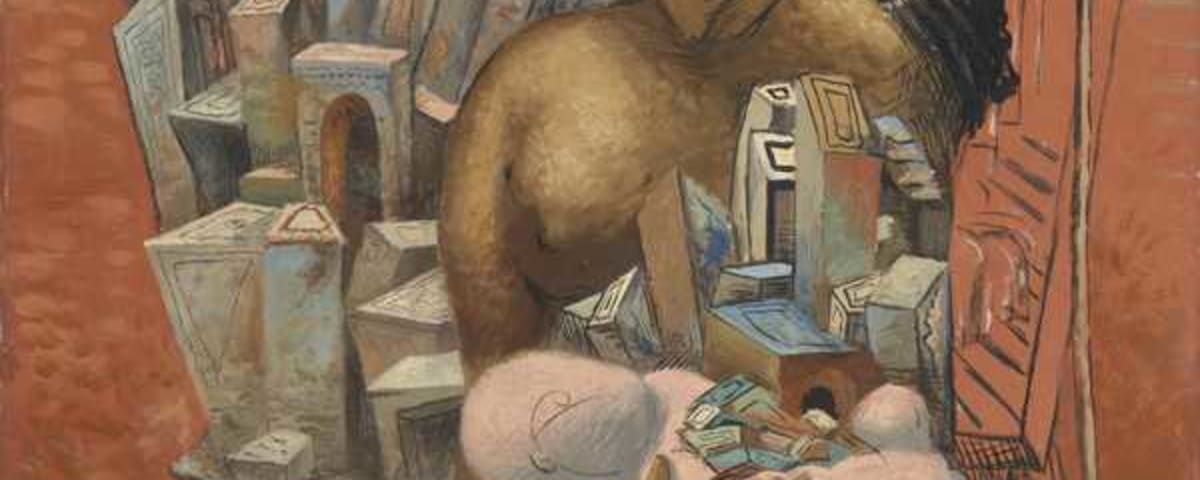
Il Novecento Italiano (Italian for The Italian Twentieth Century) was an Italian art group formed in Milan in 1922 with the aim of reviving the tradition of large-scale painting and sculpture in a classical, monumental style. The movement arose within the wider European return to order after the First World War, when many artists abandoned radical avant-garde experiment in favour of clarity, weightiness of form and a connection to the Italian classical heritage, from Roman antiquity to the masters of the early Renaissance. The group's ideologist and promoter was the critic and collector Margherita Sarfatti, and among its artists were Mario Sironi, Achille Funi, Anselmo Bucci and Ubaldo Oppi. Their painting is marked by simplified, sculptural volumes, static compositions, muted colour and a sense of solemn stillness. Novecento gained official recognition under the Fascist regime, with which some of its members were associated, which later complicated assessment of the movement. Nonetheless, Il Novecento Italiano remains an important example of interwar Neoclassicism and a testimony to the complex relations between modern art, tradition and politics in the twentieth century.

Impressionism is a visual language that took shape in France in the 1860s and 1870s and revolutionized European painting by placing at its centre the immediate visual impression of a changing world. Its aesthetic core was the desire to seize a fleeting instant, the play of light, atmosphere and the vibration of air. The artists left the studio for the open air (plein air) and began to paint what the eye sees under a particular light rather than what the mind knows. Its formal marks are a broken, vibrating brushstroke, a bright, high-keyed palette without black shadows, the optical mixing of pure colours, the dissolution of contour, and a fragmentary composition seemingly caught "by chance," shaped by the influence of photography and the Japanese print. Its motifs are landscape, water and reflections, city boulevards, scenes of leisure and the portrait in a natural setting. Its founders were Claude Monet, with his series of haystacks, cathedrals and water lilies, Auguste Renoir, Camille Pissarro, Edgar Degas with his dynamism of movement, and Berthe Morisot; the movement's name came from Monet's painting "Impression, Sunrise." In Ukrainian art the Impressionist discoveries were creatively absorbed by Mykola Burachek, by Oleksandr Murashko, whose canvas "The Carousel" glows with light, by Abram Manevich and Petro Levchenko. Impressionism liberated colour and brushwork, changed the very notion of a finished work, and opened the road to Post-Impressionism and all subsequent modern painting, remaining one of the public's most beloved chapters in the history of art.
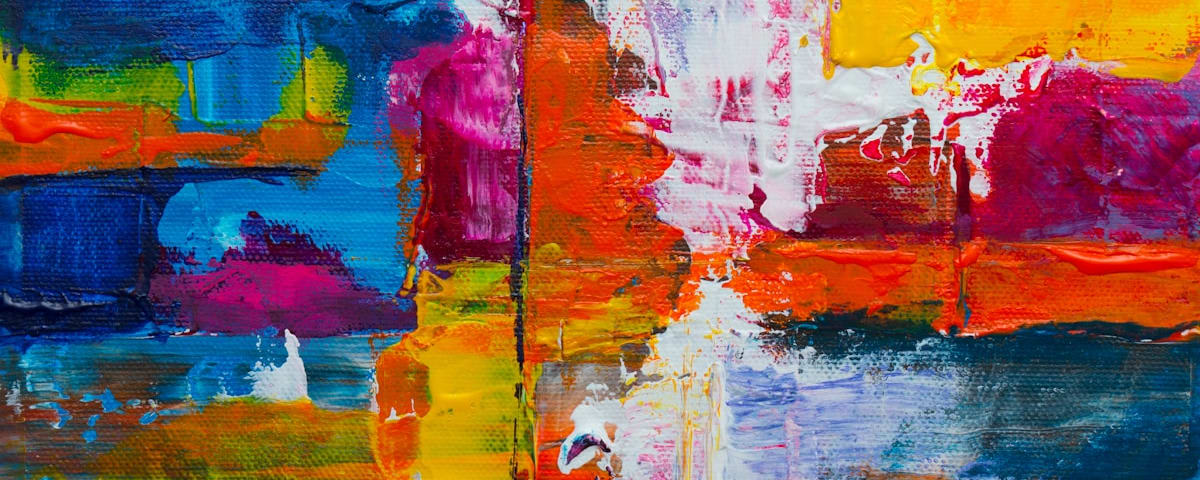
Indigenism (from Spanish indigenismo) is a cultural and artistic movement that arose in Latin America in the early twentieth century and placed indigenous peoples, their heritage, identity, and social struggle at its centre. It emerged as a reaction against European academic art and colonial erasure, asserting the dignity and aesthetics of pre-Columbian civilisations — the Aztecs, Maya, and Inca. In the visual arts, indigenism found its most vivid expression in Mexican muralism: Diego Rivera, José Clemente Orozco, and David Alfaro Siqueiros celebrated the nation's indigenous roots in monumental frescoes. In Peru the movement was led by the painter José Sabogal, who depicted Andean peasants with deep respect. Indigenism fused art with politics, demanding recognition of indigenous rights. It was an important contribution to the search for national and cultural identity beyond imposed colonial canons, and it inspired later movements for the decolonisation of culture.
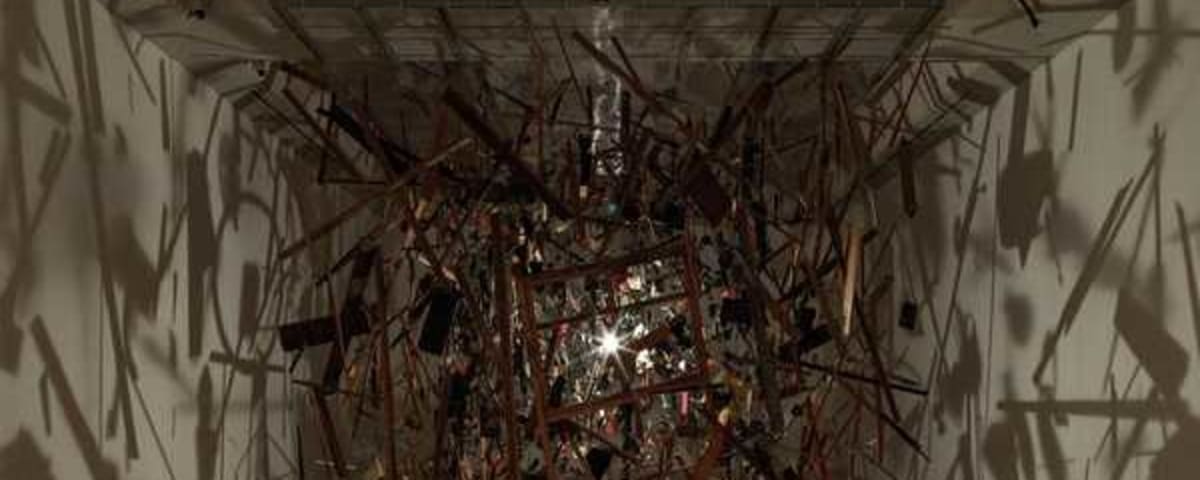
Installation art is a form of art consisting of mixed-media constructions or assemblages, usually intended for a specific site and for a temporary period of time. Instead of a single painting or sculpture contemplated at a distance, an installation organises an entire space that the viewer physically enters and experiences with the whole body, in movement and over time. The artist may use the most varied means—found objects, light, sound, video, text and natural materials—combining them into a single environment with its own atmosphere and meaning. The origins of the genre lie in Dada and Surrealist displays, in Kurt Schwitters's Merzbau and in the environments of the late 1950s; as a distinct, widely recognised form, installation established itself in the 1960s and 1970s and became one of the leading practices of contemporary art. Among its well-known makers are Ilya Kabakov with his total installations, Louise Bourgeois, Ai Weiwei and Yayoi Kusama with her mirror rooms. Installation emphasises experience, context and viewer participation rather than the creation of an autonomous object, and it reflects contemporary art's desire to move beyond traditional media and to work directly with space and perception.
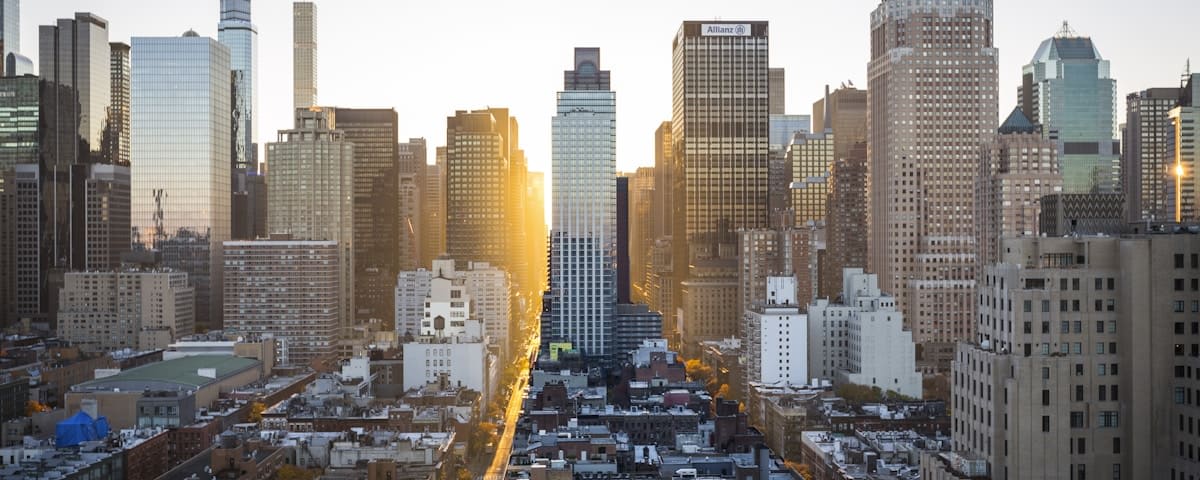
The International Style is the dominant strain of architectural modernism, named by American critics Henry-Russell Hitchcock and Philip Johnson in 1932 in connection with an exhibition of modern architecture at the Museum of Modern Art in New York. It is defined by radical functionalism, the rejection of ornament, skeletal frames of glass, steel and reinforced concrete, clean rectilinear volumes, ribbon windows, white or neutral surfaces, and compositions that are asymmetrical yet rigorously balanced. Its theoretical and practical foundations were laid by masters of the Bauhaus and the European avant-garde — Walter Gropius, Ludwig Mies van der Rohe and Le Corbusier. The slogan 'form follows function' turned architecture into a universal language suited to any place on earth, hence the name. After the Second World War the style spread to office towers, government buildings and housing estates across many countries, shaping postwar urban construction including that of Ukrainian cities. Critics later charged it with cold impersonality, opening the way for the postmodern reaction that followed.
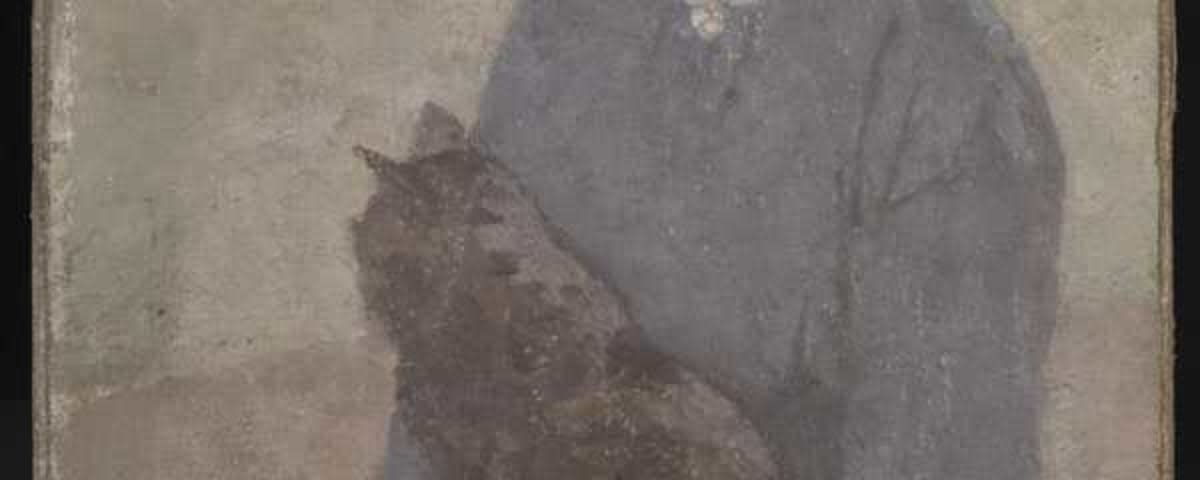
Intimism (French intimisme) is a French painting tendency of the late nineteenth and early twentieth centuries that depicts quiet, cosy domestic scenes within the private space of the home: women reading, laid tables, lamp-lit interiors, family rooms. Its most consistent exponents were Pierre Bonnard and Édouard Vuillard, both associated with the Nabis group. Their canvases are distinguished by a warm, muted palette, a small shimmering touch, a decorative densification of the surface, and close attention to the patterns of wallpaper, fabrics and pools of light. In place of heroic or historical subjects, the intimists raised the everyday and the unremarkable to the level of aesthetic meditation, continuing the interior genre of seventeenth-century Dutch painting while absorbing the lessons of Impressionism. The term stresses not only the chamber scale of the motifs but also a particular emotional closeness between viewer and scene. Intimism influenced the modern painting of everyday life across many European schools, including the Ukrainian.
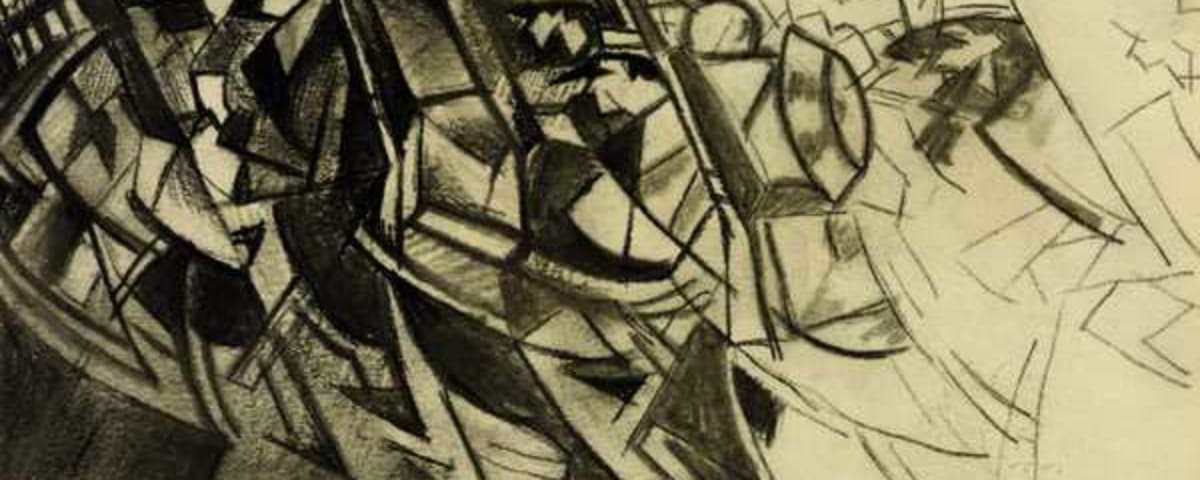
Kinaesthetic art is a tendency that explores the body in motion and the bodily sensation of movement as its central subject and means of expression. Unlike kinetic art, in which the objects themselves move, kinaesthetic art focuses on proprioception — the internal sense of the position and displacement of one's own body, on muscular effort, balance and gesture. The term was first associated with Futurism and later became bound up with performance, dance, the happening and practices that emerged in the second half of the twentieth century, when artists began to treat the movement of viewer or performer as an autonomous material. The kinaesthetic approach intersects with developments in experimental dance, notably postmodern choreography, and with installations that prompt the visitor to move, lean or balance in order to perceive the work. Here emphasis shifts from purely visual contemplation to a bodily, somatic experience of space. Kinaesthetic art widens the definition of an artistic medium by placing the living, moving, sentient human body at its centre.
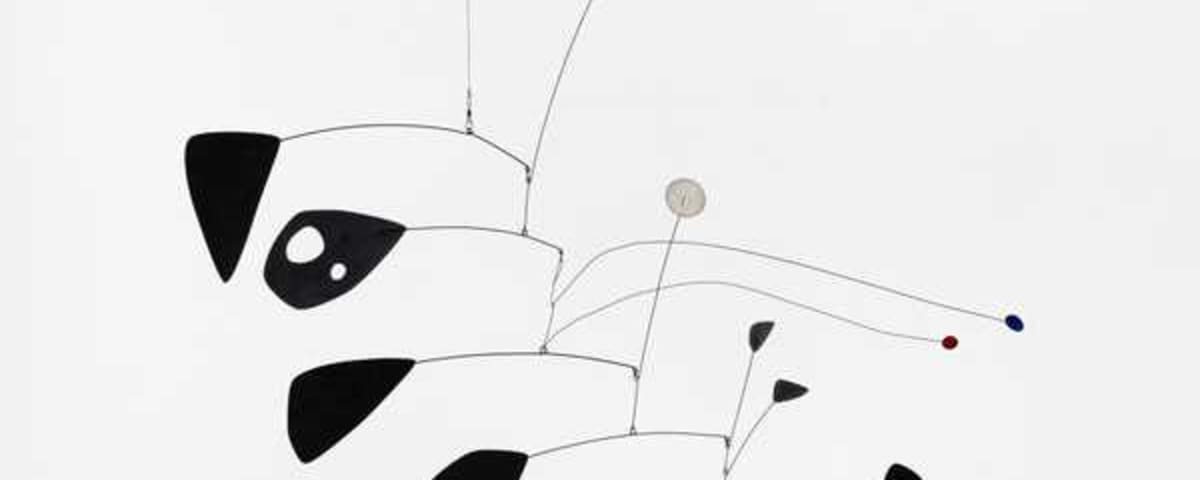
Kinetic art is a movement in which motion is the defining means of artistic effect: works either genuinely move — by means of motors, air currents, magnets or manual intervention — or create the illusion of movement through optical effects. The origins of the tendency reach back to the Constructivist experiments of Naum Gabo and Antoine Pevsner and to Marcel Duchamp's 'Bicycle Wheel' (1913). Kinetic art flourished in the 1950s and 1960s, building on the mobile, which Alexander Calder had been making since around 1930 — a suspended moving sculpture so finely balanced that the slightest breath of air sets it in motion. Other key figures include Jean Tinguely, with his self-destroying machines, Jesús Rafael Soto and Julio Le Parc. Kineticism is closely interwoven with Op art, in which movement is simulated by static geometric patterns. The art of movement reflected a fascination with technology, energy and time as an artistic dimension, dissolving the traditional idea of sculpture as a motionless, eternal object and drawing the viewer into a dynamic, changing spectacle.

Kitsch is an artistic category and aesthetic denoting mass-produced, replicated goods aimed at an undemanding taste, easy emotional sentiment and instant effect in place of depth or innovation. The term took hold in the late nineteenth and early twentieth centuries alongside the growth of the entertainment and consumer industries. The kitsch aesthetic rests on excessive sentimentality, sweetness, ostentatious luxury and the imitation of "high" art in a cheap, simplified form. Its formal marks are garish, saccharine colours, a surfeit of ornament and gilding, formulaic touching subjects (weeping children, kittens, romantic sunsets), exaggerated showiness and the mechanical copying of acknowledged masterpieces. Modernist theorists, notably Clement Greenberg in his programmatic essay "Avant-Garde and Kitsch" (1939), opposed kitsch to genuine art as its surrogate and a symptom of mass culture. In the second half of the twentieth century, however, attitudes grew more complex: Pop Art and later postmodernism began deliberately to play with kitsch, to quote it ironically and to aestheticize "bad taste." Jeff Koons transformed kitsch souvenirs and toys into monumental objects, Pierre et Gilles created a glossy camp imagery, and the notion of "camp" legitimized a love of deliberate excess. Thus kitsch turned from a term of abuse into a fully-fledged instrument of artistic strategy. Today it remains an important field for reflection on the mechanisms of taste, the mass production of images and the boundary between irony and sincerity in consumer culture.
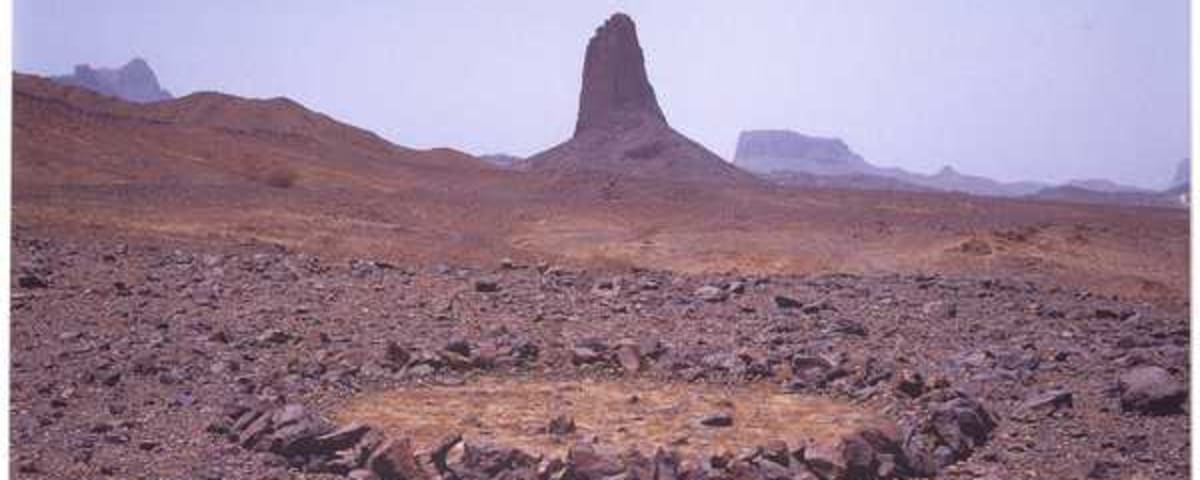
Land art (earth art) is a tendency that arose in the late 1960s in the United States and Europe, consisting in the making of artworks directly in the natural landscape: artists shape earthen mounds, trenches, spirals and lines, or arrange structures from stones, soil, branches and other found materials. Land art was born as a revolt against the commercialisation of art and the museum-gallery system: works are often sited in remote deserts or fields, impossible to buy and destined to be gradually eroded by the elements, so that they survive only in photographs and documentation. The textbook example is Robert Smithson's 'Spiral Jetty' (1970) on the Great Salt Lake. Leading practitioners include Nancy Holt, Michael Heizer and Walter De Maria, and in Europe Richard Long and Andy Goldsworthy, whose delicate interventions underscore the passage of time and natural cycles. Land art raised questions of ecology, scale, duration and the relationship between humanity and environment, becoming a precursor of contemporary ecological art.
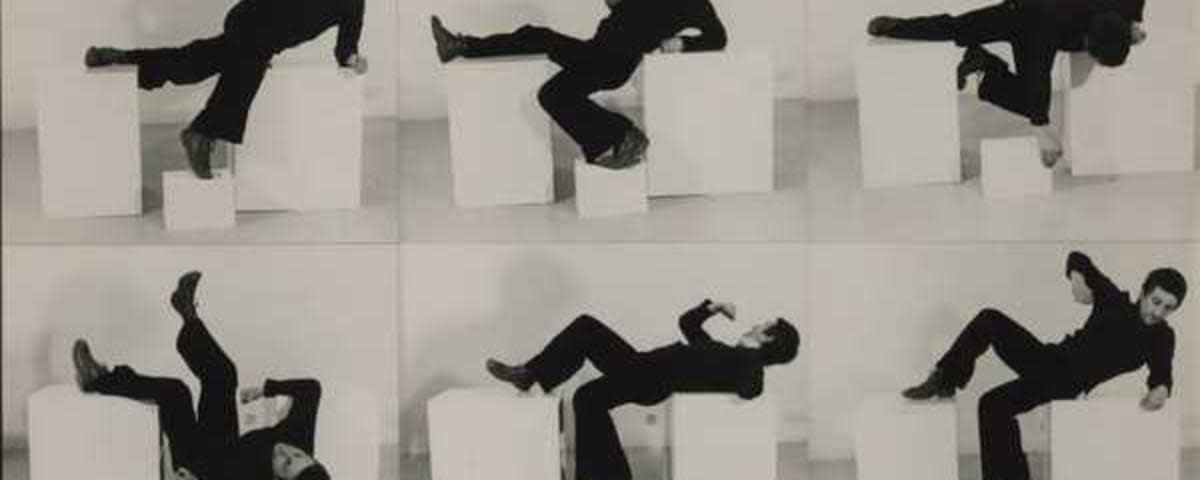
Live art is a broad category that encompasses performance carried out by an artist or group of artists as a work of art in its own right, usually innovative and experimental in nature. The term is current above all in the British context and serves as an umbrella for practices that do not fit the traditional bounds of theatre, dance, visual or media art: actionism, body art, interactive events, durational performances, hybrid interdisciplinary acts. A defining feature of live art is the presence of artist and viewer in the same time and space — immediacy, ephemerality and the unrepeatability of the event. Its origins reach back to the Futurist and Dada evenings of the early twentieth century, the happenings of the 1960s and the body art of the 1970s. In live art the artist's body often becomes the principal material and carrier of meaning, while risk, endurance and real time acquire artistic weight. Such practices raise questions of identity, gender, power and corporeality, expanding the notion of what art can be at all.
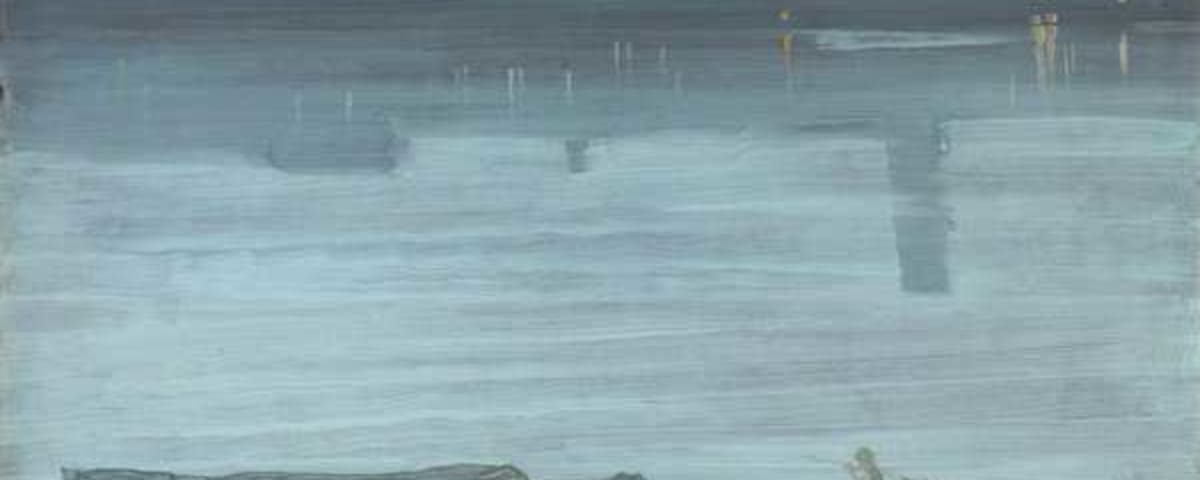
Luminism is a style of American landscape painting of roughly 1830 to 1870, closely linked to the Hudson River School and concentrated on the refined depiction of light and its effect on atmosphere. The luminists sought to render a clear, soft, almost crystalline light flooding across wide vistas, calm expanses of water, coastlines and valleys. Characteristic features of the style are horizontal compositions, brushwork reduced to near invisibility, careful tonal gradation of the sky, and a sense of stillness, immobility and almost meditative calm. Painters deliberately concealed the traces of the brush so that the surface of the canvas seemed smooth and the viewer's attention rested wholly on the light. The leading masters of luminism are considered to be Fitz Henry Lane, Martin Johnson Heade, John Frederick Kensett and Sanford Robinson Gifford. The term was applied retrospectively by art historians in the mid-twentieth century. Luminism reflected Transcendentalist ideas of nature as a manifestation of the divine and became a defining chapter of the national artistic tradition of the United States.
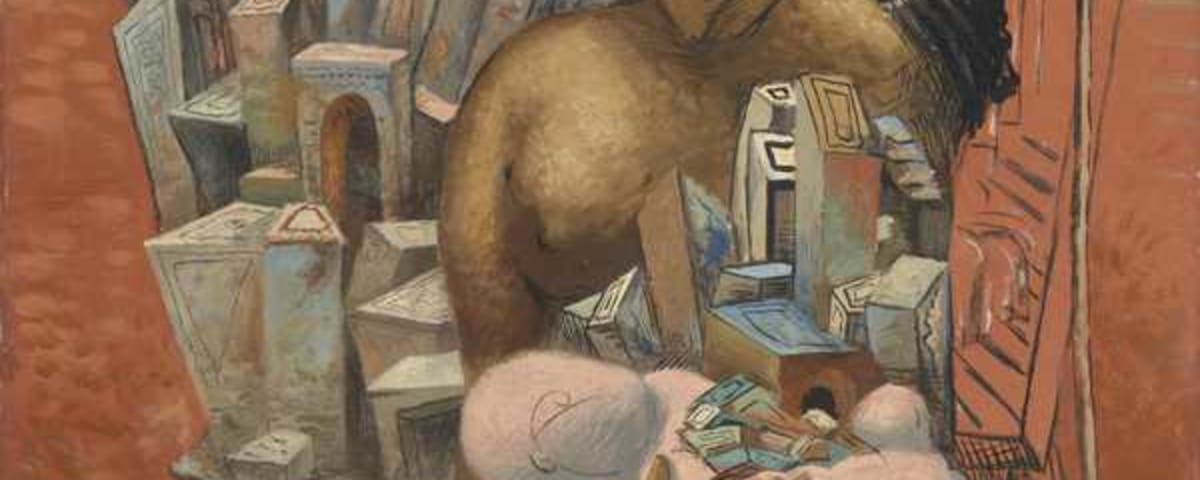
Magic realism is a term coined by the art historian and critic Franz Roh in 1925 to describe a strain of postwar European painting in which the world is depicted with emphatic clarity and realistic precision, yet with a sense of mystery, wonder or dreamlike estrangement. Unlike Surrealism, which released the unconscious and the illogical, magic realism preserves the clear, almost photographic distinctness of objects while endowing the ordinary with an aura of secrecy. Roh linked it to the New Objectivity (Neue Sachlichkeit) tendency in German art. The concept later spread to artists in various countries, including the American scene, and more widely still to literature, where magic realism became defining for Latin American prose. In painting, magic realism is distinguished by sharp detail, stillness, strange juxtapositions of familiar objects and a sense of muffled tension beneath the surface of the everyday. The tendency reflected a wish to return to the figurative after abstract and expressionist experiments, without losing modern anxiety.
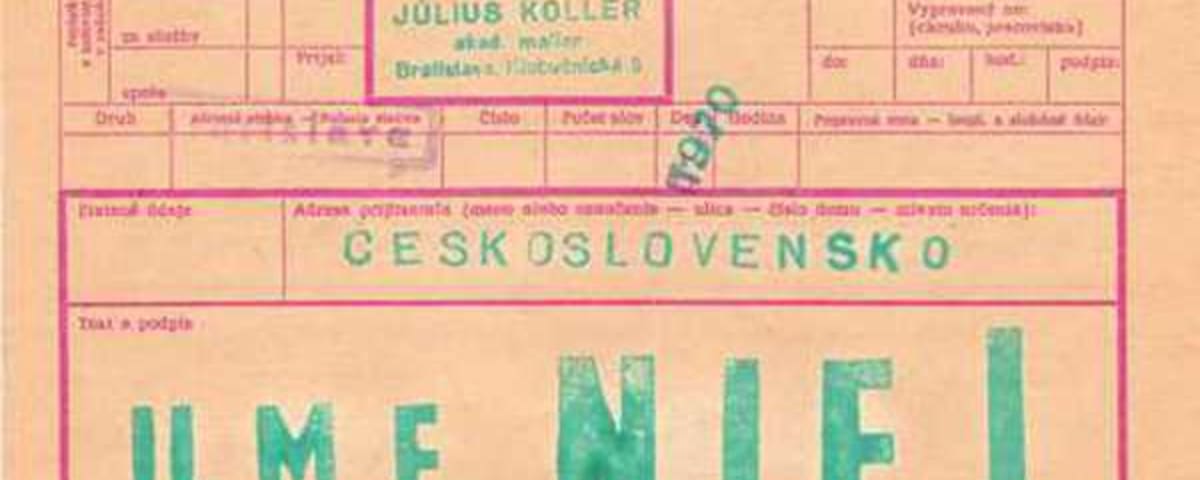
Mail art is an art movement founded on the principle of sending small works through the postal service, so that the post becomes both a means of distribution and a part of the work itself. Participants exchange postcards, collages, stamps, drawings, small objects and conceptual messages, forming a global informal network of collaboration beyond galleries, the market and curatorial control. The origins of the movement are associated with the American artist Ray Johnson, who in the late 1950s began the mail exchanges that later became known as the New York Correspondence School. Mail art flourished in the context of Fluxus and the Conceptualism of the 1960s and 1970s, attracting artists with the idea of democratic, accessible and anti-commercial exchange. It played an important role for artists in countries with limited creative freedom, including behind the Iron Curtain, where the post allowed contact with the international community. Mail art stresses process, communication and network rather than the unique precious object, and is regarded as a forerunner of the networked art of the digital age.

Mannerism is a style of European art of roughly 1520 to 1600 that arose as a reaction to the harmonious balance of the High Renaissance and is characterised by artifice, refined elegance and a deliberate sensuous distortion of the human figure. The name derives from the Italian maniera ('manner', 'style'). Mannerists elongated the proportions of bodies, gave them unnatural, spiralling poses (figura serpentinata), crowded complex compositions, and employed tense, sometimes artificial colours and packed, congested space. In place of clarity and balance they prized invention, wit and intellectual play addressed to the connoisseur. The leading masters were Pontormo, Rosso Fiorentino, Parmigianino and Agnolo Bronzino, and in sculpture and the decorative arts Benvenuto Cellini and Giambologna. Mannerism reflected the spiritual crisis of the age of Reformation and Counter-Reformation, unsettling Renaissance ideals. Long regarded as decadent, it was reassessed in the twentieth century as a distinctive, sophisticated and psychologically charged artistic language that preceded the Baroque.
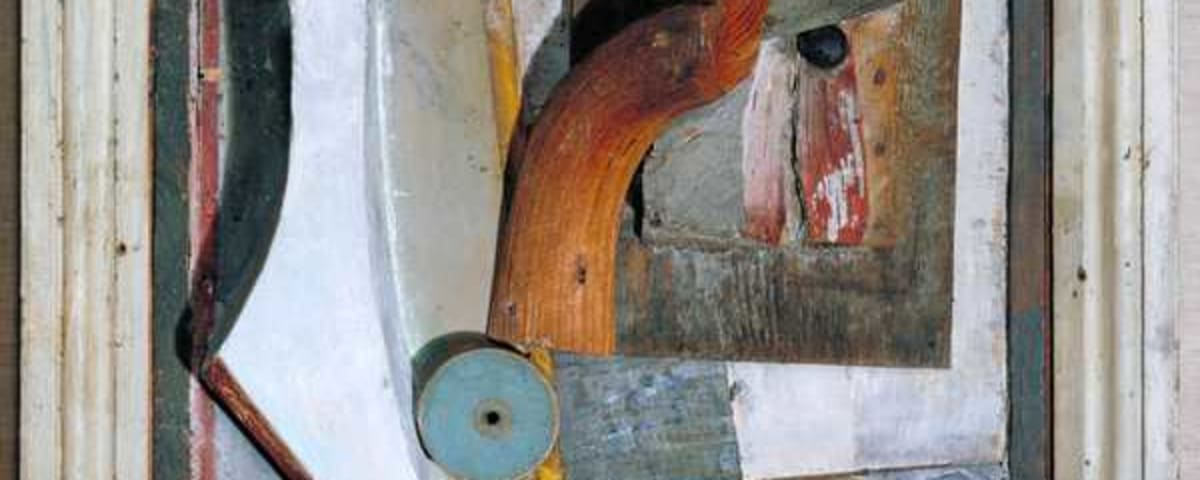
Merz is an invented nonsense word that the German Dada artist Kurt Schwitters introduced around 1919 to designate his own artistic method: collages and assemblages composed of gathered second-hand materials — tickets, wrappers, scraps of newspaper, buttons, wire, splinters of wood and other urban refuse. The word arose by chance when a fragment of the name of the bank 'Commerz und Privatbank' found its way into one of his collages; the syllable 'merz' survived and gave its name to the whole practice. Schwitters proclaimed Merz a universal worldview capable of embracing any material and any medium — poetry, painting, sculpture, music, print. Its most ambitious embodiment was the 'Merzbau', a durational architectural installation with which the artist rebuilt his own home in Hanover over years, turning it into a branching spatial construction. Merz celebrates the beauty of the devalued, discarded and accidental, raising the waste of consumer society to the status of art. The practice exerted a marked influence on postwar assemblage art, Pop art and the conceptual currents of the twentieth century.
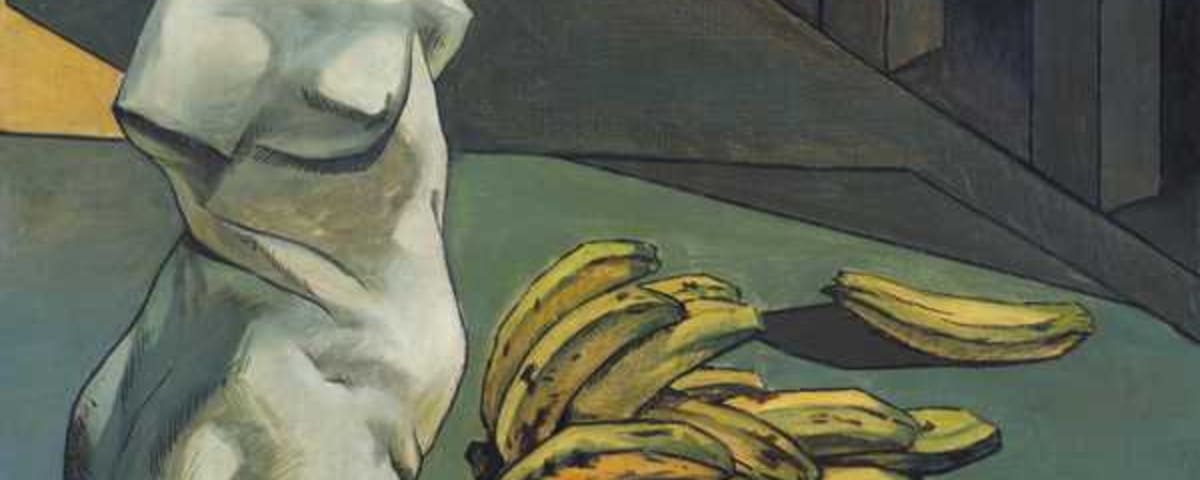
Metaphysical art (Italian Pittura metafisica) is an Italian tendency of the early twentieth century, founded around 1911 to 1917 by Giorgio de Chirico and developed together with Carlo Carrà and Giorgio Morandi. Its characteristic images are deserted, coldly lit arcaded squares with elongated shadows, classical architecture, towers, faceless mannequins and unexpected combinations of ordinary objects wrenched from their usual context. These dreamlike, ominously frozen scenes radiate a sense of silence, anxiety and hidden mystery behind the surface of the visible world — hence the name 'metaphysical', that which lies beyond the physical. De Chirico sought to reveal the enigmatic, unreal essence of things, freeing them from logic and practical purpose. Although the movement was short-lived, its influence was immense: metaphysical painting became one of the principal sources of inspiration for the Surrealists, notably René Magritte and Salvador Dalí. Metaphysical art opened the way to the exploration of the unconscious, the dream and estrangement in modern painting.

Minimalism is a movement in the visual arts that arose in the United States in the early 1960s as a radical response to the emotionalism of Abstract Expressionism. Its aesthetic is built on the principle of extreme reduction: the removal of everything superfluous — illusion, narrative and the personal gesture — for the sake of the object's pure presence. The work depicts and symbolizes nothing beyond itself; it simply is what it is, speaking the language of elementary form, colour, material and space. Its formal marks are simple geometric forms, seriality and the repetition of modules, industrial materials (steel, fluorescent tubes, plywood, brick), the abandonment of the pedestal, a neutral surface without any trace of the artist's hand, and the importance of the real physical space and the viewer's body. Sculpture displaces painting: Donald Judd creates his "specific objects" — rows of metal boxes; Carl Andre lays bricks and metal plates on the floor; Dan Flavin works with ready-made fluorescent tubes; Sol LeWitt builds modular lattice structures. In painting Frank Stella proclaims that "what you see is what you see," and Agnes Martin rules her canvases with barely perceptible grids. The music of Steve Reich and Philip Glass is kindred to it. Minimalism radically changed the conception of the work, the author and the viewer, bringing art closer to architecture and design and preparing the way for Post-Minimalism and conceptualism. Its legacy is an aesthetic of silence, clarity and concentrated material presence.
Minjung art is a South Korean socio-political art movement that arose in 1980 after the Gwangju uprising, during which government troops killed around two hundred peaceful demonstrators. The word 'minjung' means 'the people' or 'the popular masses', and the movement consciously set itself against the abstract, formalist art oriented toward Western tastes and the international market. Minjung artists turned to realistic, socially charged imagery in order to expose the authoritarian regime, injustice, the consequences of accelerated industrialisation and the division of Korea. They drew on traditional folk art, Buddhist imagery, woodblock printing and mural painting, creating an accessible, engaged and politically pointed language. Minjung painting, prints, banners and posters accompanied the democratic movement that finally brought down the military dictatorship at the end of the 1980s. Minjung art became one of the most influential examples of art directly bound up with the struggle for civil rights and democracy in Asia, and it still inspires generations of activist artists.
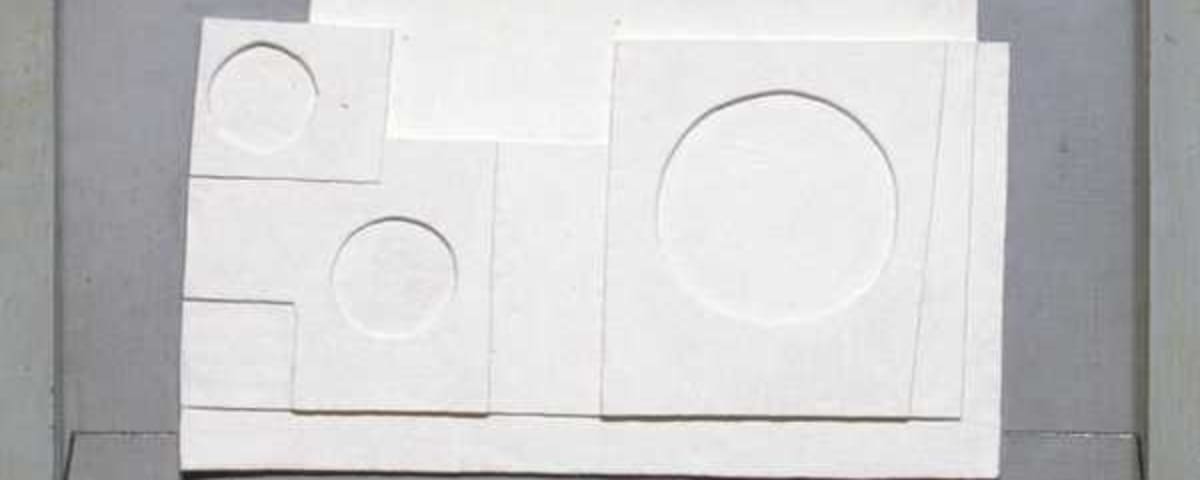
Modernism is a broad artistic paradigm of the late nineteenth to mid-twentieth centuries that united the drive to renew the language of art radically, to break with the academic tradition and to find forms consonant with the experience of the modern human being. Its engine was a belief in innovation, the autonomy of art and the intrinsic value of artistic form, and its motto was Ezra Pound's call to "make it new." Modernism is not a single style but a genealogical tree of movements: Post-Impressionism, Symbolism, Fauvism, Cubism, Futurism, Expressionism, abstraction, Suprematism, Constructivism, Surrealism and Dada. Their common features are a departure from mimetic depiction toward stylization and abstraction, attention to the medium itself (the flat surface, colour, texture), experiment with form, fragmentation and reflection on the language of art. Its pivotal figures are Paul Cézanne, Pablo Picasso, Henri Matisse, Wassily Kandinsky and Piet Mondrian. Ukrainian Modernism is a powerful and distinctive phenomenon: Kazimir Malevich with Suprematism, Oleksandr Bohomazov, Aleksandra Exter, the school of the Boichukists led by Mykhailo Boichuk, which fused Byzantine monumentality with the avant-garde, the graphic art of Heorhii Narbut and the architecture of Ukrainian Art Nouveau. In a wider sense Modernism embraced architecture (Functionalism, the Bauhaus), design, literature and music, affirming the image of the artist as innovator. Its era ends in the second half of the twentieth century, giving way to postmodernism, which cast doubt on the modernist faith in progress, originality and the grand narrative ambition of art.
Modern realism is a term denoting painting and sculpture made after the development of abstraction in modern art, but which continue to depict the visible world in a realistic, recognisable way. Unlike the academic realism of the nineteenth century, modern realism exists in conditions where abstraction has become an accepted and even dominant artistic language, so that a return to the figurative takes on a conscious, sometimes oppositional character. Artists of modern realism combine truthful observation of nature with a modern sensibility, compositional freedom and psychological tension, often depicting everyday life, the urban environment, the portrait or the interior. Among the masters associated with this tendency are Edward Hopper, with his lonely urban scenes, Lucian Freud, with his sharp corporeal portraits, Andrew Wyeth and others. Modern realism demonstrates that realistic depiction is not a relic of the past but remains a living and relevant means of reflecting on humanity and the world in an age that has witnessed the triumph of abstract art.

Mono-ha (Japanese for 'school of things') is a pioneering art movement that emerged in Tokyo in the mid-1960s and early 1970s. Instead of making traditional representational works, its artists explored materials themselves — stone, steel, glass, wood, water, soil, paper — and their natural properties, interaction and arrangement in space. Mono-ha artists reduced intervention to a minimum, leaving things as close as possible to their natural state and emphasising the relationships between elements rather than the objects themselves. The leading figure of the movement was Lee Ufan, a theorist and artist of Korean origin who in his writings drew on phenomenology and Eastern philosophy. Other participants include Nobuo Sekine, whose work 'Phase — Mother Earth' (1968), a huge cylinder of compacted earth beside a pit of the same shape, is regarded as emblematic of the movement, as well as Kishio Suga and Susumu Koshimizu. Mono-ha echoes Minimalism and Land art but is distinguished by a particular attention to emptiness, transience and contemplation rooted in the Asian aesthetic tradition.
The Nabis were a group of Post-Impressionist French painters active from about 1888 to 1900, whose works are distinguished by flat patches of colour, bold outlines and simplified, decorative drawing. The name derives from the Hebrew word 'nabi' ('prophet') and reflected the semi-secret, almost mystical character of the association. The group arose under the influence of Paul Gauguin and the Pont-Aven school; the immediate spark was a small 'talisman' picture that Paul Sérusier painted under Gauguin's guidance. The Nabis included Pierre Bonnard, Édouard Vuillard, Maurice Denis, who formulated the famous dictum that a painting is above all a flat surface covered with colours in a certain order, as well as Paul Sérusier, Ker-Xavier Roussel and Félix Vallotton. The Nabis erased the boundary between high and decorative art, working on panels, stained glass, theatre sets, posters and book illustration. Their leaning toward flatness, symbolism and ornament made the group an important link in the passage from Impressionism to Modernism and Art Nouveau.
Naive art is the visual language of self-taught makers who create outside the academic tradition, relying on a direct feeling for the world rather than learned rules. Its core is a sincerity of vision in which naivety becomes not a fault but an aesthetic virtue. Formally, such works are marked by flattened space and a deliberate disregard for linear perspective and anatomical proportion. The palette is usually bright, local and decorative, without tonal gradation or academic chiaroscuro modelling. Composition tends toward symmetry, ornament and an even filling of the surface, where every detail is rendered with equal attention. Motifs are drawn from folklore, everyday life, religious subjects, and flora and fauna, often fantastical. The technique may be intentionally simplified, yet it astonishes with confident line and bold colour. In the international context the movement's classic figure is the Frenchman Henri Rousseau (the Douanier), with his fairy-tale jungles. In Ukrainian art the naive impulse reached world stature in the work of Maria Prymachenko, with her fantastical beasts and flowers. The circle of masters also includes the Lemko Nikifor Krynytsky (Epifaniy Drovniak), a singular watercolour chronicler of the provinces. Naive art is closely akin to primitivism and folk painting, yet it preserves an inimitable authorial voice. It influenced the avant-garde, which sought in it a pristine freshness. Today the movement is prized for its authenticity, decorative power and capacity to renew the very idea of artistic truth.
Naturalism is a broad nineteenth-century movement aimed at depicting subjects as close as possible to the way the eye perceives them, without idealisation, embellishment or convention. In painting, Naturalism is bound up with the pursuit of objective truthfulness: artists worked out of doors, carefully observed light, atmosphere and the details of nature and everyday life, and often turned to the lives of peasants and workers. Naturalism is closely interwoven with Realism but stresses precisely the fidelity of visual impression and a scientific, observational approach in keeping with the positivist spirit of the age. In French art its forerunners were the Barbizon school and Jules Bastien-Lepage, whose scenes of rural life influenced whole generations of artists in various countries, including Ukraine. Naturalism was also an important concept in literature, where Émile Zola advocated an almost scientific study of society. In the visual arts the naturalist approach prepared the ground for Impressionism with its attention to immediate perception, while remaining an independent and enduring artistic outlook.
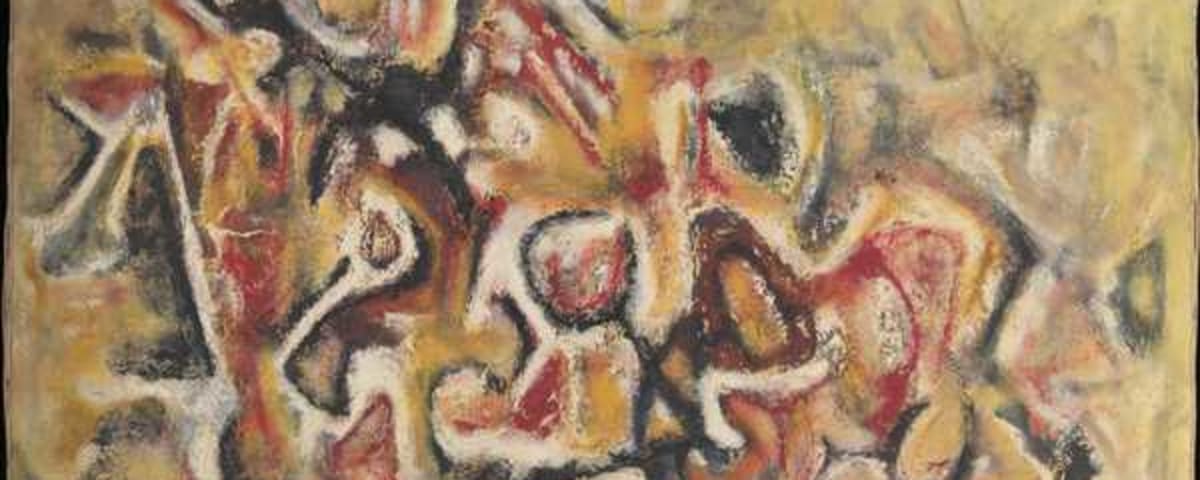
Négritude is an anti-colonial cultural and political movement founded by a group of African and Caribbean students in Paris in the 1930s, who sought to affirm the value of black identity and African culture that colonialism had despised. The key figures of the movement were the poet and future president of Senegal Léopold Sédar Senghor, the Martinican poet and politician Aimé Césaire, who actually coined the term, and the French Guianese writer Léon Damas. Négritude rejected the inferiority imposed by the colonisers, asserting pride in a shared African heritage, spirituality and aesthetics. Although the movement began chiefly in literature, it had a profound influence on the visual arts: artists of Africa, the Caribbean and the African diaspora drew on traditional forms, masks, sculpture and ornament to create a modern language of decolonised self-awareness. Négritude echoed the broader currents of Pan-Africanism and contributed to the cultural upsurge of the era of independence struggles among African states in the mid-twentieth century. It remains one of the most important intellectual movements to rethink race, identity and cultural dignity.

Neoclassicism is an especially pure, austere form of classicism that arose in European art from about 1750 and prevailed into the early nineteenth century. The movement emerged as a reaction against the playful splendour of Rococo and was inspired by the new archaeological discoveries of the ancient cities of Pompeii and Herculaneum, as well as by the ideas of Enlightenment rationalism and the theoretical writings of Johann Joachim Winckelmann, who proclaimed as an ideal the 'noble simplicity and quiet grandeur' of Greek art. Neoclassicism turned to the strict line, clear composition, balance, restrained colour and heroic or moralising subjects drawn from ancient history and mythology. In painting its most eminent exponent was Jacques-Louis David, whose canvases combined classical form with the civic pathos of the French Revolution; he was followed by Jean-Auguste-Dominique Ingres. In sculpture the leading masters were Antonio Canova and Bertel Thorvaldsen. Neoclassicism shaped the appearance of government buildings, museums and monuments across Europe and America, and its influence is felt in Ukrainian art and architecture of the late eighteenth and early nineteenth centuries.
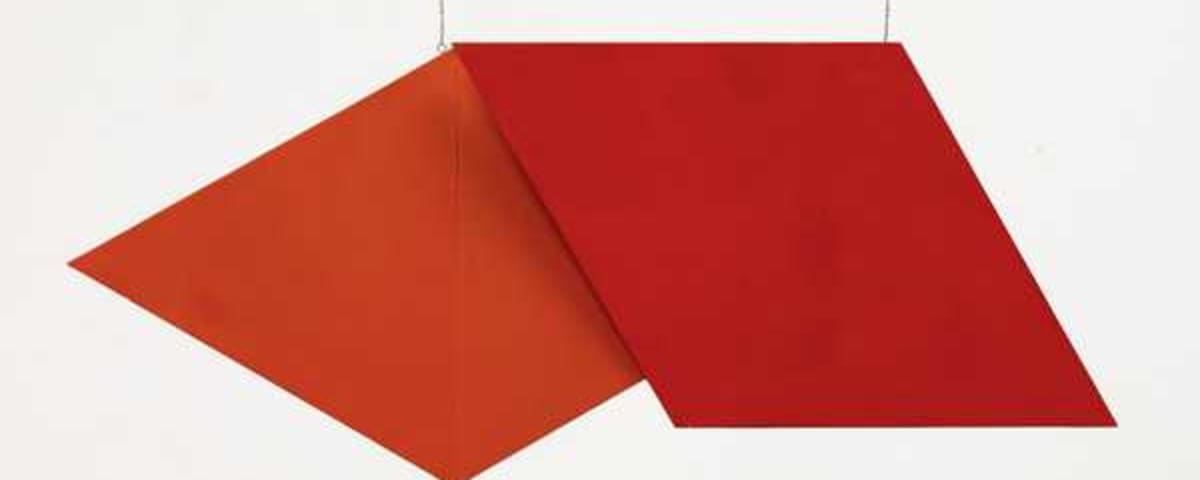
Neo-concrete art is an offshoot of the Brazilian concrete art movement that arose in the late 1950s in Rio de Janeiro as a call to restore to strictly geometric abstraction more sensuousness, colour, poetry and a human dimension. In 1959 a group of artists issued the 'Neo-Concrete Manifesto', written chiefly by the critic and poet Ferreira Gullar, in which they rejected the mechanistic, rationalist dogmatism of concrete art and stressed the living, bodily perception of the work. The leading figures of the movement were Lygia Clark and Hélio Oiticica. Clark created the 'Bichos' — hinged metal 'creatures' that the viewer could manipulate — while Oiticica developed coloured spatial constructions and later the 'Parangolés', cape-like garments to be worn and danced in. Neo-concrete art broke down the boundary between work and viewer, turning art into an interactive, sensory and even performative experience. The movement was short-lived, lasting into the early 1960s, but it exerted an enormous influence on later Latin American and world art, anticipating the participatory and corporeal practices of subsequent Conceptualism.
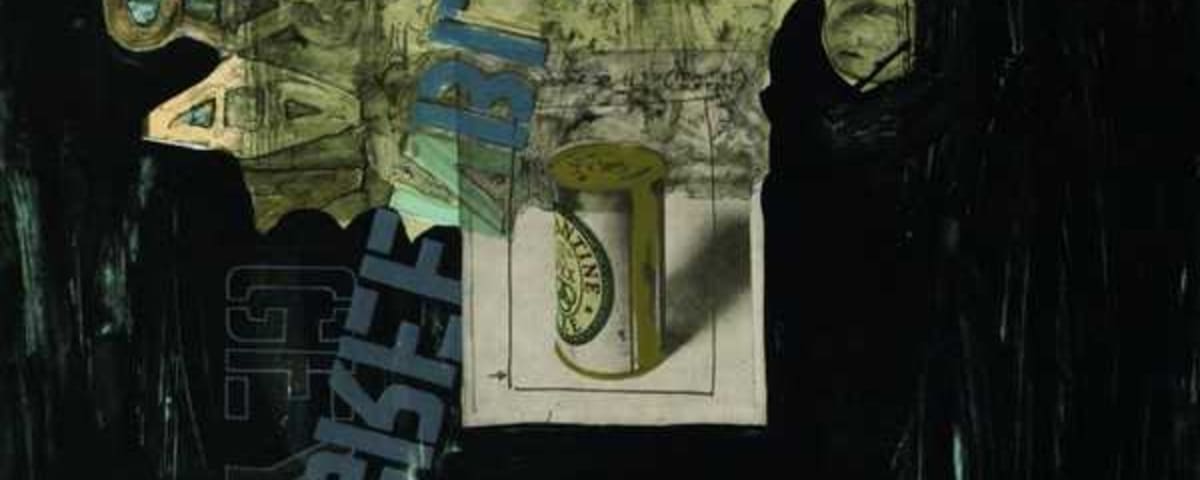
Neo-Dada is a term applied to the work of artists active in the United States in the 1950s and early 1960s whose art recalled the Dada movement of the early twentieth century in its irony, its use of everyday objects and its unsettling of the boundaries between art and life. Neo-Dada arose as a reaction against the then-dominant Abstract Expressionism with its pathos of inner experience; instead, younger artists turned to found objects, collage, readymades, popular-culture imagery and a detached, sometimes cool presentation. The most distinctive figures of the movement were Robert Rauschenberg, with his 'Combines' — hybrids of painting and assemblage incorporating real objects — and Jasper Johns, with his series of flags, targets and numbers that questioned the nature of image and sign. The composer John Cage played a significant role, his ideas of chance and everyday sound nourishing this circle. Neo-Dada became a direct bridge to Pop art, Fluxus and Conceptual art, reintroducing the Dada spirit of play, provocation and critique of artistic convention into postwar culture.
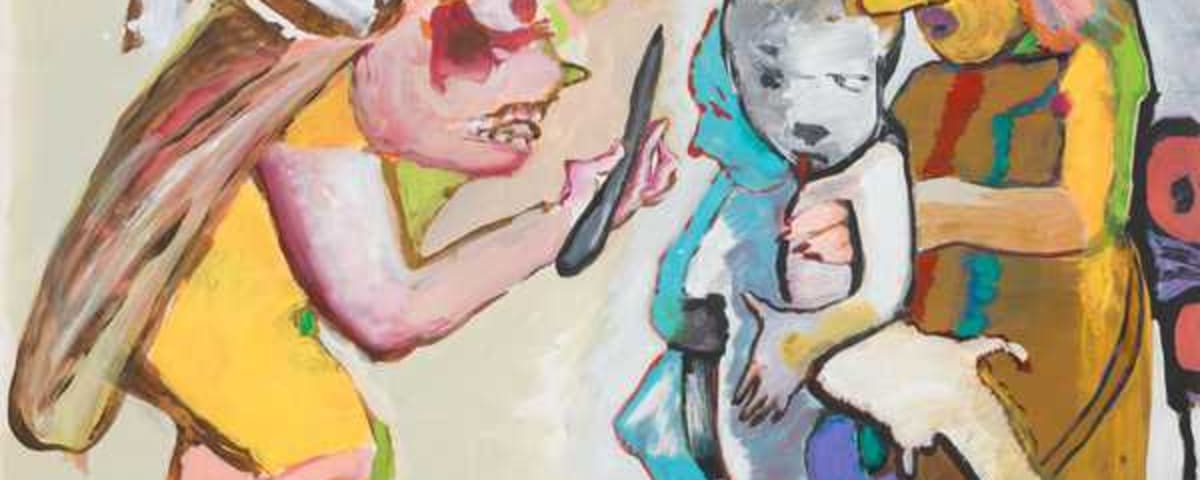
Neo-Expressionism is an international phenomenon of a powerful revival of painting in an expressionist spirit in the 1980s, which arose as a reaction against the dominance of Minimalism and Conceptual art in the preceding decade. Neo-Expressionists returned to the large-format, emotionally charged, figurative canvas with dense texture, energetic and sometimes deliberately crude brushwork, saturated colour and tense, dramatic imagery drawn from history, myth, national trauma and personal experience. The movement unfolded in parallel in several countries. In Germany it was embodied by the so-called 'Neue Wilden', including Georg Baselitz, Anselm Kiefer, who reflected on the burden of national history, and Jörg Immendorff. In Italy the parallel tendency of the Transavanguardia developed with Francesco Clemente and Enzo Cucchi. In the United States Neo-Expressionism includes Jean-Michel Basquiat and Julian Schnabel. The movement restored painting to a central place on the art scene and market, though critics charged it with excessive theatricality and commercialisation. Neo-Expressionism remains an emblematic example of the cyclical return to painting and expressive figuration in the age of late Modernism and early Postmodernism.
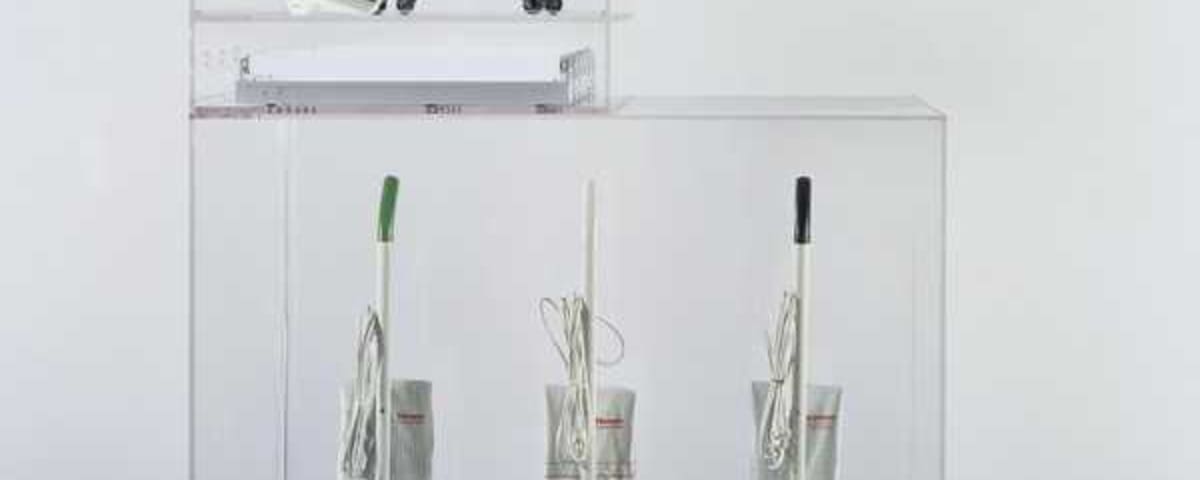
Neo-Geo (short for 'Neo-Geometric Conceptualism') is a term that came into use in the early and mid-1980s in the United States, above all in New York, to describe the work of a group of artists whose art critically reflected on the mechanisation, consumerism and total commercialisation of the modern world. Neo-Geo combined a cold, impersonal geometric abstraction with a conceptual and theoretical stance, drawing on postmodern ideas of simulation and the critique of the sign. The artists deliberately borrowed the formal language of early abstract art and Minimalism but stripped it of spiritual or utopian pretensions, turning it into an empty, ironically quoted sign. The leading figures of the movement are considered to be Peter Halley, who painted bright canvases with 'cells' and 'conduits' as metaphors for alienated urban space, as well as Jeff Koons with his glossy objects of mass culture, Haim Steinbach and Ashley Bickerton. Neo-Geo reflected the mood of critical Postmodernism, in which art analyses its own commodity nature and place within the sign systems of late capitalism, and it became a notable phenomenon of the late twentieth-century art market.

Neo-Impressionism is the name given to the Post-Impressionist work of Georges Seurat, Paul Signac and their followers, who painted by applying small adjacent touches or dots of pure colour so that, seen from a distance, these hues would mix optically in the viewer's eye, reproducing the vibration of light. This technique is known as Pointillism or Divisionism. The movement arose in the mid-1880s in France and drew on contemporary scientific theories of colour and visual perception, notably the writings of Michel Eugène Chevreul and Ogden Rood. Unlike spontaneous Impressionism, Neo-Impressionism sought a systematic, almost methodical approach, and its compositions are marked by a balanced, harmonious structure and a sense of frozen monumentality. The programmatic work is considered to be Seurat's large canvas 'A Sunday on La Grande Jatte' (1884–1886). Signac became the chief theorist and populariser of the method, setting out its principles in his book 'From Eugène Delacroix to Neo-Impressionism'. The movement influenced Fauvism and the further development of abstract colour, and its ideas spread through many European schools.

Neo-Plasticism is the term adopted by the Dutch pioneer of abstract art Piet Mondrian to designate his own type of abstract painting, which reduced the image to the simplest elements: only horizontal and vertical black lines forming a grid, and fields filled with the three primary colours — red, blue and yellow — in combination with white, black and grey. Mondrian developed this language around 1917 to 1920 within the De Stijl movement, founded together with Theo van Doesburg. The name derives from the Dutch 'Nieuwe Beelding', 'new formation'. Mondrian sought to express a universal, timeless harmony and spiritual equilibrium, purging art of all figuration, individual feeling and chance. He believed that the strict balance of opposites — vertical and horizontal, colour and colourlessness — reflected the fundamental order of being. Neo-Plasticism exerted a profound influence on the architecture, design, typography and applied arts of the twentieth century, becoming one of the defining languages of geometric abstraction and a foundation of later modernist design.
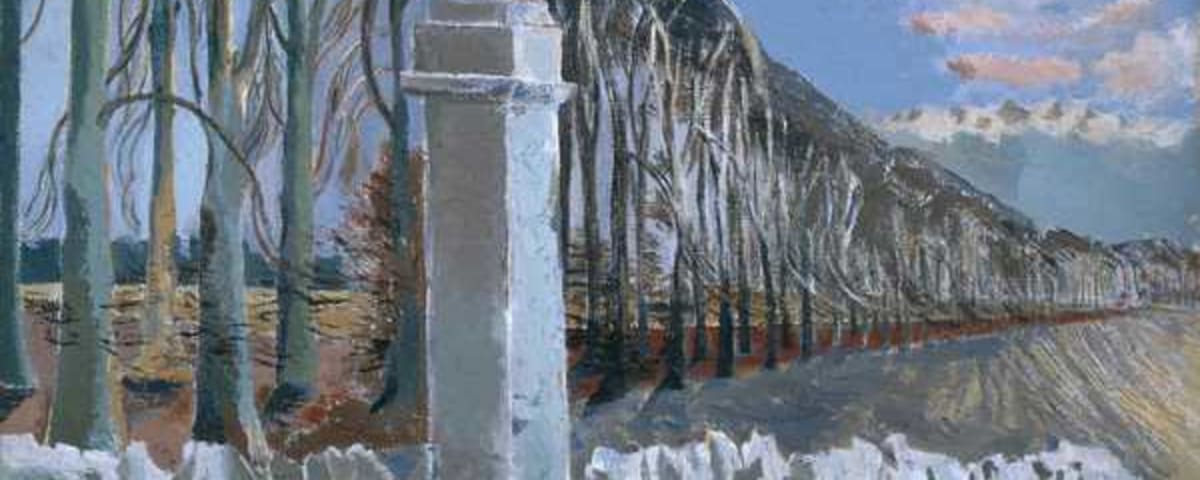
Neo-Romanticism is a term applied to the imaginary and often quite abstract landscape paintings of the British artists Paul Nash, Graham Sutherland and others in the late 1930s and the 1940s. The movement arose as a kind of revival of the spirit of nineteenth-century English Romanticism — of William Blake, Samuel Palmer and John Martin — in response to the anxieties of the pre-war and wartime years. The Neo-Romantics turned to the native landscape as a source of mystical, poetic and sometimes eerie experience, endowing hills, trees, ruins and ancient stones with a sense of spiritual presence and historical depth. Their landscapes are full of melancholy, solitude and charged atmosphere, and their forms often approach surrealist deformation and symbolic generalisation. The circle of Neo-Romantics also included John Piper, John Minton and the young Lucian Freud in his early phase. The movement played an important role in British wartime and postwar art, notably in the work of the official war artists, and expressed a yearning to seek spiritual roots and national identity in the landscape of the homeland.
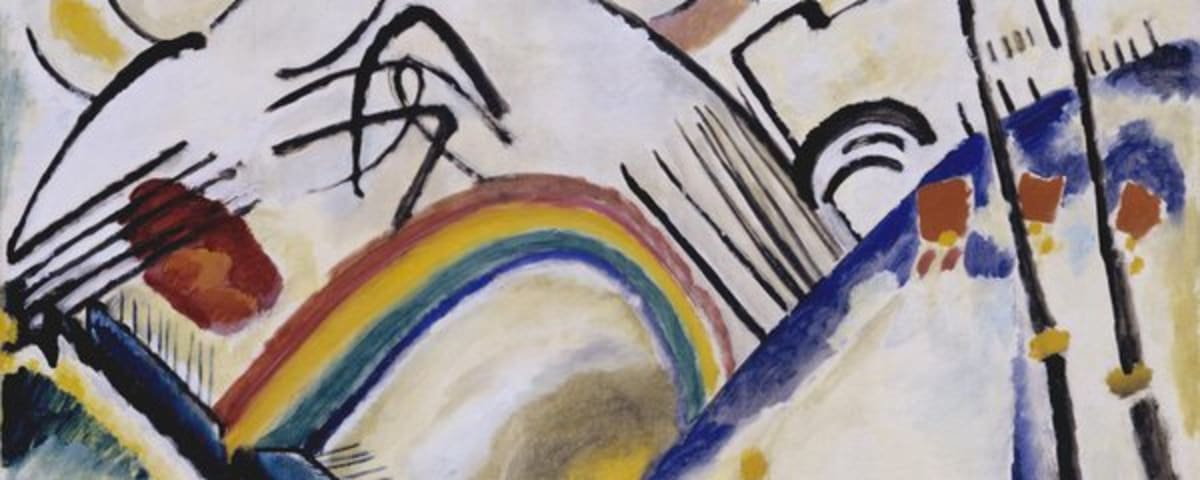
The New Artists' Association of Munich (German Neue Künstlervereinigung München, abbreviated NKV) is an avant-garde exhibiting society founded in Munich in 1909 by a group of artists dissatisfied with the conservatism of the official art associations. The association sought to establish a new art free of academicism, oriented toward spiritual content, symbolism and an increasingly bold treatment of colour and form at the threshold of abstraction. Wassily Kandinsky became chairman of the society, and among its leading members were Alexej von Jawlensky, Marianne von Werefkin, Gabriele Münter and Adolf Erbslöh. The NKV mounted several exhibitions that introduced the Munich public to the newest European tendencies, including Fauvism and Cubism. However, tension grew within the group between the moderate members and the more radical wing led by Kandinsky, who was moving ever more decisively toward non-objective art. In 1911, following a sharp split, Kandinsky, Franz Marc and Münter left the association and founded the famous Blue Rider (Der Blaue Reiter). The NKV thus served as an important intermediate stage from which one of the most influential movements of German Expressionism grew.

New Objectivity (German: Neue Sachlichkeit) was a German art movement of the 1920s that emerged as a reaction against the emotionalism of Expressionism and the idealism of the pre-war avant-garde. The name was coined in 1925 by curator Gustav Hartlaub for an exhibition in Mannheim that gathered a generation of artists who had turned toward a sober, critical, almost clinical realism. Practitioners of New Objectivity depicted the post-war reality of the Weimar Republic without embellishment: maimed veterans, prostitutes, profiteers, social inequality, and the moral decay of the big cities. Leading figures included Otto Dix, George Grosz, and Max Beckmann, whose sharply satirical canvases exposed the cynicism and brutality of the era. The style combined cold precision of detail with biting social commentary. The Nazi rise to power in 1933 ended the movement: many works were branded as degenerate art, confiscated, or destroyed. New Objectivity remains one of the most penetrating testimonies to the interwar crisis in European culture.
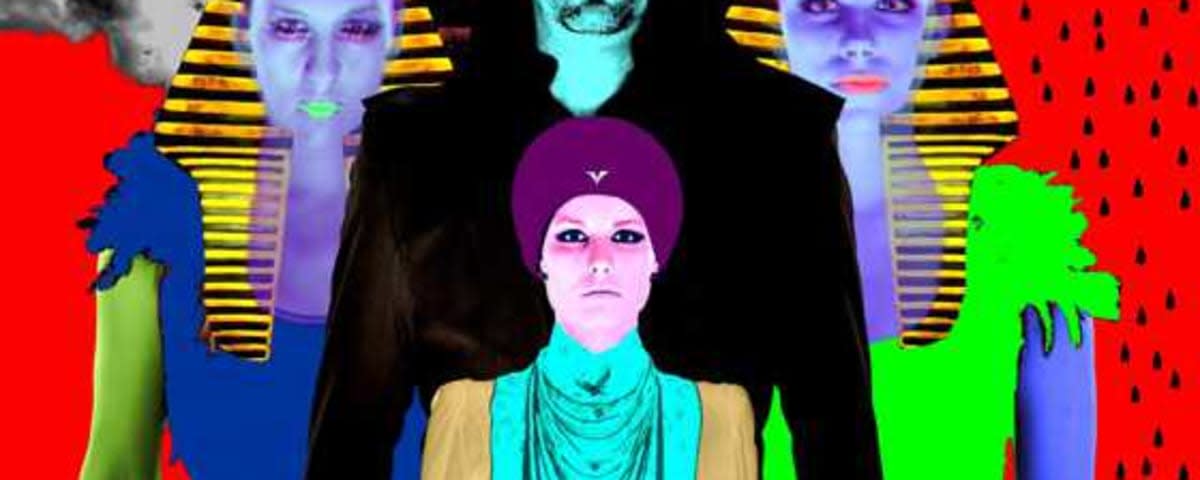
Neue Slowenische Kunst (NSK, "New Slovenian Art") was a pioneering artistic collective founded in 1984 in Slovenia, then part of socialist Yugoslavia. The organization arose at the intersection of several groups: the music band Laibach, the painting collective Irwin, and the Scipion Nasice Sisters Theatre department, later joined by design and philosophy divisions. NSK worked with a provocative "retro-avant-garde" aesthetic, appropriating and reworking totalitarian iconography — the symbolism of the avant-garde, Socialist Realism, and fascism — in order to expose the mechanisms of ideological manipulation. This strategy of "over-identification" triggered sharp public debate. In 1992, following the breakup of Yugoslavia, the collective proclaimed itself a "state in time" — the NSK State, a virtual country without territory that issues its own passports and operates as a conceptual citizenship project. NSK's activity became one of the most influential forms of postmodern political art in Central and Eastern Europe at the end of the twentieth century.
Neue Wilde ("New Wild Ones") is a term used in Germany for Neo-Expressionism, the turbulent revival of expressive painting in the late 1970s and 1980s. The name alludes to the "wild ones" — the Fauves of the early century — and emphasizes the spontaneity, energy, and emotional immediacy of a new generation of artists. After decades dominated by Conceptualism, Minimalism, and abstraction, young painters returned to figuration, vivid color, broad impasto brushwork, and large formats. In Germany the movement had two centers: the Berlin circle with figures such as Rainer Fetting and Helmut Middendorf, and the Cologne scene around Walter Dahn and Hans Peter Adamski. Neue Wilde painting was often autobiographical, urban, nocturnal, and saturated with motifs of subculture and music. The movement paralleled the Italian Transavantgarde and American Neo-Expressionism, becoming part of a wider international return to painting in the 1980s.
New British Sculpture is a term applied to the work of young British sculptors of the 1980s who, reacting against the austerity of Minimalism and the intellectual asceticism of Conceptual art, chose a freer, more playful and imagistic approach to materials, techniques, and subjects. Instead of industrial impersonality, they turned to found objects, domestic junk, cheap industrial materials, and bright color, transforming everyday things into poetic or ironic objects. Leading figures of the movement include Tony Cragg, Richard Deacon, Bill Woodrow, Anish Kapoor, and Edward Allington. Their works often balanced between abstraction and the suggestion of recognizable forms, raising questions of consumerism, urban life, and humanity's relationship with the material world. Many of these artists gained international recognition through exhibitions at the Lisson Gallery in London. New British Sculpture restored tactility, wit, and metaphor to the language of three-dimensional art and significantly influenced the subsequent generation of British artists.
New Figuration is a general term for the revival of figurative art in Europe and America in the 1960s, following a period dominated by Abstract Expressionism and geometric abstraction. Artists of this tendency reintroduced the human figure and the recognizable object world into the language of modern painting — not as a mere continuation of tradition, but in a new, often sharp, critical, and expressive key. New Figuration absorbed the lessons of abstraction — free brushwork, distortion, color expression — and combined them with social, psychological, and political content. In France and Spain the tendency took the form of Nouvelle Figuration and "narrative figuration" with artists such as Erró and Jacques Monory; in Britain it is associated with Francis Bacon and Lucian Freud. The movement paralleled the emergence of Pop art but retained greater drama and existential tension. New Figuration became an important link in the reassessment of the role of the human image in the art of the second half of the twentieth century.
New Generation Sculpture is the name given to the work of a group of young British sculptors active in the 1960s who experimented with new materials, forms, and bright color. The term derives from the "New Generation" exhibition series held at London's Whitechapel Gallery, notably the influential 1965 show that presented a generation of Anthony Caro's students at St Martin's School of Art. These sculptors abandoned traditional materials such as bronze and stone in favor of industrial steel, fiberglass, and painted metal. Their works were abstract, colorful, and often placed directly on the floor without a pedestal, changing the viewer's relationship with the object. Key figures include Phillip King, William Tucker, Tim Scott, and David Annesley. Vivid color played an independent role, bringing sculpture closer to the experience of painting. New Generation Sculpture became the British counterpart to international tendencies toward lightness, color, and abstraction in the three-dimensional art of the 1960s.
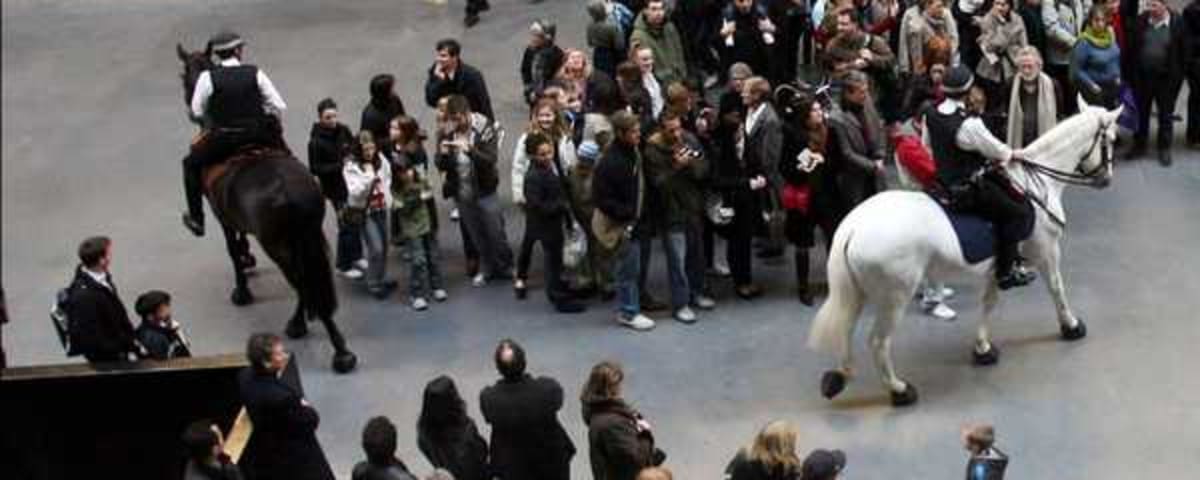
New Genre Public Art is a form of public art that is often activist in character and created outside museum and institutional structures with the aim of directly engaging a particular community in co-creation and dialogue. The term was introduced by American artist Suzanne Lacy in the late 1980s and early 1990s, generalizing practices in which content, rather than form, defines the work. Unlike traditional monuments or plaza sculptures, New Genre Public Art focuses on social issues — gender inequality, racism, poverty, ecology, and the rights of marginalized groups. The artist acts more as an organizer of a process than as the author of a finished object, and the community itself becomes a co-author. Projects may last months or years and take the form of performances, meetings, actions, and educational initiatives. This tendency is closely linked to participatory and socially engaged art and expanded the understanding of where and for whom art exists in public space.

New Sculpture is a term denoting a tendency in British sculpture of the second half of the nineteenth century, roughly from the 1880s to the early 1900s. It emerged as a reaction against the frozen neoclassicism and static quality of earlier Victorian sculpture. New Sculpture artists sought greater naturalism, psychological expressiveness, poetry, and symbolic content, drawing at the same time on the influence of the French school and the Italian Renaissance. They paid particular attention to surface, movement, detail, and subtle modeling, often combining different materials — bronze, ivory, colored enamels, and precious stones. Leading figures of the tendency include Frederic Leighton, author of the landmark "An Athlete Wrestling with a Python," Alfred Gilbert, Hamo Thornycroft, and Alfred Drury. New Sculpture also promoted the development of the decorative statuette and closely echoed the Arts and Crafts movement and Art Nouveau. It substantially renewed British sculpture and prepared the ground for the modernist sculpture of the twentieth century.
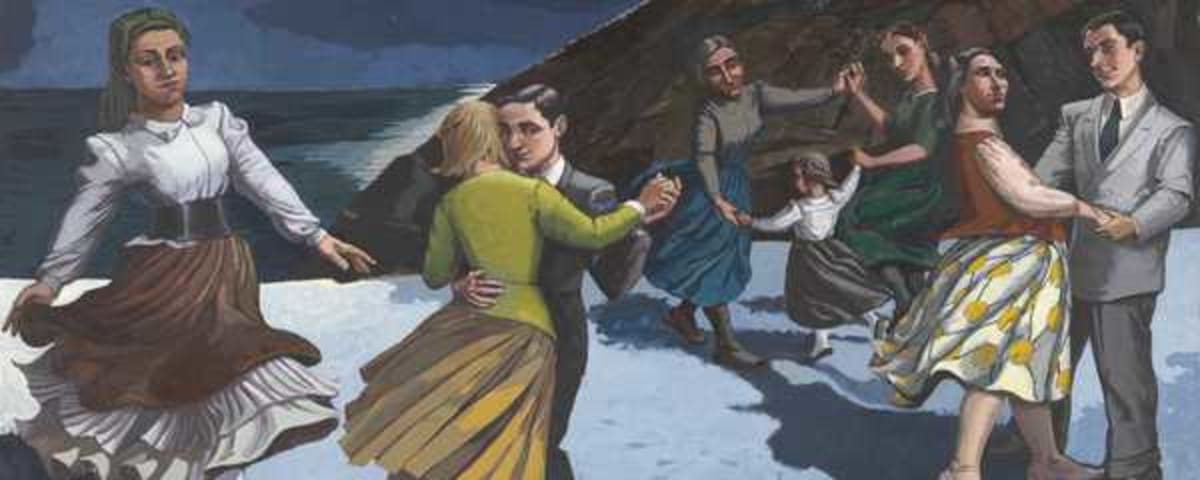
New Spirit Painting is a term associated with the revival of expressionist, figurative painting around the turn of the 1970s and 1980s. The name derives from the influential exhibition "A New Spirit in Painting," held in 1981 at the Royal Academy of Arts in London under the curatorship of Christos Joachimides, Nicholas Serota, and Norman Rosenthal. This show proclaimed the return of painting as a leading art form after a decade dominated by Conceptual, Minimalist, and performance art that had questioned the very relevance of painting. The exhibition combined established masters — Picasso, Matisse, Bacon — with a younger generation of expressive artists, including Georg Baselitz, Anselm Kiefer, Julian Schnabel, and Francesco Clemente. New Spirit Painting affirmed emotionality, subjectivity, large scale, saturated color, and a return to historical, mythological, and personal subjects. The exhibition became one of the manifestos of international Neo-Expressionism and testified to the restored status of traditional painting in the art of the 1980s.

The New Wave (the Ukrainian Transavant-garde) was an explosion of young nonconformist art in Ukraine of roughly 1987 to 1999, coinciding with the era of Perestroika, the collapse of the USSR and the achievement of independence. The term "Transavant-garde" derives from the concept of the Italian critic Achille Bonito Oliva, who used it to name a return to grand, emotional, figurative painting after Conceptualism; on Ukrainian soil it acquired its own rebellious ring. The key idea of the era was a radical liberation from ideological and aesthetic prohibitions, an ironic reworking of the Soviet and classical heritage, corporeality, myth-making and a monumental, often expressive large-format painting. The hearth of the movement was the Kyiv squat on Paris Commune Street, where young artists lived and worked. Its signature figures were Arsen Savadov and Heorhiy Senchenko, whose canvas "The Sorrow of Cleopatra" (1987) became the manifesto of a generation, together with Oleg Golosiy, Oleksandr Hnylytsky, Vasyl Tsagolov, Dmytro Kavsan and Yuriy Solomko. Their art fused pathos with play, post-totalitarian freedom with postmodern quotation, restoring scale and sensuality to painting. In the late 1980s the first independent centres also emerged in Kyiv, such as the Soviart gallery (1987), which brought the nonconformists before the public. By the end of the 1990s the turbulent neo-expression of the New Wave was gradually supplanted by conceptual, photographic and video practices, which prepared the language of mature contemporary art. The New Wave brought Ukrainian art out of the underground into the public and international arena, forming the first generation of free artists of an independent state. This turbulent, brief era closed the Soviet age and directly prepared the institutional coming-of-age of contemporary Ukrainian art in the decades that followed.
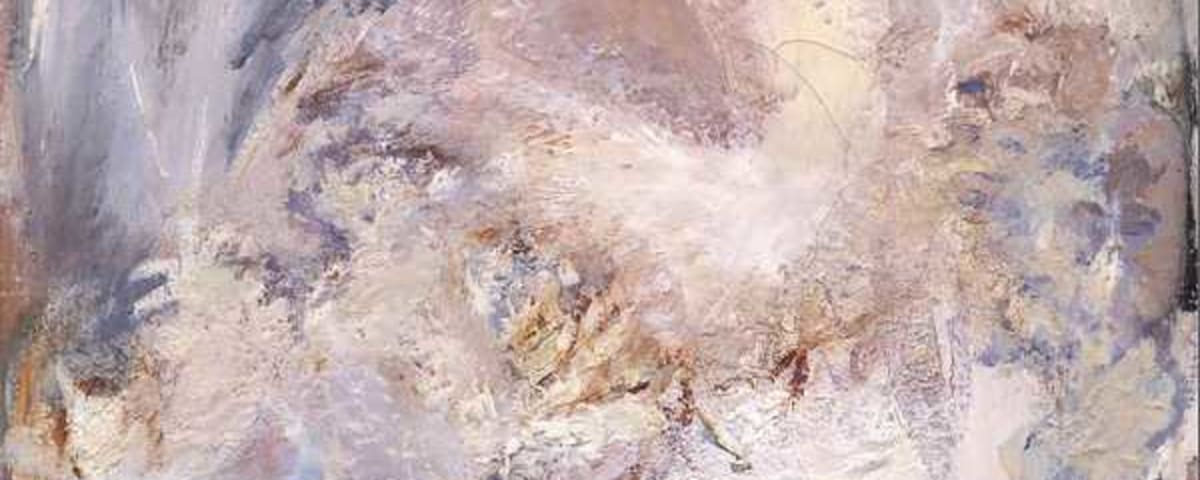
Objective Abstraction was a non-geometric, free style of abstract art developed by a group of British artists in the early 1930s. The tendency took definitive shape during the eponymous exhibition "Objective Abstractions," held in 1934 at London's Zwemmer Gallery. Unlike the strict geometric Constructivism widespread in Europe at the time, these artists worked in a manner of spontaneous, sensuous, almost improvisational brushwork, in which abstract form grew directly from the very process of painting rather than from a preconceived scheme. Painting appeared as a self-sufficient reality of color and texture, "objective" precisely because it did not depict the external world but existed as an independent material fact. Members of the group included Rodrigo Moynihan, Geoffrey Tibble, and Graham Bell. Objective Abstraction to some extent anticipated later Tachisme and Abstract Expressionism with their emphasis on gesture and the autonomy of the painted surface. Although the movement was short-lived, it became an important episode of early British abstract art.
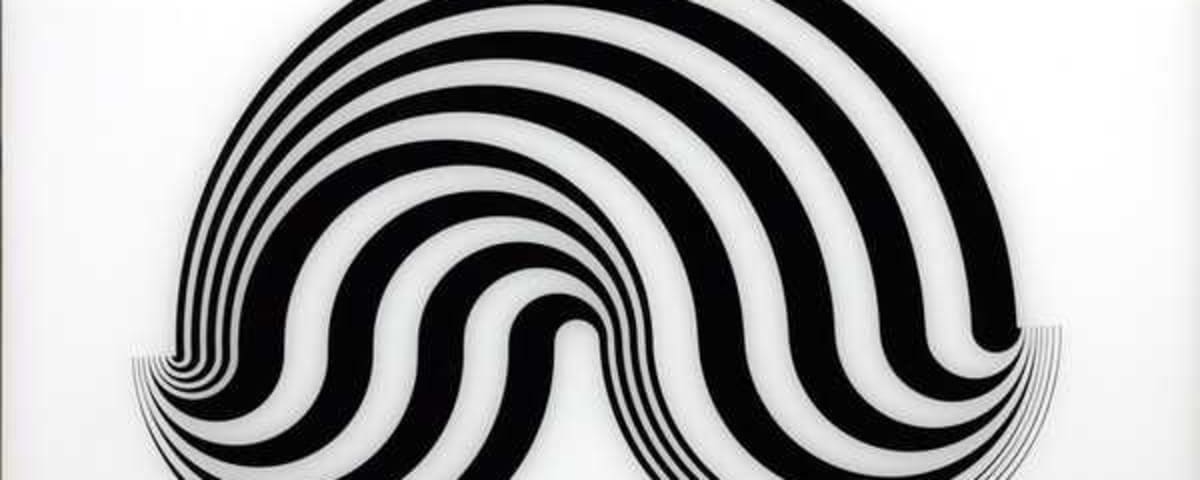
Op art (optical art) is an abstract visual language that investigates the mechanisms of visual perception and provokes illusions of movement on a static surface. Its central idea is to make the eye "see" what is physically absent: vibration, flicker, pulsation and the deformation of space. Formally, op art employs strict geometry — grids, concentric circles, waves, chequerboard and moiré structures. The palette may be starkly black-and-white, where the play is built on the edges of forms, or intensely spectral, where the illusion arises from the interaction of complementary colours. Composition is exactingly calibrated, almost mathematical, stripped of personal brushwork and emotional expression. The technique favours an impeccably smooth, impersonal surface that heightens the optical effect. Such works activate the physiology of sight: after prolonged looking, afterimages and a sensation of swaying appear. The movement took shape in the 1960s, and its manifesto was the exhibition "The Responsive Eye" in New York in 1965. Its leading masters are the Hungarian-French artist Victor Vasarely, called the father of op art, and the Briton Bridget Riley, with her hypnotic black-and-white waves. Op art is related to kinetic art and constructivism, with roots reaching back to the ideas of the Bauhaus. It quickly penetrated design, fashion and advertising. Today the movement is valued for its intellectual rigour, precision and capacity to turn the viewer into a participant in an optical experiment.
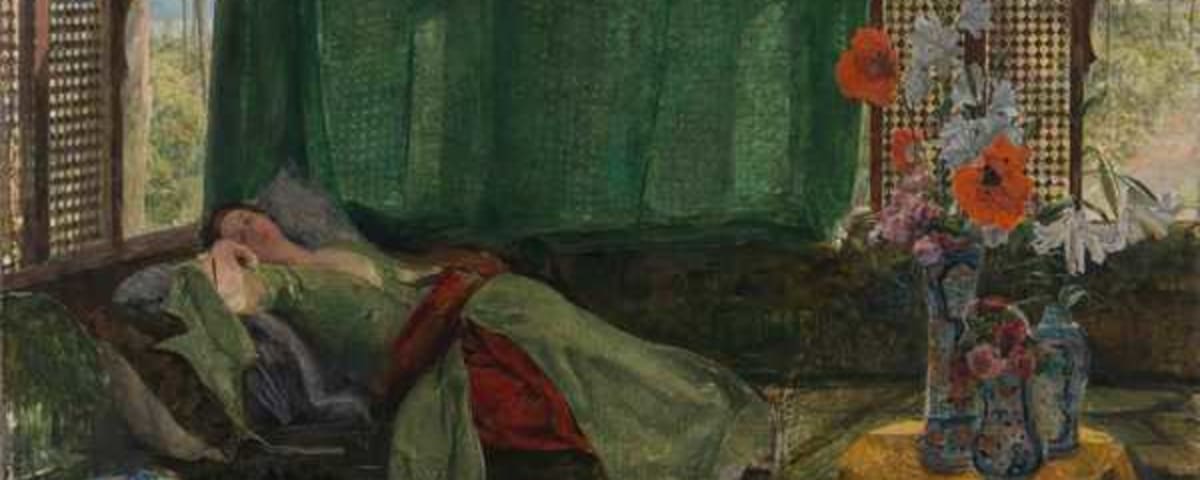
Orientalism is a term that in art history denotes the work of mainly European artists of the nineteenth century who traveled to North Africa and the Middle East in search of new, exotic subjects, or who depicted these lands from imagination. The tendency flourished during the Victorian and Romantic eras, when colonial expansion, scientific expeditions, and the growth of travel opened images of the Maghreb, Egypt, the Ottoman Empire, and the Holy Land to Western audiences. Orientalists depicted bazaars, mosques, harems, deserts, caravans, and genre scenes with great attention to color, light, and decorative detail. Among the leading masters were Eugène Delacroix, whose 1832 journey to Morocco was pivotal, as well as Jean-Léon Gérôme and John Frederick Lewis. Modern scholars, especially after Edward Said's book "Orientalism" (1978), critically reassess this tendency, seeing in it not only aesthetic fascination but also a projection of colonial stereotypes and Western fantasies about the "East."
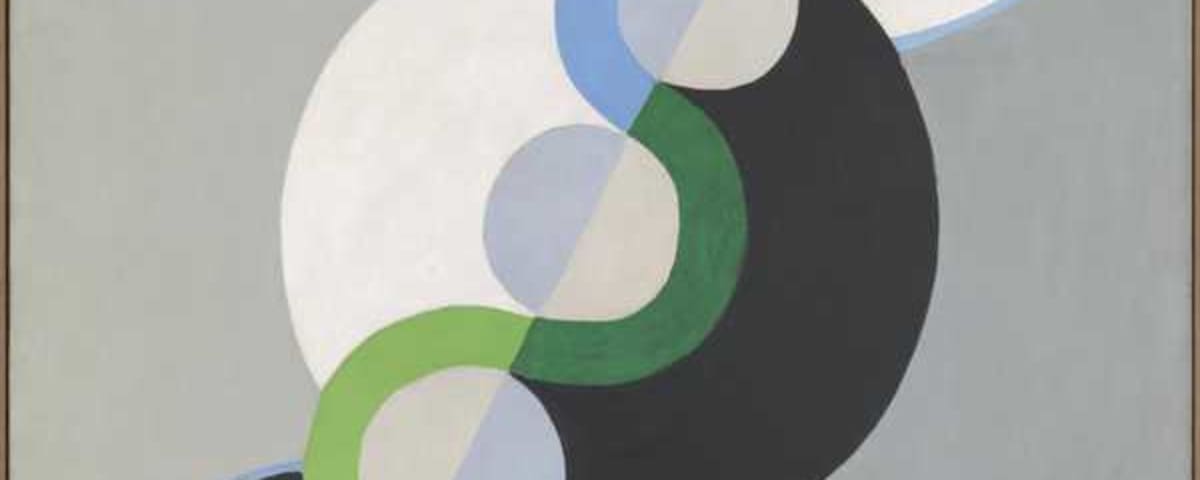
Orphism was an abstract or semi-abstract painting style that arose under the influence of Cubism and was developed by the artist couple Robert and Sonia Delaunay from around 1912. The name was proposed by the poet Guillaume Apollinaire, who linked the new painterly language to the mythical singer Orpheus, emphasizing its lyrical, musical, almost poetic nature. Unlike Analytical Cubism with its muted palette and decomposition of form, Orphism made color an independent means of expression and the main driving force of composition. Artists built images on contrasts of pure spectral colors that, interacting, generated a sense of light, movement, and rhythm. Its theoretical foundation was the concept of the "simultaneous contrast" of colors. Key works of the tendency are Robert Delaunay's "Windows" and "Discs" series, as well as Sonia Delaunay's textile and painting works. Orphism influenced the development of abstraction in Europe and America, notably the American Synchromist painters, and became an important step in the emergence of non-objective art in the early twentieth century.
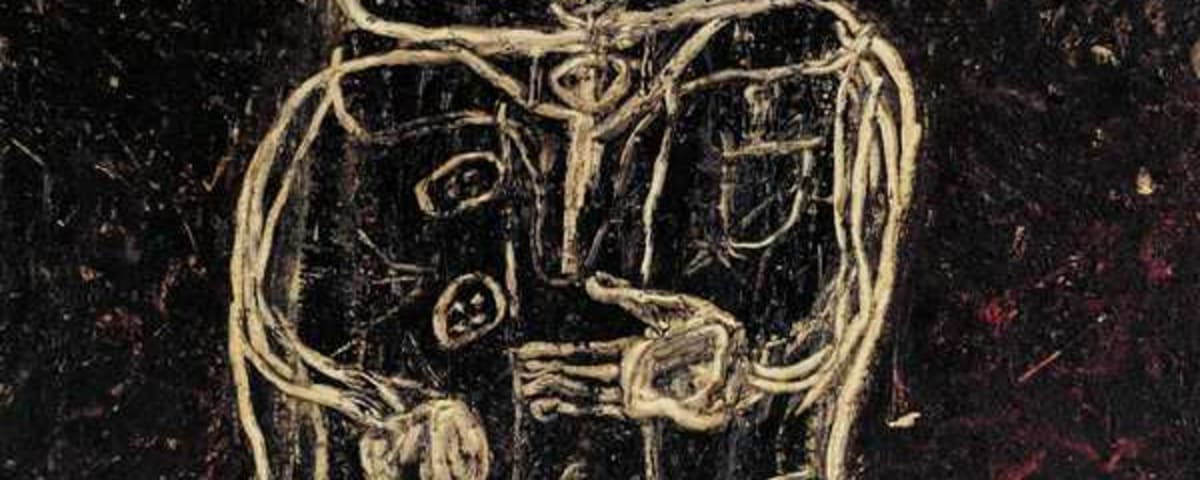
Outsider Art is a term denoting art that has a naive, spontaneous, often visionary quality and is created by people beyond the boundaries of the official art world: without academic training, without ambition for a career, and outside the traditional structures of art production and sale. The English term was introduced in 1972 by critic Roger Cardinal as an equivalent of the French concept "art brut" ("raw art"), coined by the artist Jean Dubuffet in the 1940s. Dubuffet collected the works of psychiatric hospital patients, self-taught creators, mediums, and socially isolated individuals, seeing in them a creative energy uncorrupted by cultural convention. Classic examples are considered to be the drawings of Adolf Wölfli and the elaborately detailed fantasy worlds of Henry Darger. Outsider Art is distinguished by deep personal obsession, idiosyncratic symbolism, and technical freedom. Over time it gained museum recognition and influenced professional artists, calling into question the boundaries between "high" and "marginal" art.
Pan-Africanism is an ideology and movement of racial and cultural solidarity among the peoples of Africa and its diaspora, which formed around the mid-nineteenth century and gained strength in the twentieth. Politically, Pan-Africanism sought the unity of African peoples, liberation from colonialism, and overcoming the legacy of the slave trade; culturally, it affirmed the dignity, heritage, and distinctiveness of African civilization. In art, Pan-African ideas nourished the search for an independent visual language free from European domination and a return to indigenous forms, symbols, and aesthetics. These sentiments echoed the Négritude movements in the French-speaking world and the Harlem Renaissance in the United States. Artists of the diaspora and the continent drew on African sculpture, textiles, ornament, and oral tradition as sources of inspiration. In the post-war era of decolonization, Pan-Africanism stimulated festivals of African art such as FESTAC and the development of modernist schools in independent states. It remains an influential foundation for the artistic self-definition of Black artists worldwide.
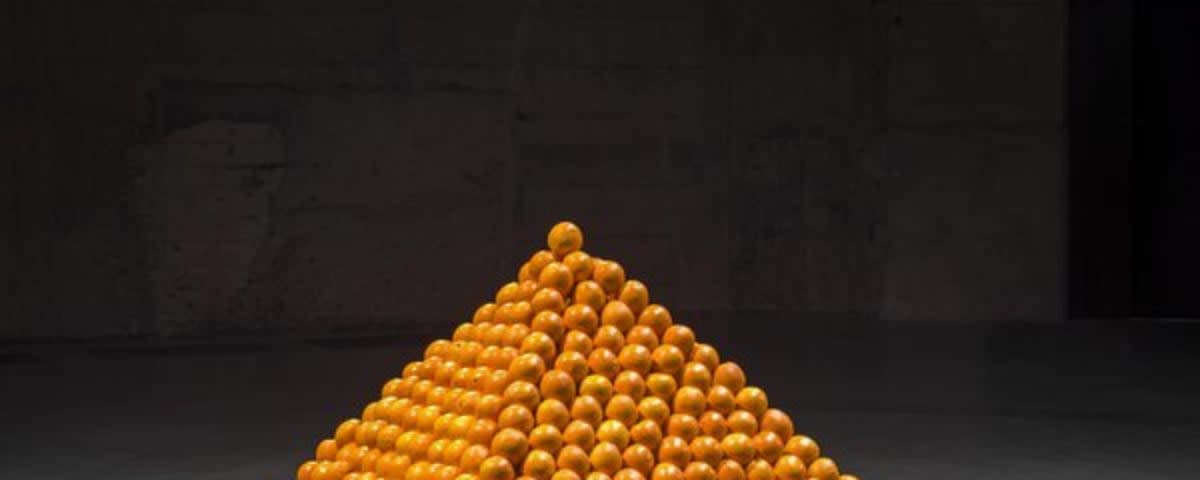
Participatory art is a form of art that directly involves the audience in the creative process, transforming viewers from passive spectators into active participants and co-authors of the event. Unlike a traditional work that exists as a finished object, a participatory work is realized only through the action, interaction, and experience of the people who take part in it. The roots of this approach reach back to the avant-garde experiments of the Dadaists and Futurists in the early twentieth century, as well as the Happenings of the 1950s and 1960s and the activity of the Fluxus movement. Theorists, notably Claire Bishop in her book "Artificial Hells," analyze participatory art through the lens of the ethics, aesthetics, and politics of participation, viewing collective action as a way of critiquing individualism and market relations in art. Well-known practitioners include Tino Sehgal, Rirkrit Tiravanija, and collectives of socially engaged art. Participatory practices are closely linked to relational aesthetics and New Genre Public Art and have substantially expanded ideas about authorship, the role of the viewer, and the social function of contemporary art.
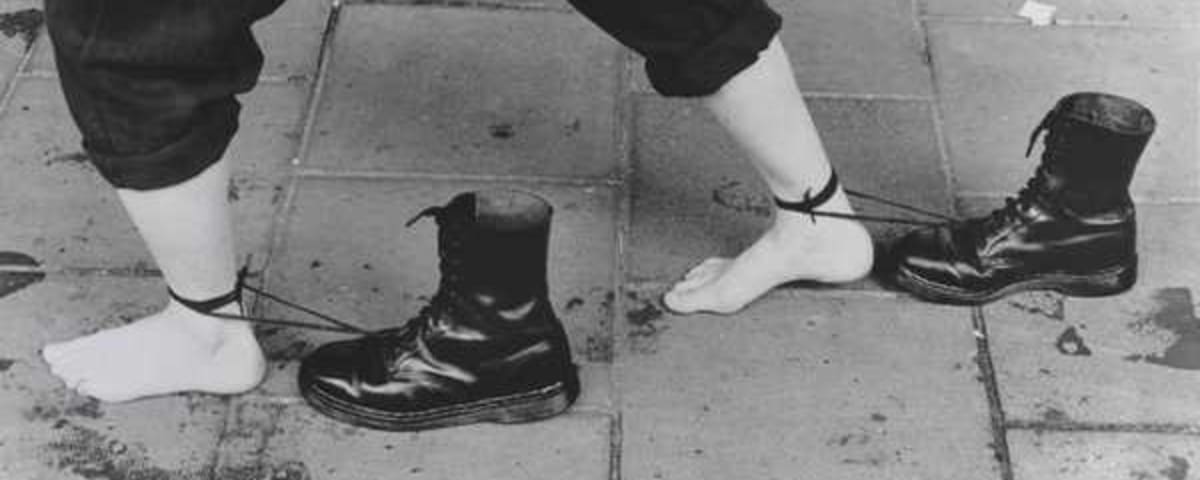
Performance art is an art form in which the artist uses their own body as the primary medium and carries out a particular action or series of actions that themselves become the artwork. Unlike painting or sculpture, performance exists in time and space, is ephemeral and often unrepeatable, and its main components are the artist's presence, duration, interaction with the viewer, and the live experience itself. The origins of the genre reach back to the avant-garde evenings of the Dadaists at the Cabaret Voltaire, Futurist demonstrations, and early twentieth-century experiments, but as an independent form performance took shape in the 1960s and 1970s within the context of Conceptual art, body art, and feminism. Classic examples are the works of Marina Abramović, who tested the limits of the body and endurance, the actions of Joseph Beuys with his idea of "social sculpture," and the performances of Vito Acconci and Chris Burden. Performance is often recorded in photographs, video, or documents, which later become museum objects themselves. The genre radically changed ideas about the materiality and permanence of the artwork.
The Pictures Generation is the name given to a group of American artists who reached creative maturity in the late 1970s and early 1980s and were known for their critical analysis of media culture, advertising, film, and photography. The term derives from the influential exhibition "Pictures," organized in 1977 by critic Douglas Crimp at the New York venue Artists Space. These artists worked in an age of visual saturation with mass images and explored how photography, television, and advertising shape identity, desire, and perceptions of reality. Relying on strategies of appropriation, they borrowed, copied, and reworked already existing images, questioning the notions of originality and authorship. Key figures include Cindy Sherman with her "Untitled Film Stills," Richard Prince, Sherrie Levine, Barbara Kruger, and Louise Lawler. The theoretical basis of the movement was the ideas of postmodernism and semiotics. The Pictures Generation significantly influenced the subsequent development of conceptual photography and critical art about the media.
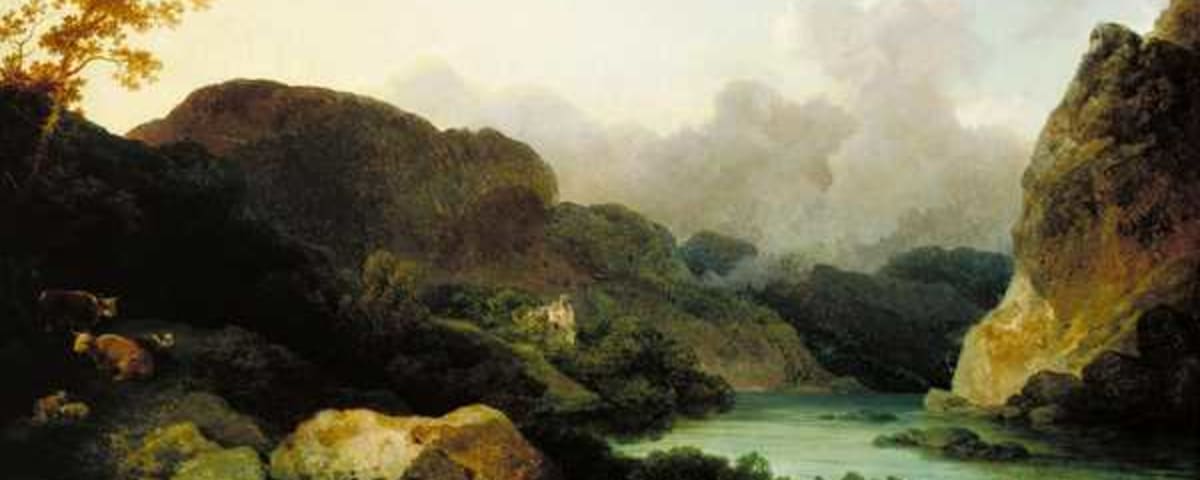
Picturesque is an aesthetic category that took shape in Britain at the end of the eighteenth century and described an ideal type of landscape attractive precisely for its artistic, "picture-like" quality. The term derives from the Italian pittoresco — "resembling a picture." The picturesque occupied an intermediate position between two other categories of the era — the "beautiful," which implied smoothness, harmony, and tenderness, and the "sublime," associated with vastness, terror, and the power of nature. The picturesque, by contrast, valued irregularity, roughness, variety, ruins, gnarled trees, and elements of wildness that gave a landscape its picturesque character. The theory was developed by the English authors William Gilpin, Uvedale Price, and Richard Payne Knight at the close of the eighteenth century. The concept had an enormous influence on landscape painting, garden design, and Romantic literature: gardens were deliberately arranged to resemble the paintings of Claude Lorrain and Salvator Rosa. The picturesque shaped the taste of an entire era in the perception of nature and left a deep mark on European landscape culture.
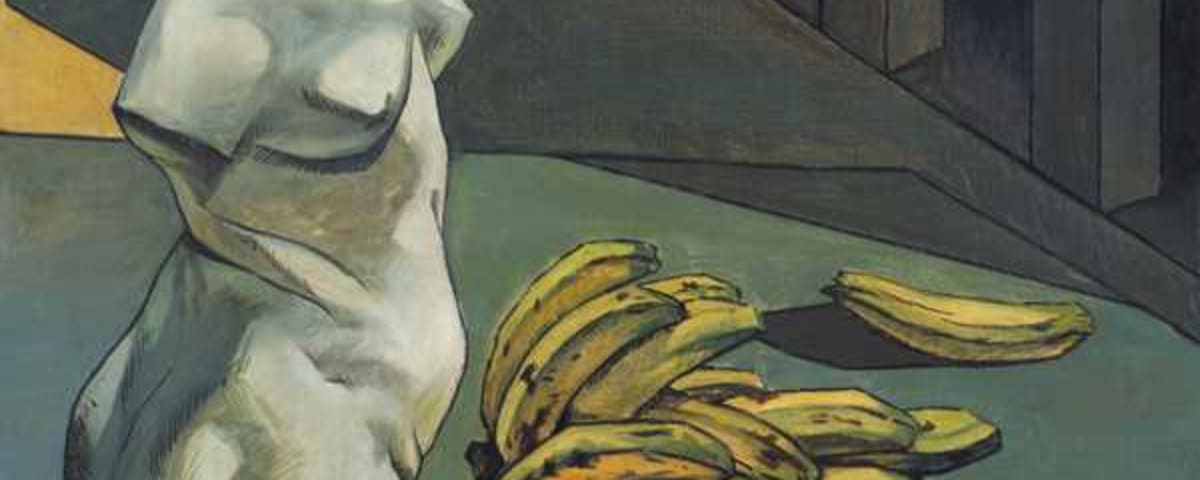
Metaphysical Painting (Pittura Metafisica) was an Italian art movement of the early twentieth century characterized by dreamlike, unsettling images of deserted arcaded squares with unexpected juxtapositions of objects. The tendency originated around 1910–1911 in the work of Giorgio de Chirico and received its name and theoretical formulation during the First World War, when de Chirico met the painter Carlo Carrà in the city of Ferrara around 1917. Metaphysical Painting depicted empty urban spaces with sharp shadows, classical arcades, mannequins in place of people, geometric instruments, and everyday things wrenched from their usual context. This created a sense of mystery, frozen time, and hidden meaning behind visible reality. The artists sought to reveal the "metaphysical" essence of things lying beyond ordinary perception. Besides de Chirico and Carrà, Giorgio Morandi is associated with the movement. Metaphysical Painting had an enormous influence on Surrealism, inspiring artists such as Max Ernst and René Magritte, and became one of the key sources of the art of the enigmatic and the unreal.

Pop art is a visual language that made mass culture, advertising, the comic strip and the consumer product the very subject of art. Its core idea is to erase the boundary between "high" and "low" and to raise the everyday, ironically, to the rank of an aesthetic object. Formally, pop art employs bright local colours, crisp contours, flat planes and the devices of reproduction printmaking. Characteristic motifs are tin cans, cola bottles, film stars, road signs, and comic-book covers and frames. Technically, its artists readily turned to silkscreen, photomechanical printing and the halftone dot, emphasising the serial and impersonal nature of the image. Composition is often built on repetition, the enlargement of a detail, or the collage-like juxtaposition of recognisable signs. Emotional distance and cool irony distinguish pop art from the expressive abstraction against which it arose. The movement flourished in late-1950s Britain and reached its peak in the United States of the 1960s. Its icon was Andy Warhol, with his reproduced portraits of Marilyn Monroe and his Campbell's soup cans. Roy Lichtenstein carried the language of the comic, with its Ben-Day dots, into high art, while Claes Oldenburg made giant soft replicas of ordinary objects. The British line is represented by Richard Hamilton and Eduardo Paolozzi. Pop art critically reflects on consumer society while relishing its glitter. Today it is prized for its visual punch, conceptual edge and lasting influence on design and advertising.

Post-Impressionism is a collective name for the artistic searches that grew out of Impressionism but overcame its fixation on the fleeting impression in favour of enduring form, structure and personal meaning. The movement's shared idea was to return to painting the constructive strength, symbolic depth and emotional tension lost in the pursuit of transient light. Formally, its masters retained the pure, saturated colour of the Impressionists, yet subordinated it to conception rather than to the eye. Paul Cézanne sought in nature a geometric foundation — the cylinder, the sphere, the cone — and built space through the juxtaposition of colour planes, becoming a bridge to Cubism. Georges Seurat devised Pointillism, breaking colour into tiny dots of pure pigment that blend only in the viewer's eye. Vincent van Gogh turned the brushstroke into a vessel of feeling: his swirling, impasto lines pulse with an inner fire. Paul Gauguin turned to Synthetism and symbol, working with large decorative fields of saturated colour and primitive forms. Post-Impressionist composition is deliberate, often flat and decorative, with an emphasised contour. Technically, its artists experimented with texture, the rhythm of the brushstroke and the expression of line. The movement developed in France in the 1880s–1900s and became the foundation of all modern twentieth-century art, feeding Fauvism, Expressionism and Cubism. Today Post-Impressionism is valued for uniting chromatic freedom with intellectual and spiritual depth.
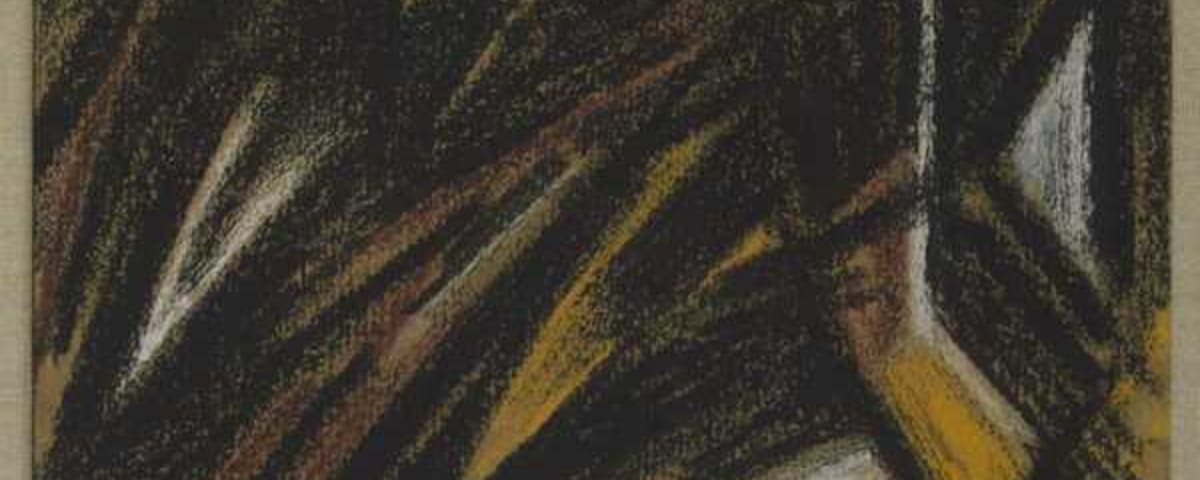
Rayonism (from the French rayon, "ray") was an early form of abstract art characterized by the interaction of lines and forms derived from rays of light reflected off objects. The tendency was developed by the artists Mikhail Larionov and Natalia Goncharova around 1912–1913 and announced in a manifesto in 1913. Rayonism was based on the idea that the eye sees not objects themselves but the rays of light they emit; the artist's task was to depict not the thing but the intersection of these invisible streams of light in space. The canvases showed dynamic bundles of colored lines crossing at various angles, creating a shimmering, almost non-objective field. Theoretically the tendency echoed the ideas of Italian Futurism regarding movement, dynamism, and energy, as well as the scientific conceptions of light of its time. Goncharova, whose art was closely linked to folk tradition and icon painting, brought to Rayonism a sense of color and decorative rhythm. Although the movement was short-lived, it became one of the earliest steps toward complete abstraction in European art.
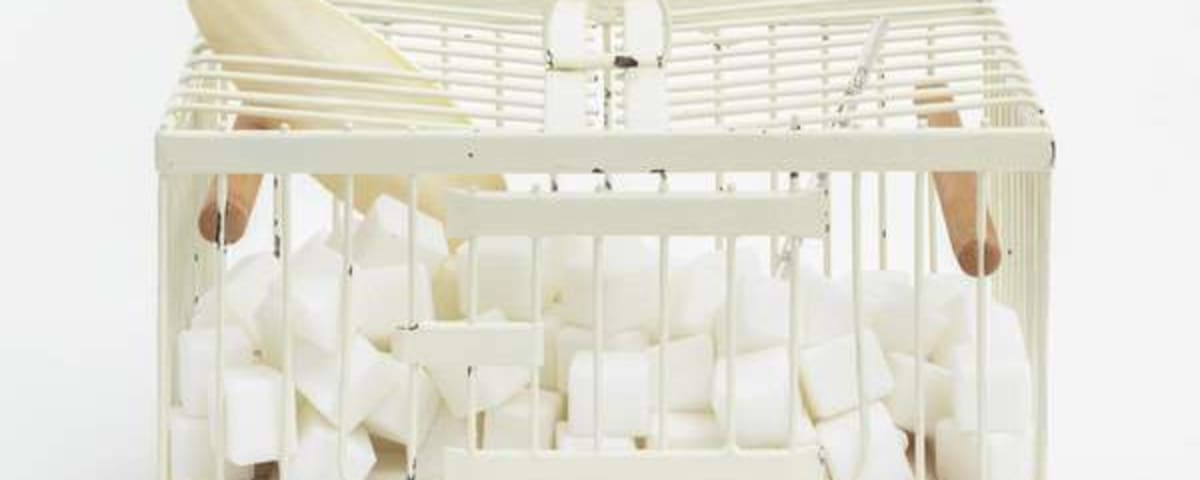
Readymade is a term introduced by the artist Marcel Duchamp to denote artworks created from mass-produced industrial objects, selected and declared art by the very fact of the artist's choice. Duchamp began using the concept around 1915. The essence of the readymade lay in a radical shift: the artist no longer paints or sculpts anything but merely singles out an ordinary object from the flow of consumption, places it in an artistic context, and grants it a new status. The most famous example was "Fountain" of 1917 — a factory-made porcelain urinal signed with the pseudonym R. Mutt and submitted to an exhibition. Duchamp also turned a bicycle wheel, a bottle rack, and a snow shovel into art. The readymade called into question fundamental notions of craftsmanship, originality, authorship, and the very nature of art, asserting that the decisive factor is the artist's idea and gesture rather than craft. This idea had a colossal influence on Dada, Conceptual art, Pop art, and nearly all art of the twentieth and twenty-first centuries.
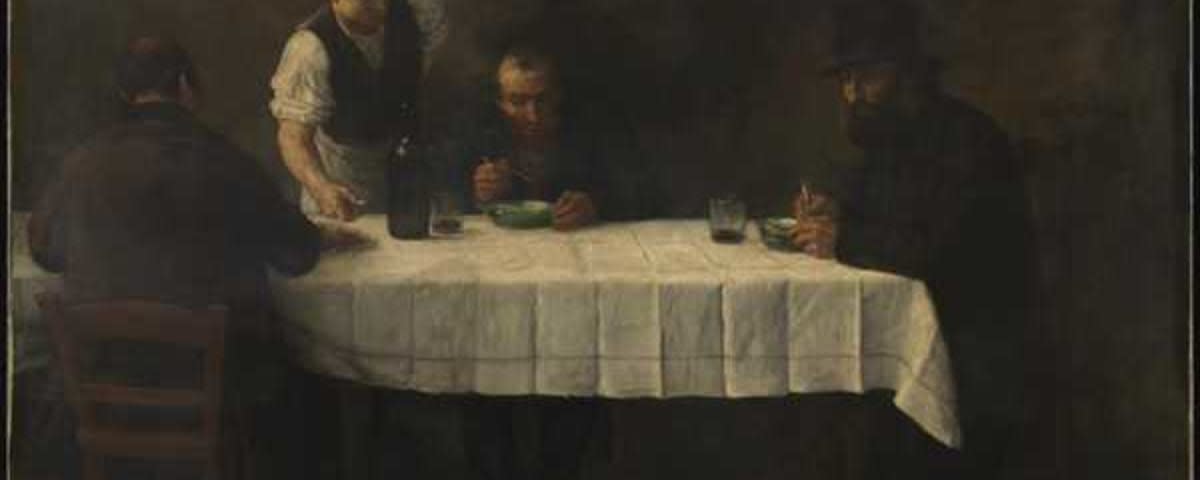
Realism is a visual language that strives to render the surrounding reality truthfully and without bias, as it actually is, free of idealisation, mythological ornament or romantic exaltation. Its core idea is to recognise ordinary people, labour, everyday life and social contradiction as worthy subjects of art. Formally, Realism relies on precise drawing, exact anatomy, convincing perspective and the tonal modelling of volume. The palette is usually restrained and close to nature, attentive to real illumination and the materiality of textures. Composition avoids artificial theatricality, favouring natural, observed scenes. Its motifs are peasants, workers, urban types, portraits of contemporaries, genre scenes and the landscape of one's native land. Technically, its artists prize careful execution and the authenticity of detail. As a conscious programme, Realism took shape in mid-nineteenth-century France: Gustave Courbet challenged academicism with canvases of stone-breakers and a rural funeral, while Jean-François Millet celebrated peasant toil. In Ukraine, Realism produced a constellation of masters born on Ukrainian soil. The Ukrainian artist Illia Repin, a native of Chuhuiv in Sloboda Ukraine, created the monumental "Reply of the Zaporozhian Cossacks" and sharp social canvases. Mykola Pymonenko lovingly recreated Ukrainian village life, rituals and landscapes. Realism laid the foundation for a critical view of society. Today it is valued for its craftsmanship, humanity and capacity to tell the truth about life.
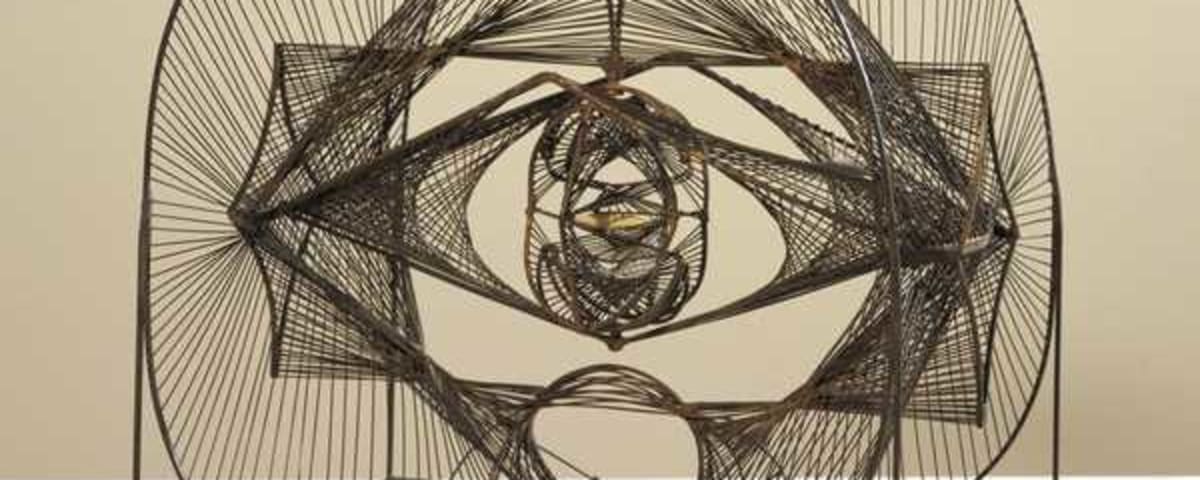
Réalités nouvelles ("New Realities") was an exhibition society and salon devoted to pure, non-objective abstract art. The association arose in Paris: the first initiative under this name appeared in the late 1930s, and the Salon des Réalités Nouvelles was officially founded in 1946, in the post-war era when abstraction was seeking new institutional forms. The society continued the traditions of the pre-war groups Cercle et Carré and Abstraction-Création, which championed geometric, concrete abstraction against figuration and Surrealism. The annual Réalités Nouvelles salons became the main platform for non-objective artists from various countries, among them Auguste Herbin, Jean Dewasne, Sonia Delaunay, and many others. The term "concrete art," introduced earlier by Theo van Doesburg, emphasized that abstract lines, colors, and planes are not a simplification of reality but themselves constitute a new, self-sufficient "reality." The salon played an important role in the revival and dissemination of abstract art in Europe after the Second World War and continues to operate to this day.
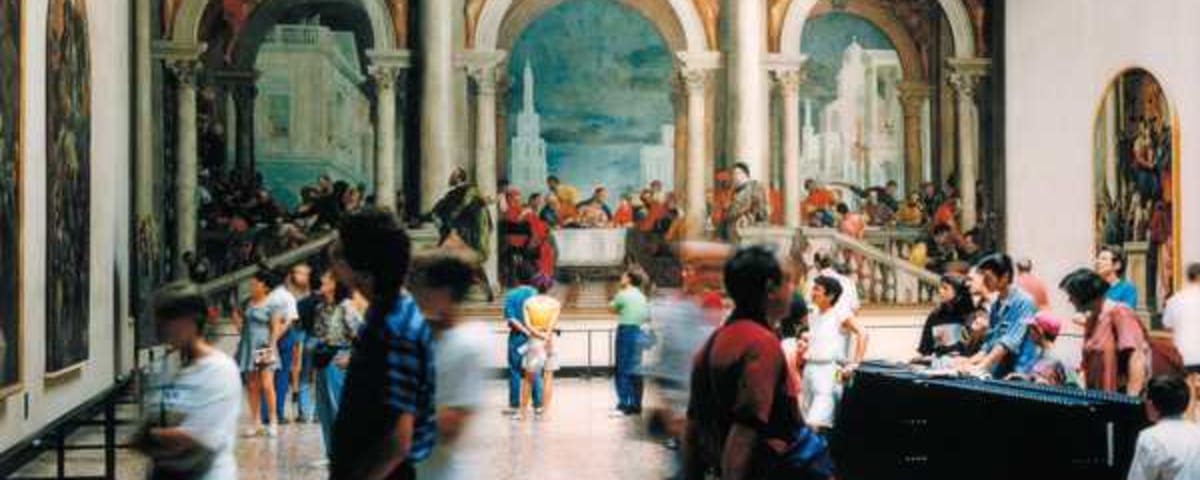
The Renaissance, as a visual language, is a system of pictorial principles that revived the ancient ideal of harmony, measure and human dignity, placing the human being at the centre of the universe. Its central idea is the rational cognition of the visible world, grounded in observation and science, and its embodiment in perfect form. Formally, the Renaissance gave art linear and aerial perspective, precise anatomy, chiaroscuro modelling and a balanced, often symmetrical composition governed by mathematical proportion. The palette grew ever richer, especially with the development of oil painting, which allowed subtle glazes and soft transitions (sfumato). Its motifs embrace religious subjects, classical mythology, portraiture and the birth of landscape. Technically, its artists combined scientific perspective with virtuoso draughtsmanship. The movement arose in Italy in the fourteenth to sixteenth centuries, passing from the Early to the High Renaissance. Its titans were Leonardo da Vinci, with the "Mona Lisa" and "The Last Supper"; Michelangelo, with the ceiling of the Sistine Chapel; Raphael, with his harmonious Madonnas; and Titian, as the master of Venetian colour. In the North, a parallel line developed with Jan van Eyck and Albrecht Dürer and their scrupulous detail. The Renaissance shaped the European canon of beauty for centuries to come. Today it is valued for its synthesis of science and art, its humanist pathos and its unsurpassed technical perfection.

Resistance Art is a form of politically engaged art that emerged in South Africa in the mid-1970s, following the Soweto uprising of 1976. It focused on the struggle against apartheid — the system of racial segregation — and on affirming African dignity, strength, and unity. Resistance Art used accessible and reproducible means: posters, prints, murals, banners, photography, and illustrations for trade-union and community movements, in order to mobilize the community and convey a political message despite censorship. Artists worked in community art workshops and often remained anonymous for their safety. The works exposed the violence of the regime, honored fallen activists, and called for solidarity. Among the notable figures were Thamsanqa Mnyele (killed in 1985), Dikobe Martins and Norman Catherine, as well as many collectives. After the fall of apartheid in 1994, Resistance Art became an important part of South Africa's cultural memory and an example of how visual creativity can be a direct instrument of social and political struggle.
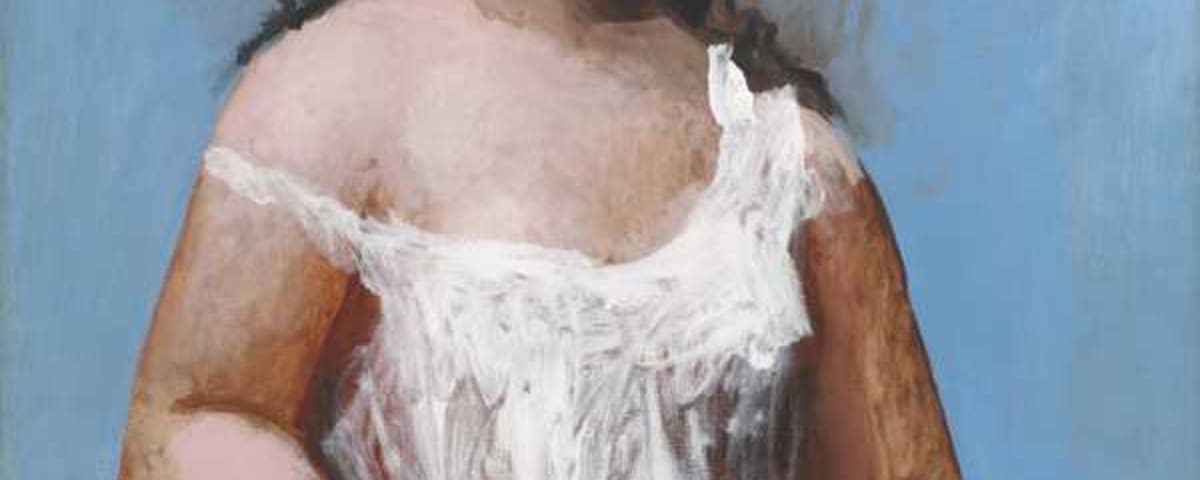
Return to Order (French: retour à l'ordre) was a European art movement and mood after the First World War, characterized by a return to more traditional, classical approaches in art and a rejection of the extreme avant-garde experiments of the previous decade. The catastrophe of the war provoked in many artists a longing for stability, clarity, order, harmony, and connection with the great artistic heritage of the past. Instead of the fragmentation of Cubism and the aggression of Futurism, artists turned to balanced composition, clear drawing, figuration, and classical subjects. A symbolic embodiment of this turn was Pablo Picasso's "neoclassical" period in the early 1920s, with its monumental, sculptural female figures. In Italy the Novecento group developed in parallel, and the French poet and artist Jean Cocteau was one of the theorists of this mood. Return to Order was not a single style but rather a common tendency that spread across various countries and influenced both modernists and official art of the interwar era, becoming an important episode in the history of twentieth-century art.

Rococo is a visual language of refined lightness, play and pleasure that arose in the early eighteenth century as an intimate, chamber-scale response to the solemn grandeur of the Baroque. Its core idea is to turn art into a source of exquisite delight, to celebrate love, flirtation, luxury and the fleeting joy of existence. Formally, Rococo is distinguished by asymmetry, capricious flowing lines, the shell motif (rocaille), plant scrolls and mirror-like glints. The palette is built on tender pastel tones — sky blue, pink, pearl grey, cream and gold. Composition is often dynamic yet free of pathos, playful and light instead. Its motifs are gallant fêtes, pastorals, boudoir scenes, cupids and the ancient goddesses of love. Technically, its painting favours a light, almost sketch-like brushstroke, transparency and delicacy. Rococo merged organically with the decorative arts, interiors, porcelain and furniture. Its leading masters were the Frenchmen Antoine Watteau, creator of melancholy "fêtes galantes"; François Boucher, with his sensual mythological scenes; and Jean-Honoré Fragonard, with the sparkling "The Swing" and his amorous subjects. In portraiture, Rococo elegance was embodied by Élisabeth Vigée-Lebrun. The movement reigned at the European courts until the triumph of austere Neoclassicism. Today Rococo is valued for its decorative virtuosity, elegance and the hedonistic sensuality of its imagery.

Romanticism is a visual language of feeling, imagination and freedom that arose in the late eighteenth and early nineteenth centuries as a revolt against the cold rationalism of Neoclassicism and the ordered world of the Enlightenment. Its central idea is to exalt personal experience, passion, dream and the drama of the human soul above rules and norms. Formally, Romanticism employs dynamic, often diagonal composition, energetic movement, contrasts of light and shadow, and an expressive, free brushstroke. The palette can be dramatic and saturated, able to convey a storm, a fire, moonlight or a thunderous sky. Its motifs are the majestic elements of nature, ruins, the exoticism of the East, historical catastrophes, heroic impulses and the solitary dreamer before the infinite. Technically, its artists prize emotional immediacy over academic polish. In France, Eugène Delacroix embodied passionate colour in "Liberty Leading the People", while Théodore Géricault conveyed tragedy in "The Raft of the Medusa". In Spain, Francisco Goya laid bare the dark depths of humanity. The German Caspar David Friedrich created mystical landscapes of solitude, and the Englishman J. M. W. Turner dissolved form in the element of light and air. Romanticism fed the national awakening of peoples, including the Ukrainian, inspiring an interest in folklore and history. Today the movement is valued for its emotional depth, its cult of imagination and its affirmation of the uniqueness of the human personality.
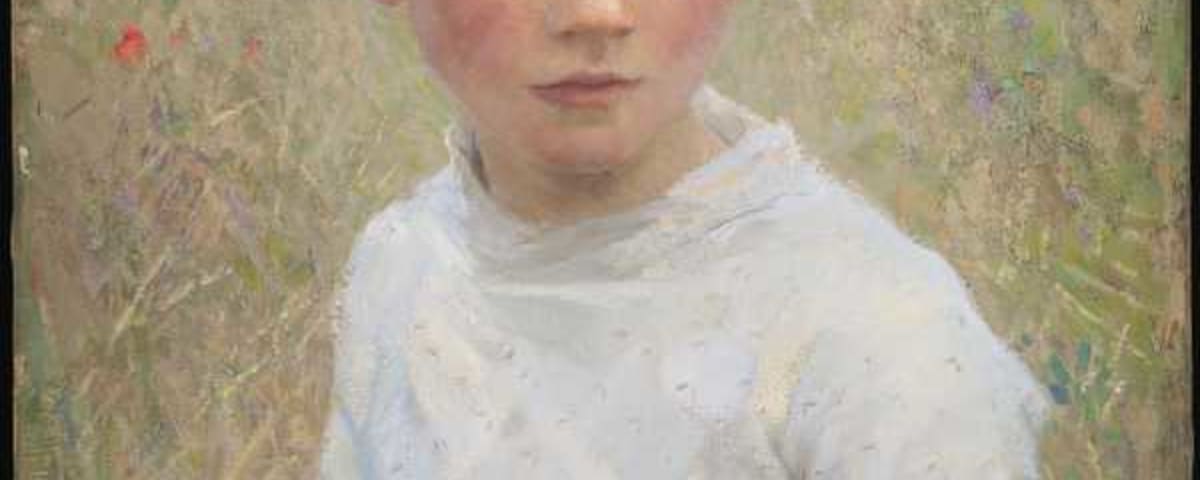
Rural Naturalism was a painting movement of the second half of the nineteenth century characterized by scenes of country life and labor depicted in a realistic and often sentimentalized manner. The tendency developed under the influence of French Realism, notably the work of Jean-François Millet and the Barbizon school, as well as the method of plein-air painting, which allowed artists to work directly in nature and accurately convey light and atmosphere. Particularly influential was the example of Jules Bastien-Lepage, whose canvases of peasants combined documentary fidelity with a poetic sensibility. Rural Naturalism depicted peasants, shepherds, reapers, fishermen, and children in moments of labor and rest, emphasizing the dignity of simple life, the human bond with the land, and the passage of rural existence. The movement spread across many countries of Europe and America, inspiring whole artist colonies such as the Newlyn school in Britain. Although sometimes criticized for idealization, Rural Naturalism played an important role in democratizing the subjects of art and affirming a realistic view of the lives of ordinary people.
Secession (from the Latin secessio, "separation") is a term denoting the breaking away of younger and more radical artists from an existing academy or established art society in order to form a new association free from conservative rules and to provide their own exhibition venue. The phenomenon became widespread in German-speaking countries at the end of the nineteenth century. The most famous was the Vienna Secession, founded in 1897 by a group of artists led by Gustav Klimt, who became its first president. Its motto proclaimed: "To every age its art, to art its freedom." The members of the Vienna Secession, among them also Josef Hoffmann and Koloman Moser, built their own exhibition pavilion and published the journal "Ver Sacrum," promoting the Art Nouveau style and the idea of a synthesis of the arts. Earlier, in 1892, the Munich Secession arose, and later the Berlin Secession led by Max Liebermann. The Secession movement became an important form of modernization of European art, challenging the academic monopoly and opening the way to new aesthetic explorations at the turn of the century.
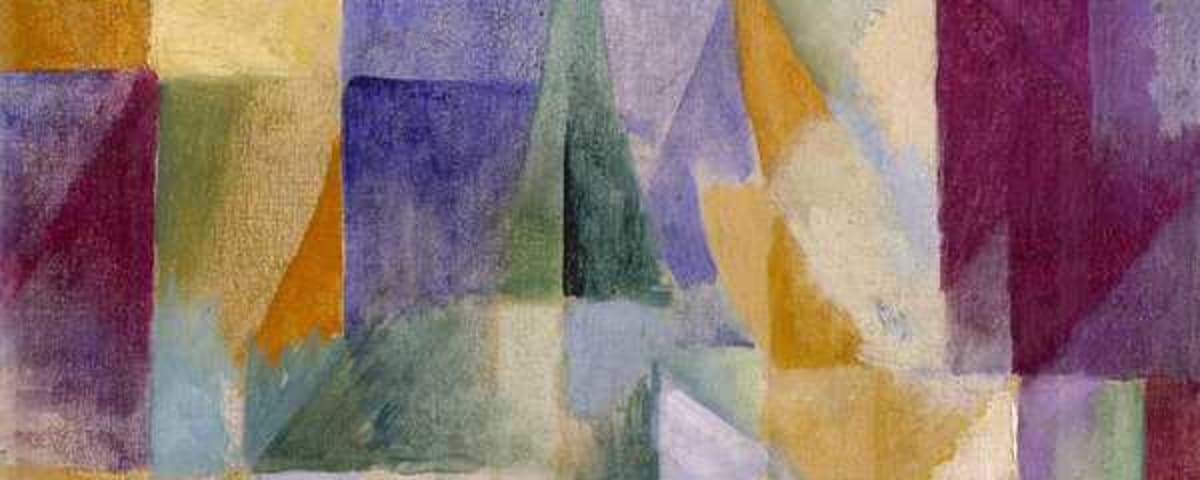
Simultanism (from the French simultané, "simultaneous") is a term introduced by the artist Robert Delaunay to describe the abstract painting developed by him and his wife Sonia Delaunay from around 1910–1912. The concept relied on the law of the "simultaneous contrast of colors," formulated in the nineteenth century by the chemist Michel-Eugène Chevreul, according to which adjacent colors mutually intensify one another and are perceived by the eye at the same time, producing a sense of vibration, movement, and light. In Simultanism color became the main means of constructing form and space rather than mere decoration; the interaction of contrasting colored planes was meant to convey the dynamism of modern life. Simultanism is closely linked to Orphism and became one of the key ideas in early abstraction. Sonia Delaunay extended these principles to textiles, book art, clothing design, and decorative panels, notably in the famous "simultaneous book" together with the poet Blaise Cendrars. Simultanism had a notable influence on the development of color abstraction and modernist design in Europe in the first half of the twentieth century.
Site-specific describes an artwork conceived and made for one particular location, existing in an inseparable dialogue with that space and losing much of its meaning if removed. Unlike a portable painting or a freestanding sculpture, such a work responds to the architecture, history, landscape, light and social context of its chosen setting. The approach flourished from the 1960s within minimalism, land art and installation practice: Richard Serra, Robert Smithson and Daniel Buren insisted that relocating a work destroys it, most famously in the controversy over Serra's Tilted Arc. The concept extends to public art and museum interventions that reframe an existing environment. In Ukraine the site-specific logic resonates with contemporary artists who work inside abandoned industrial halls, ruined buildings and urban spaces, turning the place itself into material and a vehicle for statements about memory, history and identity.
The Situationist International (Internationale Situationniste, IS) was a revolutionary alliance of European avant-garde artists, writers and theorists formed in 1957 at a conference in Italy. Uniting former members of Lettrism, the COBRA group and other formations, it sought to dissolve the boundary between art and everyday life while attacking the capitalist "society of the spectacle." Its central figure was Guy Debord, author of The Society of the Spectacle (1967); the circle also included Asger Jorn and Raoul Vaneigem. The Situationists developed concepts such as the dérive (drift), psychogeography and détournement, the hijacking and subversion of existing images. Their ideas strongly shaped the May 1968 student uprising in Paris. The movement's legacy echoes in Ukrainian critical art and activist practices that rethink urban space, media and power structures, challenging the passive consumption of culture and everyday life.
Socialist Realism was the official, ideologically imposed method of Soviet art, dominant from 1932 until the late 1980s. Its foundations were formulated after the Party decree of 1932 on the restructuring of literary and artistic organisations and were consolidated at the Writers' Congress of 1934; its ideologist was Andrei Zhdanov, and the slogan "engineers of human souls" defined the artist's role as that of a propagandist. Its key idea was the depiction of reality "in its revolutionary development" — that is, not as it is but as the Party saw it: heroicised labour, the happy collective farm, the leader, industry, optimism. Formally, Socialist Realism leaned on the academic realism of the nineteenth century, on clear narrative and legibility for the masses, categorically rejecting any formalism or avant-garde. In practice this meant strict censorship, canonical subjects and the cult of the leader. Ukrainian artists of varying stature worked within the era: Tetyana Yablonska in her early period created the famous canvas "Bread" (1949), a model of the style, though she later evolved toward a more individual manner; Serhiy Hryhoriev, Mykola Hlushchenko and Mykhailo Derehus left a substantial legacy. The canon rested on the principles of party spirit, ideological commitment and "popular character," and the artists' unions strictly policed adherence to the method. In the 1960s a more restrained "severe style" matured within its bounds, preparing the ground for a gradual departure from dogma. Socialist Realism was not a style in the natural sense but a system of control that suppressed the avant-garde and Boychukism and for decades defined the limits of the permissible. Its monopoly began to crumble with the Thaw and the Sixties movement, and finally collapsed at the end of the Soviet era, yielding to the underground and to new artistic freedoms.
Socially engaged practice is a strand of contemporary art in which the work is collaborative, often participatory, and people together with their relationships become both the medium and the material. Instead of producing a finished object, the artist initiates processes, encounters and actions that unfold within real communities beyond the gallery walls. Its roots lie in the performance, conceptualism and institutional critique of the 1960s and 1970s, while theoretical framing came from Nicolas Bourriaud's notion of relational aesthetics and from dialogical art. Artists such as Tania Bruguera and Thomas Hirschhorn address migration, labour, education and political participation. In Ukraine this approach became especially vivid after the Revolution of Dignity and during the war, with art projects working alongside displaced people, veterans and urban communities, turning art into a tool of solidarity, healing and collective action.
Social realism refers to any realistic painting or graphic work that also carries an explicit social or political comment, usually focused on the lives of workers, the poor and the marginalised. The tendency crystallised in the first half of the twentieth century as a response to economic crises, industrialisation and inequality; it aimed not to beautify reality but to bear witness to it. Related phenomena include Gustave Courbet as a forerunner, American painters of the Great Depression, and the Mexican muralists Diego Rivera and José Clemente Orozco. Social realism must be distinguished from the official doctrine of Socialist Realism imposed as state policy in the service of totalitarian propaganda. In twentieth-century Ukrainian art, painters who sought to depict the true fate of peasants and workers often faced ideological pressure, and their sincere social themes clashed with the rigid canons forced upon them from above.
Social sculpture is a theory developed by the artist Joseph Beuys in the 1970s, grounded in the belief that everything is art and therefore every person is potentially an artist capable of shaping society creatively. Beuys expanded the very notion of sculpture: instead of stone or bronze, the "material" becomes thought, language, discussion, and social and political relationships. The idea is closely tied to his slogan "everyone is an artist" and to practical initiatives such as founding the Free International University and the vast ecological action 7000 Oaks at Documenta in 1982. Social sculpture stresses the creative responsibility of each citizen for a shared future. These views resonate with the Ukrainian experience of grassroots initiatives and volunteering, where collective creative action, from reconstruction to community self-organisation, is understood as a way of literally shaping society with one's own hands.
Spazialismo (Spatialism) was an Italian movement founded by the artist Lucio Fontana in 1947, whose manifesto proclaimed the need to unite art with the science and technology of a new era. Fontana, born in Argentina and working in Italy, sought to push painting beyond the flat plane of the canvas into real space and time. The most famous embodiment of these ideas is his series Concetti spaziali (Spatial Concepts), in which he punctured and slashed the surface of the canvas, transforming the two-dimensional picture into an object that admits real space and the darkness behind it. Spatialism anticipated environmental art, installation and light-based work, and influenced postwar experiments in kinetic and neon art. The radical gesture of breaking the surface became a universal symbol of the shift from the traditional easel picture to spatial thinking, a concern shared by contemporary artists, including in Ukraine.
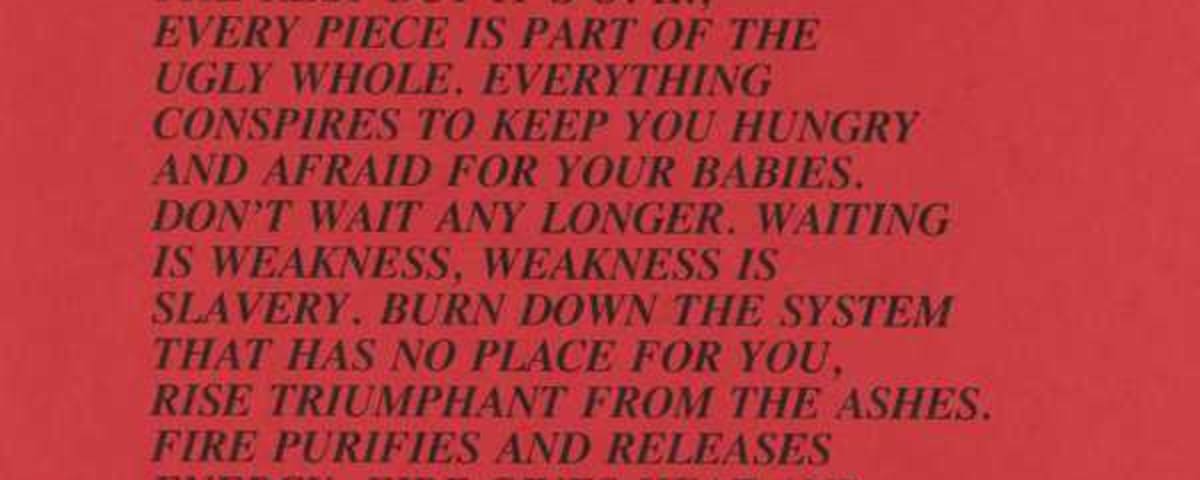
Street art is a visual language of public space that carries creativity into the street, turning façades, walls and urban surfaces into a canvas accessible to everyone. Its core idea is a direct, often extra-institutional address to the viewer, a dialogue with the urban environment and its social context. It grew out of the graffiti culture of the 1970s, when tags and aerosol "writing" flooded the New York subway. Formally, street art is extraordinarily diverse: from calligraphic tags and graffiti "wild styles" to large realistic murals, stencils, stickers, mosaics and paste-ups. Its palette may be bright and punchy or monochrome and graphic, depending on the concept and technique. Technically, its artists use aerosol, stencil and roller, while large murals require projection and lifts. Composition takes account of the supporting architecture, fitting the image into the rhythm of the city. Its motifs embrace social critique, political statement, poetic metaphor and playful provocation. Its global icons are the Briton Banksy, with his sharp stencils, and the American Keith Haring. In Ukraine, street art has undergone a powerful flowering: the monumental murals of Volodymyr Manzhos and Oleksii Bordusov (the Interesni Kazki duo), as well as numerous patriotic and memorial paintings across cities after 2014 and 2022. Today the movement is valued for its democratic spirit, the sharpness of its statement and its capacity to humanise urban space.

Suprematism is a visual language of radical non-objective abstraction that proclaimed the supremacy of pure feeling over the depiction of real things. Its core idea, formulated by the Ukrainian artist Kazimir Malevich (born in Kyiv in 1879), was to reduce painting to primary geometric elements and colour as self-sufficient carriers of spiritual energy. Formally, Suprematism operates with simple figures — the square, circle, cross, rectangle and triangle — which hover in a boundless white space, freed from gravity and horizon. Its palette at first favoured pure local colours — black, red, blue and yellow on a white ground — and later arrived at "white on white". Composition is dynamic, built on diagonal ascents, rhythm and the tension between forms that create a sense of cosmic movement. Technically, the surface is smooth, impersonal and stripped of expressive brushwork. The movement's manifesto was the "Black Square" of 1915, shown at the "0.10" exhibition in Petrograd — a kind of "icon" of the new art. Malevich, whose roots are tied to Kyiv, gathered followers: El Lissitzky developed the idea in his "Prouns", while Olga Rozanova and Ivan Puni worked in a Suprematist vein. The movement interacted closely with Constructivism and influenced architecture and design. Suprematism became one of the cornerstones of the world avant-garde. Today it is valued for its philosophical radicalism, its purity of form and its visionary striving toward a new spiritual dimension of art.

Surrealism is a visual language that explores the unconscious, the dream and the realm of the irrational, striving to free creativity from the control of reason and logic. Its core idea, proclaimed in André Breton's manifesto of 1924, was to attain a "super-reality" through the fusion of dream and actuality, psychic automatism and unexpected associations. Formally, Surrealism divides into two currents: one meticulously illusionistic, with photographically rendered impossible scenes, and the other abstract and automatic, with freely flowing forms. Its palette may be cold and dreamily translucent or unsettlingly contrasting. Composition is often built on the illogical juxtaposition of incompatible objects, the deformation of space and the metamorphosis of forms. Its motifs are melting clocks, deserted perspectives, hybrid creatures, eroticism, fears and the phantoms of memory. Technically, its artists invented frottage, decalcomania and automatic writing. The Spaniard Salvador Dalí became famous for his "paranoiac-critical method" and "The Persistence of Memory"; the Belgian René Magritte, for his philosophical riddles of everyday images; while Max Ernst and Joan Miró developed the automatic line. Giorgio de Chirico, with his "metaphysical painting", was a forerunner of the movement. Surrealism absorbed the ideas of Freudian psychoanalysis and deeply influenced cinema, literature, advertising and fashion. Today it is valued for its liberation of the imagination, its poetics of surprise and its inexhaustible capacity to reveal the hidden depths of the human psyche.

Tachisme (from the French tache, meaning stain or blot) is a term for the non-geometric abstract art that developed in Europe during the 1940s and 1950s, characterised by spontaneous brushwork, dribbles and blots of paint, and calligraphic, writing-like marks. Tachisme is regarded as the European counterpart of American Abstract Expressionism and as part of the broader phenomena of lyrical abstraction and art informel. The tendency rejected earlier rational, geometric art such as Cubism and Constructivism in favour of intuitive, gestural expression. Its leading figures include Hans Hartung, Georges Mathieu, Wols and Pierre Soulages. The Tachistes wanted the very texture of the paint and the trace of the artist's moving hand to become a direct carrier of emotion and the unconscious. This emphasis on spontaneity and the materiality of the surface later resonated with postwar European abstraction, joined by artists of Ukrainian origin in the diaspora.
Transavanguardia (Transavantgarde) was an Italian neo-expressionist group that emerged in the late 1970s and became one of the key manifestations of a return to painting after the dominance of conceptual and minimalist art. The term was coined by the critic Achille Bonito Oliva, who grouped together the painters Sandro Chia, Francesco Clemente, Enzo Cucchi, Mimmo Paladino and Nicola De Maria. The Transavantgarde rejected the idea of a linear modernist "progress" and proclaimed the artist's freedom to draw freely from art history, mythology, regional traditions and personal imagery. Their works were marked by saturated colour, figuration, expressive brushwork and open sensuality. Together with the German Neue Wilden and American neo-expressionism, the movement signalled the painting revival of the 1980s. Its assertion of the artist's right to memory, emotion and eclectic quotation proved attuned to the postmodern age, including the search for a new figuration in Eastern Europe and Ukraine.
Tropicália was the name given to an explosion of cultural creativity in Rio de Janeiro and São Paulo in 1968, as Brazil's military regime tightened its grip on power. The movement spanned music, visual art, theatre, cinema and poetry, blending local Brazilian culture with international avant-garde and pop influences in a spirit of radical "cultural cannibalism." In music it was embodied by Caetano Veloso, Gilberto Gil and the band Os Mutantes; the name itself came from the artist Hélio Oiticica's installation Tropicália (1967), a labyrinth of sand, plants and a television that ironically played on the stereotyped image of a tropical paradise. Tropicália art was at once festive and critical, mocking both provincialism and the blind imitation of foreign models, and its oppositional stance led to the persecution and exile of its leaders. For Ukrainian audiences the experience is valuable as an example of how art under authoritarian pressure finds a language of resistance through irony, hybridity and celebratory energy.

Verism is a term derived from the Italian word verismo (realism), denoting an extreme, sometimes harsh truthfulness in depicting reality without idealisation. In its broader historical sense, verismo first described the Italian literary and operatic movement of the late nineteenth century, focused on the hard lives of ordinary people; in opera it was embodied by Giacomo Puccini, Pietro Mascagni and Ruggero Leoncavallo. In the visual arts the concept is used for an intensely precise, documentary naturalism, from ancient Roman portrait busts that mercilessly recorded a sitter's wrinkles and flaws to later realist tendencies. In the twentieth century the word was also applied to a wing of the German Neue Sachlichkeit (New Objectivity), whose figures such as Otto Dix and George Grosz exposed the social wounds of postwar society with pitiless candour. Common to all forms of verism is a refusal of embellishment and a determination to show life as it really is.

Vorticism was a British avant-garde group formed in London in 1914 with the aim of creating art that expressed the dynamism of the modern world, the energy of machines, the city and speed. The movement arose at the crossroads of Cubism and Futurism but sought its own sharp, geometricised style with hard lines, angles and machine-like forms. Its intellectual leader was the writer and painter Wyndham Lewis, and the name was proposed by the poet Ezra Pound, alluding to the vortex as a point of maximum creative energy. The group published the magazine Blast and included artists such as Henri Gaudier-Brzeska and Edward Wadsworth. Vorticism was short-lived: the First World War scattered its members, and Henri Gaudier-Brzeska was killed at the front in 1915. Despite its brevity, the movement was arguably the only distinctive British contribution to international early modernism and left a notable mark on the history of the European avant-garde in the first third of the twentieth century.