


Ukrainian art & cultureOnline


Other dimensions of culture
Other dimensions of culture





Test mode: all content on this site is for testing and will be removed at launch.
Art Glossary
Ukrainian Art&Culture online glossary of art terms covers movements, styles and techniques such as Impressionism, Printmaking, Video art and more.
from Realismto Cyberpunk
34from Oilto 3D Modeling
8from Paintingto Design
7from Trypilliato Contemporary
23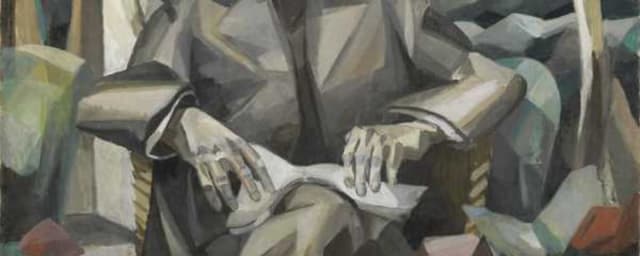
Abbaye de Créteil was a short-lived utopian community of French writers, artists, and composers founded in the autumn of 1906 in the town of Créteil, just outside Paris. Its name evokes the Abbey of Thélème in François Rabelais's Gargantua and Pantagruel, whose sole rule was "do as you wish": the members hoped to build a self-sufficient community that would support itself through its own printing press and free artists from the pressures of the commercial market. The nucleus of the group comprised the poets and novelists Georges Duhamel, Charles Vildrac, and René Arcos, joined by the painter Albert Gleizes, the composer Albert Doyen, and others. Aesthetically the circle is linked with "Unanimism," the idea of a shared, collective soul animating the crowd and the modern city. Despite its lofty ideals, financial hardship forced the community to disband as early as 1908, yet its experiment in communal living and cooperative publishing influenced later avant-garde associations across Europe.
See 37 art terms →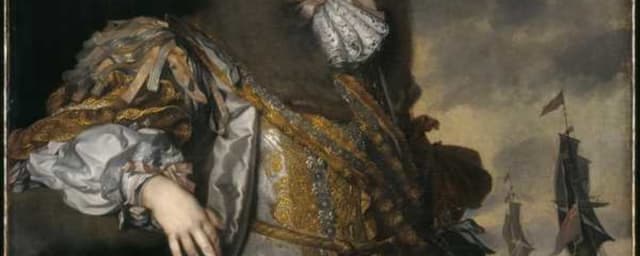
Baroque is an artistic language of the late sixteenth to the mid-eighteenth century, built on the pathos of movement, contrast and the emotional captivation of the viewer. In contrast to the balanced calm of the Renaissance, the Baroque strives to astonish, stir and draw the beholder into action, so its works are filled with dramatic tension and theatricality. Its hallmarks are a dynamic diagonal composition, sharp oppositions of light and shadow (the techniques of chiaroscuro and tenebroso), a wealth of textures, saturated color and an almost sculptural plasticity of form. Baroque masters loved expansive multi-figure scenes, illusionistic ceiling paintings that seem to open the sky, sumptuous draperies and the depiction of a moment of highest emotional intensity. In painting the style is represented by Caravaggio with his stark light, Peter Paul Rubens with his turbulent corporeality, Diego Velázquez and Rembrandt, who brought the play of light to psychological depth. In Ukraine a distinctive "Cossack Baroque" developed, blending Western European forms with local tradition: the architecture of the age of Hetman Ivan Mazepa, icon painting, engraving and the celebrated illustrated early printed books of the Kyiv-Pechersk Lavra. The Ukrainian portrait-parsuna and the many-tiered carved iconostases also belong to this era. Baroque became a style in which visual splendor served spiritual exaltation and affirmation, and its expressive means still nourish our notion of solemnity and drama in art.
See 23 art terms →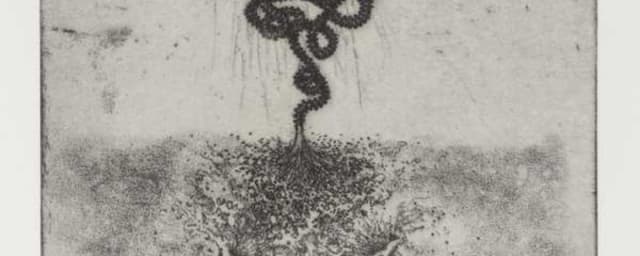
Cadavre exquis, the exquisite corpse, is a collective method of drawing or writing invented by the Surrealists around 1925. Several participants add a fragment to a shared work in turn without seeing the earlier parts: the sheet is folded to hide what has already been made, leaving visible only the connecting lines. The result is a strange, unpredictable creature or phrase born of the collective unconscious. The name comes from the first sentence produced in the literary version of the game: the exquisite corpse shall drink the new wine. Participants included Andre Breton, Yves Tanguy, Marcel Duchamp, and Joan Miro. The method embodied key Surrealist principles, automatism, chance, the refusal of individual control, and the freeing of imagination from logic. The exquisite corpse became not merely a game but a serious creative tool that influenced later collective and performative practices and is still used in art education to loosen the imagination.
See 36 art terms →
Dada was a radical anti-art movement born in 1916 in Zurich, at the Cabaret Voltaire, as an outraged response to the carnage of the First World War and to the bourgeois rationalism that had produced it. At the core of the Dada aesthetic lay deliberate provocation: the rejection of logic, taste and the very notion of the masterpiece, and a cult of chance, absurdity and irony. The movement's formal arsenal was exceptionally heterogeneous — photomontage, collage, assemblage, the readymade (a ready-made industrial object elevated to the status of an artwork), and sound or phonetic poetry. Composition was governed by rupture, by the collision of irreconcilable fragments and the montage of clippings from newspapers and advertising. Marcel Duchamp, with his urinal "Fountain" (1917) and his defaced "Mona Lisa," undermined the institution of the museum itself; Kurt Schwitters devised his own "Merz" system out of rubbish and tram tickets; Hannah Höch and Raoul Hausmann in Berlin turned photomontage into a political weapon; Man Ray and Francis Picabia extended the field toward machine-like imagery. Tristan Tzara formulated the movement's manifestos and its technique of poems assembled from cut-up words. Dada was fundamentally international and short-lived, yet it opened the road to Surrealism, conceptualism and all later art of the object and the action. Its legacy is not a style in the narrow sense but a new strategy: art as a critical gesture that questions its own limits.
See 20 art terms →
An edition, in art, is a series of identical impressions, prints, or multiples produced from a single printing plate, matrix, negative, or model. The concept of the edition is central to reproducible techniques such as engraving, etching, lithography, and screen printing, as well as photography and sculptural casting. Each copy in an edition is considered an original work rather than a copy, because it is produced directly from the artist's plate under the artist's control or with their authorisation. The size of an edition, meaning the number of copies, significantly affects the value and rarity of works: smaller editions generally command higher prices. Copies are traditionally numbered as a fraction, so that 12/50, for example, means the twelfth impression out of a total run of fifty. In addition to numbered sheets, there are also artist's proofs (épreuve d'artiste), trial proofs, and printer's proofs. Once the edition is complete, the printing plate is often cancelled or destroyed to prevent unauthorised additional printing. The practice of limited editions allows art to be more accessible while maintaining a controlled rarity, combining the democratisation of printmaking with the market value associated with an original.
See 18 art terms →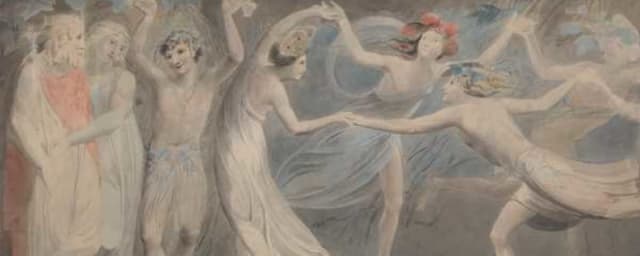
Fairy painting is a genre depicting fairies, elves, gnomes and other creatures from folklore, mythology and the supernatural world. It is especially closely associated with Victorian Britain of the mid and later nineteenth century, when a fascination with fairy tales, legends and the otherworldly combined with an interest in literature — above all in Shakespeare's plays A Midsummer Night's Dream and The Tempest, which became favourite sources of subject matter. Such paintings are distinguished by extraordinary detail, the small scale of the figures and a fantastical, sometimes unsettling atmosphere. Among the best-known masters of the genre is Richard Dadd, whose meticulously obsessive The Fairy Feller's Master-Stroke (1855-1864) was created during the artist's confinement in a psychiatric hospital, as well as Joseph Noel Paton and John Anster Fitzgerald. Fairy painting reflected complex currents of Victorian culture: an escape from industrial reality into the world of imagination, an interest in childhood, the afterlife and the unconscious, and sometimes hidden erotic or anxious undertones. Today these works are valued for their technical mastery, rich fantasy and their peculiar window onto the psychology of the age.
See 23 art terms →
Generative art is art created wholly or partly by means of a predetermined autonomous system that often includes an element of randomness or self-determination. The artist sets the rules, algorithm or process and delegates the direct execution of the work to this system — mechanical, mathematical, chemical, biological or, most often, computational. The term is most frequently applied to computer art, in which program code generates images, forms, sound or movement according to defined parameters. The idea of creating by rules is not new: elements of a generative approach can be traced in the musical "dice games" of the Classical era, in the art of ornament, and in the avant-garde's experiments with chance, notably among the Dadaists. However, generative art truly flourished with the advent of computing: the pioneers of the 1960s — Frieder Nake, Georg Nees, Vera Molnár and Manfred Mohr — programmed plotters to create geometric compositions. The artist sets up the system, while the result is partly unpredictable, which raises questions about the role of author, chance and machine in the creative process. Today generative art is experiencing a new surge thanks to algorithms, blockchain platforms and artificial intelligence, remaining one of the most dynamic fields of digital art.
See 21 art terms →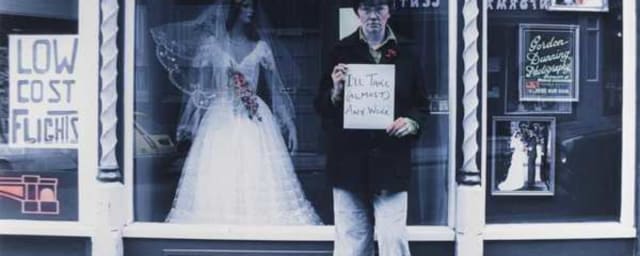
The Hackney Flashers were a women's art collective active in Britain from 1974 to 1980. Most of its members were photographers who identified as socialists and feminists and sought to combine documentary photography with political analysis. The collective worked in the London borough of Hackney, examining the position of women in paid work, the household and childcare. Their best-known projects were the exhibitions Women and Work (1975) and Who's Holding the Baby? (1978), in which photography was combined with texts, statistics, montage and satirical collage to expose invisible and unpaid women's labour and the shortage of affordable childcare. The members deliberately rejected individual authorship in favour of a collective, critical practice. The Hackney Flashers became a notable example of feminist documentary and agitational art of the 1970s that used photography as a tool of social consciousness and activism, and their legacy continues to inform discussions of gender, labour and representation in photography.
See 9 art terms →
Iconography is, firstly, the totality of images, symbols and motifs present in a work of art and, secondly, the branch of art history that studies their origin, meaning and evolution. Iconographic analysis asks not 'how is it depicted?' but 'what is depicted and what does it mean?': it identifies figures, subjects and their attributes, decodes symbolism and traces the established ways of representing particular themes throughout history. For example, keys point to Saint Peter, and a lily to the Annunciation and purity. As a scholarly discipline iconography took shape in the nineteenth and early twentieth centuries, and its most influential theoretical model was proposed by the German and American scholar Erwin Panofsky. He distinguished three levels of analysis: pre-iconographic description (recognizing forms and objects), iconographic analysis proper (identifying subjects and symbols) and iconological interpretation (revealing the deeper cultural, philosophical and worldview meaning of an age). Iconography is especially important for understanding religious, mythological and allegorical art, as well as the Eastern Christian icon, where the canonical images of Christ, the Mother of God and the saints follow strict traditional schemes charged with deep theological meaning.
See 18 art terms →
Japonisme (French Japonisme) is a term coined in the late nineteenth century for the Western fascination with Japanese art and design, which erupted after Japan was opened to trade in the 1850s. Colour woodblock prints (ukiyo-e) by masters such as Hokusai and Hiroshige, together with Japanese ceramics, fans, kimonos and folding screens, were imported into Europe in quantity and eagerly collected. Artists borrowed from them bold cropping, a high horizon line, flat fields of saturated colour, decorative outlines, asymmetry and a rejection of academic perspective. The influence of Japonisme is evident in the work of Édouard Manet, Edgar Degas, Claude Monet, Vincent van Gogh, James McNeill Whistler and the Nabis. The enthusiasm extended to the applied arts, shaping Art Nouveau, the poster and graphic design. Japonisme became one of the key catalysts in the passage from Realism to Modernism, unsettling European assumptions about space, composition and the role of the decorative in art.
See 2 art terms →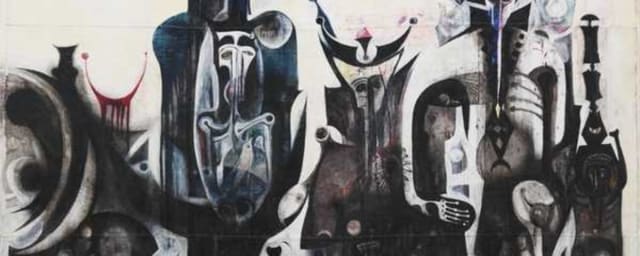
The Khartoum School was a modernist art movement that emerged in Sudan around 1960 and sought to develop a new visual vocabulary to express the unique identity of the newly independent nation after the country gained independence in 1956. The movement centred on the College of Fine and Applied Art in Khartoum, and its leading figures were the artists Ibrahim el-Salahi, Ahmed Shibrain and Kamala Ibrahim Ishag. The artists of the school aimed to combine the influences of Western modernism with local sources: Arabic calligraphy, Islamic ornament, African motifs and the traditions of Sudanese material culture. Central to their aesthetic was the notion of hurufiyya, the creative use of Arabic letters and calligraphic signs as plastic, almost abstract compositional elements. In this way the artists sought to reflect the dual, African and Arab-Islamic, heritage of Sudanese culture and to establish a distinctive postcolonial art. Ibrahim el-Salahi later achieved international recognition as one of the foremost masters of African modernism. The Khartoum School occupies an important place in the history of modern African and Arab art.
See 8 art terms →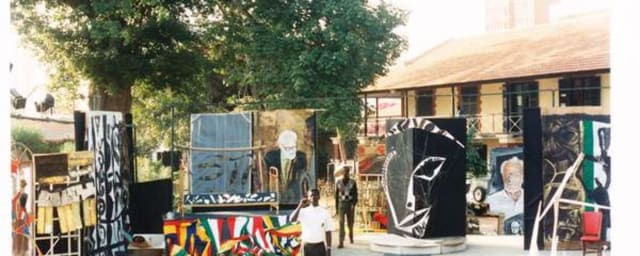
Laboratoire Agit'Art was a revolutionary and subversive art collective founded in Dakar, Senegal, in 1974 that sought to combine traditional African performance and creativity with a contemporary aesthetic. The group emerged as a reaction against official, state-sanctioned cultural policy, in particular the aesthetics of Negritude championed by Senegal's first president, Léopold Sédar Senghor. The members of the collective, among them the artist and writer Issa Samb (also known as Joe Ouakam), El Hadji Sy and others, rejected an orientation towards museum-bound, commodified art and emphasised process, performance, improvisation and the ephemerality of the creative act. Their practices combined theatre, poetry, painting, sculpture from found materials, installation and street actions, often unfolding in a shared courtyard studio in central Dakar that itself became a living, constantly changing work. Laboratoire Agit'Art became one of the most influential centres of avant-garde and conceptual art in West Africa and an important example of the critical, anti-institutional art of the postcolonial era, one that rethought the very nature of African modernity.
See 10 art terms →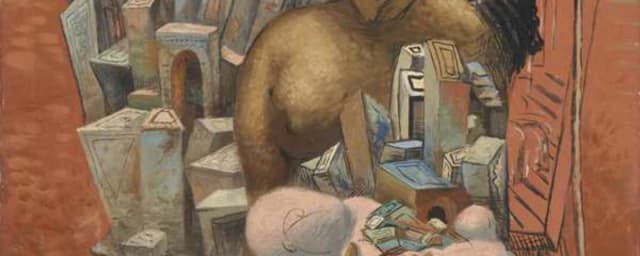
Magic realism is a term coined by the art historian and critic Franz Roh in 1925 to describe a strain of postwar European painting in which the world is depicted with emphatic clarity and realistic precision, yet with a sense of mystery, wonder or dreamlike estrangement. Unlike Surrealism, which released the unconscious and the illogical, magic realism preserves the clear, almost photographic distinctness of objects while endowing the ordinary with an aura of secrecy. Roh linked it to the New Objectivity (Neue Sachlichkeit) tendency in German art. The concept later spread to artists in various countries, including the American scene, and more widely still to literature, where magic realism became defining for Latin American prose. In painting, magic realism is distinguished by sharp detail, stillness, strange juxtapositions of familiar objects and a sense of muffled tension beneath the surface of the everyday. The tendency reflected a wish to return to the figurative after abstract and expressionist experiments, without losing modern anxiety.
See 31 art terms →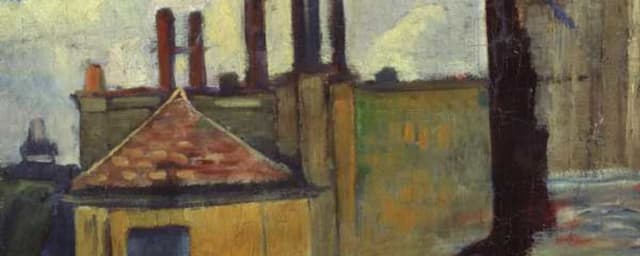
The Nabis were a group of Post-Impressionist French painters active from about 1888 to 1900, whose works are distinguished by flat patches of colour, bold outlines and simplified, decorative drawing. The name derives from the Hebrew word 'nabi' ('prophet') and reflected the semi-secret, almost mystical character of the association. The group arose under the influence of Paul Gauguin and the Pont-Aven school; the immediate spark was a small 'talisman' picture that Paul Sérusier painted under Gauguin's guidance. The Nabis included Pierre Bonnard, Édouard Vuillard, Maurice Denis, who formulated the famous dictum that a painting is above all a flat surface covered with colours in a certain order, as well as Paul Sérusier, Ker-Xavier Roussel and Félix Vallotton. The Nabis erased the boundary between high and decorative art, working on panels, stained glass, theatre sets, posters and book illustration. Their leaning toward flatness, symbolism and ornament made the group an important link in the passage from Impressionism to Modernism and Art Nouveau.
See 31 art terms →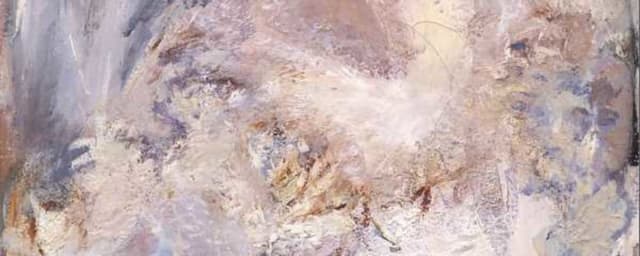
Objective Abstraction was a non-geometric, free style of abstract art developed by a group of British artists in the early 1930s. The tendency took definitive shape during the eponymous exhibition "Objective Abstractions," held in 1934 at London's Zwemmer Gallery. Unlike the strict geometric Constructivism widespread in Europe at the time, these artists worked in a manner of spontaneous, sensuous, almost improvisational brushwork, in which abstract form grew directly from the very process of painting rather than from a preconceived scheme. Painting appeared as a self-sufficient reality of color and texture, "objective" precisely because it did not depict the external world but existed as an independent material fact. Members of the group included Rodrigo Moynihan, Geoffrey Tibble, and Graham Bell. Objective Abstraction to some extent anticipated later Tachisme and Abstract Expressionism with their emphasis on gesture and the autonomy of the painted surface. Although the movement was short-lived, it became an important episode of early British abstract art.
See 10 art terms →
Painterly is a term denoting the application of paint in a «free», less controlled manner, as a result of which visible brushstrokes remain in the finished painting. This approach is contrasted with the linear, or graphic, mode, in which forms are outlined by clear contours and the brushstrokes are smoothed away and imperceptible. The concept of the «painterly» (German malerisch) was developed and given theoretical grounding by the Swiss art historian Heinrich Wölfflin in his «Principles of Art History» (1915) as one of five pairs of opposites by which he distinguished the styles of the Renaissance and the Baroque. In the painterly style, forms merge, and emphasis falls on masses of light and shadow, on colour and movement, rather than on a closed contour. Classic examples of painterly handling are the works of Titian, Rembrandt, Velázquez, and Frans Hals, and later the Impressionists. The painterly approach stresses the very process of painting and the materiality of the paint, and so remains one of the key concepts for the analysis of style in European painting.
See 36 art terms →A Japanese technique of low-temperature pottery firing in which the piece is taken from the kiln while still hot and cooled in the open air; also the ware itself.
See 21 art terms →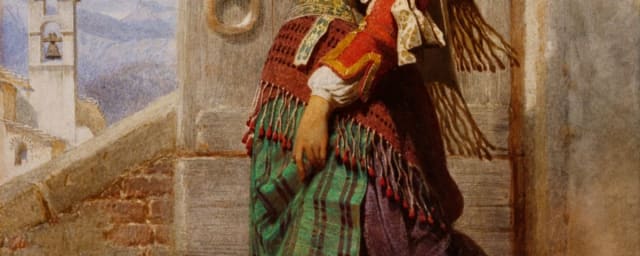
The Salon was the official art exhibition whose name derives from the Salon Carré in the Louvre in Paris, where from 1725 the French Royal Academy of Painting and Sculpture displayed the works of its members. Throughout the eighteenth and nineteenth centuries it became the most prestigious and influential public art exhibition in Europe: a jury of academicians selected the works, and acceptance or rejection could make or break an artist's career. The exhibitions were accompanied by vigorous debate, and it was here that the profession of art critic emerged, with writers such as Denis Diderot and later Charles Baudelaire producing extended reviews. The rigid conservatism of the jury provoked resistance. In 1863, under pressure from rejected artists, Napoleon III authorised the Salon des Refusés, which showed Édouard Manet's Le Déjeuner sur l'herbe among other controversial works. Later, independent bodies created their own venues, notably the jury-free Salon des Indépendants (from 1884) and the Salon d'Automne (from 1903), which became platforms for the Fauves and Cubists. The term "salon" thus came to symbolise the conflict between official academicism and the avant-garde, and it also became a model of the public art institution that shaped cultural life in other countries, including Eastern Europe and Ukraine.
See 35 art terms →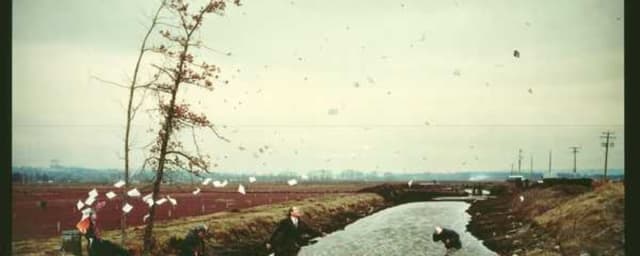
A tableau is a painting in which the figures are arranged for pictorial or dramatic effect and appear wholly absorbed in their actions, entirely unaware of the presence of the viewer. The term comes from the French tableau ("picture") and in art theory denotes a composition that presents itself as a self-sufficient, closed scene, as if a frozen moment of action. The figures do not "play to the audience" or address the viewer with a look or gesture, but behave as though the fourth wall between the picture and the onlooker did not exist at all. The notion of the tableau was developed in the eighteenth century by the philosopher Denis Diderot, who opposed the truthful absorption of figures in their action to artificial theatricality. Later the art historian Michael Fried, in his studies of "absorption" and "theatricality," showed how important this strategy was for the development of European painting from Chardin and Greuze onward. A related notion is the "living picture" (tableau vivant), in which live people froze in poses to reproduce a well-known painting. The idea of the tableau also influenced photography and cinema, where the staged, carefully composed "tableau" became a distinct expressive device of framing.
See 19 art terms →An ethnographic macro-region of Ukraine comprising Hutsulshchyna, Boikivshchyna and Lemkivshchyna and, in the broader division, also Pokuttia, Bukovyna and Zakarpattia.
See 6 art terms →
Vanishing point, in the system of linear perspective, is the point at which distant parallel lines, seen in perspective, appear to converge. Although in real three-dimensional space such lines never intersect, on the plane of the picture they seem to meet at a common point, usually situated on the horizon line, thereby creating a convincing impression of depth and distance. In the simplest, one-point perspective, all lines directed into the depth of space converge towards a single central vanishing point; in two-point perspective, used to depict objects at an angle, two vanishing points on the horizon are used; more complex constructions involve three or more points. The concept of the vanishing point is fundamental to the mathematical theory of perspective developed in Renaissance Italy by Brunelleschi and Alberti. The correct placement of the vanishing point determines the viewpoint and direction of gaze within a picture. This concept remains basic to painting, drawing, architectural draughtsmanship, and any realistic depiction of space.
See 9 art terms →
War artists are artists who record war through art — from official state commissioning schemes (Britain established one in 1916 and revived it in 1939) to independent practice by artists working inside their own country while the fighting continues. In Ukraine the role became widespread after 2014 and especially after the full-scale invasion of 2022: artists document, testify and raise funds for the defence, and some of them serve.
See 7 art terms →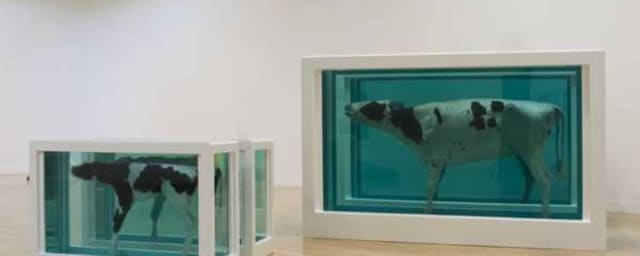
The Young British Artists (YBAs) is a label applied to an informal group of artists who began exhibiting together in the late 1980s and went on to define the face of British art in the 1990s. The starting point is generally considered to be the 1988 exhibition Freeze, organised by Damien Hirst, then a student at Goldsmiths College in London, in an empty dockland building. The circle of YBAs includes Damien Hirst, Tracey Emin, Sarah Lucas, the brothers Jake and Dinos Chapman, Marc Quinn, Gary Hume, Chris Ofili and others. The artists were united not by a common style but by an openness to new materials and processes, a taste for sensational and often shocking tactics, and an entrepreneurial attitude to their careers. Iconic works include Hirst's shark in formaldehyde, The Physical Impossibility of Death in the Mind of Someone Living, Emin's tent Everyone I Have Ever Slept With and her installation My Bed. The collector and advertising figure Charles Saatchi played a key role in their rise, and his 1997 exhibition Sensation at the Royal Academy caused a great stir. The YBAs turned London into one of the world's centres of contemporary art and radically changed perceptions of the art market and of publicity in art.
See 1 art term →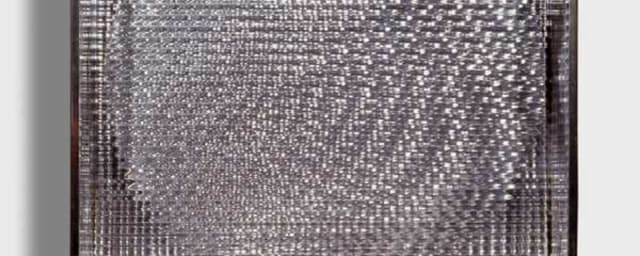
ZERO was a group of artists who practised a form of kinetic art using light, movement and monochrome surfaces. Founded in Düsseldorf in 1957 by Heinz Mack and Otto Piene, and later expanded by the arrival of Günther Uecker, ZERO thought of itself less as a style than as a "new beginning", a clean starting point from which art could be reborn after the devastation of the Second World War. The artists abandoned the individual gesture and traditional composition in favour of investigating the vibration of light, optical effects, serial structures and real motion. Uecker created reliefs of nails, Piene made "light ballets", and Mack built metal steles that reflected and scattered light. ZERO built a wide network of connections with European movements, notably the Italian Azimut group and the Dutch Nul. This international optical-kinetic tradition influenced the later development of light art, with which the contemporary media practices of Ukrainian artists also resonate.
See 1 art term →