




Art terms on "T"
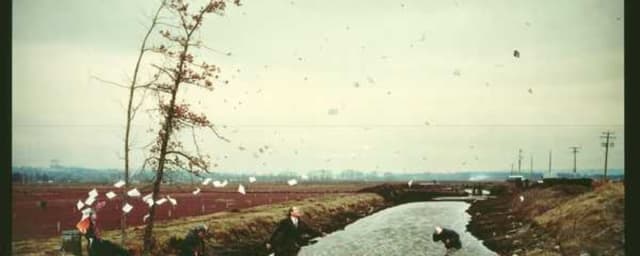
Tableau
A tableau is a painting in which the figures are arranged for pictorial or dramatic effect and appear wholly absorbed in their actions, entirely unaware of the presence of the viewer. The term comes from the French tableau ("picture") and in art theory denotes a composition that presents itself as a self-sufficient, closed scene, as if a frozen moment of action. The figures do not "play to the audience" or address the viewer with a look or gesture, but behave as though the fourth wall between the picture and the onlooker did not exist at all. The notion of the tableau was developed in the eighteenth century by the philosopher Denis Diderot, who opposed the truthful absorption of figures in their action to artificial theatricality. Later the art historian Michael Fried, in his studies of "absorption" and "theatricality," showed how important this strategy was for the development of European painting from Chardin and Greuze onward. A related notion is the "living picture" (tableau vivant), in which live people froze in poses to reproduce a well-known painting. The idea of the tableau also influenced photography and cinema, where the staged, carefully composed "tableau" became a distinct expressive device of framing.
Read more →
Tachisme
Tachisme (from the French tache, meaning stain or blot) is a term for the non-geometric abstract art that developed in Europe during the 1940s and 1950s, characterised by spontaneous brushwork, dribbles and blots of paint, and calligraphic, writing-like marks. Tachisme is regarded as the European counterpart of American Abstract Expressionism and as part of the broader phenomena of lyrical abstraction and art informel. The tendency rejected earlier rational, geometric art such as Cubism and Constructivism in favour of intuitive, gestural expression. Its leading figures include Hans Hartung, Georges Mathieu, Wols and Pierre Soulages. The Tachistes wanted the very texture of the paint and the trace of the artist's moving hand to become a direct carrier of emotion and the unconscious. This emphasis on spontaneity and the materiality of the surface later resonated with postwar European abstraction, joined by artists of Ukrainian origin in the diaspora.
Read more →Tapestry
A hand-woven, pile-free pictorial wall hanging with a figurative or ornamental design, woven so that the weft completely covers the warp.
Read more →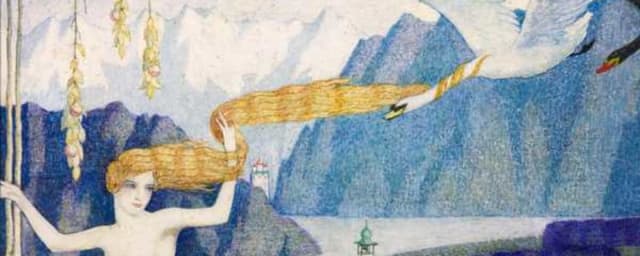
Tempera
Tempera is a painting technique using pigments bound in a water-soluble emulsion, most often based on egg yolk (egg tempera), or in an oil-and-water emulsion of oil and whole egg. Mixed with water, the paint is applied to a prepared surface in thin, transparent layers; it dries quickly, becoming water-resistant, and in time acquires a pleasant matte hardness. Because of its rapid drying, tempera cannot be blended directly on the surface, so artists model form with small strokes and glazes, laying one layer over another. Tempera was the principal technique of easel and icon painting in late antiquity, Byzantium and the European Middle Ages, until the spread of oil at the end of the fifteenth century. The celebrated altarpieces of the early Renaissance were painted in it; masters used it on wooden panels covered with gesso. In the Byzantine-Rus and later Ukrainian icon-painting tradition, egg tempera was the principal material, and many icons were executed in it. In the twentieth century interest in tempera revived: artists valued its pure, luminous colour, durability and the discipline of the technique. Tempera remains in the arsenal of icon painters and painters who seek a strict, stable and translucent colouring today.
Read more →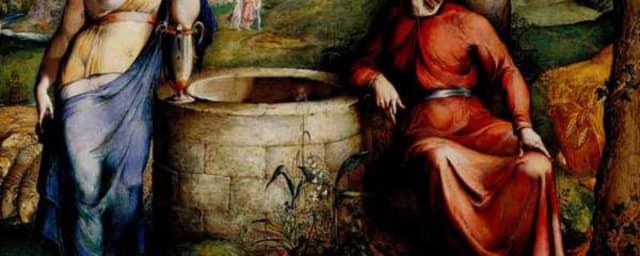
The Ancients
The Ancients were a circle of English visionary artists that formed in the 1820s around the poet and artist William Blake in the last years of his life, before his death in 1827. Young followers, among them Samuel Palmer, Edward Calvert, and George Richmond, reverently called Blake "the Divine One" and drew inspiration from his spiritual, anti-materialist outlook and his illustrations to Virgil. The group's name reflected their conviction that the ancient past was artistically and spiritually superior to their own age of industrialisation. The centre of their activity was the village of Shoreham in Kent, which they called the "Valley of Vision": there Palmer created his most poetic landscapes, saturated with mystical light and filled with the moon, ripening cornfields, and shepherds. The work of the Ancients combined Romantic spirituality with close observation of nature and later influenced English landscape painting and the revival of interest in Blake.
Read more →
The black aesthetic
The Black Aesthetic is a cultural and artistic ideology that developed in the United States during the 1960s, running parallel to the civil rights and Black Power movements. It served as the artistic wing of the broader Black Arts Movement, which the theorist Larry Neal in 1968 called the 'aesthetic and spiritual sister of the Black Power concept'. Advocates of the Black Aesthetic argued that African American art should draw upon its own cultural experience, history of enslavement, and ongoing struggle, rather than imitating European canons and standards of beauty. The movement promoted a form of cultural separatism in the arts, emphasising the need to create works that address the Black community directly and strengthen its self-awareness, pride, and dignity. The Black Aesthetic encompassed poetry, music, theatre, visual art, and criticism, insisting that both form and content should serve social and political liberation. Although the movement was later criticised for essentialism, its influence was profound: it reframed the relationship between art, identity, and politics and paved the way for subsequent generations of Black artists, writers, and theorists who continued to interrogate representation and power.
Read more →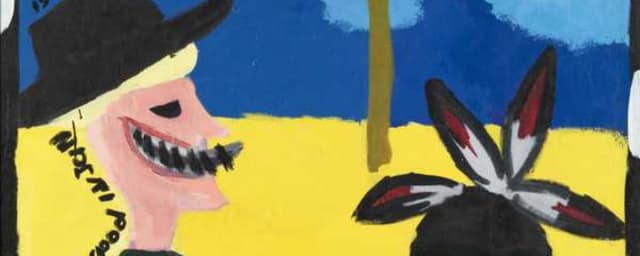
The Blk Art Group
The Blk Art Group was an association of young Black artists founded in Wolverhampton, England, in 1979 that raised questions about what Black art is, what its identity might be, and what it could become in the future. The core of the group consisted of art students Eddie Chambers, Keith Piper, Donald Rodney, Marlene Smith, Claudette Johnson, and Wenda Leslie, all of them children of Caribbean migrants. Their art was openly political and confrontational: using collage, photomontage, painting, and text, they explored racism, police violence, the legacies of slavery and colonialism, and the everyday experience of Black youth in Thatcher-era Britain. The group organised exhibitions and conferences, notably the first National Black Art Convention in 1982, which made it a catalyst for the broader British Black Arts Movement. Although the association was short-lived, its members went on to become leading figures in contemporary British art.
Read more →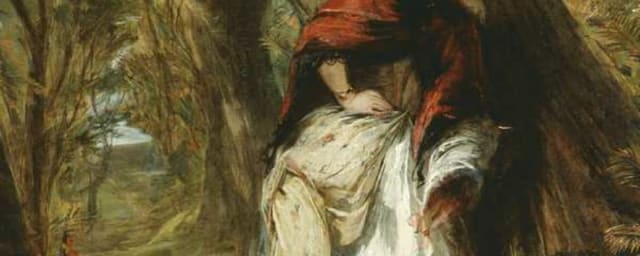
The Clique
The Clique was an informal society formed around 1837 by a group of friends during their studies at the Royal Academy of Arts in London. Its members—the young artists Richard Dadd, William Powell Frith, Augustus Leopold Egg, John Phillip, Henry Nelson O'Neil, and Edward Matthew Ward—met regularly in the evenings to draw on set literary or historical themes and then jointly discussed and criticised one another's work. They admired the genre and everyday painting of David Wilkie and illustrative subjects from Shakespeare, Walter Scott, and Byron, while rejecting the grand historical manner promoted by the academy. Most members of the Clique went on to successful careers: Frith became famous for his crowded panoramas of Victorian life, while the tragic fate of Richard Dadd—who, owing to mental illness, created his fantastical masterpieces in an asylum—lent the group a special aura. The society remains a notable episode of British art on the eve of the Pre-Raphaelites.
Read more →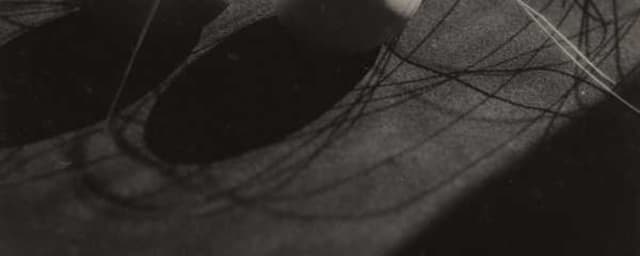
The New Vision
The New Vision was a photographic movement of the 1920s closely tied to the ideas of the Bauhaus and to the theorist and artist Laszlo Moholy-Nagy. Its central claim was that the camera could see the world differently and more fully than the human eye, and therefore photography possessed an aesthetic of its own, independent of painting. Typical devices included steep high and low viewpoints, diagonal compositions, dramatic contrasts of light and shadow, extreme close-ups, double exposures, and experiments with the cameraless photogram. Moholy-Nagy set out these principles in influential writings that called for cultivating a new vision as a renewed mode of perceiving reality. The movement shaped Constructivist and experimental photography across Central and Eastern Europe, including the avant-garde searches of Ukrainian artists of the 1920s who joined documentary purpose with formal invention. The New Vision helped establish the modernist understanding of photography as an autonomous art.
Read more →
The Photo-Secession
The Photo-Secession was an association of American photographers founded in New York in 1902 by Alfred Stieglitz, who championed photography as a fine art equal to painting and printmaking. Its name echoed the European Secessions that broke with academic tradition. The circle included Edward Steichen, Gertrude Kasebier, Clarence White, and others. Aesthetically the movement rested on Pictorialism, favoring soft focus, hand-manipulated printing processes such as gum bichromate and platinum, atmospheric mood, and compositions close to Symbolist painting. Stieglitz promoted the group's ideas through the sumptuous journal Camera Work and the gallery known as 291, where he later also exhibited European modernism. The Photo-Secession played a decisive role in the acceptance of photography as art within museums and criticism, and prepared the ground for the later modernist straight photograph. Its influence echoed in Pictorialist circles across Europe in the early twentieth century.
Read more →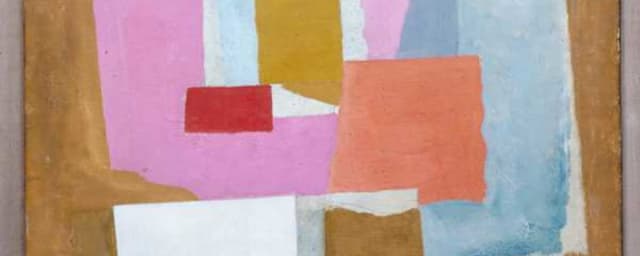
The Seven and Five Society
The Seven and Five Society was a British association of artists founded in London in 1919; the name referred to its original membership of seven painters and five sculptors. At first the group was fairly conservative and can be seen as a British manifestation of the "return to order" (retour à l'ordre) that swept European art after the First World War. In its first statement the society even declared that it had no wish to promote "any startling new theories." During the 1920s the character of the society changed dramatically as modernist artists joined it, notably Ben Nicholson, who later led the group, together with Christopher Wood, Winifred Nicholson, Ivon Hitchens and the sculptors Barbara Hepworth and Henry Moore. Under Nicholson's influence the society evolved towards abstraction, and in 1935 it held the first exhibition of purely abstract art in Britain, after which the association was renamed the "7 & 5 Abstract Group." The society soon disbanded, but it played a key role in the formation of British modernism, serving as a bridge between tradition and the avant-garde and nurturing leading masters of the twentieth century.
Read more →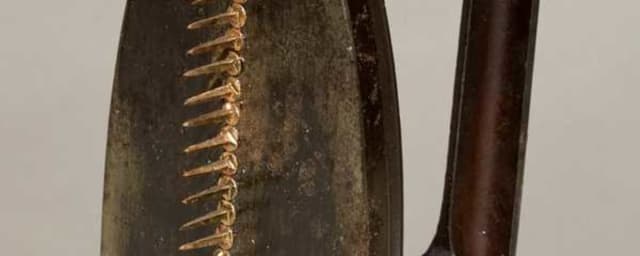
The uncanny
The uncanny is an aesthetic and psychological category most fully formulated by Sigmund Freud in his essay 'Das Unheimliche' (1919). Freud defined the uncanny as a particular kind of dread that arises when something is at once familiar and strange: when the long-repressed returns in a familiar guise. The German unheimlich literally means 'un-homely', the opposite of the cosy and safe, and it is precisely the fusion of the familiar and the disturbing that produces this peculiar sensation. Examples include dolls, waxworks, automata, doubles and objects that seem to come alive — everything that hovers on the border between the living and the inanimate. The concept had an enormous influence on twentieth-century art, especially Surrealism: Giorgio de Chirico, Hans Bellmer, Meret Oppenheim and Max Ernst deliberately created images that evoke this uneasy anxiety. Later the uncanny became an important tool for the critical analysis of photography, installation and other media, notably in the writings of the art historian Hal Foster. The category remains productive for discussing works that unsettle the boundary between the familiar and the strange, the living and the dead, the real and the imagined, provoking in the viewer a deep psychological disquiet.
Read more →
Time-based media
Time-based media is art that depends on technology and has a durational, temporal dimension; it unfolds over time and must be played back for the viewer to perceive it. This category includes video art, film, slide projections, sound works, computer and digital installations, and performances recorded for display. Unlike a painting or sculpture, which the viewer grasps in a single moment, time-based media have a beginning, a duration and an end, and often a definite sequence of events, so that the factor of time becomes an integral part of the artistic content. The field took shape in the second half of the twentieth century with the arrival of affordable video equipment; pioneers of video art, notably Nam June Paik, as well as performance artists, began using technical carriers for works that could not be reduced to a static object. The term "time-based media" acquired particular importance in museum and conservation practice, since preserving such works requires care not for a physical object but for equipment, formats, files and display instructions that become obsolete over time. Museums therefore develop special strategies of conservation, documentation and data migration to ensure the longevity of art built on technology and time.
Read more →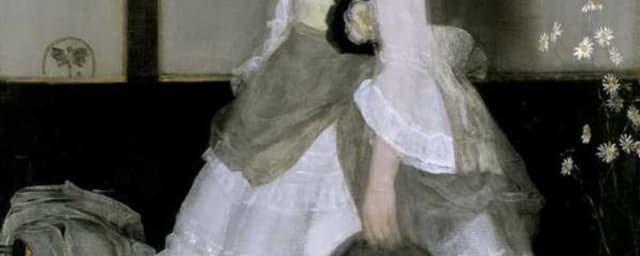
Tone
Tone in the visual arts is the degree of lightness or darkness of a colour or surface, independent of its chromatic hue. Artists distinguish colour by three main properties: hue itself (for example red or blue), saturation and tone (value or lightness). The ability to perceive and render tonal relationships is one of the fundamental skills of the draughtsman and painter, for it is the gradations of light and shade that create the illusion of volume, space and illumination on a flat surface. A charcoal or graphite drawing works almost entirely through tone. The systematic study of tone underlies the academic tradition and the technique of chiaroscuro, masterfully developed by Caravaggio and Rembrandt, who built dramatic contrasts between brightly lit and darkened areas. In painting, tonal unity is often more important than accuracy of colour: a muted, closely related range can establish a mood, while sharp tonal contrasts draw the eye and organize the composition. An understanding of tone is equally crucial to black-and-white photography and printmaking, where all expressive power rests on the play of greys between pure white and deep black.
Read more →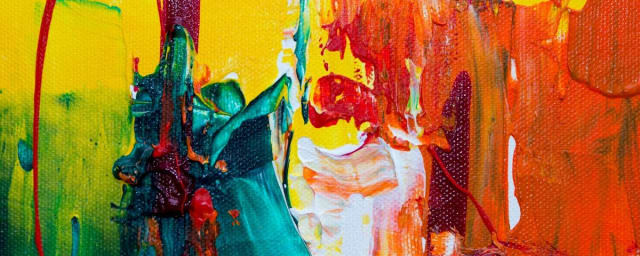
Transavanguardia
Transavanguardia (Transavantgarde) was an Italian neo-expressionist group that emerged in the late 1970s and became one of the key manifestations of a return to painting after the dominance of conceptual and minimalist art. The term was coined by the critic Achille Bonito Oliva, who grouped together the painters Sandro Chia, Francesco Clemente, Enzo Cucchi, Mimmo Paladino and Nicola De Maria. The Transavantgarde rejected the idea of a linear modernist "progress" and proclaimed the artist's freedom to draw freely from art history, mythology, regional traditions and personal imagery. Their works were marked by saturated colour, figuration, expressive brushwork and open sensuality. Together with the German Neue Wilden and American neo-expressionism, the movement signalled the painting revival of the 1980s. Its assertion of the artist's right to memory, emotion and eclectic quotation proved attuned to the postmodern age, including the search for a new figuration in Eastern Europe and Ukraine.
Read more →
Triptych
A triptych is a work of art composed of three panels or sections, usually unified by a shared theme or composition. The central panel is typically the largest, while the two side wings can fold inward to protect the main image. The format originated in early Christian and medieval art, where triptychs functioned as altarpieces for churches and private devotional spaces. The three parts often symbolised the Trinity or allowed a narrative to unfold across a sequence of scenes. During the Renaissance and the Northern Renaissance the triptych flourished in the hands of masters such as Hans Memling and Hieronymus Bosch, whose Garden of Earthly Delights is a celebrated example. In Ukrainian sacred art the tradition of folding devotional images likewise appeared in icon painting and iconostasis design. In the twentieth century artists such as Francis Bacon revived the triptych as a secular form, using three panels for psychological tension and the juxtaposition of images. Today the term also applies to photography, video and installation, where a threefold structure organises the viewer's perception.
Read more →
Trompe l'oeil
Trompe l'oeil (from the French for «deceives the eye») is a painting technique that creates an illusion of a real object or scene so convincing that the viewer, at least for a moment, takes what is depicted for an actual thing. This is achieved through the skilful use of perspective, precise light-and-shade modelling, life-size scale, and meticulously rendered surface texture. Trompe l'oeil often depicts objects in shallow space — pinned-up letters, coins, a glazed cabinet door, insects on a wall — things that are easily mistaken for reality. The origins of the device reach back to antiquity, and it flourished in European Baroque art and in seventeenth-century Dutch still life, where masters created illusory niches, shelves, and letter racks. Trompe l'oeil is closely bound up with the notions of illusionism and the still-life «deception». Although often regarded as a virtuoso game, it raises profound questions about the nature of vision, reality, and art itself, which is what has attracted artists from the Renaissance to the present day.
Read more →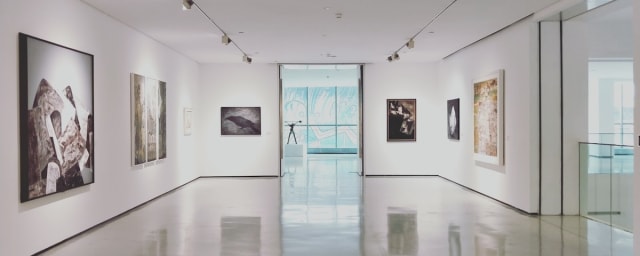
Tropicália
Tropicália was the name given to an explosion of cultural creativity in Rio de Janeiro and São Paulo in 1968, as Brazil's military regime tightened its grip on power. The movement spanned music, visual art, theatre, cinema and poetry, blending local Brazilian culture with international avant-garde and pop influences in a spirit of radical "cultural cannibalism." In music it was embodied by Caetano Veloso, Gilberto Gil and the band Os Mutantes; the name itself came from the artist Hélio Oiticica's installation Tropicália (1967), a labyrinth of sand, plants and a television that ironically played on the stereotyped image of a tropical paradise. Tropicália art was at once festive and critical, mocking both provincialism and the blind imitation of foreign models, and its oppositional stance led to the persecution and exile of its leaders. For Ukrainian audiences the experience is valuable as an example of how art under authoritarian pressure finds a language of resistance through irony, hybridity and celebratory energy.
Read more →
Trypillia
The Trypillia culture (5500–2750 BCE) was one of Europe's oldest agrarian civilisations, named after the village of Trypillia near Kyiv, where Vikentiy Khvoika first excavated it in the late nineteenth century. It spanned the lands of present-day Ukraine, Moldova and Romania and attained a remarkable degree of settled life. Its defining phenomenon was the proto-city — colossal mega-settlements in the Cherkasy and Kirovohrad regions (Maidanetske, Talianky, Nebelivka) comprising thousands of dwellings laid out in concentric rings. Houses were built of timber and daubed clay, often two-storeyed, and worn-out settlements were ritually burned. The most eloquent Trypillian legacy is painted pottery: thin-walled vessels covered with spirals, meanders, "binocular" cult vessels and fertility symbolism rendered in white, red and black. Equally famous is the small-scale plastic art — clay female figurines linked to the cult of the Great Mother and agrarian rites. Trypillian ornament was conceived as a cosmological model of the world, divided into celestial and earthly tiers. The economy combined tillage, stock-breeding and advanced ceramics, while copper metallurgy remained nascent. The culture's decline at the close of the fourth millennium is tied to climatic change and the pressure of steppe pastoralist communities. For Ukrainian cultural memory, Trypillia became a symbol of deep autochthony, and its spiral motifs still nourish the national decorative tradition and contemporary artistic reflection.
Read more →



