




Art terms on "E"

Edition
An edition, in art, is a series of identical impressions, prints, or multiples produced from a single printing plate, matrix, negative, or model. The concept of the edition is central to reproducible techniques such as engraving, etching, lithography, and screen printing, as well as photography and sculptural casting. Each copy in an edition is considered an original work rather than a copy, because it is produced directly from the artist's plate under the artist's control or with their authorisation. The size of an edition, meaning the number of copies, significantly affects the value and rarity of works: smaller editions generally command higher prices. Copies are traditionally numbered as a fraction, so that 12/50, for example, means the twelfth impression out of a total run of fifty. In addition to numbered sheets, there are also artist's proofs (épreuve d'artiste), trial proofs, and printer's proofs. Once the edition is complete, the printing plate is often cancelled or destroyed to prevent unauthorised additional printing. The practice of limited editions allows art to be more accessible while maintaining a controlled rarity, combining the democratisation of printmaking with the market value associated with an original.
Read more →
Educational turn
The educational turn is a tendency in contemporary art and curatorial practice that emerged in the mid-1990s and gained prominence in the 2000s. The term describes a growing interest in education, learning, research, and the exchange of knowledge as independent forms of artistic activity. Within the educational turn, emphasis shifts from the finished art object to process, collaboration, discussion, and the collective production of knowledge. Here art approaches pedagogy, and exhibitions, seminars, reading groups, workshops, and alternative schools become fully valid artistic practices. The educational turn is closely connected to relational aesthetics and to participatory and socially engaged art. Curators and artists began to rethink the exhibition itself as an educational space rather than merely a place for displaying objects. Notable manifestations of this tendency were numerous projects that combined art with experimental pedagogy and critical theory, including at major biennials and Documenta. Critics observed that the educational turn reflects a broader desire in art to move beyond the market and the museum institution, turning instead toward community-based, dialogical, and processual work. At the same time, the tendency provoked debate about the risk of instrumentalising both education and art.
Read more →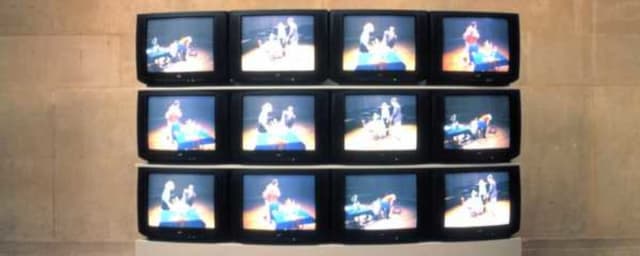
Electronic media
Electronic media is a general term for artistic means and carriers that require electronic devices for their creation, storage and playback. The most common examples are video recordings, audio recordings, slide presentations, CD-ROMs, as well as online content and other digital formats. Unlike traditional materials such as paint or stone, electronic media exist as a signal or data that come to life only through technical equipment — a monitor, projector, loudspeaker or computer. The use of electronic media in art developed rapidly from the 1960s, when, with the appearance of portable video equipment, artists such as Nam June Paik (who had already exhibited television sets as objects in 1963) began to explore video as an artistic medium. Electronic media became the basis of video art, sound art, and interactive and networked installations. This field poses particular challenges for museums and collectors: technologies quickly become obsolete and formats and carriers become unreadable, so the preservation and restoration of such works require constant "migration" to new platforms. Questions of documentation, conservation and authenticity of electronic media are among the most pressing in contemporary museology and art scholarship.
Read more →
Elizabethan
The term Elizabethan refers to the reign of Queen Elizabeth I of England from 1558 to 1603, an age of national self-confidence and flourishing of the arts. In the visual arts the period is defined above all by the development of portraiture, which acquired special importance as a means of asserting power, status and dynastic continuity. Portraits of the queen herself were deeply symbolic: pearls, roses, globes, ermine and other emblems embodied purity, might and dominion. The leading masters of the age were the miniaturists Nicholas Hilliard and Isaac Oliver, whose exquisite portrait miniatures represented the summit of English art of the time. The style was marked by flatness, decorative meticulousness and attention to sumptuous fabrics, embroidery and jewels rather than to volumetric, realistic space. The Elizabethan era was also a golden age of English literature and theatre, the time of William Shakespeare and Christopher Marlowe. More broadly, the word describes the architecture, decorative arts and dress of the period, with their characteristic opulence and symbolic richness.
Read more →
Embossed
Embossing produces a raised or recessed relief surface created during printing or finishing processes, when material, most often paper, is pressed between a die and a counter-die either without ink or with it. As a result the image or text is perceived not only by sight but also by touch. Within printmaking there is a distinct form, blind embossing, an inkless relief impression that questions the traditional role of ink and emphasizes the texture and the play of light across the surface of the sheet. In the twentieth century relief impressions were explored by artists interested in pure form and materiality, including practitioners of Minimalism and constructive abstraction. Embossing is also widely used in the applied and decorative arts, bookbinding, book and packaging design, and commercial printing, where it lends objects a tactile expressiveness and a sense of quality. The term also describes relief worked into leather, metal, and fabric.
Read more →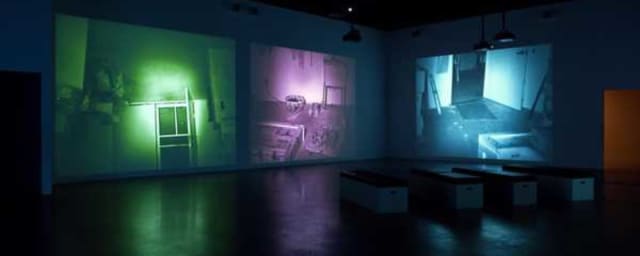
Emulation
Emulation, in the field of preserving digital and media art, is the process of reproducing a work's original software and hardware environment on a newer platform so that it can keep functioning despite technological change. Many works of media art, video games, interactive installations, and pieces built on obsolete operating systems or storage media depend on specific, often no longer existing, hardware and software. Emulation creates a virtual model of that outdated environment, allowing the original code to run on modern computers without rewriting the work itself. It is one of the key methods of conservation alongside migration, the transfer to new formats, and documentation. Emulation raises complex questions of authenticity: how faithfully the reproduced experience matches the artist's intention, what counts as the original of an immaterial work, and where the limit of acceptable change lies. Museums and archives develop dedicated strategies and ethical protocols to preserve digital heritage, including Ukrainian digital and media art, for future generations.
Read more →
Engraving
Engraving is a technique of high-precision intaglio printmaking in which the image is cut directly into a metal, usually copper, plate with a burin, a steel tool with a V-shaped profile. The artist physically removes metal, ploughing clean, crisp furrows that are then filled with ink; the surplus is wiped from the surface, and under the pressure of the press the ink is transferred from the grooves onto dampened paper. The technique demands great skill and strength, since every line is cut by hand and corrections are almost impossible. Engraving developed in Europe in the fifteenth century and reached its heights in the work of Albrecht Durer, whose sheets astonish with the tonal richness achieved through the density of hatching alone. For centuries reproductive engraving was the chief means of multiplying and disseminating images before the advent of photomechanical printing. In Ukraine copperplate engraving flourished in the seventeenth and eighteenth centuries in the workshops of the Kyiv Pechersk Lavra, becoming an important part of Baroque book culture.
Read more →
Entropy
Entropy is a concept borrowed from physics and thermodynamics, where it denotes a measure of disorder, disorganisation, and the inevitable gradual breakdown of a system. The second law of thermodynamics states that in an isolated system entropy never decreases over time, increasing in irreversible processes, and ordered energy dissipates. In a broader cultural sense, entropy has become a metaphor for decay, dissolution, and the irreversible drift toward chaos, the degradation of society, matter, or meaning. The concept of entropy was introduced into art by the American artist Robert Smithson in the late 1960s. In his essays and land art works, notably the famous Spiral Jetty (1970), Smithson reflected on geological time, erosion, and the inevitable destruction of forms by natural forces. For him, entropy was not only a physical process but also a philosophical concept that undermined ideas of progress and permanence. Entropy influenced the development of Minimalism, land art, and conceptual art, inspiring artists to work with temporality, decay, and irreversible processes. Works that deliberately age, erode, or change over time embody the idea that matter and order inevitably tend toward disintegration.
Read more →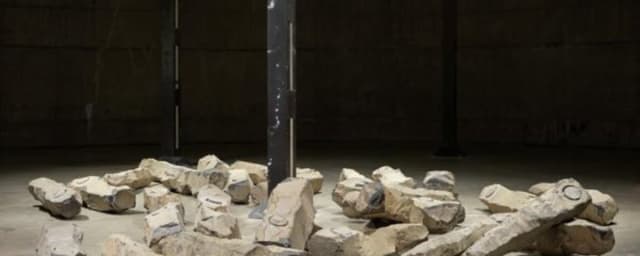
Environmental art
Environmental art is a broad term covering works that address social and political issues relating to the natural and urban environment. The term has two interrelated meanings. First, it describes art that physically engages with the landscape and space, including land art and large-scale interventions in nature. Second, and increasingly, it means ecologically conscious art—work that draws attention to environmental crisis, pollution, climate change, resource depletion and the relationship between humanity and nature. Unlike early land art, which sometimes altered the landscape by industrial means, contemporary environmental art often seeks to heal, to restore ecosystems or to propose sustainable solutions. Notable practitioners include Robert Smithson with his Spiral Jetty, Andy Goldsworthy, who works with fragile natural materials, and Hans Haacke and the Harrisons, whose projects combine art, science and activism. Environmental art reflects the growth of global ecological awareness and expands the understanding of the artist's role as a participant in social and environmental processes.
Read more →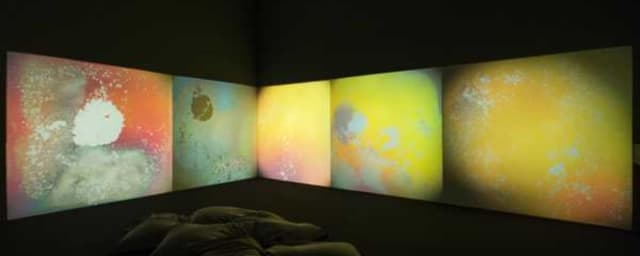
Environments
Environments is a term used as an alternative name for installation art. It refers to mixed-media constructions or assemblages, usually devised for a specific site and for a temporary period, which the viewer can physically enter and experience with the whole body. Unlike a traditional painting or sculpture contemplated at a distance, an environment surrounds the visitor, transforming them from a passive observer into a participant in the space. The concept became widespread in the late 1950s and early 1960s, when artists began to move beyond the frame and the pedestal to create total spatial situations. A key figure was Allan Kaprow, who linked the idea of environments directly to happenings; his early rooms filled with objects became a model for the genre. The tradition of environments also includes the work of Claes Oldenburg and Edward Kienholz, with his grim lifelike tableaux, as well as many experiments of Pop art and Neo-Dada. Historically the term marks an important stage in the shift from object-based art to spatial experience, which later crystallised into the independent field of installation.
Read more →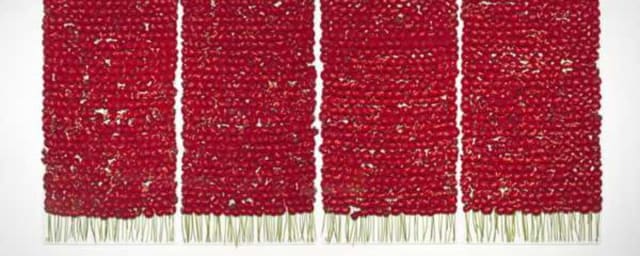
Ephemeral art
Ephemeral art is a general term for works that exist only for a short period of time and are not intended to be permanently preserved. Their very transience is part of the idea: a work may melt, wilt, crumble, be washed away or consumed, and this fated disappearance becomes a source of its meaning and beauty. Ephemeral art includes performances, happenings, works made from natural or fleeting materials such as ice, sand, flowers, smoke and food, as well as land art gradually undone by nature. Artists turn to ephemerality for many reasons: to resist commercialisation and the reduction of art to a commodity, to emphasise process rather than a finished object, or to reflect on the transience of life and memory. Notable examples include the fragile sculptures of Andy Goldsworthy made from leaves and ice, and the short-lived installations and documented actions of many conceptual artists. Often the only trace left of such a work is a photograph, video or description, which raises questions about the role of documentation in preserving art. Ephemeral art challenges the traditional identification of an artwork's value with its material permanence.
Read more →
Etching
Etching is an intaglio printmaking technique in which the image is formed by the chemical action of acid rather than by mechanical cutting. A metal plate is covered with an acid-resistant varnish, the ground, through which the design is drawn with a needle, exposing the bare metal. The plate is then immersed in acid, which bites into the open lines, creating recesses to hold ink. Because drawing with a needle across the soft ground is almost as free as drawing with a pencil, etching gives artists far greater spontaneity and ease of line than engraving with a burin. By regulating the time of biting and re-covering areas with varnish, a wide range of tones can be obtained. Rembrandt was an unrivalled master of the technique, as was Francisco Goya, whose series the Caprichos and the Disasters of War became summits of graphic art. Etching remains one of the most popular and expressive methods of fine-art printmaking, widely used by contemporary Ukrainian printmakers as well.
Read more →
Ethno
Ethno is a visual language that deliberately draws on the traditional folk ornament, craft and symbolism of a given culture, reinterpreting them within a contemporary visual context. Unlike purely authentic folk art, the ethno style is an authorial reflection upon heritage: the artist quotes, stylizes and adapts local motifs, preserving their recognizability while setting them into a new form. Its characteristic features are dense decorativeness, the rhythmic repetition of ornament, flatness, resonant contrasting colours, and a symbolism rooted in an agrarian and ritual worldview. In the Ukrainian context, ethno feeds on powerful sources: Petrykivka painting with its inventive floral tracery, block-printed cloth, paper-cut vytynanka, the art of the pysanka, weaving with geometric bands, and Hutsul ceramics and carving. These traditions are transferred into easel painting, graphic art, design, fashion and contemporary decorative art. Emblematic figures working at the boundary of the folk and the authorial include Maria Prymachenko with her fantastical bestiary, the Petrykivka masters Tetiana Pata and Fedir Panko, and numerous contemporary artists who build their identity on a dialogue with their roots. The ethno aesthetic combines ornamental generosity with emblematic concision, a festive palette with archaic depth of meaning. It is not museum conservation but a living mechanism of cultural continuity that lets tradition speak the language of the present and affirm national identity.
Read more →
Euston Road School
The Euston Road School was a British realist grouping formed in 1938 from artists who taught or studied at a private School of Drawing and Painting at 316 Euston Road in London. Its founders were William Coldstream, Victor Pasmore and Claude Rogers (Graham Bell was a substantial theoretical influence on them), who, responding to the political tension of the pre-war era and to abstraction's growing detachment from life, returned to close, restrained observation of nature. Their style was marked by a sober, almost austere objectivity: a muted palette, meticulous measuring of proportions by eye (a method Coldstream refined to near-scientific precision), and a focus on everyday motifs—portraits, urban views, and modest interiors. The school shared left-wing, socially conscious convictions and sought to make art accessible to a wider public. Although the establishment closed as early as 1939 with the outbreak of war, its approach to figurative painting had a lasting influence on British art education, notably through Coldstream's later teaching career.
Read more →
Expanded cinema
Expanded cinema is a term covering film, video, multimedia performance or immersive environments that go beyond the traditional cinema screening and reject the conventional one-way relationship between a passive audience and a flat screen. The term was popularised by the critic and theorist Gene Youngblood in his 1970 book Expanded Cinema, in which he understood new screen-based art forms as an extension of human consciousness. In practice, expanded cinema may project images onto multiple screens at once, onto three-dimensional surfaces, bodies or entire rooms; the screening is often combined with performance, live music, light effects and audience participation. Such experiments flourished in the 1960s within underground film and intermedia art, pursued by figures such as Stan VanDerBeek, Carolee Schneemann, the USCO collective and the scene associated with Andy Warhol. Expanded cinema anticipated the emergence of video art, moving-image installation and contemporary immersive media. It questioned the very boundaries of cinema, turning viewing into a spatial, bodily and collective experience rather than the contemplation of a narrative.
Read more →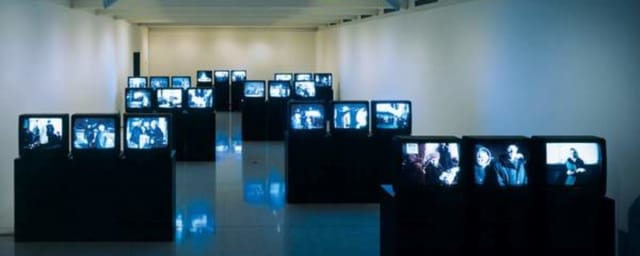
Experimental ethnography
Experimental ethnography is an approach to studying and interpreting the cultures of everyday life that applies techniques from experimental film and art, including montage, found footage, collage and surrealist devices. Unlike traditional academic ethnography with its claim to objective, detached observation, this approach consciously acknowledges the author's subjectivity and the poetic, fragmentary nature of any cultural description. It blurs the boundary between document and artwork, between research and the poetry of the image. The practice has roots in the surrealists' interest in the "other" and in ethnographic material, and was developed by artists and theorists ranging from structural film to contemporary video art. Artists use archival footage, amateur recordings and personal narratives to question the power relations inherent in the very act of observing and representing. Such a reflexive, critical method resonates with contemporary Ukrainian authors who explore local memory, ritual and identity while avoiding a colonial, condescending gaze.
Read more →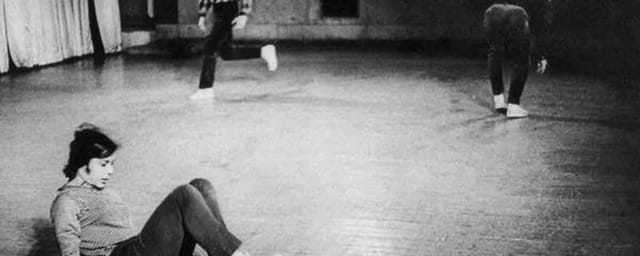
Experiments in Art and Technology (E.A.T.)
Experiments in Art and Technology (E.A.T.) was a non-profit organisation and collective founded in 1967 in New York to foster collaboration between artists and engineers and to explore the creative potential of new technologies. It was created by the Bell Labs engineers Billy Klüver and Fred Waldhauer together with the artists Robert Rauschenberg and Robert Whitman. The organisation's idea grew out of the large-scale event 9 Evenings: Theatre and Engineering of 1966, in which ten artists, collaborating with engineers, produced pioneering performances using electronics, video, and sound. E.A.T. arranged personal contacts between artists and technical specialists, held competitions, and most ambitiously realised the Pepsi Pavilion at Expo '70 in Osaka—an interactive space with a fog sculpture and a mirrored dome. The organisation's work became foundational for media art and for the digital and interactive art of the following decades.
Read more →
Expressionism
Expressionism is a visual language that places at its centre not outward verisimilitude but the subjective experience, inner state and emotional intensity of the artist. Emerging in the German-speaking world in the early twentieth century (the group Die Brücke in Dresden and Der Blaue Reiter in Munich), it opposed the Impressionist recording of an impression with the drive to express anxiety, despair, ecstasy or spiritual longing. Its formal marks are the deformation and sharpening of form, harsh and often dissonant colour, an energetic, nervous brushstroke, thickened contours and dramatic light. Composition is built on tension and instability; space is distorted for psychological effect, and body and face are contorted to lay bare feeling. Edvard Munch, with "The Scream," gave the movement its prototype; Ernst Ludwig Kirchner, Emil Nolde, Oskar Kokoschka and Egon Schiele developed its expressive figuration; Wassily Kandinsky passed through Expressionism on his way to abstraction. In Ukrainian art, kindred inflections are felt in the dramatic colourism of Oleksa Novakivskyi, in the tragic canvases of Anatol Petrytskyi and in the expressive imagery of interwar artists. Expressionism was closely bound to the woodcut, whose sharpness of line matched its emotional strain perfectly. The movement embraced painting, graphic art, literature, theatre and film, becoming the voice of a generation traumatized by modern civilization and war. Its influence nourishes Neo-Expressionism and the whole later tradition of art as confession.
Read more →



