




Art terms on "P"

Painterly
Painterly is a term denoting the application of paint in a «free», less controlled manner, as a result of which visible brushstrokes remain in the finished painting. This approach is contrasted with the linear, or graphic, mode, in which forms are outlined by clear contours and the brushstrokes are smoothed away and imperceptible. The concept of the «painterly» (German malerisch) was developed and given theoretical grounding by the Swiss art historian Heinrich Wölfflin in his «Principles of Art History» (1915) as one of five pairs of opposites by which he distinguished the styles of the Renaissance and the Baroque. In the painterly style, forms merge, and emphasis falls on masses of light and shadow, on colour and movement, rather than on a closed contour. Classic examples of painterly handling are the works of Titian, Rembrandt, Velázquez, and Frans Hals, and later the Impressionists. The painterly approach stresses the very process of painting and the materiality of the paint, and so remains one of the key concepts for the analysis of style in European painting.
Read more →
Painting
Painting is the practice of applying paint or other materials to a surface, usually with a brush, and more broadly it is one of the fundamental visual arts and its result — the picture. Painting works with colour, tone, line, texture and composition to create images of the real world, to express emotion or to embody abstract ideas. The supporting surface may be canvas, a wooden panel, paper, plaster or a wall, and among its techniques are oil, tempera, watercolour, gouache, acrylic, fresco and encaustic. The history of painting reaches back to prehistoric cave art and continues through Egyptian, classical and medieval art, the flowering of the Renaissance, the Baroque and on to modernism, which radically rethought the very notion of the image. In the twentieth century abstraction, expressionism and conceptualism expanded the limits of what a picture could be. The Ukrainian tradition of painting embraces Byzantine-Rus icon painting, Cossack Baroque, realism and the powerful avant-garde of the early twentieth century, represented by masters of Boichukism and non-objective painting. Despite the rise of photography and new media, painting remains a central and living art form.
Read more →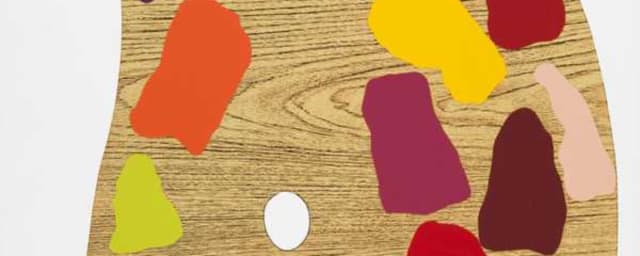
Palette
A palette is a smooth flat surface on which the artist lays out and mixes their paints before applying them to the picture; it often has a thumb-hole so that it can be conveniently held in the hand. The classic painter's palette is a thin wooden board of oval or rectangular shape, though glass, porcelain, metal and modern disposable paper palettes are also used. On it the artist prepares the required shades, adjusts the amount of paint and solvent and keeps an ordered set of colours at hand throughout the work. In a figurative, broader sense, "palette" refers to the characteristic set of colours of an artist or work — its colour range. Thus one speaks of a "cool" or "warm" palette, or of the restrained or saturated palette of a particular master. The way paints are arranged on the palette reflects the working method: some artists build a clear tonal series, others mix colours intuitively. In a still wider figurative sense the word is used beyond painting too — one speaks of a composer's tonal palette or a writer's palette of devices. Thus the palette is at once a concrete tool and a metaphor for artistic range.
Read more →
Pan-Africanism
Pan-Africanism is an ideology and movement of racial and cultural solidarity among the peoples of Africa and its diaspora, which formed around the mid-nineteenth century and gained strength in the twentieth. Politically, Pan-Africanism sought the unity of African peoples, liberation from colonialism, and overcoming the legacy of the slave trade; culturally, it affirmed the dignity, heritage, and distinctiveness of African civilization. In art, Pan-African ideas nourished the search for an independent visual language free from European domination and a return to indigenous forms, symbols, and aesthetics. These sentiments echoed the Négritude movements in the French-speaking world and the Harlem Renaissance in the United States. Artists of the diaspora and the continent drew on African sculpture, textiles, ornament, and oral tradition as sources of inspiration. In the post-war era of decolonization, Pan-Africanism stimulated festivals of African art such as FESTAC and the development of modernist schools in independent states. It remains an influential foundation for the artistic self-definition of Black artists worldwide.
Read more →
Panel
A panel in painting is a rigid support or surface for applying paint, as opposed to flexible stretched canvas. The most common historically was the wooden panel: a prepared board of oak, poplar, lime or another wood, covered with a gesso ground that gave a smooth white surface for tempera or oil. Wood provided a strong, stable base for fine and detailed work, so most easel pictures and altarpieces before the sixteenth century, as well as icons, were executed on panels. With the spread of canvas in Venice and Northern Europe, the panel gave way to it as the principal material because of canvas's lightness, cheapness and suitability for large formats, yet the panel never disappeared entirely. Wooden panels had a drawback — cracking and warping with changes in humidity — so conservators pay them particular attention. In the twentieth century artists returned to rigid supports, using plywood, hardboard, masonite and modern composite panels, which hold impasto well and do not deform. The term "panel" is also used for the individual parts of a polyptych and for wall panels.
Read more →
Paper
Paper is matted plant fibre formed into a thin sheet either by hand (the traditional method) or by machine (the modern method); artists use it as a surface for drawing, watercolour and printmaking. Paper is made from cellulose fibres — once chiefly from linen and cotton rags, now largely from wood pulp — which are pulped, suspended in water and lifted on a screen, after which the fibres interlock and dry into a strong sheet. The quality, texture, sizing and colour of the paper significantly affect the final appearance of a work. Paper was invented in ancient China, whence it spread through the Islamic world to medieval Europe, revolutionising drawing, book printing and printmaking. Different grades — from rough, grainy watercolour paper to smooth printmaking paper and thin Japanese sheets — serve the needs of particular techniques. In many cultures paper became an artistic material in its own right: in paper-cutting, origami, paper reliefs and installations. The Ukrainian folk vytynanka is a vivid example of turning plain paper into a distinctive decorative art. The fragility and sensitivity of paper require special conditions of storage.
Read more →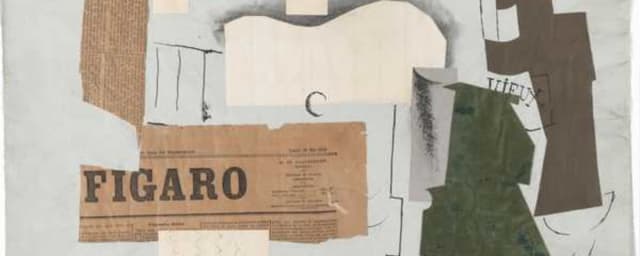
Papier collé
Papier collé (from the French for «pasted paper») is a specific form of collage, closer to drawing than to painting, in which pieces of paper — often printed, coloured, or textured — are pasted onto a support. The technique was invented by Georges Braque in 1912, when he pasted onto a sheet strips of paper imitating wood panelling; almost simultaneously it was taken up by Pablo Picasso. Papier collé was a logical continuation of Analytic Cubism and an important step towards Synthetic Cubism: instead of depicting objects, the artists introduced into the composition actual pieces of real material — scraps of newspaper, wallpaper, sheet music — which remained at once planes of colour and form and allusions to recognisable things. This created a play between reality and representation, between the flat surface and illusion. Papier collé differs from the broader notion of collage in its predominant use of paper and its close link to drawing. The technique had an enormous influence on the development of twentieth-century modern art.
Read more →
Participatory art
Participatory art is a form of art that directly involves the audience in the creative process, transforming viewers from passive spectators into active participants and co-authors of the event. Unlike a traditional work that exists as a finished object, a participatory work is realized only through the action, interaction, and experience of the people who take part in it. The roots of this approach reach back to the avant-garde experiments of the Dadaists and Futurists in the early twentieth century, as well as the Happenings of the 1950s and 1960s and the activity of the Fluxus movement. Theorists, notably Claire Bishop in her book "Artificial Hells," analyze participatory art through the lens of the ethics, aesthetics, and politics of participation, viewing collective action as a way of critiquing individualism and market relations in art. Well-known practitioners include Tino Sehgal, Rirkrit Tiravanija, and collectives of socially engaged art. Participatory practices are closely linked to relational aesthetics and New Genre Public Art and have substantially expanded ideas about authorship, the role of the viewer, and the social function of contemporary art.
Read more →
Pastel
Pastel is a coloured drawing material in the form of a stick, made of pure coloured pigment mixed with a minimal amount of a binder that holds it together. Because the pigment is scarcely diluted, pastel gives extraordinarily pure, bright and lightfast colours, and its velvety matte surface has a special softness. Pastel can be worked as line, hatching and layering tones, or as an area, rubbing the pigment with a finger or stump for soft transitions. Since the particles merely lie on the surface, the finished work is fragile and needs fixing and glazing under glass. Pastel occupies a middle ground between drawing and painting, so its works are called "pastels" and are counted among both graphics and painting. The technique flourished in the eighteenth century, when Rosalba Carriera and Maurice Quentin de La Tour created brilliant pastel portraits. In the nineteenth century Edgar Degas raised pastel to new heights, combining it with monotype and achieving vibrant colour in his scenes of dancers. Ukrainian artists also used pastel in portraiture and landscape. A distinction is made between soft, hard and oil pastel, each with its own expressive possibilities.
Read more →
Patina
Patina usually refers to the distinctive green or brown surface layer that forms on bronze and other metal sculpture. Natural patina arises from the slow oxidation of metal under the action of air, moisture and time: copper and bronze become coated with greenish or blue-green compounds, while other metals acquire brown, black or silvery tones. Such a layer not only changes the colour of the work but also to some extent protects the metal from further corrosion, giving the sculpture a sense of age and nobility. Besides forming naturally, patina is often applied artificially: sculptors and founders treat the surface of bronze with chemical solutions and heat to obtain the intended colour and texture — from deep green to warm brown or near-black. Patina thus becomes a deliberate artistic means, emphasising form and the play of light on the surface. In a broader figurative sense, the word "patina" describes the sheen of time on any old objects — tarnished metal, worn wood — as well as the aesthetic value of the marks of ageing. Conservators carefully distinguish valuable historic patina from harmful products of corrosion.
Read more →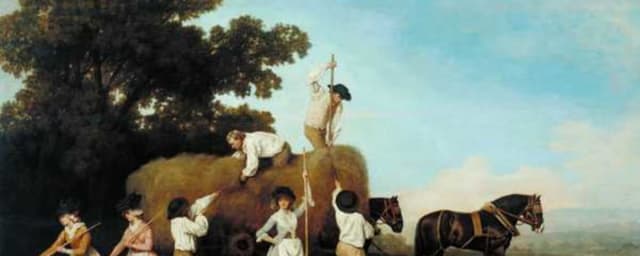
Pendant
A pendant, or companion picture, is one of two works conceived to be displayed together as a matching pair. The term "pendant" (from the French for "hanging, corresponding") denotes two paintings of the same size and format, with a coordinated composition and usually a shared theme, intended to hang side by side — often symmetrically on either side of a door, fireplace or central image. Together they form a balanced ensemble in which each half complements and "answers" the other. The practice of making companion pictures was especially widespread in European art of the seventeenth and eighteenth centuries. A classic example is the pendant portraits of a married couple, in which husband and wife are depicted separately but turned towards each other, forming a single pair. Pendants could also be landscapes — morning and evening, for instance — or allegorical subjects complementing one another in meaning. Symmetrical hanging was an important part of the decorative scheme of palace and country-house interiors. Recognising works as pendants matters for art history and museum practice, since separating a historically linked pair destroys the dialogue between the images that the artist intended.
Read more →
Penwith Society of Arts
The Penwith Society of Arts was an association of artists founded in 1949 in the town of St Ives in Cornwall, Britain, by artists working mainly in an abstract style. The society arose from a split within the older St Ives Society of Artists, when a group of progressive, modernist-minded artists broke away to form their own association. Its name derives from the Penwith peninsula, the westernmost part of Cornwall, where St Ives is situated. Among its leading members were Barbara Hepworth, Ben Nicholson, Peter Lanyon and the critic Herbert Read, who played an important role in the society's establishment. St Ives had by then become one of the most important centres of British modernist art, attracting artists with its brilliant coastal light, its shoreline scenery and its creative community. The artists of the society developed abstract art, often inspired by natural forms, the landscape and the sea of Cornwall. The Penwith Society of Arts became the central institution of the so-called St Ives School and played a key role in the development of British postwar abstraction. It continues to exist to this day.
Read more →
Performance art
Performance art is an art form in which the artist uses their own body as the primary medium and carries out a particular action or series of actions that themselves become the artwork. Unlike painting or sculpture, performance exists in time and space, is ephemeral and often unrepeatable, and its main components are the artist's presence, duration, interaction with the viewer, and the live experience itself. The origins of the genre reach back to the avant-garde evenings of the Dadaists at the Cabaret Voltaire, Futurist demonstrations, and early twentieth-century experiments, but as an independent form performance took shape in the 1960s and 1970s within the context of Conceptual art, body art, and feminism. Classic examples are the works of Marina Abramović, who tested the limits of the body and endurance, the actions of Joseph Beuys with his idea of "social sculpture," and the performances of Vito Acconci and Chris Burden. Performance is often recorded in photographs, video, or documents, which later become museum objects themselves. The genre radically changed ideas about the materiality and permanence of the artwork.
Read more →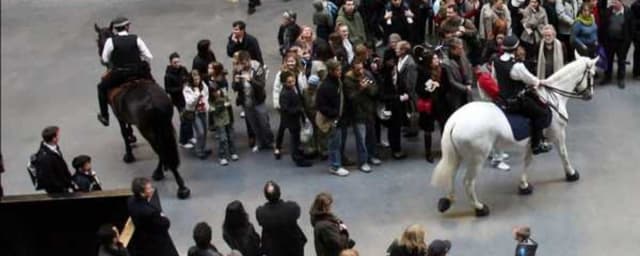
Performativity
Performativity is a concept describing the capacity of words, signs, or actions not merely to describe reality but actively to create or change it. The term originates in the philosophy of language of the British thinker J. L. Austin, who in works of the 1950s identified performative utterances, phrases that by the very act of being spoken perform an action, such as I now pronounce you married or I promise. Unlike constative utterances, which can be evaluated as true or false, performative utterances do something in the world. The concept of performativity acquired enormous influence in the humanities and art theory, especially through the philosopher Judith Butler, who in the 1990s applied it to the analysis of gender. Butler argued that gender is not an innate essence but is constituted through the repeated performance of certain acts, gestures, and norms, that is, it is performative. This idea deeply influenced performance art, queer theory, and identity-related art. In an artistic context, performativity helps to understand how the body, action, and ritual produce meanings and social roles. It also emphasises the processual, active dimension of art, in which a work exists not as a static object but as an event that unfolds in time and affects reality.
Read more →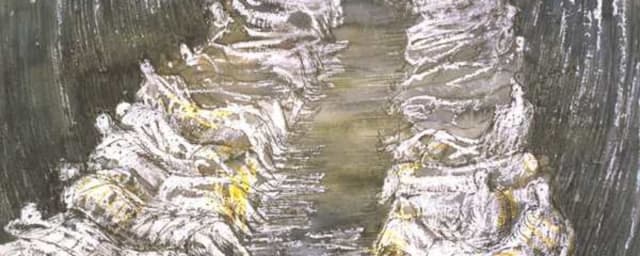
Perspective
Perspective is a system for representing objects of three-dimensional space on the two-dimensional surface of a picture so as to convey an impression of depth, distance, and volume. Its most influential variety is linear perspective, in which parallel lines, as they recede, appear to converge towards one or several vanishing points on the horizon line, while objects diminish in proportion to their distance. The mathematical foundations of linear perspective were developed in Renaissance Florence: the first experiments are credited to the architect Filippo Brunelleschi around 1415, and they were set out theoretically by Leon Battista Alberti in his treatise «On Painting» (1435). This discovery fundamentally transformed European art, enabling artists to construct a convincingly coherent, measurable space. Alongside linear perspective there is aerial (atmospheric) perspective, which conveys depth through the softening of colour and clarity of distant objects, as in the works of Leonardo da Vinci. Perspective remained the basis of academic painting for centuries, until twentieth-century modernists began deliberately to reconsider and dismantle its conventions.
Read more →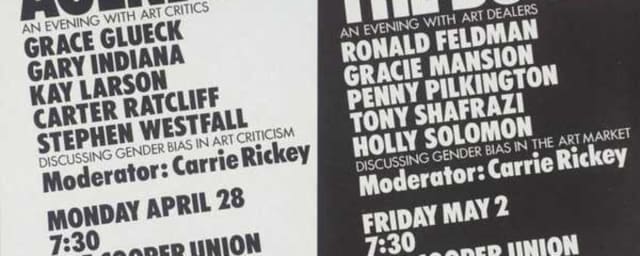
PESTS
PESTS was an anonymous protest group of artists active in New York in the 1980s whose aim was to expose discrimination and tokenism directed at artists from racial minorities by commercial galleries, museums and other art institutions. The group was close in spirit and method to the well-known Guerrilla Girls, but it focused primarily on the problem of racial rather than gender inequality in the art world. Its members preserved their anonymity and distributed leaflets, posters and newsletters in which, by means of facts, names and statistics, they documented the systematic neglect of non-white artists, their meagre representation in exhibitions and collections, and the practice of tokenism, the symbolic inclusion of a few individual artists for the sake of visible diversity without any real change. The activity of PESTS coincided with a period of intensified debate about multiculturalism, identity and representation in American art. Although the group was short-lived, it played a notable part in the wider movement for racial justice in the art world and testified to a growing critical awareness of structural inequality in art institutions at the end of the twentieth century.
Read more →Petrykivka painting
A form of folk decorative ornamental painting that took shape in the mid-nineteenth century in the village of Petrykivka, Dnipropetrovsk Oblast. It is based on improvised floral compositions built from a few set types of brushstroke.
Read more →
Photobook
A photobook is a book of photographs conceived and sequenced by the photographer or curator so that the images share a common theme, idea, or narrative line. Unlike a casual album, the photobook is a unified work of art in which the order of pictures, the layout, the rhythm of spreads, the printing, and even the choice of paper all carry meaning. The form flourished in the twentieth century, when documentary, poetic, and conceptual photobooks became a major mode of expression. Within the Kharkiv School of Photography, the Ukrainian artist Boris Mikhailov produced several influential photobooks, among them Case History, which fuse social urgency with intimate voice. Contemporary Ukrainian photographers use the photobook to explore memory, identity, and the experience of war. Because it is reproducible and affordable, the photobook democratizes art, carrying an author's vision to a broad audience beyond the museum wall.
Read more →
Photogram
A photogram is a photographic image made without a camera: objects are placed directly on light-sensitive paper, which is then exposed to light. Areas covered by objects stay pale, while exposed areas darken, producing silhouettes, translucent contours, and subtle tonal gradations. The technique reaches back to the early photogenic drawings of William Henry Fox Talbot and the botanical cyanotypes of Anna Atkins. In the 1920s avant-garde artists raised the photogram to an independent art: Laszlo Moholy-Nagy, Christian Schad with his schadographs, and Man Ray with his rayographs treated it as a way to explore the pure play of light and form. The photogram lays bare the very nature of photography, the action of light upon a sensitive material, and it remains a favored tool of experimental and educational practice, including among Ukrainian artists working at the border of abstraction and document.
Read more →
Photography
Photography is the process and practice of making images by the action of light on a light-sensitive material, as well as the images so produced. Invented in the late 1830s through Louis Daguerre's daguerreotype and Talbot's calotype, it quickly transformed ideas of the image, the document, and memory. Photography spans a vast range, from scientific recording and photojournalism to Pictorialism, modernist experiment, and conceptual art. Over the twentieth century it established itself as a full art capable of an autonomous aesthetic. Ukraine has a rich photographic tradition: the travel writer and photographer Sofia Yablonska, and later the internationally celebrated Kharkiv School of Photography (among its members, Boris Mikhailov), which developed a sharply social and poetic approach. The digital revolution democratized the medium and made it ubiquitous, while sharpening questions of truth, authorship, and the ethics of the image in an age of mass visual culture.
Read more →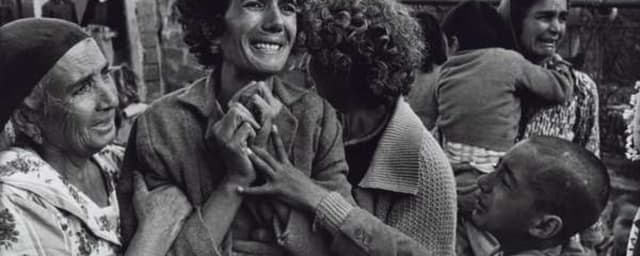
Photojournalism
Photojournalism is a form of journalism that tells a news story chiefly through powerful photography. It demands a union of accuracy, timeliness, and ethical responsibility: the picture must be a truthful witness to an event rather than a staged construction. Photojournalism flourished in the era of the mid-twentieth-century illustrated magazines and the spread of portable cameras that made it possible to capture the decisive moment. The field includes spot news, essayistic reportage, and war photography. Ukrainian photojournalism has deep roots; the photographer Yevgeny Khaldei, born in Yuzivka (today Donetsk), made some of the most famous war images of the twentieth century. Since 2014, and especially after the full-scale invasion, Ukrainian photojournalists have documented the war, earning international recognition and creating a visual chronicle of national resistance. The ethics of authenticity and the safety of authors remain central challenges of the profession.
Read more →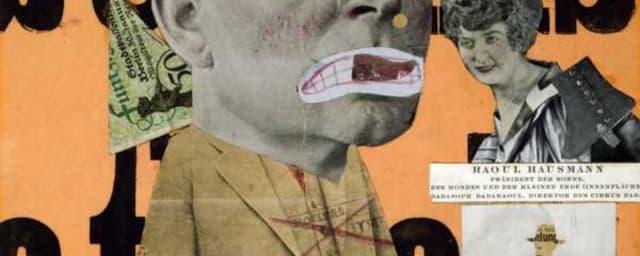
Photomontage
Photomontage is a technique, and its product, in which a new image, printed page, or composition is assembled from cut and combined photographs, often together with text. Unlike seamless retouching, classic photomontage deliberately shows its seams and collisions, generating sharp political or poetic meanings. The technique flourished with Dada and Constructivism in the early 1920s: Hannah Hoch, Raoul Hausmann, and especially John Heartfield, who turned photomontage into a powerful anti-fascist weapon of the poster. Within the Ukrainian avant-garde the Kharkiv artist Vasyl Yermilov used collage and montage methods, combining photography, typography, and geometric form. Photomontage remains a living tool of advertising, book design, and political art, and in the digital age its logic has become the ubiquitous foundation of image editing.
Read more →
Photorealism
Photorealism is a style of painting and drawing that emerged in the United States and Europe in the late 1960s, based on the meticulous, almost photographically exact rendering of an image, usually taken from an existing photograph. Artists projected photographs onto canvas or transferred them by grid, achieving an impersonal, smooth surface free of emotive brushwork. Leading practitioners include Chuck Close with his monumental portraits, Richard Estes with his glittering urban storefronts, Audrey Flack, and Ralph Goings. Photorealism arose as a reaction against the subjectivity of Abstract Expressionism and at the same time as a reflection on the age of mass photography and advertising. It raises questions about the nature of seeing, of copy and original, and about the line between mechanical reproduction and handcraft. The style influenced hyperrealist sculpture and remains relevant in contemporary painting, including among Ukrainian realists.
Read more →
Picture plane
The picture plane is the notional physical surface of a painting or drawing, that is, the flat plane of the canvas, paper, or panel on which the image is created. In art theory the picture plane is often imagined as a transparent window through which the viewer looks onto the depicted world. This concept is key to understanding perspective and the illusion of depth: in Renaissance painting artists developed linear perspective in order to create, on the flat picture plane, a convincing illusion of a three-dimensional space that appears to recede behind the surface. The relationship between the picture plane and illusory space became a central problem of modern art. In the late nineteenth and early twentieth centuries, artists began deliberately to draw attention to the flatness of the surface instead of concealing it with the illusion of depth. Paul Cézanne, and later the Cubists, destroyed traditional perspective, emphasising the two-dimensionality of the canvas. The critic Clement Greenberg regarded the assertion of the flatness of the picture plane as the defining feature of modernist painting and a sign of its honesty toward its own medium. Thus the concept of the picture plane became not only a technical term but also the conceptual heart of debates about the nature of painting, illusion, and abstraction.
Read more →
Pictures generation
The Pictures Generation is the name given to a group of American artists who reached creative maturity in the late 1970s and early 1980s and were known for their critical analysis of media culture, advertising, film, and photography. The term derives from the influential exhibition "Pictures," organized in 1977 by critic Douglas Crimp at the New York venue Artists Space. These artists worked in an age of visual saturation with mass images and explored how photography, television, and advertising shape identity, desire, and perceptions of reality. Relying on strategies of appropriation, they borrowed, copied, and reworked already existing images, questioning the notions of originality and authorship. Key figures include Cindy Sherman with her "Untitled Film Stills," Richard Prince, Sherrie Levine, Barbara Kruger, and Louise Lawler. The theoretical basis of the movement was the ideas of postmodernism and semiotics. The Pictures Generation significantly influenced the subsequent development of conceptual photography and critical art about the media.
Read more →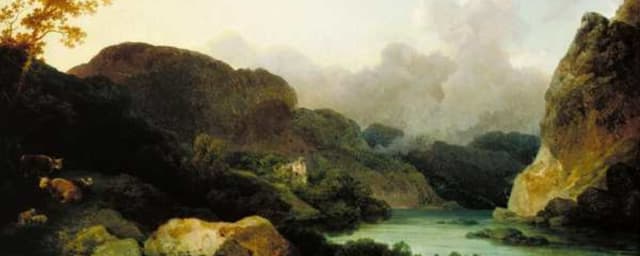
Picturesque
Picturesque is an aesthetic category that took shape in Britain at the end of the eighteenth century and described an ideal type of landscape attractive precisely for its artistic, "picture-like" quality. The term derives from the Italian pittoresco — "resembling a picture." The picturesque occupied an intermediate position between two other categories of the era — the "beautiful," which implied smoothness, harmony, and tenderness, and the "sublime," associated with vastness, terror, and the power of nature. The picturesque, by contrast, valued irregularity, roughness, variety, ruins, gnarled trees, and elements of wildness that gave a landscape its picturesque character. The theory was developed by the English authors William Gilpin, Uvedale Price, and Richard Payne Knight at the close of the eighteenth century. The concept had an enormous influence on landscape painting, garden design, and Romantic literature: gardens were deliberately arranged to resemble the paintings of Claude Lorrain and Salvator Rosa. The picturesque shaped the taste of an entire era in the perception of nature and left a deep mark on European landscape culture.
Read more →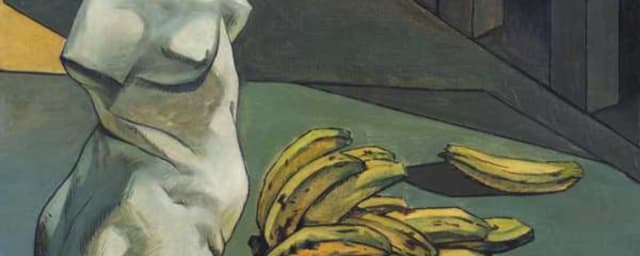
Pittura Metafisica
Metaphysical Painting (Pittura Metafisica) was an Italian art movement of the early twentieth century characterized by dreamlike, unsettling images of deserted arcaded squares with unexpected juxtapositions of objects. The tendency originated around 1910–1911 in the work of Giorgio de Chirico and received its name and theoretical formulation during the First World War, when de Chirico met the painter Carlo Carrà in the city of Ferrara around 1917. Metaphysical Painting depicted empty urban spaces with sharp shadows, classical arcades, mannequins in place of people, geometric instruments, and everyday things wrenched from their usual context. This created a sense of mystery, frozen time, and hidden meaning behind visible reality. The artists sought to reveal the "metaphysical" essence of things lying beyond ordinary perception. Besides de Chirico and Carrà, Giorgio Morandi is associated with the movement. Metaphysical Painting had an enormous influence on Surrealism, inspiring artists such as Max Ernst and René Magritte, and became one of the key sources of the art of the enigmatic and the unreal.
Read more →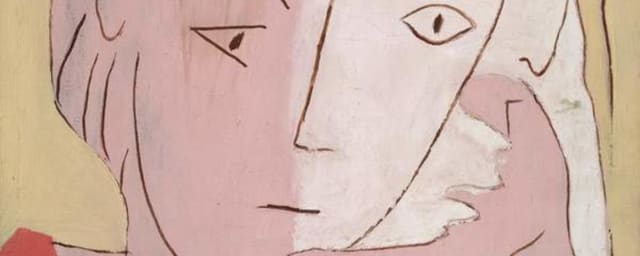
Plane
A plane, in art, is any flat, level surface, as well as a distinct facet or area of such a surface in painting, drawing, or sculpture. In painting one speaks of planes when analysing how an image is divided into separate areas of colour, tone, or form, arranged at different notional levels of depth: the foreground, middle ground, and background. Each such plane helps to organise the space of the composition and to create a sense of depth or, conversely, of flatness. The concept of the plane is especially important for understanding how artists construct space and form. In traditional illusionistic painting, planes are ordered so as to imitate the recession of space into depth. In Cubism, developed by Pablo Picasso and Georges Braque in the early twentieth century, form was broken down into numerous intersecting, shifted planes that depicted an object simultaneously from different points of view and destroyed a single perspective. In sculpture and painting, planes also determine how light reflects off surfaces, shaping volume and modelling form. The analysis of planes remains an important tool of art history, allowing one to describe the structure of a work, the organisation of space, and the way form is constructed on a flat or three-dimensional support.
Read more →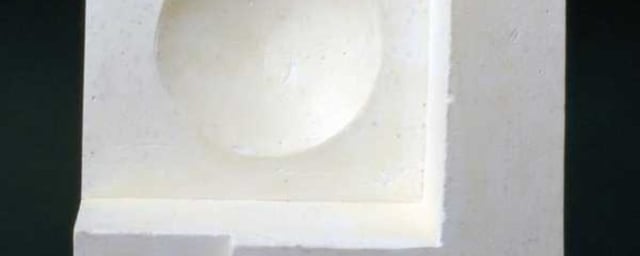
Plaster of Paris
Plaster of Paris is a fine white powder which, mixed with water, forms a pliable paste that quickly sets into a white solid mass. Chemically it is calcium sulphate hemihydrate, obtained by calcining natural gypsum stone. As it sets, the mass expands slightly and reproduces the finest details of a mould precisely, which makes plaster an indispensable material in sculpture and casting. It is used to make models, moulds for casts, casts themselves and architectural decoration. In the sculptural process plaster plays a key role as an intermediate material: a clay model is translated into a strong plaster cast, from which the final work is then executed in bronze or marble. Plaster casts of ancient statues served for centuries as teaching aids in art academies, including Ukrainian art schools, where students mastered drawing and modelling from life. Plaster is also used in medicine, construction and decorative finishing owing to its cheapness, ease of working and whiteness. Its drawbacks — brittleness and sensitivity to moisture — limit its use as a final display material.
Read more →
Plein air
Plein air (from the French for «open air») is the practice of painting finished pictures outdoors rather than in the studio, in order to observe natural light, colour, and atmosphere directly. Although artists had long made studies from nature, the custom of executing the final work itself outdoors spread in the nineteenth century. This was aided by technical innovations, above all the invention of oil paints in metal tubes (around 1841), which made materials portable. Important precursors of plein-air painting were the masters of the Barbizon school, notably Camille Corot and Théodore Rousseau, who worked in the Forest of Fontainebleau. The principle of plein air was most fully embodied by the French Impressionists — Claude Monet, Auguste Renoir, Camille Pissarro — for whom the rendering of momentary effects of light and time of day became the chief aim. Monet painted series of the same motif under different lighting, so as to capture the changeability of the atmosphere. Plein-air painting transformed the very conception of colour and light and deeply influenced the subsequent development of European art.
Read more →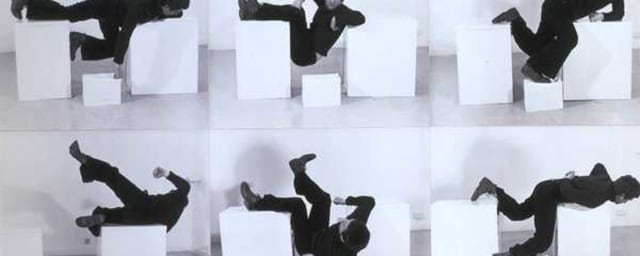
Plinth
A plinth is a heavy base, pedestal or box on which a sculpture stands and is presented. The plinth raises the work above the level of the floor or ground, separates it from the surrounding space and brings it into the viewer's field of vision at the required height, while also physically stabilising the statue. The form of the plinth — a plain cube, a cylinder or a moulded pedestal — affects the perception of the sculpture: it can emphasise the work's monumentality or, conversely, recede unobtrusively, giving all attention to the sculpture itself. Historically the pedestal was an integral part of monumental and easel sculpture, often adorned with reliefs, inscriptions or architectural decoration. In the twentieth century, however, attitudes to the plinth changed radically: Constantin Brâncuși began treating the pedestal as part of the work itself, while Minimalists and Land-art figures often dispensed with it altogether, placing sculpture directly on the floor to break the "pedestal-viewer" hierarchy and involve real space. Thus the plinth was transformed from a purely utilitarian support into an independent subject of artistic reflection on the status and limits of the sculptural work.
Read more →Podillia
A historical and ethnographic region in south-western Ukraine covering almost all of Vinnytsia Oblast, the south of Khmelnytskyi and Ternopil oblasts and the north of Odesa Oblast, with distinctive traditions of nyz embroidery, carpet weaving and pottery.
Read more →Poltava white-on-white embroidery
The regional embroidery manner of the Poltava region, in which the pattern is worked in white thread on white cloth, combining counted satin stitch (lyshtva) with openwork techniques.
Read more →
Pop Art
Pop art is a visual language that made mass culture, advertising, the comic strip and the consumer product the very subject of art. Its core idea is to erase the boundary between "high" and "low" and to raise the everyday, ironically, to the rank of an aesthetic object. Formally, pop art employs bright local colours, crisp contours, flat planes and the devices of reproduction printmaking. Characteristic motifs are tin cans, cola bottles, film stars, road signs, and comic-book covers and frames. Technically, its artists readily turned to silkscreen, photomechanical printing and the halftone dot, emphasising the serial and impersonal nature of the image. Composition is often built on repetition, the enlargement of a detail, or the collage-like juxtaposition of recognisable signs. Emotional distance and cool irony distinguish pop art from the expressive abstraction against which it arose. The movement flourished in late-1950s Britain and reached its peak in the United States of the 1960s. Its icon was Andy Warhol, with his reproduced portraits of Marilyn Monroe and his Campbell's soup cans. Roy Lichtenstein carried the language of the comic, with its Ben-Day dots, into high art, while Claes Oldenburg made giant soft replicas of ordinary objects. The British line is represented by Richard Hamilton and Eduardo Paolozzi. Pop art critically reflects on consumer society while relishing its glitter. Today it is prized for its visual punch, conceptual edge and lasting influence on design and advertising.
Read more →Portrait
A genre of art, and an individual work, that represents a particular real person or group of people and conveys their likeness.
Read more →
Post-Impressionism
Post-Impressionism is a collective name for the artistic searches that grew out of Impressionism but overcame its fixation on the fleeting impression in favour of enduring form, structure and personal meaning. The movement's shared idea was to return to painting the constructive strength, symbolic depth and emotional tension lost in the pursuit of transient light. Formally, its masters retained the pure, saturated colour of the Impressionists, yet subordinated it to conception rather than to the eye. Paul Cézanne sought in nature a geometric foundation — the cylinder, the sphere, the cone — and built space through the juxtaposition of colour planes, becoming a bridge to Cubism. Georges Seurat devised Pointillism, breaking colour into tiny dots of pure pigment that blend only in the viewer's eye. Vincent van Gogh turned the brushstroke into a vessel of feeling: his swirling, impasto lines pulse with an inner fire. Paul Gauguin turned to Synthetism and symbol, working with large decorative fields of saturated colour and primitive forms. Post-Impressionist composition is deliberate, often flat and decorative, with an emphasised contour. Technically, its artists experimented with texture, the rhythm of the brushstroke and the expression of line. The movement developed in France in the 1880s–1900s and became the foundation of all modern twentieth-century art, feeding Fauvism, Expressionism and Cubism. Today Post-Impressionism is valued for uniting chromatic freedom with intellectual and spiritual depth.
Read more →



