




Art terms on "B"
Baroque
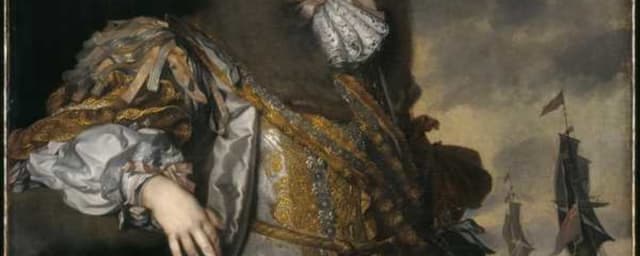
Baroque is an artistic language of the late sixteenth to the mid-eighteenth century, built on the pathos of movement, contrast and the emotional captivation of the viewer. In contrast to the balanced calm of the Renaissance, the Baroque strives to astonish, stir and draw the beholder into action, so its works are filled with dramatic tension and theatricality. Its hallmarks are a dynamic diagonal composition, sharp oppositions of light and shadow (the techniques of chiaroscuro and tenebroso), a wealth of textures, saturated color and an almost sculptural plasticity of form. Baroque masters loved expansive multi-figure scenes, illusionistic ceiling paintings that seem to open the sky, sumptuous draperies and the depiction of a moment of highest emotional intensity. In painting the style is represented by Caravaggio with his stark light, Peter Paul Rubens with his turbulent corporeality, Diego Velázquez and Rembrandt, who brought the play of light to psychological depth. In Ukraine a distinctive "Cossack Baroque" developed, blending Western European forms with local tradition: the architecture of the age of Hetman Ivan Mazepa, icon painting, engraving and the celebrated illustrated early printed books of the Kyiv-Pechersk Lavra. The Ukrainian portrait-parsuna and the many-tiered carved iconostases also belong to this era. Baroque became a style in which visual splendor served spiritual exaltation and affirmation, and its expressive means still nourish our notion of solemnity and drama in art.
Read more →Battle painting
A genre of art devoted to war and military life: battles, campaigns and the everyday life of an army.
Read more →
Bauhaus
The Bauhaus was a revolutionary school of art, architecture, and design founded by the pioneer of modern architecture Walter Gropius in Weimar, Germany, in 1919. Its founding idea was to unite the fine arts, craft, and industrial production into a single whole serving the needs of mass society; the principle "form follows function" (a phrase coined by the American architect Louis Sullivan) and the rejection of superfluous ornament defined the face of twentieth-century modernism. Training began with a compulsory preliminary course, and the workshops were led by outstanding artists—Paul Klee, Wassily Kandinsky, László Moholy-Nagy, Johannes Itten, and Oskar Schlemmer. Under political pressure the school moved in 1925 to Dessau, where Gropius built for it the famous glass-and-concrete building, and later to Berlin; its final director was the architect Ludwig Mies van der Rohe. Forced to close by the Nazis in 1933, the Bauhaus saw its teachers scatter across the world and spread its ideas, permanently transforming architecture, graphic and industrial design, and art education.
Read more →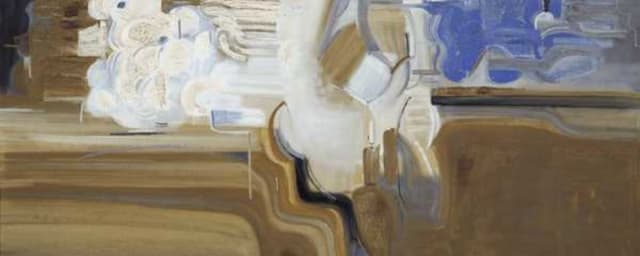
Beaux Arts Quartet
Beaux Arts Quartet was the name given to a group of four young British realist painters whose work was shown at the Beaux Arts Gallery in London in the early 1950s. The quartet comprised John Bratby, Derrick Greaves, Edward Middleditch, and Jack Smith, and their patron was the gallery's owner and director Helen Lessore, who consistently championed figurative painting against the fashion for abstraction. The artists depicted the ordinary, often bleak everyday life of post-war working-class Britain—cramped kitchens, sinks, food scraps, and shabby interiors—for which the critic David Sylvester coined the broader name "Kitchen Sink School." Their rough, earthy-coloured style echoed the contemporary "Angry Young Men" movement in literature and theatre. In 1956 the four painters represented Great Britain at the Venice Biennale, attesting to the importance of this tendency for mid-century British art.
Read more →
Beijing East Village
Beijing East Village was a short-lived, politically charged Chinese art collective that came to prominence in the early 1990s. Its name refers both to a poor migrant settlement on the eastern outskirts of Beijing where the artists lived and, ironically, to the bohemian art scene of New York's East Village. In squalid conditions the young artists concentrated on radical performance and photography of the body, exploring the limits of endurance, identity, and the relationship between the individual and a repressive society. Key figures were the performance artists Zhang Huan and Ma Liuming, along with the photographer Rong Rong, who documented their actions and preserved them for history. Works such as Twelve Square Metres and To Add One Metre to an Anonymous Mountain (1995, made by former residents after the community had been disbanded) became canonical examples of the Chinese avant-garde. Official pressure and arrests led to the community's dissolution by around 1994, yet the East Village remained a turning point in the emergence of contemporary Chinese performance art.
Read more →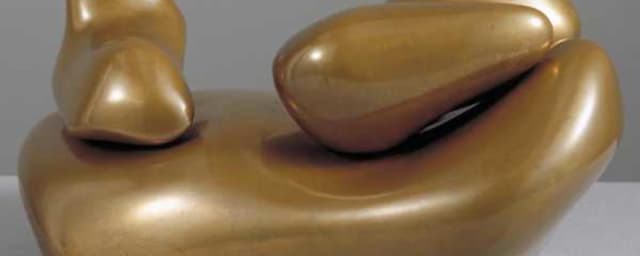
Biomorphic
Biomorphic is a term describing forms or images that, while abstract, nonetheless refer to or evoke living organisms: plants, cells, amoebas, bones, organs or the human body. The word derives from the Greek bios, life, and morphe, form. Biomorphic forms are typically fluid, rounded, sinuous and asymmetrical, in contrast to rigid geometric abstraction with its straight lines and regular figures. Biomorphism gained particular importance in the art of the 1930s, above all within Surrealism, where it reflected an interest in the unconscious, organic growth and natural processes. Striking examples are the biomorphic sculptures and reliefs of Hans Arp, the organic forms of Joan Miró and Yves Tanguy in painting, and the streamlined plastic volumes in the work of the sculptors Henry Moore and Barbara Hepworth. Later biomorphic motifs spread into mid-twentieth-century design and architecture. The term remains useful for describing any abstract art whose forms suggest a sense of the living, growing and natural, set against the mechanical and artificial.
Read more →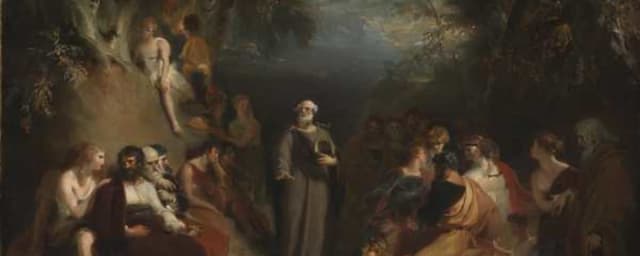
Bitumen
Bitumen is a natural, dark, resinous hydrocarbon-based substance that in painting was used as a brown pigment and glazing material, especially to enrich and deepen dark tones and shadows. Also known as asphalt or "asphaltum," this material gave artists a warm, transparent and deep brown tint that lent paintings a sense of glowing depth and soft transitions between light and shade. Bitumen was widely used by artists of the eighteenth and nineteenth centuries, including representatives of Romanticism and the English school such as Joshua Reynolds and John Martin. However, the material had a fatal technical flaw: bitumen never fully dries or hardens. Over time it continues to move, crack and darken, so that the surface of many paintings became covered with characteristic deep cracks (so-called "crocodile skin") or darkened so much that the image was partly lost. Because of this irreversible damage, by the end of the nineteenth century artists largely abandoned bitumen in favour of more stable brown pigments. Today bitumen is chiefly of interest to conservators and researchers of old painting techniques, who study the causes of deterioration in historical canvases.
Read more →
Black Atlantic
The Black Atlantic is a concept introduced by the British sociologist and cultural theorist Paul Gilroy in his influential book The Black Atlantic: Modernity and Double Consciousness (1993). The term describes a cultural space spanning Africa, the Americas, the Caribbean, and Europe, regions bound together by the transatlantic slave trade and its enduring aftermath. Gilroy argued that Black culture cannot be reduced to a single nation or ethnicity, because it was formed through constant movement, exchange, and fusion of peoples, ideas, and artistic forms across the Atlantic Ocean. The concept challenges narrow national and racial narratives, emphasising the transnational, hybrid character of modernity itself. Gilroy used the image of the ship as a symbol of movement, trade, and cultural exchange between continents. In the visual arts, the idea of the Black Atlantic has inspired many diaspora artists to reflect on the legacies of slavery, migration, and the condition of double consciousness. The term has become foundational to postcolonial studies, diaspora research, and contemporary art, offering a way to understand culture as a network of connections rather than a fixed tradition tied to a single place or people.
Read more →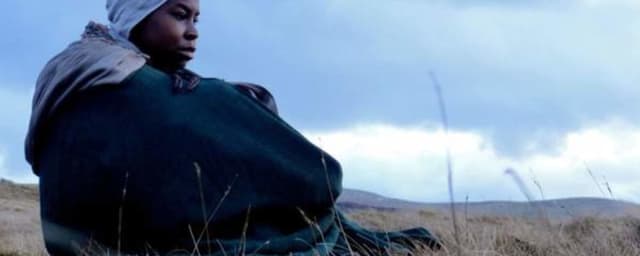
Black Audio Film Collective
Black Audio Film Collective was a pioneering artistic initiative founded in 1982 whose experimental film practice engaged with Black popular and political culture in Britain and explored the country's new multicultural reality. The collective comprised seven artists, among whom the central figure was the director and theorist John Akomfrah, together with Reece Auguiste, Lina Gopaul, Avril Johnson, David Lawson, Trevor Mathison, and Edward George. The group worked in the mode of the "film essay," combining documentary footage, archival material, poetic voice-over, sound collages, and theoretical reflection on memory, diaspora, and race. Its landmark film Handsworth Songs (1986), made as a response to the uprisings in British cities, won recognition and awards and became a model of politically engaged avant-garde cinema. After disbanding in 1998, its members, notably Akomfrah, continued influential careers, and the collective's legacy remains foundational for Black British art.
Read more →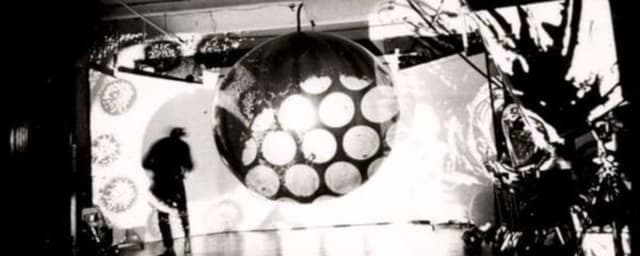
Black box
The black box, in the context of contemporary art, is a term for a darkened, usually square or rectangular room painted black, used to present performance, video art, sound installations, and other experimental time-based forms of art. The name derives from the theatrical tradition of the black box theatre, a flexible space without a fixed stage that allows the relationship between performer and audience to be freely arranged and reconfigured. The black box is often contrasted with the white cube, the bright, neutral gallery space designed to display static objects such as paintings and sculptures. Where the white cube emphasises the autonomy and timelessness of the object, the black box immerses the viewer in a controlled environment in which time, duration, lighting, and sound play a central role. As performative and media-based practices spread in the second half of the twentieth century, museums and galleries increasingly began to install dedicated black box spaces for such works. Today the term is widely used in museum practice to describe a space specially adapted to the needs of moving image and live performance, distinct from conventional exhibition galleries.
Read more →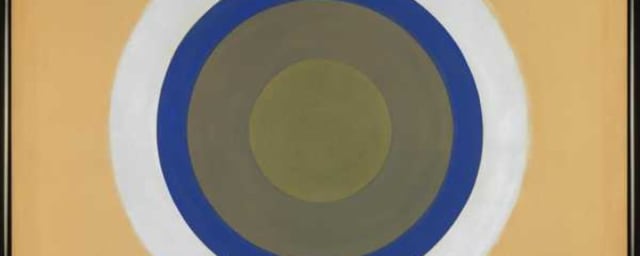
Black Mountain College
Black Mountain College was a highly influential educational institution founded in the town of Black Mountain, North Carolina, USA, in 1933, where education was experimental and centred on an interdisciplinary approach. At the heart of its programme lay the idea that art was central to a liberal education, and the college itself was governed democratically by its own faculty and students, who worked and farmed the land together. Its first leading art teacher was Josef Albers, a refugee from the Nazi-closed Bauhaus, who brought European modernist teaching methods with him. Faculty and visitors over the years included the composer John Cage, the choreographer Merce Cunningham, the architect and inventor Buckminster Fuller, and the poets and painters Robert Motherwell, Willem de Kooning, and Robert Rauschenberg. It was here that one of the first "happenings" took place, and the crossing of ideas among disciplines nourished the post-war American avant-garde. Financial difficulties forced the college to close in 1957, but its impact on American art, dance, and music is hard to overstate.
Read more →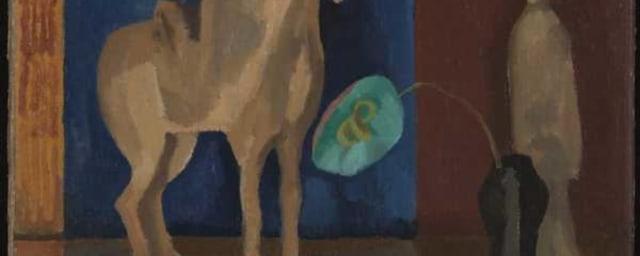
Bloomsbury
Bloomsbury, or the Bloomsbury Group, was a circle of intellectuals, writers, and artists who lived in the Bloomsbury district near the centre of London roughly between 1904 and 1940. The group had no formal programme and was held together by friendship, shared aesthetic and ethical views, and a disdain for Victorian propriety. Its members included the writer Virginia Woolf and her sister, the painter Vanessa Bell, the critic and art theorist Roger Fry, the painter Duncan Grant, the art critic Clive Bell, the economist John Maynard Keynes, and the writer Lytton Strachey. In the visual arts the leading role was played by Roger Fry, who in 1910 organised in London the exhibition that introduced the British public to the Post-Impressionism of Cézanne, Van Gogh, and Gauguin; he also, together with Bell and Grant, founded the decorative Omega Workshops. Bloomsbury championed the theory of "significant form" and aesthetic experience and had a substantial influence on the development of modernism in British literature, painting, and design.
Read more →
Body art
Body art is art in which the body, usually the artist's own body, is the primary medium and focus of the work. Instead of depicting the body in painting or sculpture, the artist uses their own physical presence, action, endurance, pain or risk as direct material. Body art is closely linked with performance and often exists only in the moment of execution, surviving afterwards as photographs, video or descriptions. The tendency took shape in the late 1960s and 1970s in the context of conceptual art, feminist thought and a desire to move beyond the traditional object. It raises questions of identity, gender, embodiment, the limits of endurance and the relationship between artist and viewer. Among its well-known representatives are Marina Abramović, who explored the limits of the physical and psychic through long, exhausting actions; Vito Acconci; Chris Burden, who exposed himself to danger; and Ana Mendieta, who joined the body with landscape and ritual. Body art expanded the notion of what can be artistic material and deeply influenced the later development of performance and socially engaged practice.
Read more →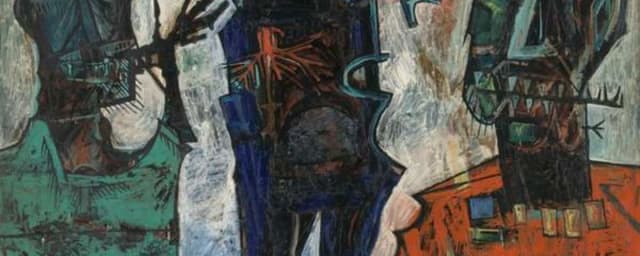
Bombay Progressive Artists’ Group
The Bombay Progressive Artists' Group was a short-lived but decisive association for Indian modernism, founded in 1947 in Bombay, the same year India gained independence. The group challenged the conservative academic tradition and colonial salon painting, as well as the sentimental nationalism of the Bengal School, seeking to create a new Indian visual language that would be at once modern, cosmopolitan, and rooted in its own culture. Its founder is generally considered to be Francis Newton Souza, and its core included Maqbool Fida Husain, Sayed Haider Raza, Krishnaji Howlaji Ara, Sadanand Bakre, and Hari Ambadas Gade. The artists creatively reinterpreted European modernism—Cubism, Expressionism, the painting of Matisse and Picasso—through the lens of Indian themes, myths, and folk art. Although the group formally dissolved in the early 1950s as its members scattered across the world, it laid the foundations of modern Indian art, and its members became the country's most celebrated masters.
Read more →Borshchiv embroidery
A local tradition of women's shirt embroidery from the Borshchiv area (Ternopil Oblast, Western Podillia), recognisable by dense stitching in black woollen thread on the sleeves.
Read more →Botanical illustration
An accurate depiction of a plant and its parts made for a scientific purpose; a kind of illustration defined by its subject rather than a genre in the classical sense.
Read more →
Boychukism
Boychukism is a Ukrainian monumental school of the first third of the twentieth century, named after its founder Mykhailo Boychuk and built on a synthesis of national tradition with European modernism. At the heart of the style lies the idea of "neo-Byzantinism": Boychuk and his pupils consciously turned to the artistic language of Byzantine and Old Rus icon painting, the Italian Proto-Renaissance (above all Giotto) and Ukrainian folk art, seeing in them a model of monumental wholeness. The hallmarks of Boychukism are the flatness of the image, a generalized and laconic silhouette, elongated static figures with quiet inner concentration, a restrained earthen color range, and the subordination of figures to the rhythm and architectural plane of the wall. The Boychukists worked chiefly in fresco and tempera, reviving ancient recipes, as well as in graphics, book illustration, carpet-weaving and ceramics, seeking to embrace the whole environment of life. The circle of masters included Tymofiy Boychuk, Ivan Padalka, Vasyl Sedliar, Oksana Pavlenko and Sofiya Nalepynska-Boychuk. The school's largest monumental ensembles — the murals of the Lutsk Barracks, the Peasant Sanatorium in Odesa and the Chervonozavodskyi Theatre in Kharkiv — were destroyed together with most of their works. In 1937 Mykhailo Boychuk and his leading pupils were executed and their works annihilated, so Boychukism became a tragic symbol of the "Executed Renaissance," whose legacy scholars reconstruct only from fragments and photographs.
Read more →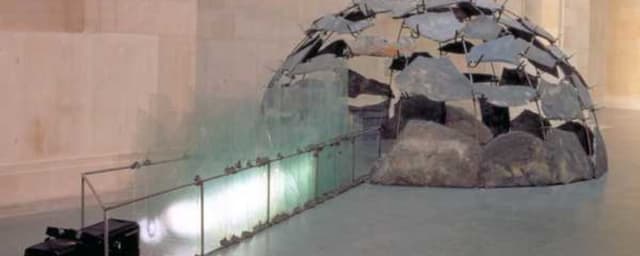
Bricolage
Bricolage is a method of creating a work of art from a diverse range of materials that happen to be at hand, often chance, found, or repurposed objects. The French word bricolage means do-it-yourself construction or something made from available means, while a bricoleur is a self-taught handyman who inventively combines whatever is available. The term acquired theoretical significance through the French anthropologist Claude Lévi-Strauss, who in The Savage Mind contrasted the bricoleur, working with a limited set of existing elements, with the engineer, who fashions tools for a specific task. In art, bricolage is closely related to the practices of collage, assemblage, and the readymade, pioneered in the early twentieth century by Cubists, Dadaists, and Surrealists. Artists such as Kurt Schwitters created compositions from tickets, wrappers, and fragments of everyday life. Bricolage undermines the idea of the artist as a creator who begins from a blank page, emphasising instead the reworking, combining, and transformation of ready-made material. In a broader cultural sense, the concept is also applied to music, fashion, and subcultures, where new meanings arise from the unexpected juxtaposition of pre-existing elements.
Read more →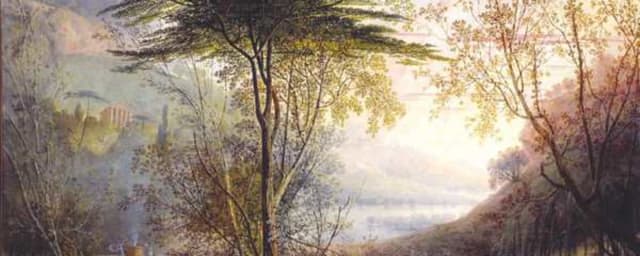
Bristol school
The Bristol School was an informal grouping of artists associated with the city of Bristol in the west of England in the early 1800s who drew inspiration from the local landscape, particularly the River Avon and the picturesque Avon Gorge. Unlike academic associations, it was more a fellowship of amateur and professional artists who went out together on sketching excursions to scenic spots around Bristol and held evening sketching meetings to exchange ideas. The leading figure of the circle was the Irish-born painter Francis Danby, whose poetic, often twilit and moonlit landscapes set the mood for the whole group; alongside him worked Edward Villiers Rippingille, Samuel Jackson, and James Johnson. The Bristol School artists cultivated a Romantic attitude to nature, an attention to atmospheric effects of light and melancholy mood, drawing on the example of Claude Lorrain and early English landscape. Although the group never achieved national fame, it became an important centre of provincial Romantic landscape and left behind a distinctive regional tradition.
Read more →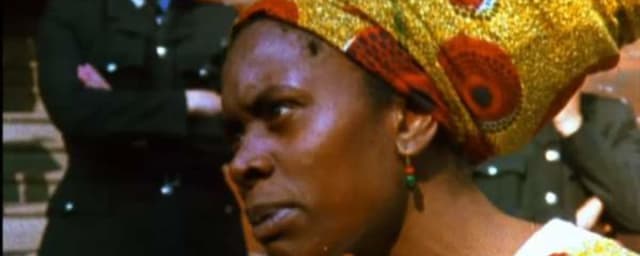
British black arts movement
The British Black Arts Movement was a radical political art movement that arose around 1982 and, inspired by anti-racist discourse and feminist critique, sought to foreground questions of race and gender and the politics of representation. The movement brought together a young generation of Black and Asian artists in Britain—mostly the descendants of post-war migrants from the Caribbean, Africa, and South Asia—who felt that the official art world ignored or exoticised them. The catalyst was the first National Black Art Convention convened by the Blk Art Group in Wolverhampton in 1982. Among its leading figures were Isaac Julien, Sonia Boyce, Lubaina Himid, Keith Piper, Donald Rodney, Eddie Chambers, and Marlene Smith. The artists worked with collage, photography, installation, video, and painting, exploring colonial legacies, diasporic identity, and the experience of life in Thatcher's Britain. The curator Lubaina Himid organised several landmark exhibitions, and the movement permanently changed ideas about who and what is represented in British museums and galleries.
Read more →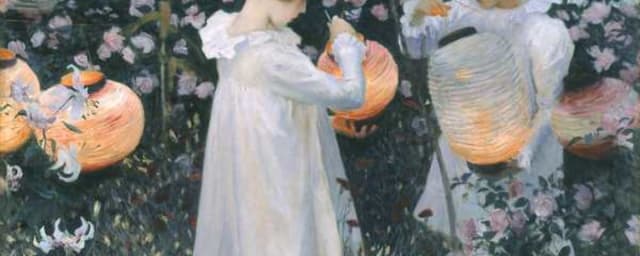
British impressionism
British Impressionism refers to artists who worked in Britain in the late nineteenth century under the influence of the ideas of the French Impressionists. They adopted a light palette, a free brushstroke, the depiction of modern everyday life and the desire to capture fleeting effects of light and atmosphere, while often retaining a greater attention to tonal modelling and structure than their French predecessors. An important role in spreading these ideas was played by the New English Art Club, founded in 1886 as an alternative to the conservative Royal Academy. Among its leading figures were Walter Sickert, who linked the British scene to Edgar Degas and conveyed the sombre poetry of urban interiors and music halls; Philip Wilson Steer with his luminous coastal landscapes; and the American James Abbott McNeill Whistler, who worked in London. The presence of Claude Monet, whose London series inspired local artists, was also significant. British Impressionism adapted French innovations to national taste and landscape, becoming a bridge to twentieth-century modernist art in Britain.
Read more →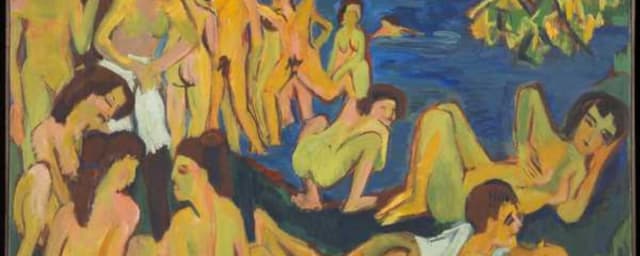
Brücke
Die Brücke (The Bridge) was a German Expressionist group founded in Dresden in 1905 that developed a radical, anti-traditional style. The name The Bridge symbolised the wish to build a bridge to the art of the future and to unite all revolutionary-minded young artists. The group became one of the two key currents of German Expressionism alongside the Munich association The Blue Rider. Its founders were Ernst Ludwig Kirchner, Erich Heckel, Karl Schmidt-Rottluff and Fritz Bleyl, architecture students who turned to painting and graphic art. Max Pechstein and Emil Nolde later joined the group. Their style is marked by harsh, simplified forms, sharp angles, saturated unnatural colours and strong emotional tension. The artists drew inspiration from medieval German woodcuts, the work of Edvard Munch and Vincent van Gogh, and the art of non-European cultures. Their contribution to the revival of the woodcut was especially significant. Die Brücke lasted until 1913, when it broke up over internal disputes, but it had a profound influence on the development of twentieth-century modernist art.
Read more →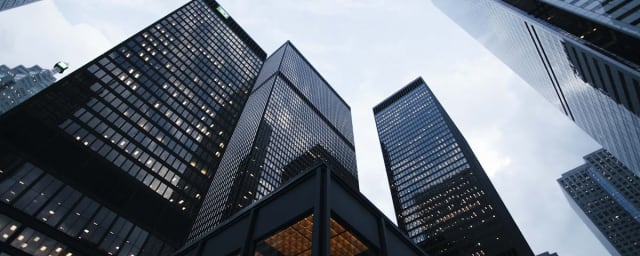
Brutalism
Brutalism is an architectural style of the 1950s and 1960s characterised by simple, massive, blocky forms and exposed, rough concrete construction. The name derives from the French phrase béton brut, raw concrete, popularised by the architect Le Corbusier. Brutalism is typified by bare surfaces of untreated concrete bearing the marks of wooden formwork, by monumentality, repeating modular elements and an emphatic honesty in displaying materials and structure. The style grew out of the postwar need for rapid and economical construction of housing, schools, universities and public buildings. The theoretical grounding of the New Brutalism was provided by the British architects Alison and Peter Smithson, and among its landmark examples are Le Corbusier's Unité d'Habitation in Marseille, the National Theatre building and the Barbican complex in London. Brutalism was often linked with ideas of social utopia and collective welfare. It was later criticised for its grimness and inhuman scale, and many buildings decayed or were demolished. Yet since the early twenty-first century interest in Brutalism has revived, and its legacy is being reassessed as an important chapter of modernist architecture.
Read more →



