




Art terms on "S"
Salon
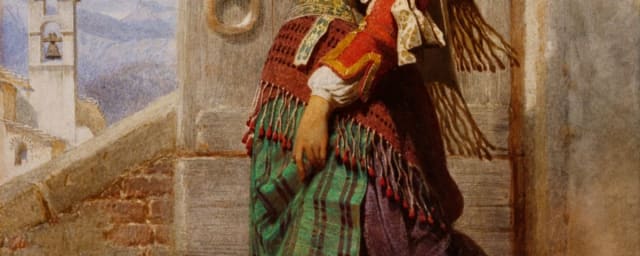
The Salon was the official art exhibition whose name derives from the Salon Carré in the Louvre in Paris, where from 1725 the French Royal Academy of Painting and Sculpture displayed the works of its members. Throughout the eighteenth and nineteenth centuries it became the most prestigious and influential public art exhibition in Europe: a jury of academicians selected the works, and acceptance or rejection could make or break an artist's career. The exhibitions were accompanied by vigorous debate, and it was here that the profession of art critic emerged, with writers such as Denis Diderot and later Charles Baudelaire producing extended reviews. The rigid conservatism of the jury provoked resistance. In 1863, under pressure from rejected artists, Napoleon III authorised the Salon des Refusés, which showed Édouard Manet's Le Déjeuner sur l'herbe among other controversial works. Later, independent bodies created their own venues, notably the jury-free Salon des Indépendants (from 1884) and the Salon d'Automne (from 1903), which became platforms for the Fauves and Cubists. The term "salon" thus came to symbolise the conflict between official academicism and the avant-garde, and it also became a model of the public art institution that shaped cultural life in other countries, including Eastern Europe and Ukraine.
Read more →
Sampling
Sampling, in its most basic form, is the reworking of existing culture, usually by technological means, much as collage does. The term originates in music production, where a sample is a fragment of an existing recording embedded in a new work; in a broader cultural sense, sampling means the appropriation, recombination, and reinterpretation of existing images, sounds, or texts. In the visual arts, sampling is connected with practices of appropriation, in which an artist deliberately borrows others' images — advertisements, mass-media stills, famous works of art — and places them in a new context, questioning notions of originality, authorship, and copyright. This strategy became especially prominent in postmodern art of the 1980s, in the work of artists engaging with mass culture. Sampling is a descendant of collage and photomontage, but it emphasises the digital and media-driven nature of contemporary culture, in which images are continuously copied, disseminated, and reworked.
Read more →
School of Altamira
The School of Altamira (Escuela de Altamira) was an avant-garde art school and association founded in 1946 in Buenos Aires, Argentina, by the Argentine-born Italian artist Lucio Fontana together with his students, who that year published the Manifiesto Blanco (White Manifesto). The manifesto advocated the integration of art and science and a new, synthetic art based on movement through time and space: "Matter, colour and sound in motion are the phenomena whose simultaneous development makes up the new art". Its teachers included the painters Emilio Pettoruti and Raúl Soldi, with Jorge Romero Brest as professor of art history; in 1947 Perón ordered the academy dissolved. Fontana did not sign the manifesto but actively contributed to it, and he later expanded its ideas as Spatialism in five manifestos from 1947 to 1952. The academy should not be confused with the School of Altamira founded in 1948 in Santillana del Mar, Spain, by Mathias Goeritz and others, which took its name from the nearby Altamira cave with its prehistoric paintings. The School of Altamira is an important example of how peripheral art centres beyond Europe actively engaged with global modernist debates of the mid-twentieth century, forging their own original versions of the avant-garde.
Read more →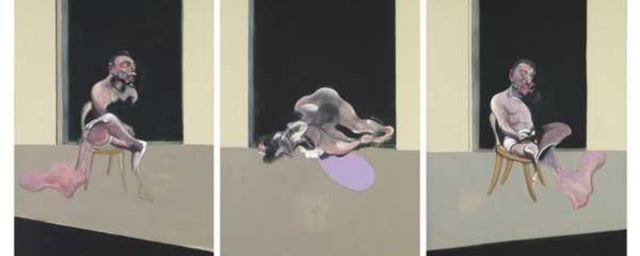
School of London
The School of London is a loose label for a group of artists who worked in London and, in the 1960s and 1970s, persistently developed figurative painting against the then-dominant currents of abstraction, Pop art and conceptualism. The term was popularised by the artist R. B. Kitaj, who in 1976, curating the exhibition The Human Clay, used it to describe a circle of artists united by their commitment to the depiction of the human figure and direct observation. The core of the group is traditionally taken to include Francis Bacon, Lucian Freud, Frank Auerbach, Leon Kossoff, Michael Andrews and Kitaj himself. These artists shared neither a common style nor a manifesto; they were united by the conviction that the human figure and bodily experience remain an inexhaustible source for modern art. Bacon created distorted, psychologically charged images; Freud painted nudes with an almost merciless physical precision; Auerbach and Kossoff laid down thick layers of paint, fixing the city and its people in dense matter. Many were émigrés or the children of émigrés, giving the movement a cosmopolitan dimension. The School of London demonstrated the vitality of the figurative tradition in an age of the avant-garde and helped revive interest in painting at the end of the twentieth century.
Read more →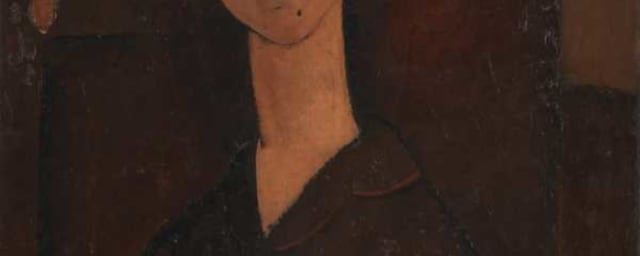
School of Paris
The School of Paris (École de Paris) is a collective term describing the diversity of artists who worked in Paris in the first decades of the twentieth century, when the city became a magnet for artists from around the world and the principal centre of innovation in modern art. It is not a school in the literal sense nor a single style, but rather a designation for an international creative community concentrated in the districts of Montmartre and Montparnasse. Fauvism, Cubism, Expressionism and abstraction intersected here, and artists' cafés and studios such as La Ruche became spaces for the exchange of ideas. A distinctive feature of the School of Paris was the large proportion of foreigners and émigrés: Pablo Picasso and Juan Gris from Spain, Amedeo Modigliani from Italy, Marc Chagall, Chaïm Soutine and Ossip Zadkine from Eastern Europe. Artists of Ukrainian origin made a significant contribution, including the sculptor Alexander Archipenko, Sonia Delaunay (née Stern; known before her marriage as Sonia Terk) and Mykhailo Boichuk, whose presence firmly places their work within the European artistic context. After the Second World War the term was also applied to a new generation of abstract painters. The School of Paris symbolises the era when Paris was the undisputed capital of world art.
Read more →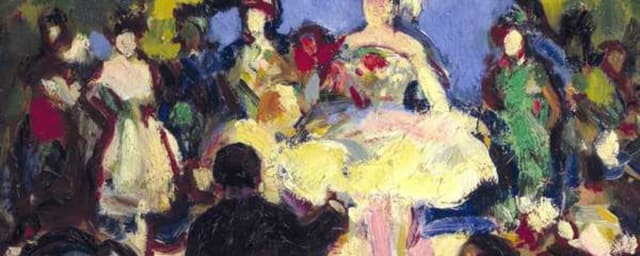
Scottish Colourists
The Scottish Colourists were a group of four Scottish painters who, in the early twentieth century, were among the first to bring the intense colour and bold handling of French Post-Impressionism and Fauvism to Britain. They were Samuel John Peploe, Francis Campbell Boileau Cadell, John Duncan Fergusson and George Leslie Hunter. Although they never formed a formal association, the four exhibited together three times, first in 1924 at the Galerie Barbazanges in Paris ('Les Peintres de l'Ecosse Moderne'); the name gained currency later, notably through T. J. Honeyman's book Three Scottish Colourists (1950). They were united by shared artistic orientations and close ties to Paris. All four lived or studied in France for extended periods and were influenced by Manet, Cézanne, Matisse and the Fauves. They painted brilliant still lifes, landscapes of the Scottish coast and islands, elegant interiors and portraits, combining saturated colour with decisive, simplified forms. Fergusson was the closest to the continental avant-garde and worked actively within the Paris milieu, while Peploe became famous for his refined still lifes of roses and tulips. The Scottish Colourists played a key role in modernising British painting, instilling in it a continental freedom of colour, and are today regarded as among the most important Scottish artists of the first half of the twentieth century.
Read more →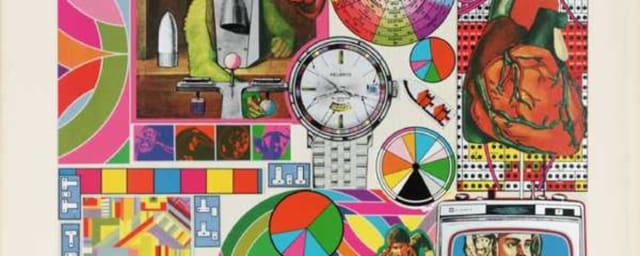
Screenprint
Screenprint (stencil or silkscreen printing) is a variety of stencil printing that uses a screen of fabric — silk or synthetic material — stretched over a frame. The areas of the screen through which ink is not meant to pass are blocked with an impermeable layer, while through the open areas ink is forced with a rubber squeegee directly onto paper, fabric, or other material placed beneath the screen. A separate screen is usually prepared for each colour. The technique allows the printing of flat, saturated areas of colour and the easy reproduction of images on various surfaces. Although stencil printing has ancient roots, modern screenprinting was developed in industry in the early twentieth century, and it was established as an artistic medium by American artists. Its most iconic use was by Andy Warhol in the Pop Art of the 1960s: his portraits of Marilyn Monroe and images of soup cans turned a commercial reproduction technique into a symbol of the age of mass consumption. Screenprinting remains popular in both easel graphics and design.
Read more →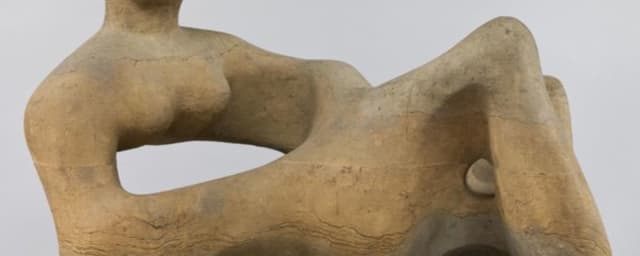
Sculpture
Sculpture is the three-dimensional visual art whose works are created by one of four main processes: carving, modelling, casting or constructing. Carving (a subtractive method) consists in removing material from a block of stone or wood; modelling (an additive method) in shaping form from a soft material such as clay or wax; casting translates a model into metal through a mould; constructing (assemblage) joins separate elements into a single whole. Sculpture exists in real space, can be viewed from different sides, and the play of light on its volumes and textures is an important part of its expressiveness. A distinction is made between sculpture in the round, which can be walked around, and relief, which projects from a plane. The history of sculpture reaches back to prehistoric figurines and continues through the grandeur of Egyptian, Greek and Roman work, the Gothic, the Renaissance with Michelangelo, the Baroque of Bernini and on to the modern era, when Rodin renewed the language of form and the twentieth century gave rise to abstract, kinetic and constructed sculpture. The Ukrainian tradition of sculpture embraces medieval Rus carving, Baroque ornament, monumental work and modernism, represented by masters such as Alexander Archipenko, who radically rethought volume and void in world sculpture.
Read more →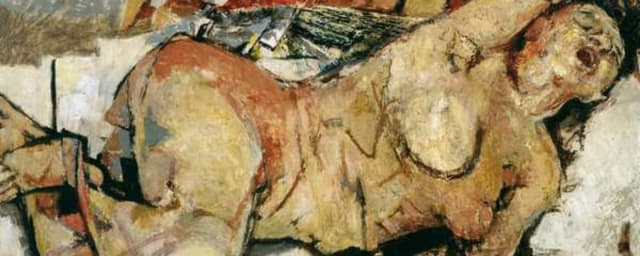
Scuola romana
The Scuola romana (Roman School) is a general term for artists who worked in Rome or had close ties to it in the 1920s and 1930s and who resisted the official classicising art of the Fascist era. It was not a single institution but rather several centres, notably the circle of artists of the Via Cavour (Scuola di Via Cavour), which included Mario Mafai, Antonietta Raphaël and Scipione (Gino Bonichi), as well as a broader grouping of so-called tonalisti. They were united by a striving for emotionally charged, often Expressionist painting, devoted to colour and the materiality of paint. The artists of the Roman School developed an intimate, lyrical and frequently anxious imagery — urban landscapes, still lifes, portraits, scenes of demolished houses — that contrasted with the monumental rhetoric of the regime's official art. Important figures also included the sculptor and painter Marino Mazzacurati; the expressive, almost hallucinatory canvases of Scipione anticipated post-war tendencies. Antonietta Raphaël, an artist of Jewish origin, brought a cosmopolitan and multicultural dimension. The Roman School became an important alternative to the state art of interwar Italy and prepared the ground for the post-war renewal of Italian painting.
Read more →
Scythia
Scythia (750–300 BCE) was the era of domination by Iranian-speaking nomadic tribes across the steppes of the Northern Black Sea region, described as early as Herodotus in his "Histories." The Scythians forged a military-tribal polity centred on the Pontic steppe, and their elite grew famous for fabled wealth. The core of Scythian culture was the "animal-style" art — dynamic images of deer, panthers, birds of prey and scenes of beasts in combat, worked in gold, bronze and bone with the stylised energy proper to the steppe nomad. Its most emblematic monuments come from immense kurgans on Ukrainian soil: Tovsta Mohyla in the Dnipro region, which yielded the celebrated gold pectoral of the fourth century BCE, along with Chortomlyk, Kul-Oba and Solokha. The Tovsta Mohyla pectoral — a three-tiered composition uniting scenes of nomadic life, the vegetal world and heraldic griffins — is considered a summit of ancient toreutics. The Scythians possessed advanced horse-breeding, cavalry tactics and close commercial and artistic ties with the Greek coastal colonies, whence came many pieces made to the order of the barbarian nobility. Their religion inclined toward cults of fire, weaponry and female fertility deities. In the late fourth and third centuries BCE, Greater Scythia was displaced by the Sarmatians, and the polity's centre shifted to the Crimea (Scythian Neapolis). Scythian gold remains one of the foremost artistic treasures of ancient Ukraine.
Read more →
Secession
Secession (from the Latin secessio, "separation") is a term denoting the breaking away of younger and more radical artists from an existing academy or established art society in order to form a new association free from conservative rules and to provide their own exhibition venue. The phenomenon became widespread in German-speaking countries at the end of the nineteenth century. The most famous was the Vienna Secession, founded in 1897 by a group of artists led by Gustav Klimt, who became its first president. Its motto proclaimed: "To every age its art, to art its freedom." The members of the Vienna Secession, among them also Josef Hoffmann and Koloman Moser, built their own exhibition pavilion and published the journal "Ver Sacrum," promoting the Art Nouveau style and the idea of a synthesis of the arts. Earlier, in 1892, the Munich Secession arose, and later the Berlin Secession led by Max Liebermann. The Secession movement became an important form of modernization of European art, challenging the academic monopoly and opening the way to new aesthetic explorations at the turn of the century.
Read more →
Self-portrait
A portrait of the artist made by the artist; a variety of the portrait genre.
Read more →
Serial art
Serial art is art that follows a strict set of rules to determine its own composition or to generate a whole series of compositions. Instead of intuitive, subjective choice, the artist establishes a system in advance — a sequence, progression, permutation, or mathematical formula — and carries it out consistently, often producing a run of related works. This method removes, or at least limits, the role of personal taste and chance decision, emphasising instead logic, order, and a predetermined structure. Serial art is closely linked to the Minimalism and Conceptualism of the 1960s. Sol LeWitt formulated written instructions and exhaustive sets of variations on geometric forms; Donald Judd constructed rows of identical objects placed at fixed intervals; Hanne Darboven filled sheets with systematic numerical sequences. Seriality is akin to the modular principle, since both operate through repetition and system. The idea of the series challenged the traditional notion of the unique masterpiece and made process and concept central to the work of art.
Read more →
Significant form
'Significant form' is a concept introduced by the English critic and art theorist Clive Bell in his book Art (1914). Bell argued that the common and defining quality of all works of visual art is a particular arrangement of lines, colours, planes and volumes that provokes in the viewer a special 'aesthetic emotion'. It is this arrangement, rather than subject matter, narrative or the recognizability of what is depicted, that makes an object a work of art. Form can be expressive even when it is largely or wholly divorced from the appearance of real things. Bell's theory rested on a formalist approach closely allied to the ideas of his colleague Roger Fry, and it served as an intellectual justification for Post-Impressionism and early abstraction, especially the work of Paul Cezanne, whom Bell regarded as exemplary. The concept helped explain why a viewer might be deeply moved by a work lacking any obvious 'content'. Critics, however, charged the theory with circularity and subjectivity, since 'aesthetic emotion' was defined by 'significant form' and 'significant form' by its power to provoke that emotion. Nonetheless the idea remained a cornerstone of twentieth-century formalist aesthetics.
Read more →
Simulacrum
Simulacrum is a concept derived from the Latin simulacrum ('likeness', 'image') and reaching back to Platonic philosophy, where it denoted a copy of a copy, removed from the ideal form by several degrees. For Plato an image of a thing is already a copy of an idea, and a copy of such an image is a simulacrum, still further from truth and therefore suspect. In classical thought the term carried a pejorative sense, pointing to something false, deceptive and lacking the true essence of the original. In the twentieth century the notion was given new life by French philosophers, above all Jean Baudrillard, whose Simulacra and Simulation (1981) described a culture in which signs and images no longer refer to any reality but only to other signs. For Baudrillard, in the contemporary mediatized world the simulacrum is a copy without an original that displaces and replaces reality (hyperreality). These ideas deeply influenced postmodern art, appropriation and the critique of consumer culture, inspiring artists to examine the mechanisms of reproduction, advertising and mass media.
Read more →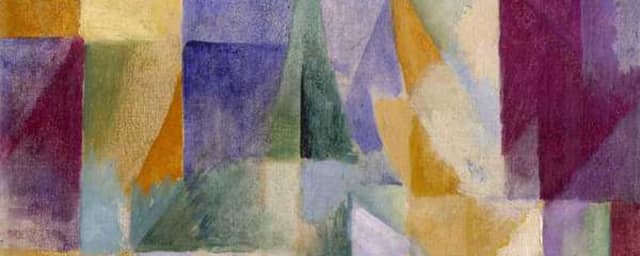
Simultanism
Simultanism (from the French simultané, "simultaneous") is a term introduced by the artist Robert Delaunay to describe the abstract painting developed by him and his wife Sonia Delaunay from around 1910–1912. The concept relied on the law of the "simultaneous contrast of colors," formulated in the nineteenth century by the chemist Michel-Eugène Chevreul, according to which adjacent colors mutually intensify one another and are perceived by the eye at the same time, producing a sense of vibration, movement, and light. In Simultanism color became the main means of constructing form and space rather than mere decoration; the interaction of contrasting colored planes was meant to convey the dynamism of modern life. Simultanism is closely linked to Orphism and became one of the key ideas in early abstraction. Sonia Delaunay extended these principles to textiles, book art, clothing design, and decorative panels, notably in the famous "simultaneous book" together with the poet Blaise Cendrars. Simultanism had a notable influence on the development of color abstraction and modernist design in Europe in the first half of the twentieth century.
Read more →
Site-specific
Site-specific describes an artwork conceived and made for one particular location, existing in an inseparable dialogue with that space and losing much of its meaning if removed. Unlike a portable painting or a freestanding sculpture, such a work responds to the architecture, history, landscape, light and social context of its chosen setting. The approach flourished from the 1960s within minimalism, land art and installation practice: Richard Serra, Robert Smithson and Daniel Buren insisted that relocating a work destroys it, most famously in the controversy over Serra's Tilted Arc. The concept extends to public art and museum interventions that reframe an existing environment. In Ukraine the site-specific logic resonates with contemporary artists who work inside abandoned industrial halls, ruined buildings and urban spaces, turning the place itself into material and a vehicle for statements about memory, history and identity.
Read more →
Situationist International
The Situationist International (Internationale Situationniste, IS) was a revolutionary alliance of European avant-garde artists, writers and theorists formed in 1957 at a conference in Italy. Uniting former members of Lettrism, the COBRA group and other formations, it sought to dissolve the boundary between art and everyday life while attacking the capitalist "society of the spectacle." Its central figure was Guy Debord, author of The Society of the Spectacle (1967); the circle also included Asger Jorn and Raoul Vaneigem. The Situationists developed concepts such as the dérive (drift), psychogeography and détournement, the hijacking and subversion of existing images. Their ideas strongly shaped the May 1968 student uprising in Paris. The movement's legacy echoes in Ukrainian critical art and activist practices that rethink urban space, media and power structures, challenging the passive consumption of culture and everyday life.
Read more →
Sixties Artists
The Sixties movement (Shistdesiatnyky) was a wave of creative and national awakening in Ukraine of roughly 1956 to 1968, which arose on the tide of the Khrushchev "Thaw" after the Twentieth Party Congress. This was a generation of artists, poets and thinkers who sought to restore to culture truth, freedom of artistic expression and national dignity, suppressed by decades of Socialist Realism and repression. In the visual arts the Sixtiers revived interrupted traditions — Boychukism, the Ukrainian Modern, folk art — fusing them with a contemporary plastic language. The hearth of the movement was the Kyiv Club of Creative Youth. Its central figure was Alla Horska, a monumentalist and activist who, together with like-minded colleagues, created the famous stained-glass window in honour of Taras Shevchenko at Kyiv University (1964), brutally destroyed by the authorities immediately upon its completion; Horska herself was murdered in Vasylkiv in 1970, in circumstances that remain unexplained. The circle included Opanas Zalyvakha, imprisoned for his convictions, Lyudmyla Semykina, Halyna Sevruk and Veniamin Kushnir. The movement was broader than the visual arts: it was nourished by the poets Vasyl Symonenko, Lina Kostenko and Ivan Drach, and by the poetic cinema of Sergei Parajanov, whose "Shadows of Forgotten Ancestors" (1965) became its visual emblem. The Sixtiers combined artistic work with human-rights activity, the circulation of samvydav and the defence of the Ukrainian language and history. The authorities answered with arrests and persecutions, which intensified after 1965 and effectively rolled back the Thaw. Despite the repressions, the movement laid the moral and aesthetic foundation of Ukrainian dissidence and of the later national revival. Shistdesiatnyky proved that authentic, free art was possible even under totalitarianism, and became a symbol of resistance to spiritual assimilation.
Read more →
Socialist realism
Socialist Realism was the official, ideologically imposed method of Soviet art, dominant from 1932 until the late 1980s. Its foundations were formulated after the Party decree of 1932 on the restructuring of literary and artistic organisations and were consolidated at the Writers' Congress of 1934; its ideologist was Andrei Zhdanov, and the slogan "engineers of human souls" defined the artist's role as that of a propagandist. Its key idea was the depiction of reality "in its revolutionary development" — that is, not as it is but as the Party saw it: heroicised labour, the happy collective farm, the leader, industry, optimism. Formally, Socialist Realism leaned on the academic realism of the nineteenth century, on clear narrative and legibility for the masses, categorically rejecting any formalism or avant-garde. In practice this meant strict censorship, canonical subjects and the cult of the leader. Ukrainian artists of varying stature worked within the era: Tetyana Yablonska in her early period created the famous canvas "Bread" (1949), a model of the style, though she later evolved toward a more individual manner; Serhiy Hryhoriev, Mykola Hlushchenko and Mykhailo Derehus left a substantial legacy. The canon rested on the principles of party spirit, ideological commitment and "popular character," and the artists' unions strictly policed adherence to the method. In the 1960s a more restrained "severe style" matured within its bounds, preparing the ground for a gradual departure from dogma. Socialist Realism was not a style in the natural sense but a system of control that suppressed the avant-garde and Boychukism and for decades defined the limits of the permissible. Its monopoly began to crumble with the Thaw and the Sixties movement, and finally collapsed at the end of the Soviet era, yielding to the underground and to new artistic freedoms.
Read more →
Socially engaged practice
Socially engaged practice is a strand of contemporary art in which the work is collaborative, often participatory, and people together with their relationships become both the medium and the material. Instead of producing a finished object, the artist initiates processes, encounters and actions that unfold within real communities beyond the gallery walls. Its roots lie in the performance, conceptualism and institutional critique of the 1960s and 1970s, while theoretical framing came from Nicolas Bourriaud's notion of relational aesthetics and from dialogical art. Artists such as Tania Bruguera and Thomas Hirschhorn address migration, labour, education and political participation. In Ukraine this approach became especially vivid after the Revolution of Dignity and during the war, with art projects working alongside displaced people, veterans and urban communities, turning art into a tool of solidarity, healing and collective action.
Read more →
Social realism
Social realism refers to any realistic painting or graphic work that also carries an explicit social or political comment, usually focused on the lives of workers, the poor and the marginalised. The tendency crystallised in the first half of the twentieth century as a response to economic crises, industrialisation and inequality; it aimed not to beautify reality but to bear witness to it. Related phenomena include Gustave Courbet as a forerunner, American painters of the Great Depression, and the Mexican muralists Diego Rivera and José Clemente Orozco. Social realism must be distinguished from the official doctrine of Socialist Realism imposed as state policy in the service of totalitarian propaganda. In twentieth-century Ukrainian art, painters who sought to depict the true fate of peasants and workers often faced ideological pressure, and their sincere social themes clashed with the rigid canons forced upon them from above.
Read more →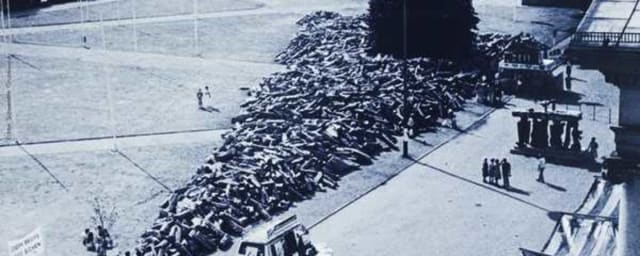
Social sculpture
Social sculpture is a theory developed by the artist Joseph Beuys in the 1970s, grounded in the belief that everything is art and therefore every person is potentially an artist capable of shaping society creatively. Beuys expanded the very notion of sculpture: instead of stone or bronze, the "material" becomes thought, language, discussion, and social and political relationships. The idea is closely tied to his slogan "everyone is an artist" and to practical initiatives such as founding the Free International University and the vast ecological action 7000 Oaks at Documenta in 1982. Social sculpture stresses the creative responsibility of each citizen for a shared future. These views resonate with the Ukrainian experience of grassroots initiatives and volunteering, where collective creative action, from reconstruction to community self-organisation, is understood as a way of literally shaping society with one's own hands.
Read more →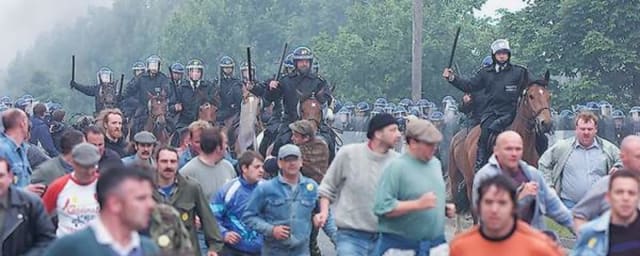
Social turn
The 'social turn' is a term popularized by the critic Claire Bishop around 2006 to describe a marked return of contemporary art to socially engaged practices. It refers to works that are collaborative, often participatory (involving viewers or communities), and in which people, social relationships and shared action become the very material and medium of art rather than merely its subject. Such projects frequently take place outside the gallery — in public space, schools, neighbourhoods or communities — and blur the boundaries between art, activism and social work. The social turn is connected to notions of relational aesthetics (Nicolas Bourriaud), participatory and dialogical art. Bishop both described and critically analysed the phenomenon, insisting that the ethical value of collaboration should not automatically override aesthetic and critical judgement about the quality of a work. This tension between good intentions and artistic conviction remains central to debates about public, community and activist art practices, including in the Ukrainian context, where participatory projects gained importance during periods of social upheaval.
Read more →
Solarisation
Solarisation, in photography more precisely the Sabattier effect, is a technique in which a partially developed negative or print is briefly exposed to light, after which development continues. As a result some tones invert, and along the borders between light and dark areas distinctive bright outlines appear, the Mackie lines, resembling a halo effect. The image acquires a graphic, faintly metaphysical quality, combining positive and negative within a single frame. Although the phenomenon was known in the nineteenth century, it was developed artistically around 1929 by Man Ray and Lee Miller within the Paris Surrealist circle, for whom chance and the transformation of the image held special value. Solarisation was applied above all to portraiture, where it emphasized contour and lent the face a mysterious detachment. The technique remains a tool of experimental and art photography, and its aesthetic is often imitated in digital processing.
Read more →
Sound art
Sound art is art about sound that uses sound both as its medium and as its object of inquiry. Unlike music, which is subordinated to melody, rhythm and harmony within a temporal composition, sound art focuses on the physical and perceptual nature of sound itself: its timbre, spatiality, silence, noise and the acoustic properties of an environment. Works often take the form of sound installations, in which sound unfolds within a specific space, and the viewer-listener, by moving through it, becomes a participant in the sound field. The roots of the field lie in the Futurists' experiments with the "art of noises," in the work of John Cage, who radically rethought silence and chance, and in the activity of Fluxus and early electronic music. Artists such as Max Neuhaus (credited with the very term "sound installation"), Bill Fontana and Christina Kubisch created spaces where sound becomes a sculptural and spatial experience. Sound art is closely linked with new media, performance and Conceptualism, and its works are shown in galleries, museums and public space. Ukrainian artists also work in this field, combining sound practices with the exploration of memory, landscape and the urban environment.
Read more →
Spazialismo
Spazialismo (Spatialism) was an Italian movement founded by the artist Lucio Fontana in 1947, whose manifesto proclaimed the need to unite art with the science and technology of a new era. Fontana, born in Argentina and working in Italy, sought to push painting beyond the flat plane of the canvas into real space and time. The most famous embodiment of these ideas is his series Concetti spaziali (Spatial Concepts), in which he punctured and slashed the surface of the canvas, transforming the two-dimensional picture into an object that admits real space and the darkness behind it. Spatialism anticipated environmental art, installation and light-based work, and influenced postwar experiments in kinetic and neon art. The radical gesture of breaking the surface became a universal symbol of the shift from the traditional easel picture to spatial thinking, a concern shared by contemporary artists, including in Ukraine.
Read more →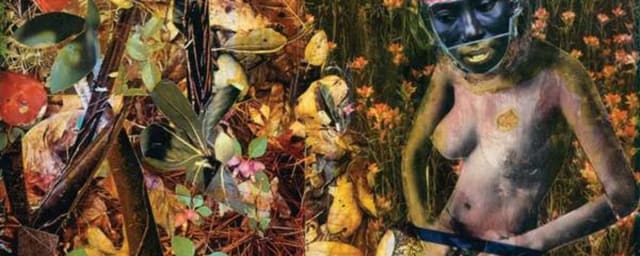
Spiral
Spiral was a collective of African American artists founded in New York in 1963 on the initiative of Romare Bearden, Hale Woodruff, Norman Lewis and Charles Alston. The group was formed in the context of the civil rights struggle, with the immediate impetus being the historic March on Washington of 1963. The artists sought to discuss collectively how African American artists should respond to the political and cultural shifts in America and what their aesthetic and civic responsibilities might be. The name "Spiral" was proposed by Woodruff, referring to the Archimedean spiral that moves outward, embracing ever-wider spaces — a metaphor for forward progress. The members debated whether a distinct "black art" existed, the relationship between abstraction and figuration, and the role of the artist in social struggle. In 1965 the group held its only exhibition, in which the works were executed exclusively in black and white as a symbolic statement. Although Spiral was short-lived, it became an important milestone in the history of African American art and a forerunner of the Black Arts Movement, influencing later generations of artists who combined creativity with questions of identity and social justice.
Read more →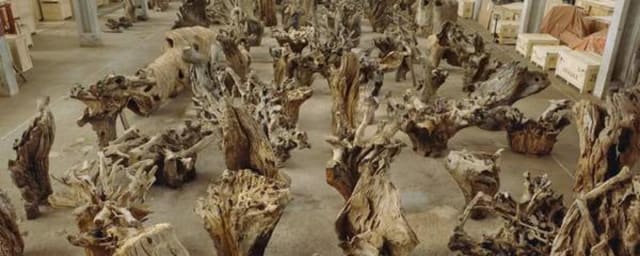
Stars group
The Stars group (Chinese: Xingxing) was a short-lived but historically important avant-garde association of self-taught artists active in Beijing from 1979 to 1983, shortly after the end of the Cultural Revolution. Its members included Wang Keping, Ma Desheng, Huang Rui, Ai Weiwei and other young artists, most of whom had no formal academic art training. The name "Stars" symbolised a striving for individuality and creative freedom in an era when official art was reduced to the canons of Socialist Realism in the service of the state. In September 1979, after the authorities rejected their application to exhibit, the artists defiantly hung their works on the railings of a park beside the National Art Museum of China, and later held a street demonstration under slogans of freedom of expression and democracy. These actions were among the earliest public appearances of the Chinese artistic avant-garde and were closely intertwined with the Democracy Wall movement. The works of the Stars were personal, critical and experimental in character, drawing on modernist forms. Although the group quickly disbanded and many of its members emigrated, it laid the foundations of contemporary Chinese art and remains a symbol of the struggle for creative independence.
Read more →
Still life
Still life is one of the principal genres of Western art, its subject being motionless, inanimate objects: flowers, fruit and vegetables, tableware, books, musical instruments, game from the hunt, skulls and other things arranged into a composition. The very name (French 'nature morte', 'dead nature'; English 'still life') accurately conveys the essence of the genre. In the traditional hierarchy still life held the lowest place, since it was thought to require only skill in copying the visible rather than imagination or elevated ideas. Despite its low official status, still life flourished in Dutch and Flemish art of the seventeenth century, becoming a field for virtuoso mastery in rendering texture, light, colour and the illusion of materiality. Many still lifes carried hidden symbolic meaning — above all the vanitas, which reminded viewers of the transience of life. Later Jean-Baptiste Chardin gave the genre a noble simplicity, and at the turn of the twentieth century still life became a true laboratory of modernism: Paul Cezanne explored form and space through apples and jugs, while the Cubists Pablo Picasso and Georges Braque broke objects down into facets and planes. Thus the 'humblest' genre became the arena of the boldest artistic revolutions.
Read more →
St Ives School
The St Ives School is a loose name for the community of artists associated with the fishing town of St Ives in West Cornwall, which from the 1940s to the 1960s became an important centre of modern and abstract art in Britain. The picturesque coast, distinctive light and seclusion had attracted artists since the nineteenth century, but it was the arrival at neighbouring Carbis Bay in 1939 of Ben Nicholson, Barbara Hepworth and the Constructivist Naum Gabo that transformed the town into a hub of the avant-garde. The circle of St Ives artists included Peter Lanyon, Patrick Heron, Terry Frost, Roger Hilton and the potter Bernard Leach, as well as the self-taught painter Alfred Wallis, whose naive marine scenes inspired professional masters. Their art combined abstraction with a deep sense of the local landscape — the sea, cliffs, light and space of Cornwall. Many maintained ties with American Abstract Expressionism while retaining their own lyrical language rooted in nature. The St Ives School became one of the most important phenomena of post-war British art, and its legacy is today preserved by a branch of the Tate gallery, Tate St Ives, opened in 1993.
Read more →
St John’s Wood clique
The St John's Wood Clique was a loose association of British painters who lived in the St John's Wood district of London in the 1860s to 1880s and sought to renew the approach to historical and genre painting. The group included Philip Hermogenes Calderon, George Dunlop Leslie, William Frederick Yeames, David Wynfield, John Evan Hodgson, Henry Stacy Marks and George Adolphus Storey. The name "clique" was used half-jokingly and emphasised the friendly, convivial relations within the circle. The artists gathered regularly to work together, socialise and offer mutual criticism, even holding ironic "competitions" on set themes. In their work they moved away from dry academicism, giving historical and literary subjects greater psychological liveliness, everyday detail and narrative appeal aimed at a broad Victorian public. The most famous painting associated with the group is Yeames's And When Did You Last See Your Father?, which depicts a scene from the English Civil War. Although the clique left no shared manifesto and did not form a distinct style, it is an interesting example of the informal artistic communities of Victorian London.
Read more →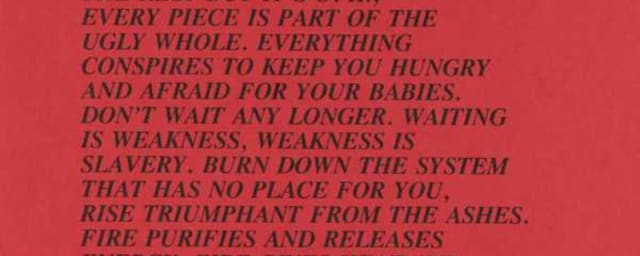
Street art
Street art is a visual language of public space that carries creativity into the street, turning façades, walls and urban surfaces into a canvas accessible to everyone. Its core idea is a direct, often extra-institutional address to the viewer, a dialogue with the urban environment and its social context. It grew out of the graffiti culture of the 1970s, when tags and aerosol "writing" flooded the New York subway. Formally, street art is extraordinarily diverse: from calligraphic tags and graffiti "wild styles" to large realistic murals, stencils, stickers, mosaics and paste-ups. Its palette may be bright and punchy or monochrome and graphic, depending on the concept and technique. Technically, its artists use aerosol, stencil and roller, while large murals require projection and lifts. Composition takes account of the supporting architecture, fitting the image into the rhythm of the city. Its motifs embrace social critique, political statement, poetic metaphor and playful provocation. Its global icons are the Briton Banksy, with his sharp stencils, and the American Keith Haring. In Ukraine, street art has undergone a powerful flowering: the monumental murals of Volodymyr Manzhos and Oleksii Bordusov (the Interesni Kazki duo), as well as numerous patriotic and memorial paintings across cities after 2014 and 2022. Today the movement is valued for its democratic spirit, the sharpness of its statement and its capacity to humanise urban space.
Read more →
Suprematism
Suprematism is a visual language of radical non-objective abstraction that proclaimed the supremacy of pure feeling over the depiction of real things. Its core idea, formulated by the Ukrainian artist Kazimir Malevich (born in Kyiv in 1879), was to reduce painting to primary geometric elements and colour as self-sufficient carriers of spiritual energy. Formally, Suprematism operates with simple figures — the square, circle, cross, rectangle and triangle — which hover in a boundless white space, freed from gravity and horizon. Its palette at first favoured pure local colours — black, red, blue and yellow on a white ground — and later arrived at "white on white". Composition is dynamic, built on diagonal ascents, rhythm and the tension between forms that create a sense of cosmic movement. Technically, the surface is smooth, impersonal and stripped of expressive brushwork. The movement's manifesto was the "Black Square" of 1915, shown at the "0.10" exhibition in Petrograd — a kind of "icon" of the new art. Malevich, whose roots are tied to Kyiv, gathered followers: El Lissitzky developed the idea in his "Prouns", while Olga Rozanova and Ivan Puni worked in a Suprematist vein. The movement interacted closely with Constructivism and influenced architecture and design. Suprematism became one of the cornerstones of the world avant-garde. Today it is valued for its philosophical radicalism, its purity of form and its visionary striving toward a new spiritual dimension of art.
Read more →
Surrealism
Surrealism is a visual language that explores the unconscious, the dream and the realm of the irrational, striving to free creativity from the control of reason and logic. Its core idea, proclaimed in André Breton's manifesto of 1924, was to attain a "super-reality" through the fusion of dream and actuality, psychic automatism and unexpected associations. Formally, Surrealism divides into two currents: one meticulously illusionistic, with photographically rendered impossible scenes, and the other abstract and automatic, with freely flowing forms. Its palette may be cold and dreamily translucent or unsettlingly contrasting. Composition is often built on the illogical juxtaposition of incompatible objects, the deformation of space and the metamorphosis of forms. Its motifs are melting clocks, deserted perspectives, hybrid creatures, eroticism, fears and the phantoms of memory. Technically, its artists invented frottage, decalcomania and automatic writing. The Spaniard Salvador Dalí became famous for his "paranoiac-critical method" and "The Persistence of Memory"; the Belgian René Magritte, for his philosophical riddles of everyday images; while Max Ernst and Joan Miró developed the automatic line. Giorgio de Chirico, with his "metaphysical painting", was a forerunner of the movement. Surrealism absorbed the ideas of Freudian psychoanalysis and deeply influenced cinema, literature, advertising and fashion. Today it is valued for its liberation of the imagination, its poetics of surprise and its inexhaustible capacity to reveal the hidden depths of the human psyche.
Read more →



