




Art terms on "I"

Iconography
Iconography is, firstly, the totality of images, symbols and motifs present in a work of art and, secondly, the branch of art history that studies their origin, meaning and evolution. Iconographic analysis asks not 'how is it depicted?' but 'what is depicted and what does it mean?': it identifies figures, subjects and their attributes, decodes symbolism and traces the established ways of representing particular themes throughout history. For example, keys point to Saint Peter, and a lily to the Annunciation and purity. As a scholarly discipline iconography took shape in the nineteenth and early twentieth centuries, and its most influential theoretical model was proposed by the German and American scholar Erwin Panofsky. He distinguished three levels of analysis: pre-iconographic description (recognizing forms and objects), iconographic analysis proper (identifying subjects and symbols) and iconological interpretation (revealing the deeper cultural, philosophical and worldview meaning of an age). Iconography is especially important for understanding religious, mythological and allegorical art, as well as the Eastern Christian icon, where the canonical images of Christ, the Mother of God and the saints follow strict traditional schemes charged with deep theological meaning.
Read more →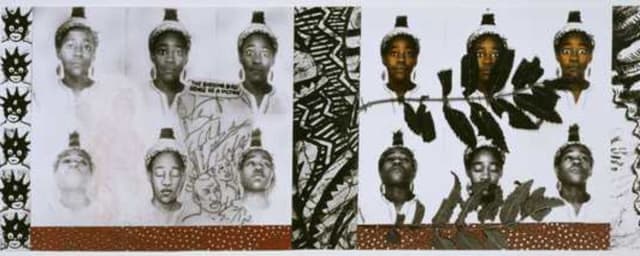
Identity politics
Identity politics is a political and cultural movement that gained significant currency in America and Europe in the mid-1980s. At its core is the idea that political action and solidarity can be based on the shared identity of a particular group, defined by race, ethnicity, sex, gender, sexual orientation, religion, or other characteristics. Identity politics raises questions of oppression, inequality, injustice, and representation, advocating the right of marginalised communities to voice, visibility, and self-determination. In art, identity politics became one of the defining themes from the 1980s and especially during the 1990s. Artists began actively to explore their own experience of belonging to particular groups, questioning established norms of representation, the canon, and structures of power within the art world. Feminist art, queer art, and the work of artists from diverse backgrounds all challenged the notion of a neutral, universal, and most often white and male, artistic subject. Identity politics substantially broadened the range of themes, voices, and forms in contemporary art, though it later provoked debate about the risks of essentialism and fragmentation. Its influence entrenched the understanding that the personal is inseparably bound to the political.
Read more →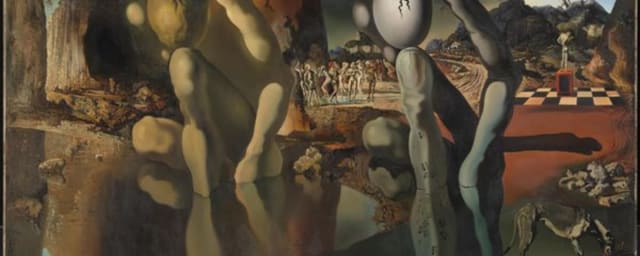
Illusionism
Illusionism is painting that creates a convincing illusion of a real object or space, or sculpture in which a figure is rendered so lifelike that it appears alive. The term covers a broad range of devices, from meticulous light-and-shade modelling to the use of linear and aerial perspective. The origins of illusionism reach back to antiquity — Pliny the Elder describes the contest between Zeuxis and Parrhasius, in which painted grapes supposedly attracted birds. Illusionism reached its most spectacular flowering in the art of the Renaissance and Baroque, when masters painted the ceilings of churches and palaces so that the architecture seemed to continue into the sky (the di sotto in su technique). Outstanding examples include the ceiling frescoes of Andrea Pozzo and Correggio. Illusionism is closely linked to trompe l'oeil and quadratura. In Ukrainian monumental painting, illusionistic murals adorned the interiors of Baroque churches, testifying to a deep assimilation of the European tradition of illusory space.
Read more →Illustration
An image that accompanies, explains and supplements a text; a kind of graphic art defined by its purpose rather than a genre in the classical sense.
Read more →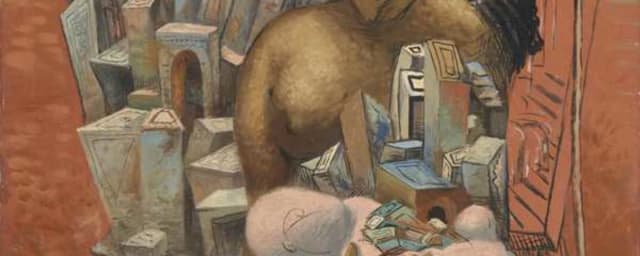
Il Novecento Italiano
Il Novecento Italiano (Italian for The Italian Twentieth Century) was an Italian art group formed in Milan in 1922 with the aim of reviving the tradition of large-scale painting and sculpture in a classical, monumental style. The movement arose within the wider European return to order after the First World War, when many artists abandoned radical avant-garde experiment in favour of clarity, weightiness of form and a connection to the Italian classical heritage, from Roman antiquity to the masters of the early Renaissance. The group's ideologist and promoter was the critic and collector Margherita Sarfatti, and among its artists were Mario Sironi, Achille Funi, Anselmo Bucci and Ubaldo Oppi. Their painting is marked by simplified, sculptural volumes, static compositions, muted colour and a sense of solemn stillness. Novecento gained official recognition under the Fascist regime, with which some of its members were associated, which later complicated assessment of the movement. Nonetheless, Il Novecento Italiano remains an important example of interwar Neoclassicism and a testimony to the complex relations between modern art, tradition and politics in the twentieth century.
Read more →
Impasto
Impasto (from the Italian impasto, «dough» or «mixture») is an area of thickly applied paint or texture in painting, in which brushstrokes stand out from the surface of the canvas and preserve the marks of the brush or palette knife. The thick layer of paint catches the light, creating a play of relief, shadow, and material tangibility that lends an image energy and immediacy. The technique became possible with the spread of oil paints in European painting. It was used masterfully by Titian and Rembrandt, in whose work impasto modelled faces and fabrics, heightening the effect of an inner glow. In the nineteenth century, impasto achieved its most emotional expression in the work of Vincent van Gogh, whose swirling relief strokes became a hallmark of Post-Impressionism. Later, Expressionists and Abstract Expressionists developed the expressive potential of thick paint. Impasto stands in contrast to smooth, mark-free painting and remains one of the principal means of textural expressiveness.
Read more →
Impressionism
Impressionism is a visual language that took shape in France in the 1860s and 1870s and revolutionized European painting by placing at its centre the immediate visual impression of a changing world. Its aesthetic core was the desire to seize a fleeting instant, the play of light, atmosphere and the vibration of air. The artists left the studio for the open air (plein air) and began to paint what the eye sees under a particular light rather than what the mind knows. Its formal marks are a broken, vibrating brushstroke, a bright, high-keyed palette without black shadows, the optical mixing of pure colours, the dissolution of contour, and a fragmentary composition seemingly caught "by chance," shaped by the influence of photography and the Japanese print. Its motifs are landscape, water and reflections, city boulevards, scenes of leisure and the portrait in a natural setting. Its founders were Claude Monet, with his series of haystacks, cathedrals and water lilies, Auguste Renoir, Camille Pissarro, Edgar Degas with his dynamism of movement, and Berthe Morisot; the movement's name came from Monet's painting "Impression, Sunrise." In Ukrainian art the Impressionist discoveries were creatively absorbed by Mykola Burachek, by Oleksandr Murashko, whose canvas "The Carousel" glows with light, by Abram Manevich and Petro Levchenko. Impressionism liberated colour and brushwork, changed the very notion of a finished work, and opened the road to Post-Impressionism and all subsequent modern painting, remaining one of the public's most beloved chapters in the history of art.
Read more →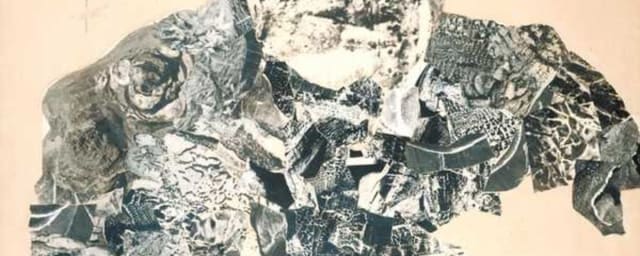
Independent Group
The Independent Group was an association of young artists, sculptors, architects, designers and critics that met at the Institute of Contemporary Arts (ICA) in London in the early 1950s. The group was a radical circle that challenged the dominance of modernist aesthetics and high culture, championing instead the value of mass culture: advertising, cinema, science fiction, comics, consumer product design and imagery from American magazines. Its members included the artists Richard Hamilton and Eduardo Paolozzi, the critics Lawrence Alloway and Reyner Banham, the architects Alison and Peter Smithson and others. The participants held discussions, lectures and organised exhibitions, the most famous of which was This Is Tomorrow of 1956. It was within the milieu of the Independent Group that the ideas foreshadowing British Pop art took shape: Richard Hamilton's collage Just What Is It That Makes Today's Homes So Different, So Appealing? of 1956 is regarded as one of the first works of the movement. The critic Lawrence Alloway is credited with helping to popularise the very term Pop art. The Independent Group had a decisive influence on the emergence of Pop art and on the rethinking of the relationship between art and mass culture.
Read more →
Indigenism
Indigenism (from Spanish indigenismo) is a cultural and artistic movement that arose in Latin America in the early twentieth century and placed indigenous peoples, their heritage, identity, and social struggle at its centre. It emerged as a reaction against European academic art and colonial erasure, asserting the dignity and aesthetics of pre-Columbian civilisations — the Aztecs, Maya, and Inca. In the visual arts, indigenism found its most vivid expression in Mexican muralism: Diego Rivera, José Clemente Orozco, and David Alfaro Siqueiros celebrated the nation's indigenous roots in monumental frescoes. In Peru the movement was led by the painter José Sabogal, who depicted Andean peasants with deep respect. Indigenism fused art with politics, demanding recognition of indigenous rights. It was an important contribution to the search for national and cultural identity beyond imposed colonial canons, and it inspired later movements for the decolonisation of culture.
Read more →
Industrial design
Industrial design is the design of mass-produced, machine-made objects of everyday life and technology, in which aesthetics is combined with function, ergonomics and manufacturability. The designer determines the form, materials and use of a product — from furniture and tableware to transport and electronics — so that it is convenient, suited to serial production and attractive to the consumer. The discipline arose from the Industrial Revolution, when handcraft gave way to the factory line and a need emerged to shape the appearance of replicated goods deliberately. Key milestones include the Arts and Crafts movement, the German Werkbund and the Bauhaus school, which in the early twentieth century proclaimed the unity of form and function and laid the foundations of modern design. The Ukrainian design tradition developed in the context of VKhUTEMAS, Constructivism and later art-industrial schools, where specialists worked on shaping the object environment. Today industrial design embraces digital interfaces, sustainability and human-centred design, remaining at the intersection of art, engineering and economics.
Read more →
Ink
Ink is an ancient medium for writing and drawing in liquid or paste form, traditionally black or brown, though it may also contain coloured dyes or pigments. Historically common types include carbon (soot) ink, iron-gall inks based on tannins and natural sepia. Artists apply ink with a pen, brush or reed, and when diluted with water it yields transparent washes, whereas undiluted it gives a rich, deep black. This flexibility suits ink both to crisp line and to soft tonal washes. Ink holds a central place in many traditions: in East Asian brush-and-ink painting, in European pen drawing of the Renaissance and Baroque, and in calligraphy and book graphics. Ukrainian graphic artists used ink in easel drawing, book illustration and the ex-libris, achieving an expressive linear language. In the twentieth century ink remained the basis of line art for print, comics and illustration. Owing to its simplicity, durability and expressiveness it is still widely used by artists today, alongside new liquid acrylic inks.
Read more →
Installation art
Installation art is a form of art consisting of mixed-media constructions or assemblages, usually intended for a specific site and for a temporary period of time. Instead of a single painting or sculpture contemplated at a distance, an installation organises an entire space that the viewer physically enters and experiences with the whole body, in movement and over time. The artist may use the most varied means—found objects, light, sound, video, text and natural materials—combining them into a single environment with its own atmosphere and meaning. The origins of the genre lie in Dada and Surrealist displays, in Kurt Schwitters's Merzbau and in the environments of the late 1950s; as a distinct, widely recognised form, installation established itself in the 1960s and 1970s and became one of the leading practices of contemporary art. Among its well-known makers are Ilya Kabakov with his total installations, Louise Bourgeois, Ai Weiwei and Yayoi Kusama with her mirror rooms. Installation emphasises experience, context and viewer participation rather than the creation of an autonomous object, and it reflects contemporary art's desire to move beyond traditional media and to work directly with space and perception.
Read more →
Institutional critique
Institutional critique is an artistic practice that consists in the critical analysis and exposure of the very institutions of art, chiefly the museum and the gallery, using the means of art itself. Artists working in this vein question the supposed neutrality of the museum space, revealing the economic, political, and ideological interests behind the formation of collections, curatorial decisions, sources of funding, and the mechanisms that grant works legitimacy and value. Institutional critique took shape in the late 1960s and 1970s as part of conceptual art. Its pioneers are considered to be artists such as Hans Haacke, Marcel Broodthaers, Daniel Buren, and Michael Asher. Haacke in particular created works that publicised hidden connections between museum sponsors and questionable economic or political structures. A second wave of institutional critique in the 1980s and 1990s, represented by artists such as Andrea Fraser and Fred Wilson, broadened the focus to address questions of class, race, and gender in museum practices. Paradoxically, institutional critique was itself later absorbed by the very institutions it criticised. Despite this, it remains an important tool for reflecting on power, representation, and the role of artistic institutions in society.
Read more →
Intaglio
Intaglio (from the Italian intaglio, «carving» or «incising») is a general term for printmaking methods in which the image is formed by recesses in the printing plate: it is precisely the incised lines or etched areas that hold the ink. The plate, usually copper or zinc, is fully covered with ink, after which the surface is wiped clean, leaving ink only in the grooves; under the pressure of the press, dampened paper is forced into the recesses and picks up the image. Intaglio techniques include engraving, etching, drypoint, aquatint, and mezzotint. This family of techniques is the opposite of relief printing (woodcut, linocut), where the raised elements hold the ink. Intaglio flourished in the fifteenth to eighteenth centuries in the work of Dürer, Rembrandt, and Goya. In Ukraine, copperplate engravings developed vigorously in the book and iconographic art of the Baroque era, notably in the workshops of the Kyiv-Pechersk Lavra.
Read more →
Interactive art
Interactive art is a form of art that depends on the participation of the viewer: the work is realised not as a finished object for contemplation but as a process that the viewer activates, alters or completes through their actions. The response may be physical (touch, movement, voice), spatial (moving one's body through an installation) or digital (interaction with sensors, cameras and code). In this way the boundary between author and public dissolves and the viewer becomes a co-creator; every session of interaction produces a unique course of events. The roots of interactivity lie in kinetic art, happenings and the Fluxus experiments of the 1960s, when artists drew the public into action. With the arrival of computers, sensors and networks at the end of the twentieth century, interactive art flourished as media installations, augmented-reality works and adaptive environments. Artists such as Myron Krueger with Videoplace, or Rafael Lozano-Hemmer, created spaces that respond to human presence. Interactive art raises questions of authorship, embodiment and participation, remaining an important strand of contemporary media practice, including within the Ukrainian digital scene.
Read more →
International style
The International Style is the dominant strain of architectural modernism, named by American critics Henry-Russell Hitchcock and Philip Johnson in 1932 in connection with an exhibition of modern architecture at the Museum of Modern Art in New York. It is defined by radical functionalism, the rejection of ornament, skeletal frames of glass, steel and reinforced concrete, clean rectilinear volumes, ribbon windows, white or neutral surfaces, and compositions that are asymmetrical yet rigorously balanced. Its theoretical and practical foundations were laid by masters of the Bauhaus and the European avant-garde — Walter Gropius, Ludwig Mies van der Rohe and Le Corbusier. The slogan 'form follows function' turned architecture into a universal language suited to any place on earth, hence the name. After the Second World War the style spread to office towers, government buildings and housing estates across many countries, shaping postwar urban construction including that of Ukrainian cities. Critics later charged it with cold impersonality, opening the way for the postmodern reaction that followed.
Read more →
Internet Art
Internet art is art made on and for the platform of the Internet, also known as net art or net.art. Instead of the gallery space, its environment is the web browser, the web page, email, social networks or the code of the protocol itself; a work may be a link, a website, a bot or a performance unfolding in real time online. Its key features are accessibility without institutional mediation, interactivity, community participation and reflection on the very nature of the network — its structure, errors, surveillance and culture. The movement took shape in the mid-1990s, when artists such as Vuk Ćosić, Olia Lialina, the group JODI, Alexei Shulgin and Heath Bunting began using browser glitches, hypertext and HTML as artistic means. The term net.art, by legend, was born from an accidentally corrupted email. Later came the post-internet wave, reflecting on the ubiquity of the digital in physical life. Internet art poses questions of authorship, reproducibility, privacy and collective creativity; Ukrainian media artists also take part in these practices, working with networked imagery and digital activism.
Read more →
Intimism
Intimism (French intimisme) is a French painting tendency of the late nineteenth and early twentieth centuries that depicts quiet, cosy domestic scenes within the private space of the home: women reading, laid tables, lamp-lit interiors, family rooms. Its most consistent exponents were Pierre Bonnard and Édouard Vuillard, both associated with the Nabis group. Their canvases are distinguished by a warm, muted palette, a small shimmering touch, a decorative densification of the surface, and close attention to the patterns of wallpaper, fabrics and pools of light. In place of heroic or historical subjects, the intimists raised the everyday and the unremarkable to the level of aesthetic meditation, continuing the interior genre of seventeenth-century Dutch painting while absorbing the lessons of Impressionism. The term stresses not only the chamber scale of the motifs but also a particular emotional closeness between viewer and scene. Intimism influenced the modern painting of everyday life across many European schools, including the Ukrainian.
Read more →



