




Art terms on "U"
Ukrainian Carpathians
An ethnographic macro-region of Ukraine comprising Hutsulshchyna, Boikivshchyna and Lemkivshchyna and, in the broader division, also Pokuttia, Bukovyna and Zakarpattia.
Read more →
Ukrainian Modern
Ukrainian Modern is the national version of the Art Nouveau style, which unfolded roughly from the early 1900s into the 1930s and spanned the era of the liberation struggle and state-building of 1917–1921. Its key idea was the forging of a modern artistic language on the basis of a native tradition: folk art, the Baroque heritage, Cossack regalia, icon painting and the printed book. Unlike international Art Nouveau, Ukrainian Modern deliberately built a national style capable of representing the culture of a nation striving for statehood. In architecture it was founded by Vasyl Krychevsky, who fused folk building with modern forms and developed the concept of a Ukrainian style in construction and stage design. The most brilliant figure of graphic Modern was Heorhiy Narbut, creator of Ukrainian book graphics, coats of arms, postage stamps, banknotes and the state symbols of the Ukrainian People's Republic; his manner, leaning on Baroque and heraldry, remains a model of national design. Narbut headed the Ukrainian Academy of Arts, founded in 1917, which became the hearth of the new school. Krychevsky's Poltava building became a template after which schools, zemstvo institutions and people's houses in the Ukrainian style were erected in various cities, while the master himself also developed theatrical stage design. The aesthetics of Ukrainian Modern nourished the decorative arts, ceramics, embroidery and book design. This era was a bridge between national Romanticism and the avant-garde: it proved that folk form could be the material of modern, not merely ethnographic, art. The Stalinist repressions of the 1930s cut this development short, but the tradition it laid down fed the Ukrainian visual identity throughout the twentieth century.
Read more →
Underground
The underground was the unofficial, nonconformist art that existed in the USSR and Ukraine outside the state system from roughly the late 1950s to the late 1980s. Its key idea was creative freedom and aesthetic autonomy under conditions in which the only permitted style was Socialist Realism and any formal or spiritual experiment was deemed ideologically hostile. Underground artists worked "for the drawer," without access to official exhibitions, and presented their work at apartment exhibitions, in studios and within a narrow circle of the initiated. Their language was extremely diverse — abstraction, Surrealism, metaphysical painting, religious and philosophical imagery — united only by a rejection of the official aesthetic. In Ukraine an especially vivid centre was the Lviv underground school of Karlo Zvirynsky, who privately taught young people modern art and spiritual culture. In Kyiv worked Valeriy Lamakh, author of the philosophical "Books of Schemes," Hryhoriy Havrylenko with his refined lyricism, and the eccentric Fedir Tetyanych (Frypulya) with his utopian "Biotechnosphere." The underground was not a single organisation but rather a network of individual figures and circles bound together by inner emigration and a refusal of conformism. Unlike Soviet nonconformism, with its louder actions such as the "Bulldozer Exhibition" of 1974, the Ukrainian underground was even more isolated and almost entirely deprived of publicity. For years its works were seen by no one beyond the closest circle of like-minded friends. This era preserved the continuity of the modern search through the age of stagnation and nurtured the milieu from which the Ukrainian New Wave erupted in the late 1980s. The underground became a bridge between the repressed avant-garde of the early century and the free contemporary art of independent Ukraine.
Read more →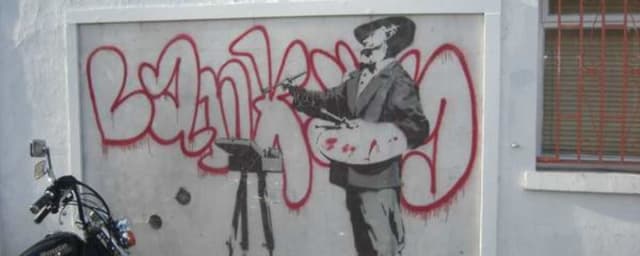
Underground art
Underground art is a notion first associated with the cultural phenomenon of the 1960s and early 1970s, when groups of creative individuals were seen as existing outside or on the fringes of popular, commercial and official culture. The underground brought together independent presses, experimental film, music, poetry and visual practices that circulated beyond institutional channels and often had a markedly rebellious, countercultural character. In countries under totalitarian control the term acquired a distinctly political charge: unofficial art was made in secret, outside censorship and state-run unions, and its makers faced persecution. In Soviet-era Ukraine there existed a powerful nonconformist underground of artists who worked beyond permitted canons, staged apartment exhibitions and preserved freedom of expression despite repression. This tradition of unofficial art became an important foundation for the development of independent Ukrainian culture after the country regained its statehood.
Read more →
Unit One
Unit One was a British group of painters, sculptors and architects founded in 1933 on the initiative of Paul Nash to promote modern art, architecture and design in Britain. Nash announced the group's formation in a letter to The Times, stressing the need for an expressive, conscious and systematic movement towards modernism that would counter the insular conservatism of British culture. The name was meant to symbolise unity of purpose while preserving the individuality of each member. The group included leading figures of future British modernism: the sculptors Barbara Hepworth and Henry Moore, the painters Ben Nicholson, Edward Wadsworth, John Armstrong and Tristram Hillier, and the architects Wells Coates and Colin Lucas. Within Unit One two tendencies coexisted — abstraction and Surrealism — reflecting broader currents of the European avant-garde. In 1934 the group held an exhibition that toured British cities and published a book-manifesto of the same name edited by Herbert Read. Although the association lasted only about two years, it played a decisive role in the emergence of British modernism in the 1930s.
Read more →
Useful Art Association
The Useful Art Association (Asociación de Arte Útil) is an initiative and theoretical platform developed by the Cuban artist Tania Bruguera, which champions the concept of "useful art" (arte útil) — art as a process that has a real, practical impact on society rather than being a rare experience of passive contemplation. Within this approach art is understood not as an object in a museum but as a tool that offers concrete solutions to pressing social, political and economic problems. Bruguera and the project's co-creators assembled an archive of historical and contemporary examples of "useful art" — initiatives that rethink resources, spaces and institutions for the public good. The key criteria of arte útil are that a project should propose a new use of art in society, challenge established understandings of the artist's role, work with real communities and produce a measurable result. This concept is connected to broader currents of socially engaged art, participatory and relational practices. The Useful Art Association was realised through exhibitions and "museums of arte útil," including in collaboration with institutions such as the Van Abbemuseum in the Netherlands, becoming an influential model of activist art in the twenty-first century.
Read more →



