




Art terms on "V"

Vanishing point
Vanishing point, in the system of linear perspective, is the point at which distant parallel lines, seen in perspective, appear to converge. Although in real three-dimensional space such lines never intersect, on the plane of the picture they seem to meet at a common point, usually situated on the horizon line, thereby creating a convincing impression of depth and distance. In the simplest, one-point perspective, all lines directed into the depth of space converge towards a single central vanishing point; in two-point perspective, used to depict objects at an angle, two vanishing points on the horizon are used; more complex constructions involve three or more points. The concept of the vanishing point is fundamental to the mathematical theory of perspective developed in Renaissance Italy by Brunelleschi and Alberti. The correct placement of the vanishing point determines the viewpoint and direction of gaze within a picture. This concept remains basic to painting, drawing, architectural draughtsmanship, and any realistic depiction of space.
Read more →
Vanitas
Vanitas is a variety of still life containing a set of symbolic objects intended to remind the viewer of mortality, the transience of earthly existence and the vanity of worldly pleasures and possessions. The name comes from the Latin phrase in the biblical Book of Ecclesiastes: 'Vanitas vanitatum, omnia vanitas' — 'Vanity of vanities; all is vanity'. In essence the vanitas is an extended painted sermon on the theme that wealth, power, knowledge, beauty and the very pleasures of life are fleeting in the face of inevitable death. The genre flourished above all in Dutch and Flemish art of the seventeenth century, notably in the university town of Leiden. Artists built complex compositions from recognizable symbols: a skull (death), extinguished candles and hourglasses (the passage of time), wilted flowers and rotting fruit (transience), soap bubbles (the fragility of life), books and scientific instruments (the futility of knowledge), coins, jewels and musical instruments (the vanity of wealth and pleasure). The vanitas combined virtuoso illusionistic skill with a profound religious and moral message, reflecting a Protestant worldview and the tension between the material prosperity of the age and spiritual anxiety. The ideas of vanitas are closely related to the broader tradition of memento mori.
Read more →
Verism
Verism is a term derived from the Italian word verismo (realism), denoting an extreme, sometimes harsh truthfulness in depicting reality without idealisation. In its broader historical sense, verismo first described the Italian literary and operatic movement of the late nineteenth century, focused on the hard lives of ordinary people; in opera it was embodied by Giacomo Puccini, Pietro Mascagni and Ruggero Leoncavallo. In the visual arts the concept is used for an intensely precise, documentary naturalism, from ancient Roman portrait busts that mercilessly recorded a sitter's wrinkles and flaws to later realist tendencies. In the twentieth century the word was also applied to a wing of the German Neue Sachlichkeit (New Objectivity), whose figures such as Otto Dix and George Grosz exposed the social wounds of postwar society with pitiless candour. Common to all forms of verism is a refusal of embellishment and a determination to show life as it really is.
Read more →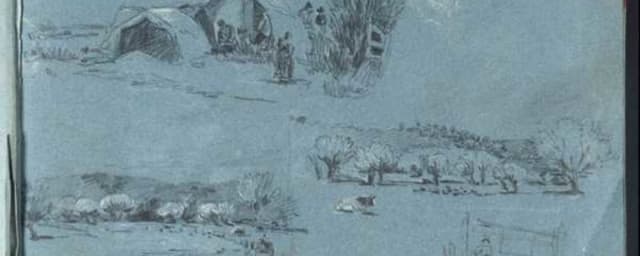
Verso / recto
Recto and verso are terms denoting the two sides of a single sheet of paper, parchment or canvas. Recto is the front, principal side, and verso the back. In the context of an open book or manuscript, the recto is the right-hand page and the verso the left; these Latin words derive from the phrases 'recto folio' ('on the straight leaf') and 'verso folio' ('on the turned leaf'). The terms are widely used in codicology, bibliography and the study of prints, drawings and manuscripts to refer precisely to a particular side of a leaf. For art scholars the recto/verso distinction is highly significant. Artists often drew on both sides of a sheet, so the verso may reveal sketches, studies or even fully independent works. The back of a canvas or panel frequently preserves signatures, dates, seals, labels and inscriptions that help establish authorship, provenance and the history of ownership. The systematic study of both sides is an important part of technical examination, attribution and the cataloguing of works on paper, as well as of the conservation of museum collections.
Read more →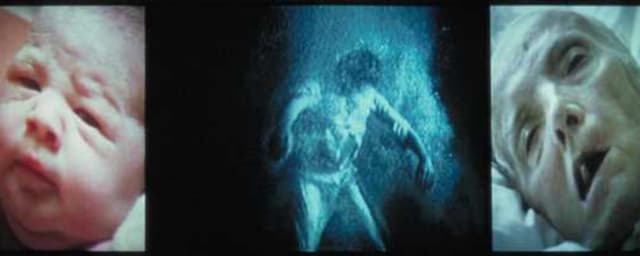
Video
Video as an art form (video art) is art based on moving images that involves the use of video and/or audio data. Unlike film or television, video art usually lacks a commercial narrative structure and instead explores time, duration, the body, space and the medium itself. The form emerged in the late 1960s when affordable portable video cameras, notably the Sony Portapak, allowed artists to record and immediately replay footage. Nam June Paik is regarded as a pioneer, and his experiments with television sets and monitors laid the foundations of the genre. Video art developed through performance, closed-circuit installations and multi-channel projections; influential figures include Bill Viola and Bruce Nauman. As digital technology and projectors spread, video became one of the central media of contemporary art, often integrated into large-scale installations. In Ukraine video art developed vigorously from the 1990s in the practices of contemporary artists who used the moving image to reflect on memory, identity and social transformation.
Read more →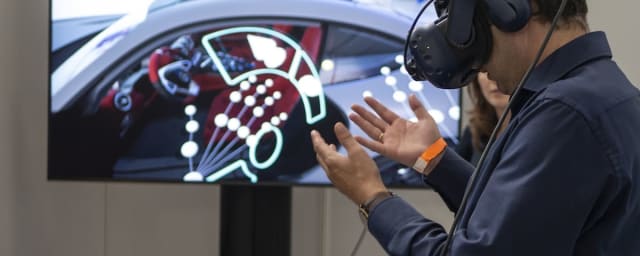
Virtual reality
Virtual reality (VR) is a technology that allows a person to interact with a computer-simulated environment that may be based on either a real or an imagined place. Immersion is achieved through headsets, stereoscopic displays, spatial audio and motion sensors that track the position of the user's body and head, producing a sense of presence within a three-dimensional space. Concepts of artificial environments reach back to mid-twentieth-century experiments, including Morton Heilig's Sensorama device and the early head-mounted displays developed by Ivan Sutherland in the 1960s. The term virtual reality was popularised by Jaron Lanier in the late 1980s. In contemporary art VR has become an expressive medium that lets artists build entire worlds explored from within, dissolving the boundary between the work and the participant. Artists use VR for immersive installations, first-person storytelling and social commentary. The technology is closely linked to augmented reality and raises new questions about embodiment, perception and authorship in the digital age.
Read more →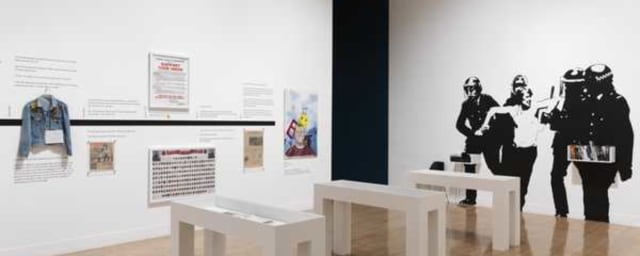
Visual ethnography
Visual ethnography is the study and interpretation of social communities and cultures in everyday life through photography, video, or film. It joins the methods of anthropology with visual media, treating images at once as instruments of data gathering and as forms of knowledge about human practices, rituals, spaces, and bodies. Its origins reach back to early anthropological photography of the nineteenth century and to ethnographic cinema; scholars later recognized that the camera is not neutral but shapes relations of power between the one who looks and the one who is filmed. Contemporary visual ethnography stresses ethics, co-authorship, and reflexivity, often involving participants themselves in making the images. In the Ukrainian context visual methods are used to document folk culture, rituals, regional identities, and the dramatic experience of displacement and war. The discipline stands at the crossroads of scholarship, documentary, and art.
Read more →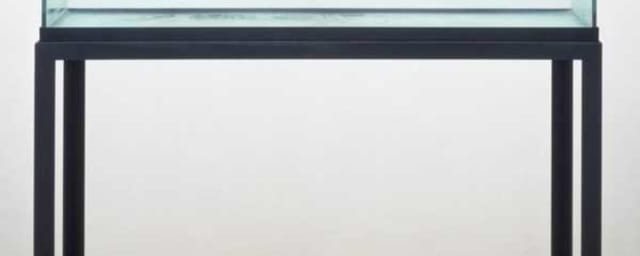
Vitrine
A vitrine is a large glass cabinet or glazed case used to display works of art, artefacts or valuable objects. Its transparent walls allow the viewer to examine the contents from all sides while protecting them from dust, moisture, theft and touch. Vitrines are a fundamental element of museum and gallery practice, especially for showing fragile, small or historically significant items, from archaeological finds and jewellery to manuscripts. In the art of the twentieth and twenty-first centuries the vitrine became an expressive means in its own right. Artists began to use the form of the vitrine itself as part of the work, questioning the ways objects are displayed, museumified and given value. Among the best-known examples are the works of Joseph Beuys, who placed symbolic objects inside glass cases, and Damien Hirst with his glazed installations. By placing ordinary or provocative things inside a vitrine, the artist elevates them to the status of an exhibit while critically examining the institutional mechanisms of display and collecting.
Read more →
Vorticism
Vorticism was a British avant-garde group formed in London in 1914 with the aim of creating art that expressed the dynamism of the modern world, the energy of machines, the city and speed. The movement arose at the crossroads of Cubism and Futurism but sought its own sharp, geometricised style with hard lines, angles and machine-like forms. Its intellectual leader was the writer and painter Wyndham Lewis, and the name was proposed by the poet Ezra Pound, alluding to the vortex as a point of maximum creative energy. The group published the magazine Blast and included artists such as Henri Gaudier-Brzeska and Edward Wadsworth. Vorticism was short-lived: the First World War scattered its members, and Henri Gaudier-Brzeska was killed at the front in 1915. Despite its brevity, the movement was arguably the only distinctive British contribution to international early modernism and left a notable mark on the history of the European avant-garde in the first third of the twentieth century.
Read more →



