




Art terms on "G"
Generative art
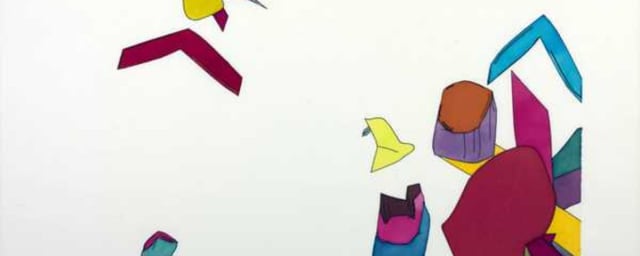
Generative art is art created wholly or partly by means of a predetermined autonomous system that often includes an element of randomness or self-determination. The artist sets the rules, algorithm or process and delegates the direct execution of the work to this system — mechanical, mathematical, chemical, biological or, most often, computational. The term is most frequently applied to computer art, in which program code generates images, forms, sound or movement according to defined parameters. The idea of creating by rules is not new: elements of a generative approach can be traced in the musical "dice games" of the Classical era, in the art of ornament, and in the avant-garde's experiments with chance, notably among the Dadaists. However, generative art truly flourished with the advent of computing: the pioneers of the 1960s — Frieder Nake, Georg Nees, Vera Molnár and Manfred Mohr — programmed plotters to create geometric compositions. The artist sets up the system, while the result is partly unpredictable, which raises questions about the role of author, chance and machine in the creative process. Today generative art is experiencing a new surge thanks to algorithms, blockchain platforms and artificial intelligence, remaining one of the most dynamic fields of digital art.
Read more →
Genre painting
Genre painting is the depiction of scenes from the everyday life of ordinary people: domestic occupations, household chores, festivities, markets, taverns, games, work and leisure. Such works are mostly small in scale and lack heroic, religious or historical elevation; their subjects are usually anonymous members of various social classes. In the traditional hierarchy of genres codified by the academies of the seventeenth century, genre painting occupied a modest place — above still life and landscape but below portraiture and history painting. The flowering of genre painting is associated above all with the golden age of seventeenth-century Dutch art, when a Protestant, mercantile republic with its prosperous burghers created great demand for small pictures for private homes. Johannes Vermeer, Jan Steen, Pieter de Hooch and Gerard ter Borch masterfully rendered interiors, light and the subtle psychology of everyday scenes. An earlier strong tradition had been established by the Fleming Pieter Bruegel the Elder with his peasant subjects. Later genre painting was developed by Jean-Baptiste Chardin in France and by the nineteenth-century Realists; it remains an important means of artistically reflecting on social life and human dignity in the everyday.
Read more →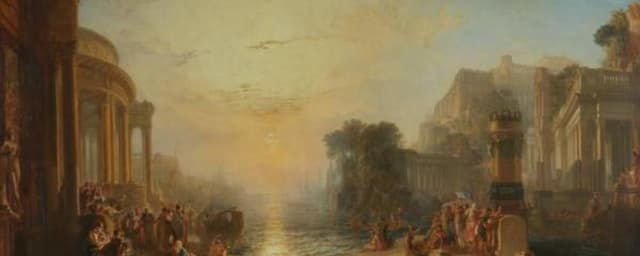
Genres
Genres in painting are established types or categories of work distinguished by the nature of the subject depicted. The classical system of genres was formally codified in the seventeenth century, notably by the French Royal Academy of Painting and Sculpture, as a strict hierarchy. In descending order of importance it comprised: history painting (subjects from history, mythology, religion and literature), portraiture, genre painting (scenes of everyday life), landscape and, lowest of all, still life. This ranking rested on the conviction that the worthiest painting depicts human actions and elevated ideas. The hierarchy of genres governed academic training, the system of commissions, prestige and the market value of works for several centuries. Most highly prized was an artist's capacity for complex multi-figure composition on an elevated theme, whereas still life or landscape were regarded as mere exercises in the skill of copying the visible. Yet as early as the nineteenth century this system began to be undermined: the Impressionists elevated landscape and scenes of modern life, and the Realists dismantled the hierarchy of subjects. In the twentieth century, with the arrival of abstraction and new media, the traditional division into genres largely lost its normative force, though it still remains a convenient tool of art-historical analysis.
Read more →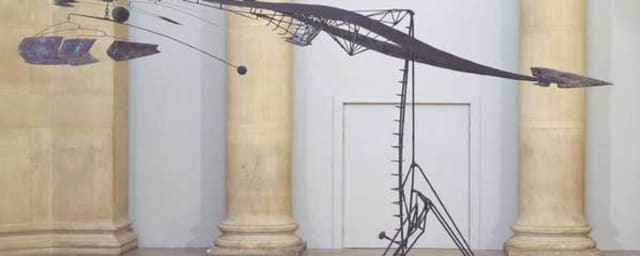
Geometry of Fear
Geometry of Fear is a term coined by the British critic Herbert Read in 1952 to describe the work of a group of young British sculptors whose pieces were shown at the Venice Biennale that year. The circle included Reg Butler, Lynn Chadwick, Kenneth Armitage, Eduardo Paolozzi, William Turnbull and others. Their sculpture was characterised by distorted, battered, angular and seemingly mangled human, and sometimes animal, figures, made largely in welded metal and bronze with rough, spiky, thorn-like surfaces. These images conveyed the atmosphere of anxiety, vulnerability and existential dread of the postwar era, a time marked by the memory of the destruction of the Second World War and the new threat of nuclear annihilation during the Cold War. Read connected the style to the philosophy of existentialism and to a sense of human defencelessness. Geometry of Fear became an important expression of mid-century British modernism and signalled a move away from the smooth, monumental forms of earlier sculpture, notably the classical humanism of Henry Moore, towards a nervous, fragmented expressiveness.
Read more →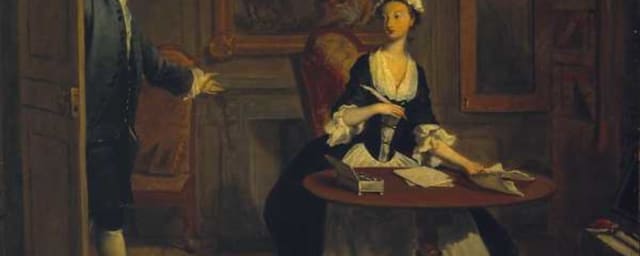
Georgian
The term Georgian is applied to the styles that prevailed in Britain during the reigns of the four kings named George, from 1714 to 1830 (the period is sometimes extended to 1837). It is an age defined above all by the dominance of classicism and Palladianism in architecture and the decorative arts. The Georgian style is marked by symmetry, clear proportion, restrained elegance and reliance on ancient Roman and Renaissance models, disseminated by the Italian architect Andrea Palladio. Exemplars of Georgian architecture include the refined terraced town houses, squares and set-pieces of Bath and Edinburgh, as well as country houses. In furniture the age is celebrated for the names of Thomas Chippendale, George Hepplewhite and Thomas Sheraton, and in ceramics for the porcelain and earthenware of Josiah Wedgwood. In the fine arts it was a time of flourishing English portraiture and landscape: Joshua Reynolds and Thomas Gainsborough worked then, followed by John Constable and J. M. W. Turner. The end of the period also saw the elegant decorative Regency style. Overall the Georgian era is regarded as a classical, harmonious phase of British culture that laid the foundations of national taste in architecture and applied art.
Read more →
German expressionism
German Expressionism was a stylistic movement of the early twentieth century in which the depiction of reality was deliberately distorted in order to express the artist's inner feelings, ideas and spiritual states. In contrast to Naturalism and Impressionism, which aimed to reproduce what was seen, the Expressionists sought to convey what was felt: anxiety, alienation, ecstasy and social criticism. To this end they used harsh, often discordant colours, deformed shapes, sharp angles and vigorous, brutal brushwork. The movement developed chiefly in two centres: the Dresden group Die Brücke (The Bridge), led by Ernst Ludwig Kirchner, Erich Heckel and Karl Schmidt-Rottluff, which tended toward primitivism and sharp, sensual imagery, and the Munich group Der Blaue Reiter (The Blue Rider), which was more lyrical and spiritual. Other important figures were Emil Nolde, Max Pechstein and Oskar Kokoschka. German Expressionism embraced not only painting and drawing but also woodcut, sculpture, literature, theatre and cinema. It reflected the crisis of European consciousness before and after the First World War and became one of the cornerstone tendencies of modernism, deeply influencing the later development of twentieth-century art.
Read more →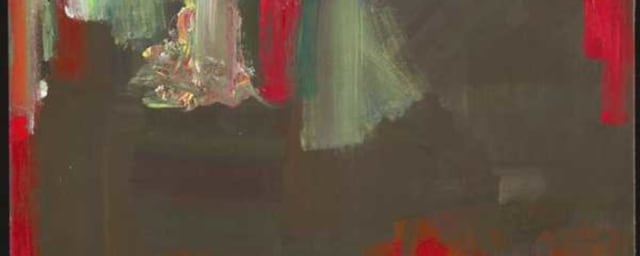
Gestural
Gestural is a term describing the application of paint in free, sweeping, energetic movements of the hand and the whole body, where the trace of the brush, its span, pressure, and speed themselves become the chief expressive content of the work. In gestural painting the act of painting is equated with an action or performance: the canvas records the physical presence of the artist, their emotion, and their movement through time. The concept found its most vivid expression in the Abstract Expressionism of the mid-twentieth century, particularly in so-called action painting, a term the critic Harold Rosenberg applied to the practice of Jackson Pollock, who splashed and poured paint onto canvas spread on the floor, and of Willem de Kooning with his turbulent strokes. Related searches were developed by European Tachisme and Lyrical Abstraction. Gesturalism stresses the immediacy, spontaneity, and bodily nature of the creative act, setting them against measured, geometric abstraction. Its influence is felt in contemporary painting and in calligraphic and performative practices.
Read more →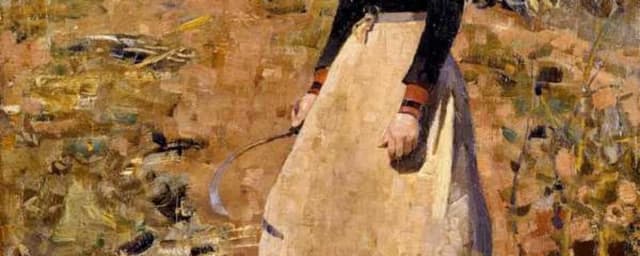
Glasgow School
The Glasgow School usually refers to the circle of artists and designers who worked around the architect and designer Charles Rennie Mackintosh in Glasgow from the mid-1890s to about 1910. Its central group was the so-called Four: Charles Rennie Mackintosh, his wife Margaret Macdonald, her sister Frances Macdonald and Herbert MacNair. Their style combined elements of Art Nouveau, Symbolism, Celtic motifs and Japanese art to form a distinctive aesthetic of elongated vertical lines, stylised plant forms and geometric austerity. This Glasgow Style embraced architecture, furniture, stained glass, metalwork, textiles and graphic design, and became Scotland's contribution to the international Art Nouveau movement. The best-known monuments of the school are the Glasgow School of Art building designed by Mackintosh and a series of tea rooms decorated in the style. The term Glasgow School is sometimes also used more broadly for a group of late-nineteenth-century landscape painters known as the Glasgow Boys. The school exerted considerable influence on European design, especially on the Vienna Secession.
Read more →Glass
An amorphous inorganic material made by fusing silica with a basic oxide; in art, the material of vessels, sculpture and stained glass.
Read more →
Gothic
Gothic was the visual language of the Western European Middle Ages, which took shape in the mid-twelfth century in France and prevailed until the fifteenth and sixteenth centuries, finding its fullest embodiment in the architecture of the cathedral. Its aesthetic core was an aspiration toward the vertical, the dematerialization of mass and the treatment of transcendent light as a symbol of the divine. Its structural basis lay in the pointed arch, the ribbed groin vault and the external flying buttress, which allowed the wall to be reduced to a skeleton and dissolved into vast stained-glass windows. The interior fills with coloured light, space is directed upward, and the silhouette of the church is articulated by towers, gables, pinnacles and openwork tracery. In sculpture the Gothic figure elongates, acquires an S-shaped curve, a gentle tenderness and individualized emotion, and its drapery becomes complex and mobile. Painting develops in stained glass, book illumination and the altarpiece, tending toward a refined line, gold grounds and a growing sense of space. Classic monuments include the cathedrals of Chartres, Reims and Amiens and Notre-Dame of Paris; the late "flamboyant" phase is marked by sumptuous ornament, while the "International Gothic" produced the exquisite works of the Limbourg brothers. In the Ukrainian lands Gothic influences are felt in the Catholic churches and castle architecture of Galicia, Volhynia and Transcarpathia, in Lviv and Kamianets. Gothic bequeathed a conception of art as synthesis, in which architecture, sculpture, stained glass and light merge into a single spiritual image.
Read more →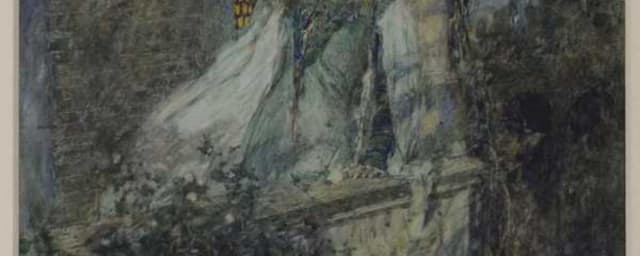
Gouache
Gouache is a water-based paint in which pigment particles are suspended in water together with a binder (usually gum arabic) and a white filler such as chalk. Unlike transparent watercolour, gouache is opaque: the white of the paper does not show through, and colour lies in a dense, even layer. This lets gouache cover earlier strokes, produce rich matte tones and accept corrections readily. The technique reaches back to medieval illuminated manuscripts and flourished in the eighteenth century, when it served for portrait miniatures and landscape studies. In the twentieth century gouache became a favourite of designers, illustrators, poster artists and stage designers thanks to its brightness, quick drying and even tone under reproduction. Ukrainian graphic artists and book illustrators used gouache widely in both easel and applied graphics, executing numerous theatre-set sketches and posters with it. Henri Matisse, in his late cut-outs, worked from sheets pre-painted in gouache, making the medium the foundation of monumental compositions. Gouache remains an accessible and expressive material for teaching and professional practice alike today.
Read more →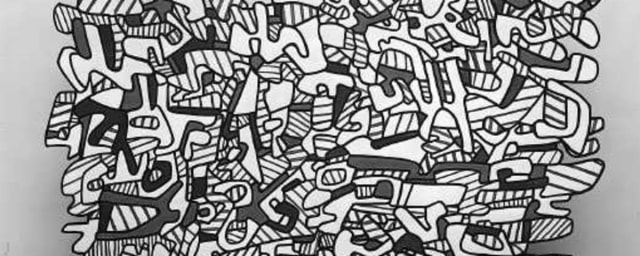
Graffiti art
Graffiti art is imagery or text, usually applied to buildings and other urban surfaces, most often using aerosol spray paint. Modern graffiti as a cultural phenomenon took shape in the late 1960s and 1970s in the poorer districts of American cities, above all New York and Philadelphia, where young people began writing their nicknames, or tags, on walls and subway trains. Simple signatures soon grew into complex, colourful multi-letter compositions—wild style and monumental pieces. Graffiti was closely linked to hip-hop culture and often had a rebellious, illegal character, raising questions about the right to public space. In the 1980s graffiti entered the gallery art world: landmark figures in this transition were Jean-Michel Basquiat, who began with street writing under the tag SAMO, and Keith Haring with his instantly recognisable pictographic images. The tradition was later continued by street-art culture, notably the anonymous British artist Banksy. Graffiti art remains a contested phenomenon—viewed at once as vandalism and as a powerful form of popular, democratic self-expression that has significantly influenced visual culture, design and contemporary art.
Read more →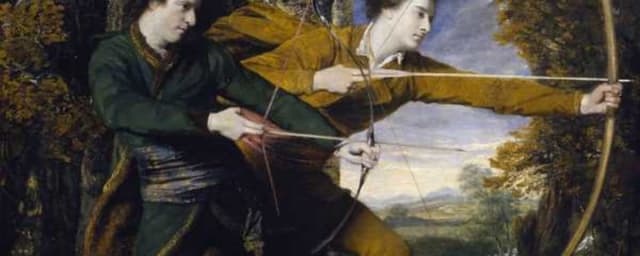
Grand manner
Grand manner is an English term for the highest, most noble style of art in academic theory, based on an idealised classical approach. It involves the depiction of elevated, edifying subjects—from history, mythology, religion or literature—in a monumental, heroic form. Rather than copying nature exactly with all its flaws, the grand manner artist was expected to improve and generalise it, raising the particular to the level of the ideal and universal in imitation of the models of antiquity and the masters of the High Renaissance, above all Raphael. The concept derives from the theory of the hierarchy of genres, in which history painting was regarded as the highest and worthiest kind of art. In Britain the ideas of the grand manner were most fully articulated by Joshua Reynolds, the first president of the Royal Academy, in his celebrated Discourses, where he urged young artists to model themselves on great history painting. Although Reynolds himself was famous chiefly as a portraitist, he sought to give his portraits a heroic elevation. The grand manner reflected the conviction that the task of art was not to entertain but to raise the viewer morally and spiritually, and it remained an influential ideal until the decline of the academic tradition in the nineteenth century.
Read more →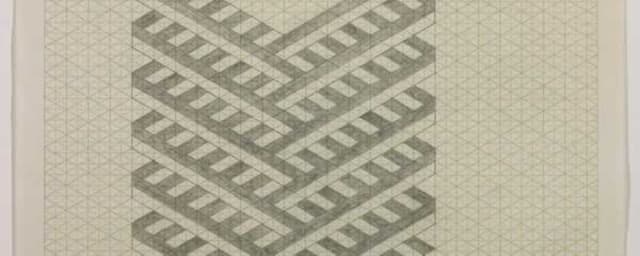
Graphite
Graphite is a metallic-grey crystalline form of carbon and one of the most common materials for writing and drawing. It is most often used as a pencil, in which a thin graphite core is encased in wood, though graphite powder and compressed sticks also serve artists as a medium in their own right. The softness or hardness of the lead is graded with letters (from H for hard to B for soft), yielding anything from pale silvery lines to deep velvety blacks. The material blends easily, lifts with an eraser and lends itself to fine hatching and tonal modelling. The modern graphite pencil emerged in the late eighteenth century, when Nicolas-Jacques Conté devised a way of mixing powdered graphite with clay and firing the rods, allowing hardness to be controlled. Since then graphite has been the principal tool of preparatory drawing, sketching and academic study, including in Ukrainian art schools. It serves both rapid notations and finished easel drawings. Its versatility, availability and precision have made graphite indispensable to artists, architects and designers.
Read more →
Grattage
Grattage (from the French gratter, «to scrape») is a painting technique in which paint is scraped away from the surface of a canvas or paper with a sharp tool, exposing lower layers or the ground beneath. Typically a canvas prepared with a layer of oil paint is laid over a textured object, and the subsequent scraping produces unexpected surface effects. The method was invented by the Surrealist Max Ernst in 1927 as a form of automatism — a means of bypassing the artist's conscious control and giving scope to chance and the unconscious. Max Ernst was its most inventive practitioner, combining grattage with frottage to transfer the relief of wood, leaves, or wire mesh onto the painted surface. Alongside decalcomania and fumage, grattage belongs to the repertoire of experimental methods with which Surrealists expanded the boundaries of traditional painting. It remains a key example of automatist techniques that shaped European modernism and the graphic experiments of the twentieth century.
Read more →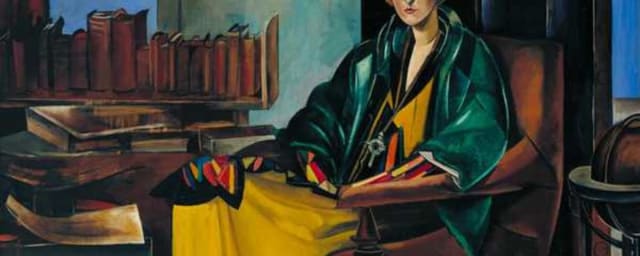
Group X
Group X was a short-lived association of British artists founded by Wyndham Lewis in 1920. It emerged as an attempt to sustain and continue attention to avant-garde art in Britain after the First World War, when the earlier radical movement of Vorticism had effectively collapsed as a result of the war and the death of several of its members. Group X included former Vorticists and artists close to them, among them Edward Wadsworth, Frederick Etchells, William Roberts, Cuthbert Hamilton, Jessica Dismorr and Frank Dobson. The group held only a single joint exhibition, at the Mansard Gallery in London in March 1920, and had no unified artistic programme or shared manifesto; its members were bound less by a common style than by a desire to assert modernist positions in British art. Owing to this lack of internal cohesion, the association soon dissolved. Despite its brevity, Group X is an important record of Wyndham Lewis's efforts to revive the prewar avant-garde impulse and marks a transitional moment in the history of British modernism between Vorticism and the art of the interwar decades.
Read more →
Grupo Frente
Grupo Frente was a Brazilian art association of the 1950s formed by artists who rejected the figuration and nationalist rhetoric of the dominant modernist style of Brazilian painting. The group emerged in Rio de Janeiro around 1954 around the artist and teacher Ivan Serpa and brought together artists interested in geometric abstraction and Concrete art. At various times it included Lygia Clark, Hélio Oiticica, Aluísio Carvão, Abraham Palatnik, Franz Weissmann and others. The members of Grupo Frente looked to European traditions of Constructivism and Concrete art, in particular the ideas of Max Bill, and sought to create a rational, non-objective art based on pure forms, colour and geometry. At the same time the association had no rigid doctrinal programme and allowed considerable freedom of individual inquiry. Grupo Frente was an important stage in the development of Brazilian Concrete art and directly preceded the emergence of Neo-Concretism in the late 1950s, in which former members of the group, notably Clark and Oiticica, played a leading role.
Read more →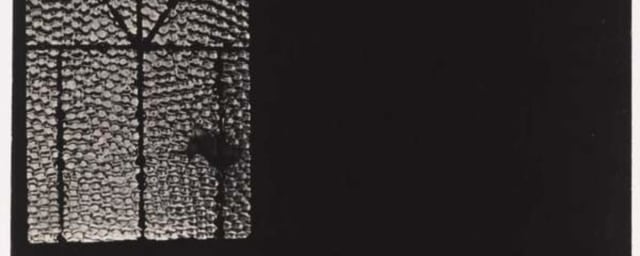
Grupo Ruptura
Grupo Ruptura was an association of Brazilian abstract artists formed in São Paulo in the early 1950s with the aim of making a decisive break with the dominant naturalistic and figurative approach to painting in the country. The group was founded in 1952, and its positions were set out in a manifesto issued during an exhibition of the same name at the Museum of Modern Art in São Paulo. Its founders included Waldemar Cordeiro, Luís Sacilotto, Geraldo de Barros, Lothar Charoux, Anatol Wladyslaw and Kazmer Fejer. The members of Grupo Ruptura proclaimed the need for a new, rational and scientific art based on the principles of Concrete art: pure geometric form, clear composition and the rejection of any representation, symbolism or illusionism. The group's theoretical leader was Waldemar Cordeiro, who argued for art as an objective, socially significant activity. Grupo Ruptura became the centre of Brazilian Concretism in São Paulo, while a parallel focus of the movement developed in Rio de Janeiro, and it substantially influenced the later development of abstract and constructive art in Brazil.
Read more →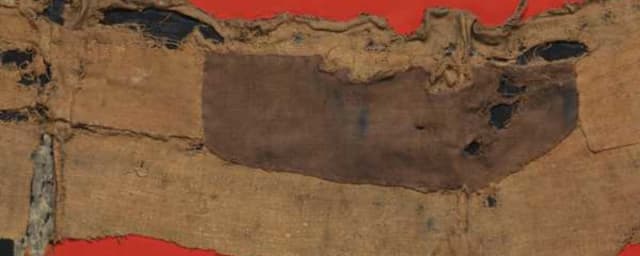
Gruppo Origine
Gruppo Origine, whose name translates as the group of origin, was a short-lived Italian art association founded in Rome in 1951. It comprised four artists: Alberto Burri, Giuseppe Capogrossi, Ettore Colla and Mario Ballocco. The group issued a manifesto proclaiming the need for a return to simple, primal forms and colours in abstract art. Its members sought to purify abstraction of the excessive decorativeness and geometric complexity into which, in their view, contemporary non-objective art had slipped, and to restore to it an expressive, sign-like directness. They rejected three-dimensional illusion and richness of colour in favour of reduced, often monochrome forms, with an emphasis on the materiality of the surface and the elementary graphic sign. Despite its brief existence, the group dissolving soon after its foundation, Gruppo Origine played a notable role in postwar Italian art and foreshadowed the later work of its members. In particular, Alberto Burri went on to become a leading master of material art (arte materica), while Capogrossi developed his recognisable system of comb-like signs.
Read more →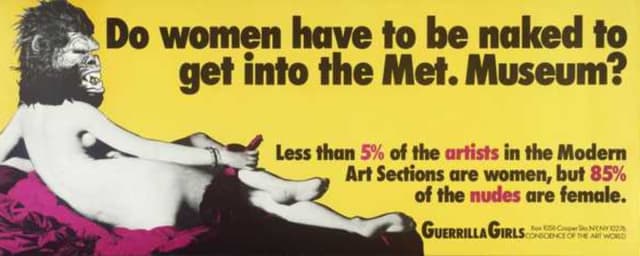
Guerrilla Girls
The Guerrilla Girls are a group of anonymous American feminist artists founded in New York in 1985 who seek to expose sexual and racial discrimination in the art world and the wider cultural sphere. Its members appear in gorilla masks, concealing their identities, and adopt as pseudonyms the names of dead women artists of the past, such as Käthe Kollwitz or Frida Kahlo. This anonymity allows them to keep attention on the issues rather than on their own personalities, while also protecting them from possible reprisals within the art establishment. The group's best-known weapon has been its bold posters, stickers and billboards presenting pointed facts and statistics that document the unequal representation of women and non-white artists in museums, galleries and collections. A classic example is the 1989 poster asking whether women have to be naked to get into the museum, which ironically compared the proportion of women artists with the proportion of female nudes in the collection of a major museum. Through their work, which combines activism, humour and visual design, the Guerrilla Girls have profoundly influenced feminist critique of art institutions and remain active to this day.
Read more →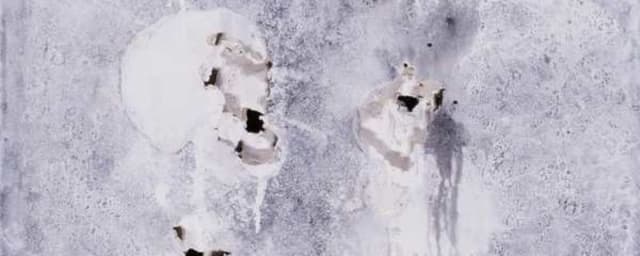
Gutai
Gutai was a Japanese avant-garde group founded in 1954 in the Osaka region by the artist Jiro Yoshihara together with younger artists. Its full name, Gutai Bijutsu Kyokai, means Concrete Art Association; the word gutai signifies concreteness or embodiment. The group's ideas and approaches radically anticipated the performative, conceptual and process-based art practices of the 1960s and 1970s. Yoshihara urged his members never to imitate others and to make what had never existed before, giving primary importance to the direct, physical engagement of the artist with the material. The Gutai artists painted with their bodies, feet and machines, threw paint, tore through canvases with their own bodies, and staged performances outdoors and in theatres. Landmark actions included Kazuo Shiraga painting with his feet while suspended above the canvas, Atsuko Tanaka's Electric Dress made of glowing lamps, and Saburo Murakami bursting through sheets of stretched paper. Gutai engaged actively with the international scene, including European gestural art. The group became one of the most important post-war avant-garde movements in Asia and is still valued for its pioneering fusion of painting, performance and material experiment.
Read more →



