




Art terms on "R"
Raku
A Japanese technique of low-temperature pottery firing in which the piece is taken from the kiln while still hot and cooled in the open air; also the ware itself.
Read more →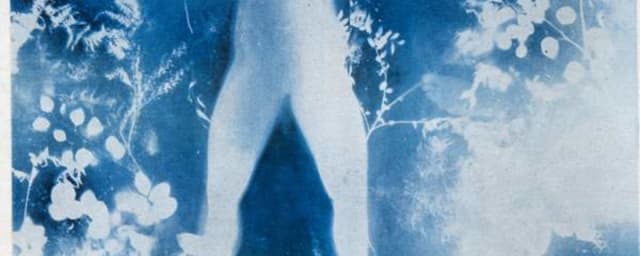
Rayograph
Rayograph is the name the artist Man Ray gave to his cameraless photograms: he laid objects directly on light-sensitive paper and exposed it to light, obtaining ghostly white silhouettes and translucent forms against a dark ground. The term derives from the artist's own name. Man Ray, associated with Dada and Surrealism in Paris, developed the technique around 1922, elevating chance and the play of light into a principle of automatic, unconscious creation. His rayographs transformed everyday things, keys, tacks, spirals, hands, into enigmatic abstract images hovering between recognition and mystery. Although a rayograph is technically identical to Moholy-Nagy's photogram or Schad's schadograph, it was the poetic, dreamlike quality of Man Ray's works that made him one of the most influential experimenters of modernist photography, inspiring later generations of artists, including in Eastern Europe.
Read more →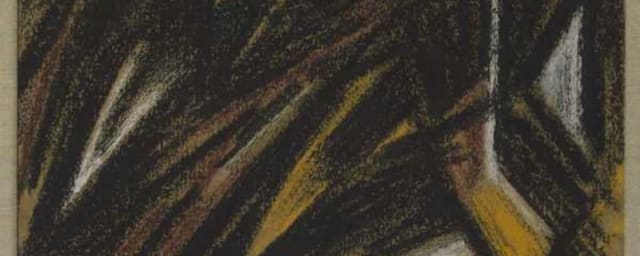
Rayonism
Rayonism (from the French rayon, "ray") was an early form of abstract art characterized by the interaction of lines and forms derived from rays of light reflected off objects. The tendency was developed by the artists Mikhail Larionov and Natalia Goncharova around 1912–1913 and announced in a manifesto in 1913. Rayonism was based on the idea that the eye sees not objects themselves but the rays of light they emit; the artist's task was to depict not the thing but the intersection of these invisible streams of light in space. The canvases showed dynamic bundles of colored lines crossing at various angles, creating a shimmering, almost non-objective field. Theoretically the tendency echoed the ideas of Italian Futurism regarding movement, dynamism, and energy, as well as the scientific conceptions of light of its time. Goncharova, whose art was closely linked to folk tradition and icon painting, brought to Rayonism a sense of color and decorative rhythm. Although the movement was short-lived, it became one of the earliest steps toward complete abstraction in European art.
Read more →
Readymade
Readymade is a term introduced by the artist Marcel Duchamp to denote artworks created from mass-produced industrial objects, selected and declared art by the very fact of the artist's choice. Duchamp began using the concept around 1915. The essence of the readymade lay in a radical shift: the artist no longer paints or sculpts anything but merely singles out an ordinary object from the flow of consumption, places it in an artistic context, and grants it a new status. The most famous example was "Fountain" of 1917 — a factory-made porcelain urinal signed with the pseudonym R. Mutt and submitted to an exhibition. Duchamp also turned a bicycle wheel, a bottle rack, and a snow shovel into art. The readymade called into question fundamental notions of craftsmanship, originality, authorship, and the very nature of art, asserting that the decisive factor is the artist's idea and gesture rather than craft. This idea had a colossal influence on Dada, Conceptual art, Pop art, and nearly all art of the twentieth and twenty-first centuries.
Read more →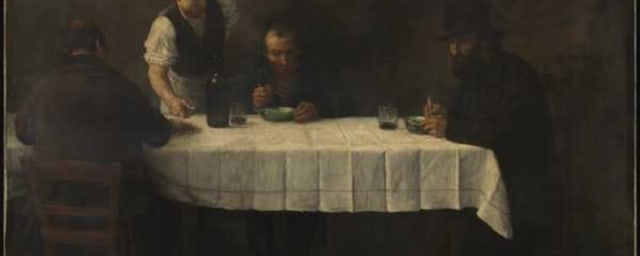
Realism
Realism is a visual language that strives to render the surrounding reality truthfully and without bias, as it actually is, free of idealisation, mythological ornament or romantic exaltation. Its core idea is to recognise ordinary people, labour, everyday life and social contradiction as worthy subjects of art. Formally, Realism relies on precise drawing, exact anatomy, convincing perspective and the tonal modelling of volume. The palette is usually restrained and close to nature, attentive to real illumination and the materiality of textures. Composition avoids artificial theatricality, favouring natural, observed scenes. Its motifs are peasants, workers, urban types, portraits of contemporaries, genre scenes and the landscape of one's native land. Technically, its artists prize careful execution and the authenticity of detail. As a conscious programme, Realism took shape in mid-nineteenth-century France: Gustave Courbet challenged academicism with canvases of stone-breakers and a rural funeral, while Jean-François Millet celebrated peasant toil. In Ukraine, Realism produced a constellation of masters born on Ukrainian soil. The Ukrainian artist Illia Repin, a native of Chuhuiv in Sloboda Ukraine, created the monumental "Reply of the Zaporozhian Cossacks" and sharp social canvases. Mykola Pymonenko lovingly recreated Ukrainian village life, rituals and landscapes. Realism laid the foundation for a critical view of society. Today it is valued for its craftsmanship, humanity and capacity to tell the truth about life.
Read more →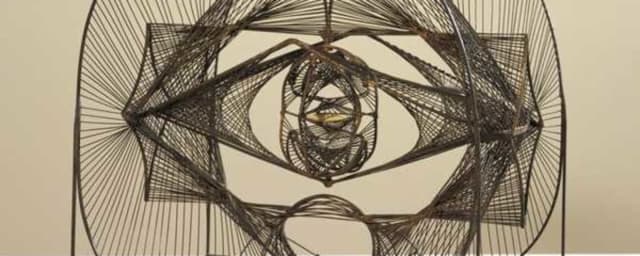
Réalités nouvelles
Réalités nouvelles ("New Realities") was an exhibition society and salon devoted to pure, non-objective abstract art. The association arose in Paris: the first initiative under this name appeared in the late 1930s, and the Salon des Réalités Nouvelles was officially founded in 1946, in the post-war era when abstraction was seeking new institutional forms. The society continued the traditions of the pre-war groups Cercle et Carré and Abstraction-Création, which championed geometric, concrete abstraction against figuration and Surrealism. The annual Réalités Nouvelles salons became the main platform for non-objective artists from various countries, among them Auguste Herbin, Jean Dewasne, Sonia Delaunay, and many others. The term "concrete art," introduced earlier by Theo van Doesburg, emphasized that abstract lines, colors, and planes are not a simplification of reality but themselves constitute a new, self-sufficient "reality." The salon played an important role in the revival and dissemination of abstract art in Europe after the Second World War and continues to operate to this day.
Read more →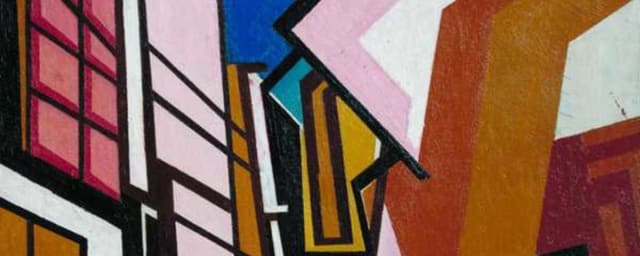
Rebel Art Centre
The Rebel Art Centre was an art centre founded by Wyndham Lewis in London in March 1914 as a meeting place for artists to discuss revolutionary ideas and to teach non-representational, avant-garde art. The centre was located on Great Ormond Street and was conceived as a kind of alternative to Roger Fry's Omega Workshops, with whom Lewis had recently quarrelled bitterly. It was intended not only to hold discussions and lectures but also to produce decorative goods, murals, furniture and textiles in a new geometric spirit, and to run art classes. The Rebel Art Centre played an important role in the birth of Vorticism, the only major English avant-garde movement before the First World War: it was in its milieu that the future Vorticists gathered, among them Lewis himself, Edward Wadsworth, Cuthbert Hamilton and others, and the idea of the magazine Blast, which became the movement's manifesto, took shape. However, the centre lasted only a few months and closed in the summer of 1914 as a result of internal disputes among its members. Despite its brevity, it occupies a notable place in the history of British modernism as the cradle of Vorticism.
Read more →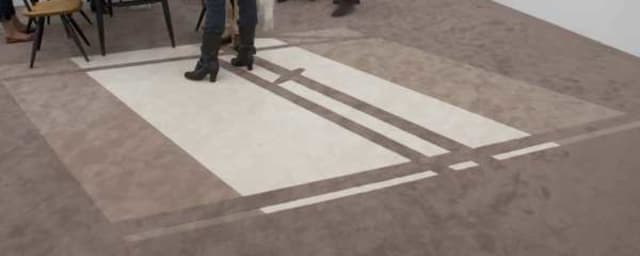
Relational aesthetics
Relational aesthetics is a theory and artistic tendency formulated by the French curator and critic Nicolas Bourriaud in the 1990s, most notably in his influential book Relational Aesthetics (1998). Bourriaud observed that a number of contemporary artists were creating works based not on a material object but on human relations and their social context. In relational art the work itself is a situation, an encounter, a shared action, or an interaction between people, rather than a painting or sculpture intended for contemplation. Bourriaud developed this concept from the practices of artists such as Rirkrit Tiravanija, who cooked and served food to gallery visitors, along with Philippe Parreno, Liam Gillick, and Christine Hill. In relational aesthetics, art is regarded as a state of encounter, and the artist as someone who creates the conditions for social interaction and micro-utopian communities within the art space. This theory influenced the development of participatory and socially engaged art and the educational turn. At the same time, relational aesthetics was criticised, notably by the theorist Claire Bishop, who argued that not all social interaction is equally meaningful and that some relational projects avoid genuine conflict and criticality. Despite these debates, the concept remains influential in the understanding of contemporary artistic practices.
Read more →
Relief
Relief is a type of sculpture in which volumetric forms project from a flat background, remaining integral with it; such a work is usually attached to a wall and intended to be viewed mainly from the front. Depending on the height to which the image projects above the plane, one distinguishes low relief (bas-relief), where the forms are barely raised; high relief (haut-relief), where they project by more than half and in places almost detach from the ground; and sunken relief, where the forms are cut below the surface. Relief is one of the most ancient forms of sculpture: it adorned the temples of ancient Egypt, Assyria, and Greece, notably the celebrated frieze of the Parthenon. In the Renaissance, Lorenzo Ghiberti created unsurpassed bronze reliefs for the Florence Baptistery, employing perspective to create an illusion of depth. Relief has long united sculpture with architecture in the decoration of façades, portals, and tombs. In the art of Ukraine, relief is widely represented in the carved decoration of churches and in monumental sculpture.
Read more →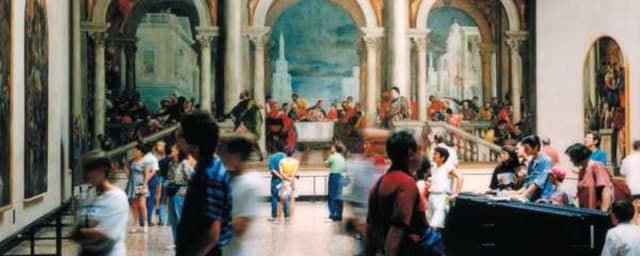
Renaissance
The Renaissance, as a visual language, is a system of pictorial principles that revived the ancient ideal of harmony, measure and human dignity, placing the human being at the centre of the universe. Its central idea is the rational cognition of the visible world, grounded in observation and science, and its embodiment in perfect form. Formally, the Renaissance gave art linear and aerial perspective, precise anatomy, chiaroscuro modelling and a balanced, often symmetrical composition governed by mathematical proportion. The palette grew ever richer, especially with the development of oil painting, which allowed subtle glazes and soft transitions (sfumato). Its motifs embrace religious subjects, classical mythology, portraiture and the birth of landscape. Technically, its artists combined scientific perspective with virtuoso draughtsmanship. The movement arose in Italy in the fourteenth to sixteenth centuries, passing from the Early to the High Renaissance. Its titans were Leonardo da Vinci, with the "Mona Lisa" and "The Last Supper"; Michelangelo, with the ceiling of the Sistine Chapel; Raphael, with his harmonious Madonnas; and Titian, as the master of Venetian colour. In the North, a parallel line developed with Jan van Eyck and Albrecht Dürer and their scrupulous detail. The Renaissance shaped the European canon of beauty for centuries to come. Today it is valued for its synthesis of science and art, its humanist pathos and its unsurpassed technical perfection.
Read more →
Replica
A replica is a copy of a work of art that is practically indistinguishable from the original in size, material and execution. Unlike an ordinary copy made by an outside hand, the classic replica is often created by the author of the original, or in the author's workshop under supervision, when the artist repeats a successful composition to the order of another client. Because of this the replica has a special status: it is an authentic work by the same master rather than a later imitation, although it is not the primary, "first" version of the conception. The practice of making replicas was widespread throughout the history of art: successful portraits, altarpieces or popular compositions were repeated to meet demand. In sculpture, authorised casts from the same mould are often called replicas. The term requires precision in art history, for it must be distinguished from the notions of "version" (a variant with differences), "copy" (executed by another hand) and "forgery" (deliberately passed off as an original to deceive). In museum and exhibition practice, replicas are also made for display in place of fragile or lost originals, thereby preserving public access to monuments.
Read more →
Reportage painting
Reportage painting (Japanese 'rupo', from the English 'reportage') was a Japanese post-war art movement that emerged in the early 1950s. Its adherents sought to expose the inner contradictions of post-war Japanese society, which they perceived as a state dependent on America during the American occupation and the Korean War. Artists of this current combined a documentary, almost journalistic approach with sharp social and political criticism, addressing real events — protests, conflicts, the consequences of militarization and everyday poverty. The movement was closely linked to left-wing political circles and the idea of art as a means of social intervention. Its representatives, among them Nakamura Hiroshi, Ikeda Tatsuo, Yamashita Kikuji and Ishii Shigeo, combined elements of realism and surrealism, drawing on satire, allegorical imagery and the aesthetics of the grotesque, and conveyed the sense of anxiety, violence and alienation of the age. Reportage painting reflected a broader debate in post-war Japanese art about the role of the artist in society, about national identity and about the possibility of realism after catastrophe. Although as a cohesive movement it was short-lived, giving way to other currents, reportage painting remains an important testimony of politically engaged art in post-war Asia.
Read more →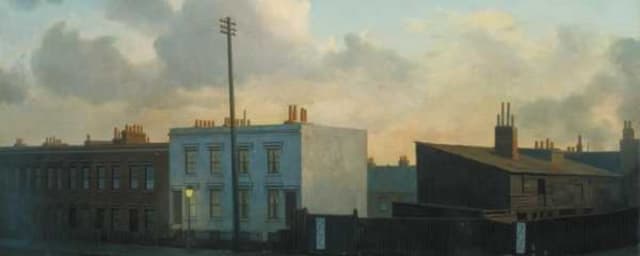
Representational
Representational art is a broad term for works that depict a recognizable aspect of visible reality — people, objects, landscapes or events. It is contrasted with abstract and non-objective (non-figurative) art, in which recognizable subjects are absent or secondary. The degree of likeness can vary enormously, from the near-photographic precision of naturalism to heavily stylized or simplified forms that nonetheless retain a link to an identifiable source. The term therefore describes the aim of showing something drawn from the world rather than a specific technique or style of execution. For most of human history art was representational, from prehistoric cave images of animals to academic painting. A decisive shift came in the early twentieth century, when artists such as Wassily Kandinsky and others began deliberately abandoning depiction in favour of pure form and colour. In that critical context the notion of the representational acquired a sharp meaning as the opposite of abstraction. In Ukrainian art the realist and figurative tradition has always coexisted with modernist and avant-garde experiment, and the term remains fundamental for analysing how a work relates to the visible world.
Read more →Reshetylivka craft centre
A centre of folk crafts in Reshetylivka, Poltava Oblast, known for two traditions: floral carpet weaving and white-on-white embroidery. Both are on Ukraine's National Inventory of Intangible Cultural Heritage.
Read more →
Resin
Resin is a usually transparent solid or semi-solid substance sometimes used by sculptors as a material for works and casts. A distinction is made between natural resins secreted by trees (such as amber or rosin) and modern synthetic resins — polyester, epoxy and polyurethane — which, as a liquid, are mixed with a hardener and poured into a mould, where they set into a strong, light and durable mass. Synthetic resins can be crystal-clear, tinted or filled with dyes and metal powder, giving a wide range of effects. Thanks to its transparency, lightness and ability to reproduce the fine details of a mould, resin became a popular material in the twentieth and twenty-first centuries. It is used for reproduced sculptures, design objects and jewellery, and for unique works in whose depth the artist "embeds" objects or creates the effect of frozen water and light. The transparency of resin allows play with the interior space of an object, which opaque metal or stone cannot. At the same time, working with resins requires care because of the toxicity of the fumes, so artists observe safety precautions. Resin is also widely used in conservation and as an artist's varnish.
Read more →
Resistance art
Resistance Art is a form of politically engaged art that emerged in South Africa in the mid-1970s, following the Soweto uprising of 1976. It focused on the struggle against apartheid — the system of racial segregation — and on affirming African dignity, strength, and unity. Resistance Art used accessible and reproducible means: posters, prints, murals, banners, photography, and illustrations for trade-union and community movements, in order to mobilize the community and convey a political message despite censorship. Artists worked in community art workshops and often remained anonymous for their safety. The works exposed the violence of the regime, honored fallen activists, and called for solidarity. Among the notable figures were Thamsanqa Mnyele (killed in 1985), Dikobe Martins and Norman Catherine, as well as many collectives. After the fall of apartheid in 1994, Resistance Art became an important part of South Africa's cultural memory and an example of how visual creativity can be a direct instrument of social and political struggle.
Read more →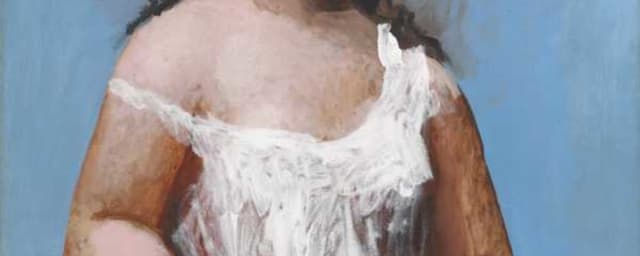
Return to order
Return to Order (French: retour à l'ordre) was a European art movement and mood after the First World War, characterized by a return to more traditional, classical approaches in art and a rejection of the extreme avant-garde experiments of the previous decade. The catastrophe of the war provoked in many artists a longing for stability, clarity, order, harmony, and connection with the great artistic heritage of the past. Instead of the fragmentation of Cubism and the aggression of Futurism, artists turned to balanced composition, clear drawing, figuration, and classical subjects. A symbolic embodiment of this turn was Pablo Picasso's "neoclassical" period in the early 1920s, with its monumental, sculptural female figures. In Italy the Novecento group developed in parallel, and the French poet and artist Jean Cocteau was one of the theorists of this mood. Return to Order was not a single style but rather a common tendency that spread across various countries and influenced both modernists and official art of the interwar era, becoming an important episode in the history of twentieth-century art.
Read more →
Rococo
Rococo is a visual language of refined lightness, play and pleasure that arose in the early eighteenth century as an intimate, chamber-scale response to the solemn grandeur of the Baroque. Its core idea is to turn art into a source of exquisite delight, to celebrate love, flirtation, luxury and the fleeting joy of existence. Formally, Rococo is distinguished by asymmetry, capricious flowing lines, the shell motif (rocaille), plant scrolls and mirror-like glints. The palette is built on tender pastel tones — sky blue, pink, pearl grey, cream and gold. Composition is often dynamic yet free of pathos, playful and light instead. Its motifs are gallant fêtes, pastorals, boudoir scenes, cupids and the ancient goddesses of love. Technically, its painting favours a light, almost sketch-like brushstroke, transparency and delicacy. Rococo merged organically with the decorative arts, interiors, porcelain and furniture. Its leading masters were the Frenchmen Antoine Watteau, creator of melancholy "fêtes galantes"; François Boucher, with his sensual mythological scenes; and Jean-Honoré Fragonard, with the sparkling "The Swing" and his amorous subjects. In portraiture, Rococo elegance was embodied by Élisabeth Vigée-Lebrun. The movement reigned at the European courts until the triumph of austere Neoclassicism. Today Rococo is valued for its decorative virtuosity, elegance and the hedonistic sensuality of its imagery.
Read more →
Romanticism
Romanticism is a visual language of feeling, imagination and freedom that arose in the late eighteenth and early nineteenth centuries as a revolt against the cold rationalism of Neoclassicism and the ordered world of the Enlightenment. Its central idea is to exalt personal experience, passion, dream and the drama of the human soul above rules and norms. Formally, Romanticism employs dynamic, often diagonal composition, energetic movement, contrasts of light and shadow, and an expressive, free brushstroke. The palette can be dramatic and saturated, able to convey a storm, a fire, moonlight or a thunderous sky. Its motifs are the majestic elements of nature, ruins, the exoticism of the East, historical catastrophes, heroic impulses and the solitary dreamer before the infinite. Technically, its artists prize emotional immediacy over academic polish. In France, Eugène Delacroix embodied passionate colour in "Liberty Leading the People", while Théodore Géricault conveyed tragedy in "The Raft of the Medusa". In Spain, Francisco Goya laid bare the dark depths of humanity. The German Caspar David Friedrich created mystical landscapes of solitude, and the Englishman J. M. W. Turner dissolved form in the element of light and air. Romanticism fed the national awakening of peoples, including the Ukrainian, inspiring an interest in folklore and history. Today the movement is valued for its emotional depth, its cult of imagination and its affirmation of the uniqueness of the human personality.
Read more →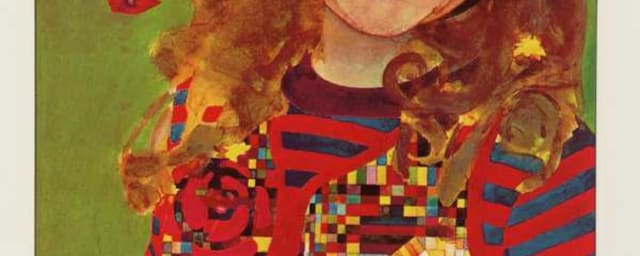
Ruralists
The Ruralists, or the Brotherhood of Ruralists, were a group of British artists founded in 1975 that sought to revive the painting of figurative subjects set against idyllic rural landscapes. The association came into being after Peter Blake, one of the founders of British Pop art, moved with his then wife Jann Haworth from London to Wellow, near Bath in Somerset; the group concentrated on the themes of nature, childhood, English folklore and the pastoral. The brotherhood included Peter Blake, his wife Jann Haworth, Graham and Ann Arnold, Graham and Annie Ovenden and David Inshaw. Consciously invoking the example of the nineteenth-century Pre-Raphaelites, the Ruralists championed a return to meticulous, narrative, Romantic figurative painting and drew inspiration from English literature, in particular fairy tales, poetry and works such as Alice in Wonderland. Their art was distinguished by a nostalgic, at times sentimental mood, a love of detail and an idealised vision of rural England. The Brotherhood of Ruralists became a notable phenomenon of British art in the 1970s and a kind of reaction against the dominance of abstraction and conceptualism, asserting the value of traditional figurative painting.
Read more →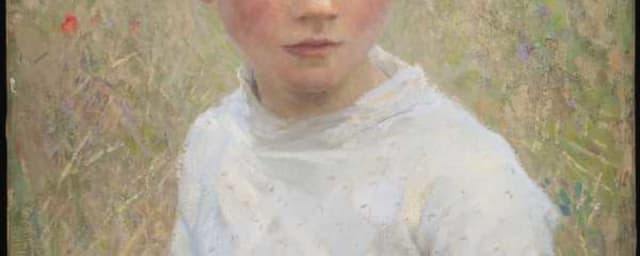
Rural naturalism
Rural Naturalism was a painting movement of the second half of the nineteenth century characterized by scenes of country life and labor depicted in a realistic and often sentimentalized manner. The tendency developed under the influence of French Realism, notably the work of Jean-François Millet and the Barbizon school, as well as the method of plein-air painting, which allowed artists to work directly in nature and accurately convey light and atmosphere. Particularly influential was the example of Jules Bastien-Lepage, whose canvases of peasants combined documentary fidelity with a poetic sensibility. Rural Naturalism depicted peasants, shepherds, reapers, fishermen, and children in moments of labor and rest, emphasizing the dignity of simple life, the human bond with the land, and the passage of rural existence. The movement spread across many countries of Europe and America, inspiring whole artist colonies such as the Newlyn school in Britain. Although sometimes criticized for idealization, Rural Naturalism played an important role in democratizing the subjects of art and affirming a realistic view of the lives of ordinary people.
Read more →



