




Virtual reality
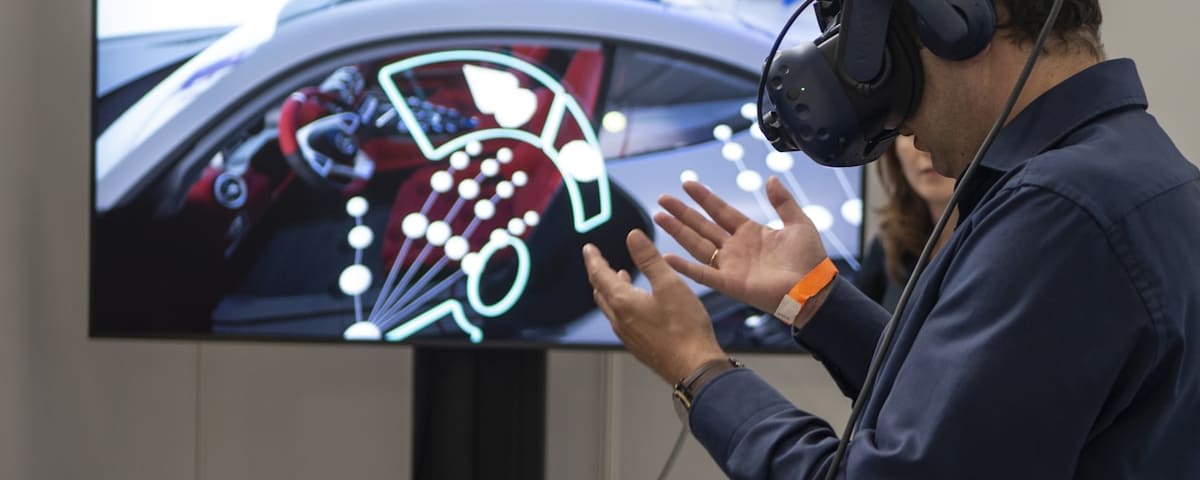
Virtual reality (VR) is a technology that allows a person to interact with a computer-simulated environment that may be based on either a real or an imagined place. Immersion is achieved through headsets, stereoscopic displays, spatial audio and motion sensors that track the position of the user's body and head, producing a sense of presence within a three-dimensional space. Concepts of artificial environments reach back to mid-twentieth-century experiments, including Morton Heilig's Sensorama device and the early head-mounted displays developed by Ivan Sutherland in the 1960s. The term virtual reality was popularised by Jaron Lanier in the late 1980s. In contemporary art VR has become an expressive medium that lets artists build entire worlds explored from within, dissolving the boundary between the work and the participant. Artists use VR for immersive installations, first-person storytelling and social commentary. The technology is closely linked to augmented reality and raises new questions about embodiment, perception and authorship in the digital age.




