




Installation art
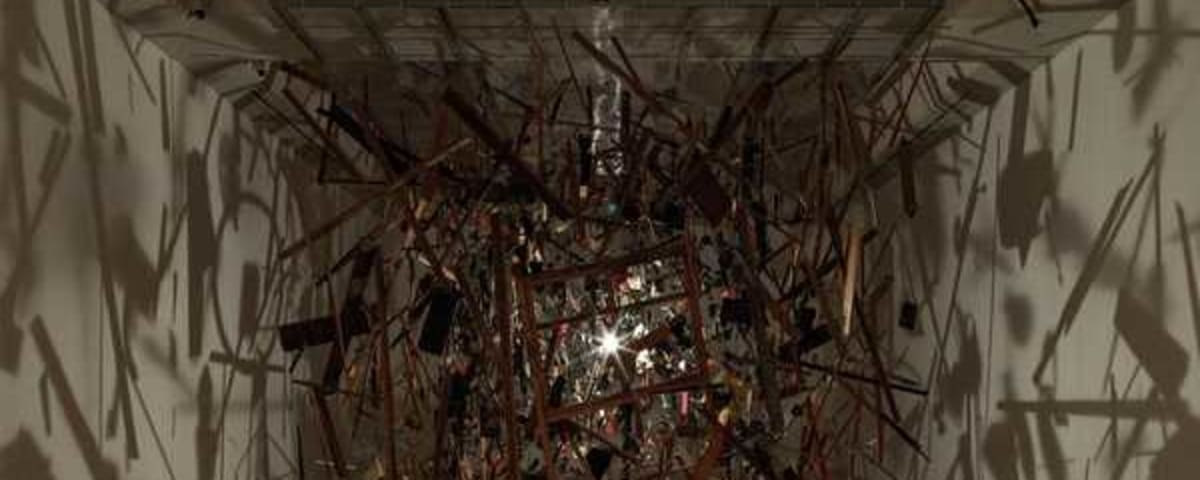
Installation art is a form of art consisting of mixed-media constructions or assemblages, usually intended for a specific site and for a temporary period of time. Instead of a single painting or sculpture contemplated at a distance, an installation organises an entire space that the viewer physically enters and experiences with the whole body, in movement and over time. The artist may use the most varied means—found objects, light, sound, video, text and natural materials—combining them into a single environment with its own atmosphere and meaning. The origins of the genre lie in Dada and Surrealist displays, in Kurt Schwitters's Merzbau and in the environments of the late 1950s; as a distinct, widely recognised form, installation established itself in the 1960s and 1970s and became one of the leading practices of contemporary art. Among its well-known makers are Ilya Kabakov with his total installations, Louise Bourgeois, Ai Weiwei and Yayoi Kusama with her mirror rooms. Installation emphasises experience, context and viewer participation rather than the creation of an autonomous object, and it reflects contemporary art's desire to move beyond traditional media and to work directly with space and perception.




