




Brücke
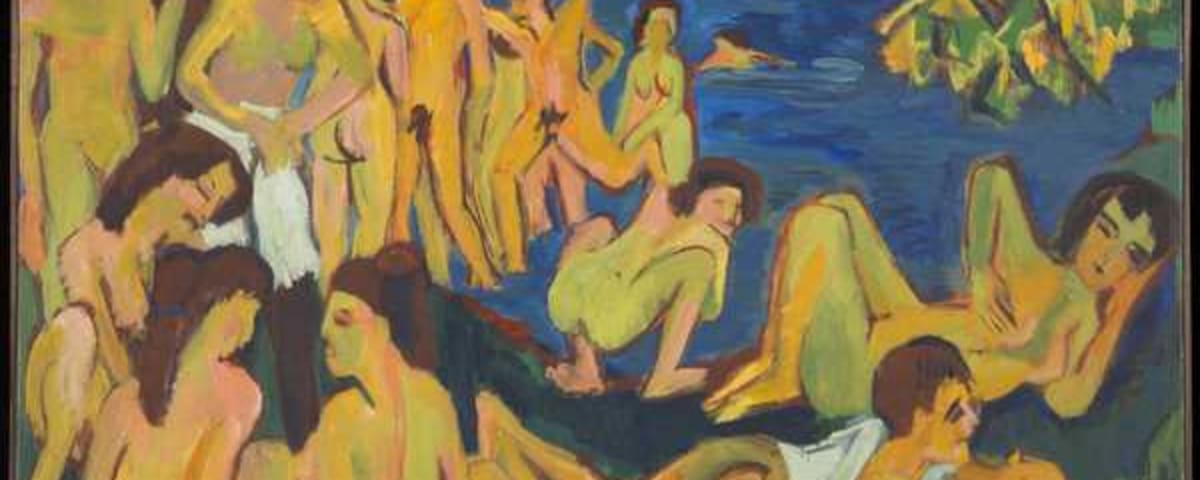
Die Brücke (The Bridge) was a German Expressionist group founded in Dresden in 1905 that developed a radical, anti-traditional style. The name The Bridge symbolised the wish to build a bridge to the art of the future and to unite all revolutionary-minded young artists. The group became one of the two key currents of German Expressionism alongside the Munich association The Blue Rider. Its founders were Ernst Ludwig Kirchner, Erich Heckel, Karl Schmidt-Rottluff and Fritz Bleyl, architecture students who turned to painting and graphic art. Max Pechstein and Emil Nolde later joined the group. Their style is marked by harsh, simplified forms, sharp angles, saturated unnatural colours and strong emotional tension. The artists drew inspiration from medieval German woodcuts, the work of Edvard Munch and Vincent van Gogh, and the art of non-European cultures. Their contribution to the revival of the woodcut was especially significant. Die Brücke lasted until 1913, when it broke up over internal disputes, but it had a profound influence on the development of twentieth-century modernist art.




