



Khartoum School
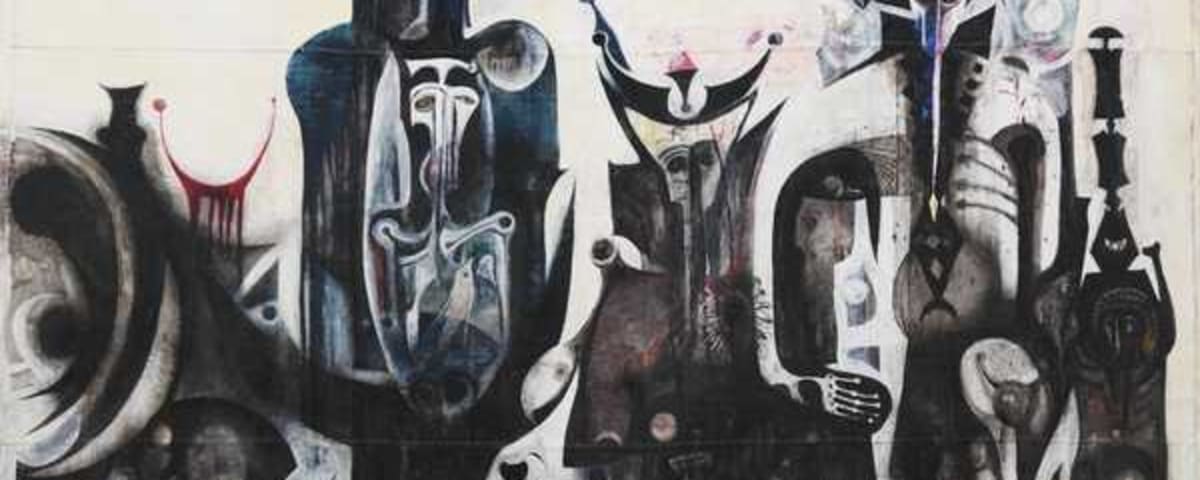
The Khartoum School was a modernist art movement that emerged in Sudan around 1960 and sought to develop a new visual vocabulary to express the unique identity of the newly independent nation after the country gained independence in 1956. The movement centred on the College of Fine and Applied Art in Khartoum, and its leading figures were the artists Ibrahim el-Salahi, Ahmed Shibrain and Kamala Ibrahim Ishag. The artists of the school aimed to combine the influences of Western modernism with local sources: Arabic calligraphy, Islamic ornament, African motifs and the traditions of Sudanese material culture. Central to their aesthetic was the notion of hurufiyya, the creative use of Arabic letters and calligraphic signs as plastic, almost abstract compositional elements. In this way the artists sought to reflect the dual, African and Arab-Islamic, heritage of Sudanese culture and to establish a distinctive postcolonial art. Ibrahim el-Salahi later achieved international recognition as one of the foremost masters of African modernism. The Khartoum School occupies an important place in the history of modern African and Arab art.




