




Hard edge painting
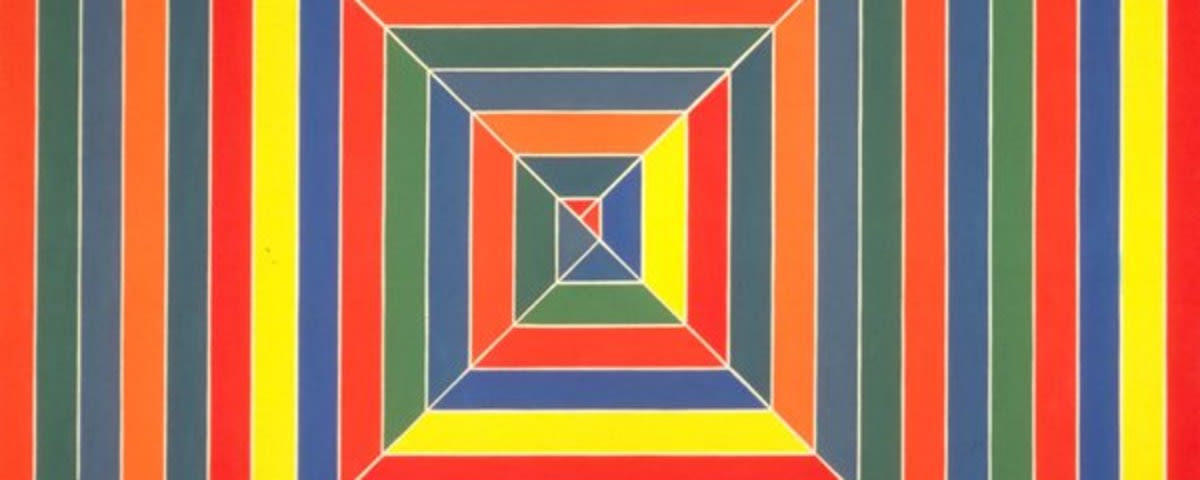
Hard-edge painting is an approach to abstract painting that became widespread in the 1960s and is characterised by areas of flat, even colour with sharp, clear, hard edges between them. The coloured planes meet one another without blurred transitions, visible brushwork or textural effects, so that the surface of the picture appears smooth, impersonal and carefully calculated. The term was proposed by the California critic Jules Langsner in the late 1950s to describe crisp, geometric painting set against the emotional, gestural manner of Abstract Expressionism. Hard-edge painting stresses the integrity of the picture as a flat object rather than a window onto depth, and often reduces the composition to a few large colour forms. Among its leading practitioners were Ellsworth Kelly, Kenneth Noland, the early Frank Stella and Al Held; it is also associated with the tendencies of Colour Field painting and Minimalism. The approach reflected the desire of post-war abstract art for clarity, objectivity and control, freeing colour and form from gesture and personal emotion in favour of a pure optical effect.




