Ukrainian art & cultureOnline


Other dimensions of culture
Other dimensions of culture





Test mode: all content on this site is for testing and will be removed at launch.
Art Glossary
Ukrainian Art&Culture online glossary of art terms covers movements, styles and techniques such as Impressionism, Printmaking, Video art and more.
from Realismto Cyberpunk
34from Oilto 3D Modeling
8from Paintingto Design
7from Trypilliato Contemporary
236 terms
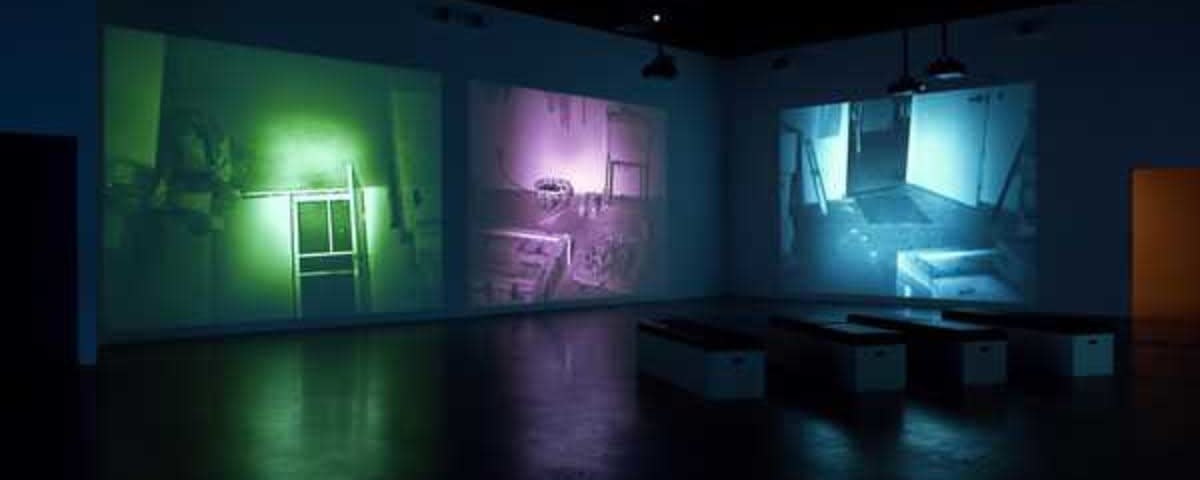
Emulation, in the field of preserving digital and media art, is the process of reproducing a work's original software and hardware environment on a newer platform so that it can keep functioning despite technological change. Many works of media art, video games, interactive installations, and pieces built on obsolete operating systems or storage media depend on specific, often no longer existing, hardware and software. Emulation creates a virtual model of that outdated environment, allowing the original code to run on modern computers without rewriting the work itself. It is one of the key methods of conservation alongside migration, the transfer to new formats, and documentation. Emulation raises complex questions of authenticity: how faithfully the reproduced experience matches the artist's intention, what counts as the original of an immaterial work, and where the limit of acceptable change lies. Museums and archives develop dedicated strategies and ethical protocols to preserve digital heritage, including Ukrainian digital and media art, for future generations.
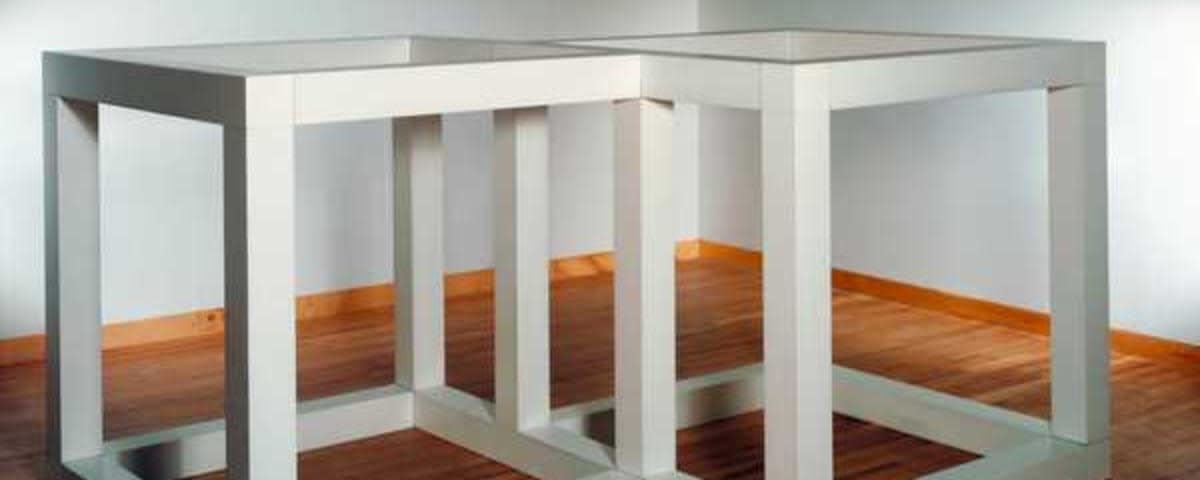
Modular is a term used in connection with Minimalism to denote an artwork composed of repeated identical parts, or modules, that can be moved, separated, and rejoined. A module is a standard unit from which, by the principle of repetition and combination, the entire structure of the work is built. This approach rejects the idea of a unique, hierarchically constructed composition in favour of an impersonal, serial logic often associated with industrial production. Modularity became one of the central ideas of 1960s Minimalism in the United States. Donald Judd created «progressions» and stacks of identical metal boxes, Carl Andre laid out floor pieces from identical bricks or metal plates, and Sol LeWitt built open cubic lattice structures. The modular principle is linked to serial art and emphasises the system, the set of rules, and the relationships between elements rather than the artist's individual gesture, radically transforming the conception of twentieth-century sculpture.

Mosaic is an image composed of small particles, traditionally little cubes (tesserae) of terracotta, coloured glass, ceramic, stone, or marble, set into mortar on floors, walls, and vaults. The art of mosaic has a history spanning millennia: it developed in Mesopotamia, reached refinement in Hellenistic Greece and Rome, where it adorned the floors of villas, and attained its highest spiritual expression in Byzantine sacred art. Byzantine masters used smalti — opaque coloured glass, often backed with a thin layer of gold — so that the shimmering surfaces of churches seemed to glow from within. This tradition had a decisive influence on Kyivan Rus. The most outstanding monument of Ukrainian mosaic is the ensemble of St Sophia's Cathedral in Kyiv from the eleventh century, notably the majestic «Virgin Orans» in the apse, executed from millions of smalti cubes. The art of mosaic experienced a revival in Art Nouveau and in twentieth-century monumental art, retaining exceptional durability and radiant colour.