Ukrainian art & cultureOnline


Other dimensions of culture
Other dimensions of culture





Test mode: all content on this site is for testing and will be removed at launch.
Art Glossary
Ukrainian Art&Culture online glossary of art terms covers movements, styles and techniques such as Impressionism, Printmaking, Video art and more.
from Realismto Cyberpunk
34from Oilto 3D Modeling
8from Paintingto Design
7from Trypilliato Contemporary
239 terms
The Académie Julian was a private art school founded in Paris in 1868 by the painter Rodolphe Julian. It became the principal alternative to the official École des Beaux-Arts, above all because it admitted women, whom the state school excluded from enrolment until 1897. The academy prepared students for the entrance examinations of the state school, offered intensive work from the model under celebrated academic masters such as William Bouguereau and Jean-Paul Laurens, and imposed no restrictions of origin or nationality, thereby attracting artists from all over the world. It was here that the future Nabis—Maurice Denis, Pierre Bonnard, Édouard Vuillard, and Paul Sérusier—trained, along with numerous American, Canadian, and Eastern European painters. Through its openness and its high standard of teaching, the Académie Julian played a key role in shaping the modernist generation at the turn of the nineteenth and twentieth centuries.

The Bauhaus was a revolutionary school of art, architecture, and design founded by the pioneer of modern architecture Walter Gropius in Weimar, Germany, in 1919. Its founding idea was to unite the fine arts, craft, and industrial production into a single whole serving the needs of mass society; the principle "form follows function" (a phrase coined by the American architect Louis Sullivan) and the rejection of superfluous ornament defined the face of twentieth-century modernism. Training began with a compulsory preliminary course, and the workshops were led by outstanding artists—Paul Klee, Wassily Kandinsky, László Moholy-Nagy, Johannes Itten, and Oskar Schlemmer. Under political pressure the school moved in 1925 to Dessau, where Gropius built for it the famous glass-and-concrete building, and later to Berlin; its final director was the architect Ludwig Mies van der Rohe. Forced to close by the Nazis in 1933, the Bauhaus saw its teachers scatter across the world and spread its ideas, permanently transforming architecture, graphic and industrial design, and art education.
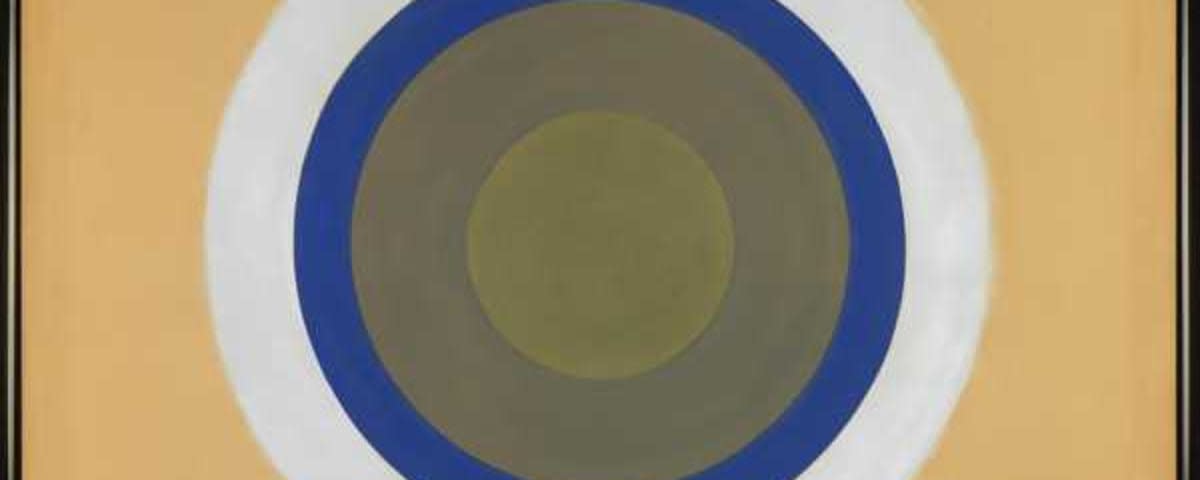
Black Mountain College was a highly influential educational institution founded in the town of Black Mountain, North Carolina, USA, in 1933, where education was experimental and centred on an interdisciplinary approach. At the heart of its programme lay the idea that art was central to a liberal education, and the college itself was governed democratically by its own faculty and students, who worked and farmed the land together. Its first leading art teacher was Josef Albers, a refugee from the Nazi-closed Bauhaus, who brought European modernist teaching methods with him. Faculty and visitors over the years included the composer John Cage, the choreographer Merce Cunningham, the architect and inventor Buckminster Fuller, and the poets and painters Robert Motherwell, Willem de Kooning, and Robert Rauschenberg. It was here that one of the first "happenings" took place, and the crossing of ideas among disciplines nourished the post-war American avant-garde. Financial difficulties forced the college to close in 1957, but its impact on American art, dance, and music is hard to overstate.

The Federal Art Project was a United States government programme intended to provide work for unemployed artists during the Great Depression of the 1930s. Established in 1935 as part of the Works Progress Administration under President Franklin Roosevelt's New Deal and directed by Holger Cahill, the project ran until 1943 and became the largest state support of art in American history. It paid thousands of artists who created murals for non-federal public buildings—schools and hospitals—as well as easel paintings, sculptures, posters, and prints; a separate division, the Index of American Design, documented the country's folk and applied art. The programme also opened community art centres and workshops across the country, bringing art closer to ordinary people. Among the artists supported early in their careers were the future leaders of Abstract Expressionism Jackson Pollock, Mark Rothko, Arshile Gorky, and Willem de Kooning, so the project indirectly nurtured the post-war flowering of American art.
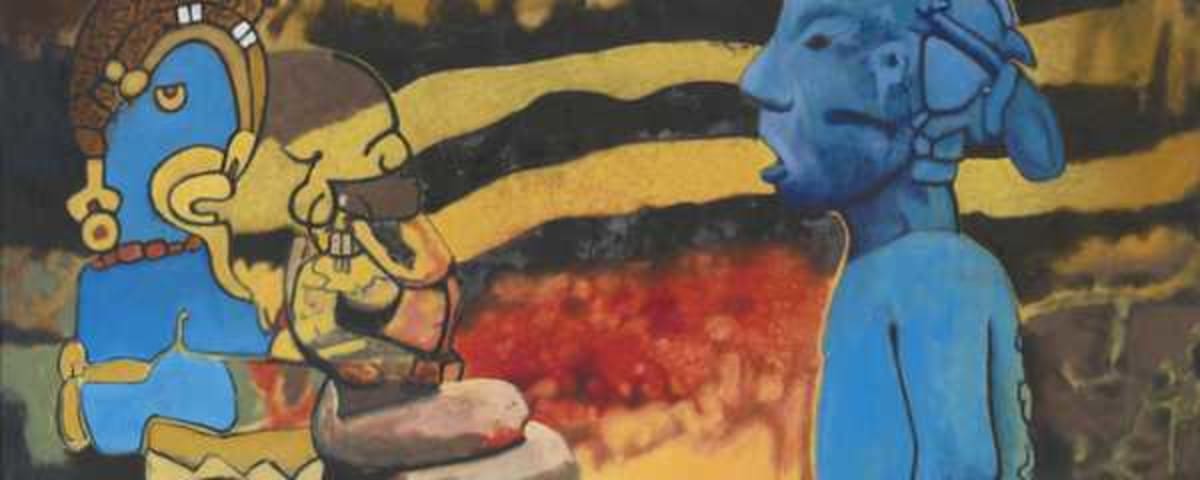
FESTAC 77, the Second World Black and African Festival of Arts and Culture, was a major cultural event held in Lagos and Kaduna, Nigeria, from January to February 1977. It continued the tradition of the First World Festival of Negro Arts held in Dakar in 1966 and became one of the largest gatherings of artists of African descent in history. The festival brought together over fifteen thousand participants from dozens of countries across Africa and its diaspora, including painters, musicians, dancers, writers, scholars and filmmakers. Its emblem was an ivory mask from Benin, symbolising the heritage and dignity of African peoples. The event had a distinctly postcolonial, pan-African character: it asserted the continent's cultural independence after decades of colonial rule and sought to reconsider the place of Black art within a global context. FESTAC had a lasting influence on the development of modern African art, strengthened networks of cooperation among diaspora artists, and became a symbol of cultural renewal and solidarity among peoples of African descent.