



Montage
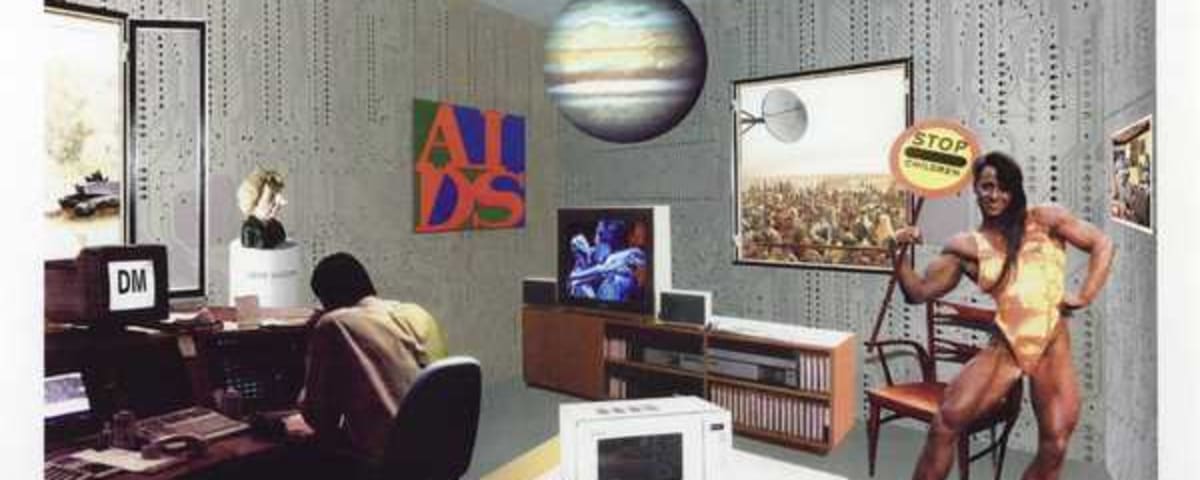
Montage is an assembly of images interrelated in such a way that they form a single unified work or part of one. The term derives from the French monter, «to mount» or «to assemble», and was first used in cinema to denote the splicing of separate shots into a meaningful sequence. In the visual arts, montage means the composing of ready-made images — newspaper clippings, photographs, reproductions — into a new composition that generates unexpected meanings through their juxtaposition. A variety of montage is photomontage, which the Dadaists turned into a sharp political weapon during and after the First World War: Hannah Höch, Raoul Hausmann, and especially John Heartfield created scathing anti-militarist and anti-fascist images by cutting and combining fragments of the mass press. Montage is founded on the principle of juxtaposition, where meaning arises not within a single image but between images. This technique profoundly influenced modern graphics, the poster, advertising, and contemporary digital art.




